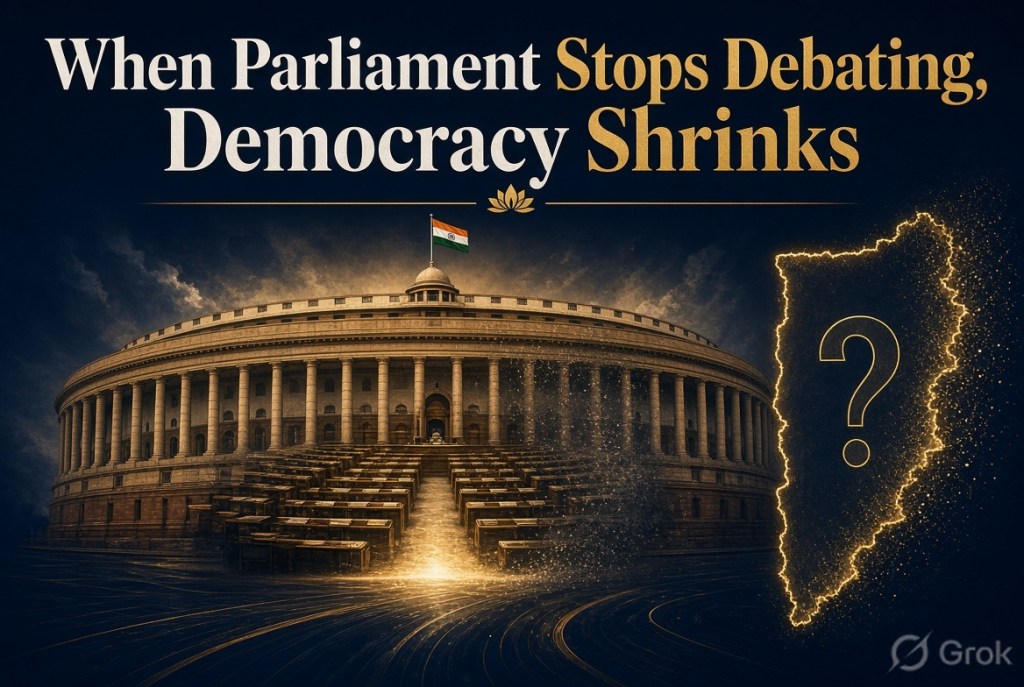
There was a time when the Indian Parliament was not merely a building where laws were enacted; it was the place where the Republic argued with itself. In the early decades, Parliament functioned as a vast democratic laboratory in which disagreement was not equated with disloyalty, opposition was not automatically interpreted as obstruction, and debate was understood as an essential instrument of governance. Political adversaries could be fierce without becoming institutional enemies. Speeches were expected to persuade, questions were designed to expose weaknesses, and legislative scrutiny was treated as a constitutional responsibility. Today, Parliament retains its authority, grandeur and procedural machinery, but something less visible and more consequential appears diminished: the culture of deliberation. The transformation is not simply from one political era to another; it is from a Parliament that sought to persuade through argument towards one increasingly tempted to demonstrate power through arithmetic.
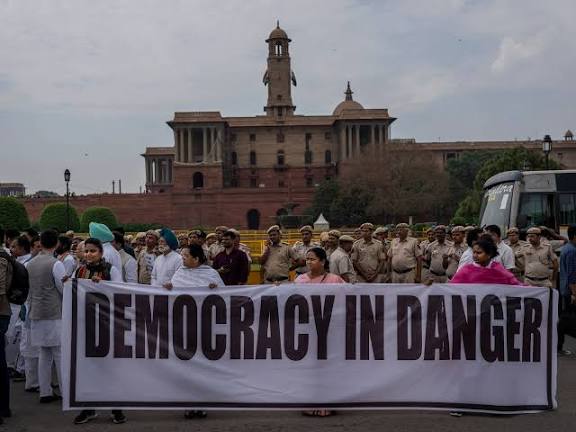
This decline cannot honestly be attributed to a single government, political party or generation. It is the cumulative product of changing political incentives, institutional habits and the gradual normalisation of behaviour once considered exceptional. The early Republic established conventions that gave Parliament a stature larger than the sum of its members. Governments possessing formidable majorities still confronted searching questions, ideological challenges and sustained criticism. Opposition parties, even when numerically weak, could influence the national conversation through the force of argument. Parliamentary speeches were political instruments rather than merely material for television clips. The House could be passionate, chaotic and partisan, but the underlying assumption remained intact: political disagreement belonged inside Parliament because Parliament existed precisely to accommodate disagreement. Over time, however, this culture has weakened as political competition has increasingly rewarded confrontation, visibility and immediate messaging rather than patient institutional persuasion.
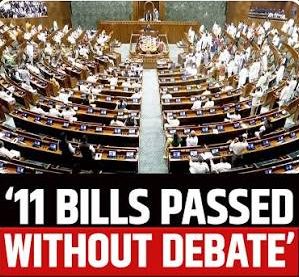
The obsession with parliamentary productivity has further distorted the meaning of legislative success. A large number of Bills passed quickly can be presented as evidence of efficiency, while prolonged debate is sometimes portrayed as obstruction. But Parliament is not a manufacturing plant and legislation is not an industrial product. A law’s quality cannot be measured by the speed with which it travels from introduction to enactment. Good legislation requires scrutiny, committee examination, expert evidence, stakeholder consultation, clause-by-clause interrogation and the possibility that criticism can genuinely alter its provisions. Speed can be administrative efficiency; it cannot automatically be democratic efficiency. When legislation moves faster than Parliament can meaningfully examine it, impressive productivity statistics may conceal something profoundly different: the shrinking of Parliament’s intellectual contribution to law-making.
The weakening of the parliamentary committee system is perhaps the clearest evidence of this institutional impoverishment. Earlier Lok Sabhas saw a substantially higher proportion of Bills being referred to committees, whereas the share fell dramatically in later periods, reaching roughly 16 per cent during the 17th Lok Sabha. Committees are Parliament’s quieter but more sophisticated machinery. They operate away from the immediate theatre of political confrontation, allowing members to examine legislative clauses, question officials, hear experts, consider stakeholder concerns and identify unintended consequences. Their importance lies precisely in their relative insulation from daily political spectacle. When Bills bypass serious committee scrutiny, Parliament loses one of its most valuable capabilities: the conversion of political authority into informed public policy. A majority can pass a law; only deliberation can help ensure that the law deserves to be passed.
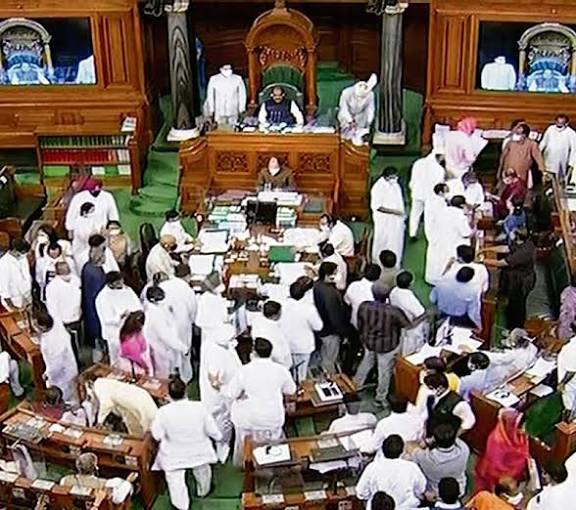
Question Hour represents another critical fault line. The executive is constitutionally accountable to Parliament, yet the effectiveness of legislative questioning has been progressively weakened by disruptions, shortened sittings, procedural restrictions, absenteeism and increasingly adversarial conduct. The problem is not merely that Question Hour sometimes fails to function smoothly; it is that the underlying culture of interrogation is losing institutional seriousness. A question is meaningful only when it creates an opportunity for a minister to explain, defend, clarify or reconsider government policy. When questions become ritualistic, answers become formulaic and proceedings are repeatedly disrupted, accountability becomes choreography. Equally troubling is the normalisation of mass suspensions and prolonged confrontations. The government possesses legitimate disciplinary authority, while the opposition possesses legitimate rights of protest. But when executive authority and oppositional disruption escalate together, Parliament itself becomes the casualty of the battle between them.
The deeper transformation is psychological: Indian politics has moved increasingly from persuasion to performance. Televised proceedings, digital platforms and social media have changed the incentives of political communication. Members may now speak less to persuade colleagues across the aisle than to produce a clip for supporters outside the chamber. The parliamentary speech is increasingly written for television headlines, social-media circulation and partisan mobilisation. Outrage travels faster than reason. A carefully constructed argument rarely becomes viral; a dramatic confrontation can dominate public discourse within minutes. Consequently, Parliament risks becoming a theatre in which political actors perform certainty rather than demonstrate intellectual openness. Yet democracy requires precisely the opposite quality: the willingness to enter a chamber convinced of one’s position and still remain intellectually capable of being challenged by another.
The concentration of executive power has compounded this institutional shift, although the phenomenon itself predates the present political era. Strong governments naturally possess greater capacity to determine legislative outcomes, but parliamentary democracy was never designed as government by majority arithmetic alone. A majority has the mandate to govern; an opposition has the responsibility to scrutinise; committees have the duty to examine; and Parliament as a whole has the obligation to deliberate. The existence of two Houses embodies this philosophy. The Lok Sabha represents the immediate democratic mandate, while the Rajya Sabha provides continuity, federal representation and another layer of scrutiny. If Bills are routinely rushed through either chamber, bicameralism risks becoming procedural rather than substantive. A second chamber should not be merely another door through which predetermined legislation passes; it should be a constitutional space where haste can be questioned and majoritarian impulses moderated.
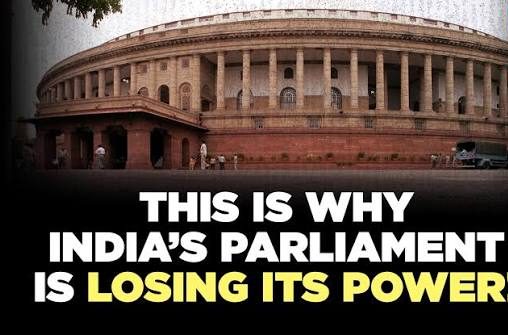
Yet the decline of parliamentary culture is also an opposition problem. Disruption, walkouts and slogans were once extraordinary instruments deployed when conventional parliamentary mechanisms appeared inadequate. Their transformation into routine political tactics has diminished their institutional value. An opposition that permanently prevents debate can ultimately weaken the very forum through which it should hold government accountable. Conversely, a government that treats every protest as illegitimate obstruction risks converting parliamentary majority into institutional dominance. Neither side can claim innocence. The tragedy is that both may win the daily political battle while losing the larger democratic argument. Parliament was created not to eliminate conflict but to civilise conflict—to transform competing interests into debate, debate into scrutiny and scrutiny into better decisions. When that chain breaks, citizens inherit laws shaped more by confrontation than deliberation.
The answer is neither nostalgia nor romanticisation of the past. Parliament must evolve with society, technology and political realities, but reform should deepen rather than hollow out its constitutional purpose. A predictable parliamentary calendar, meaningful minimum sitting days, stronger and more independent committees, systematic pre-legislative consultation, protected Question Hour and transparent standards governing suspension and discipline would strengthen institutional credibility. MPs require better research and legislative support, while citizens need greater access to parliamentary proceedings without reducing them to political entertainment. Most importantly, political parties must rediscover the seemingly unfashionable virtue of listening. Democracy is not the art of defeating an opponent every afternoon; it is the institutional mechanism through which disagreement can improve collective decisions. Parliament’s glory was never created by its architecture, microphones or constitutional language. It was created by the conviction that the problems of India were too important to be settled without argument.
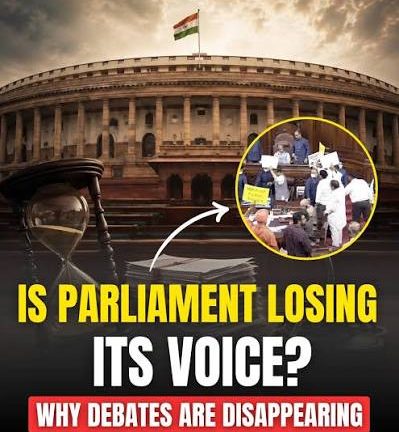
The Republic can survive a noisy Parliament. It can survive fierce opposition. It can survive governments with overwhelming majorities. What it cannot safely survive is a Parliament in which debate becomes decorative, scrutiny becomes optional, dissent becomes routinely punished, disruption becomes habitual and numerical strength becomes the ultimate argument. A legislature that merely counts votes can enact laws. A democratic Parliament must do something more difficult: it must test power through reason. The real measure of parliamentary decline, therefore, is not the volume of noise inside the chamber but the disappearance of intellectual engagement behind it. India does not need a quieter Parliament; it needs a more consequential one. The marble may remain magnificent, the constitutional authority may remain intact and the microphones may continue to function. But democracy begins to lose its soul when legislators stop trying to change each other’s minds. A Parliament that merely counts votes is a legislature. A Parliament that changes minds is a democracy.
VISIT ARJASRIKANTH.IN FOR MORE INSIGHTS

