
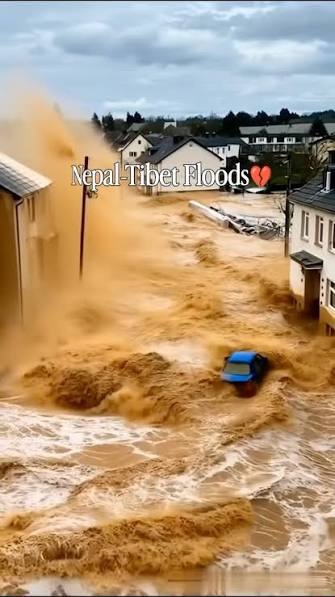
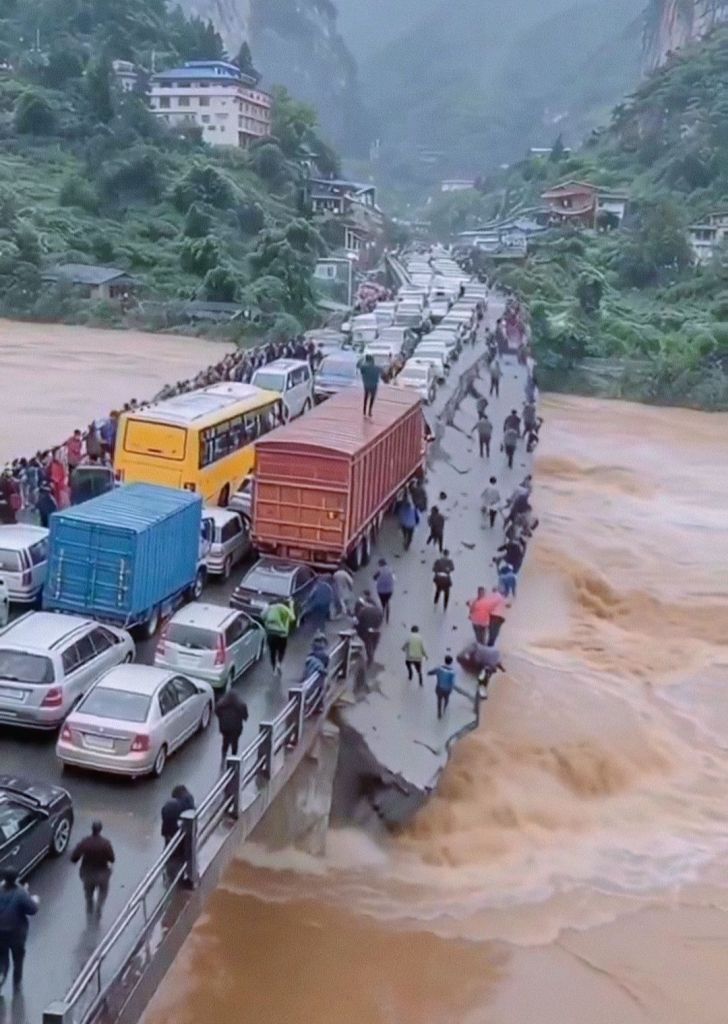
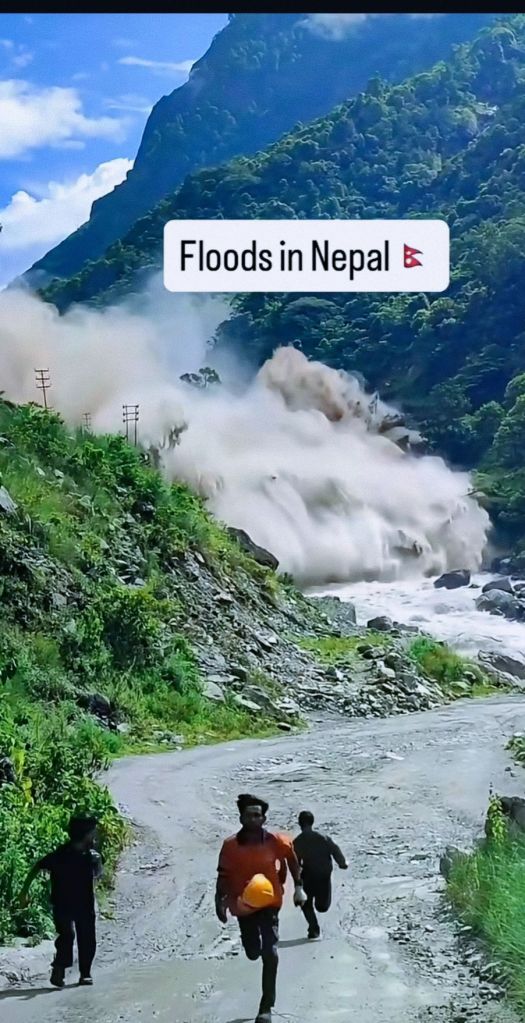
The devastating flash floods that struck Nepal’s Rasuwa region on 26 August are not merely another Himalayan natural disaster; they are a brutal reminder that nature does not negotiate with human ambition. An ice-rock avalanche, reportedly associated with seismic instability, unleashed an extraordinary combination of rock, ice, debris and meltwater into the Bhote Koshi river system. Bridges vanished, highways fractured, settlements were overwhelmed and hundreds of people were killed or reported missing. Yet the most disturbing dimension of the tragedy lies beyond the immediate death toll. The Himalayas appear to be entering an era in which geological instability, climatic disruption and reckless human intervention can converge within minutes, transforming apparently secure valleys into corridors of destruction. What happened in Rasuwa should therefore be understood not simply as a calamity to be rescued from, but as a warning to be intellectually confronted.
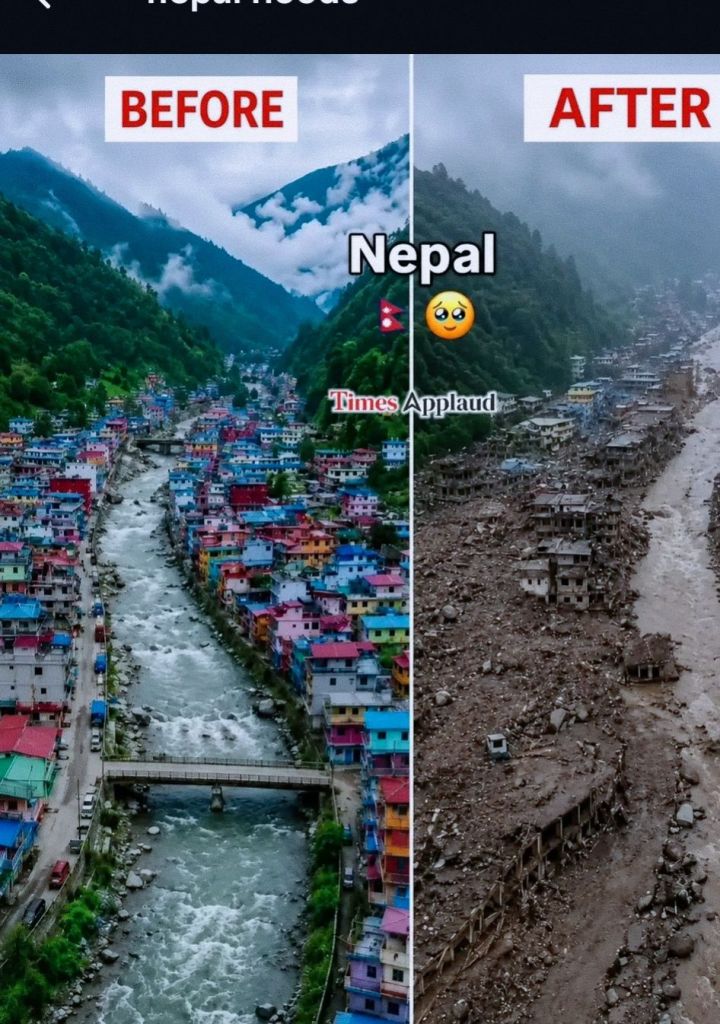
The Himalayas are not inert monuments of stone; they are among the planet’s most dynamic geological and climatic systems. Yet development has increasingly treated them as convenient platforms for highways, hydropower, tourism, pilgrimage, border trade and expanding settlements. Roads are carved into unstable slopes, forests are disturbed, rivers are constrained, construction enters vulnerable floodplains and fragile valleys are subjected to increasingly intensive commercial activity. Simultaneously, rising temperatures are altering glaciers, snowfields and permafrost, weakening the natural architecture of the high mountains. The resulting danger is not the simplistic story of “nature taking revenge”. Nature has neither anger nor intention. What we call revenge is often the physical consequence of accumulated ecological stress meeting geological reality. The mountains are not retaliating; they are responding.
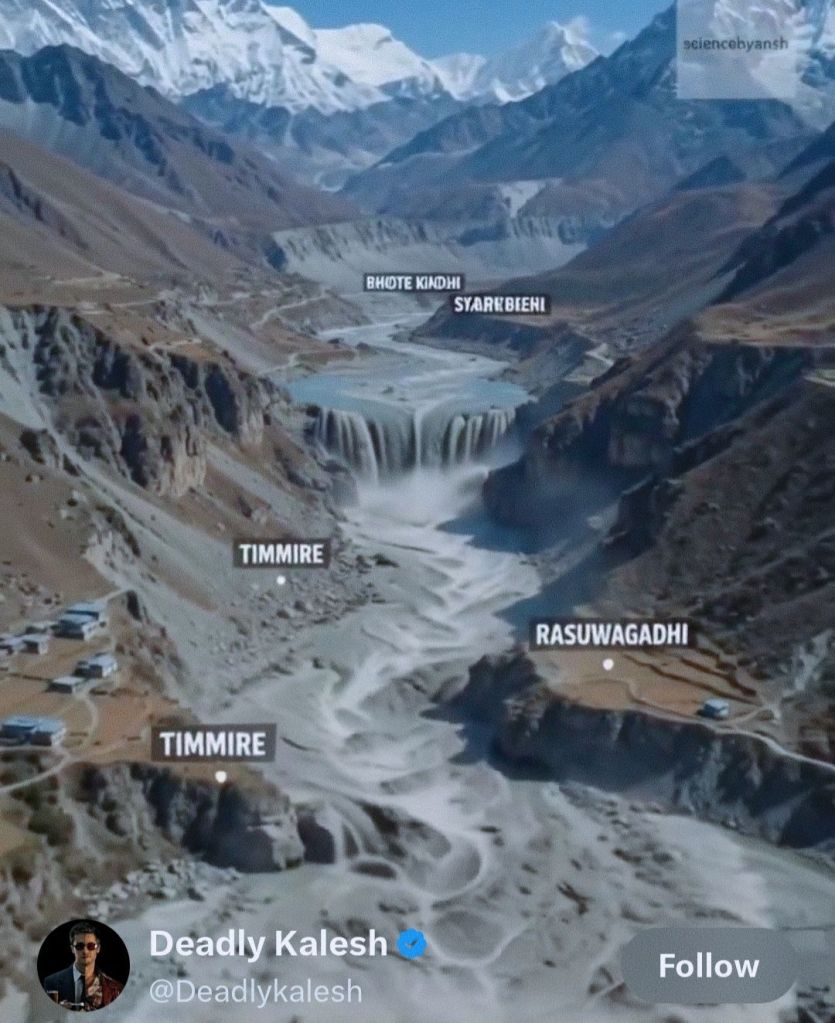
The Rasuwa catastrophe also exposes the frightening mathematics of cascading disasters. A seismic disturbance can destabilise a mountain face; an avalanche can hurl millions of tonnes of rock and ice into a river; debris can temporarily block a watercourse; accumulated water can create a natural dam; and its sudden failure can generate a destructive surge of water and sediment downstream. Add intense rainfall, accelerated snow and glacier melt, weakened slopes and expanding human settlements, and a local geological event can rapidly become a regional humanitarian emergency. This is the emerging Himalayan risk landscape: disasters are no longer necessarily isolated events. They can trigger other disasters sequentially, compressing what once unfolded over hours or days into a few terrifying minutes. Traditional disaster-management systems, designed around individual hazards, are increasingly being challenged by this new reality of interconnected catastrophe.
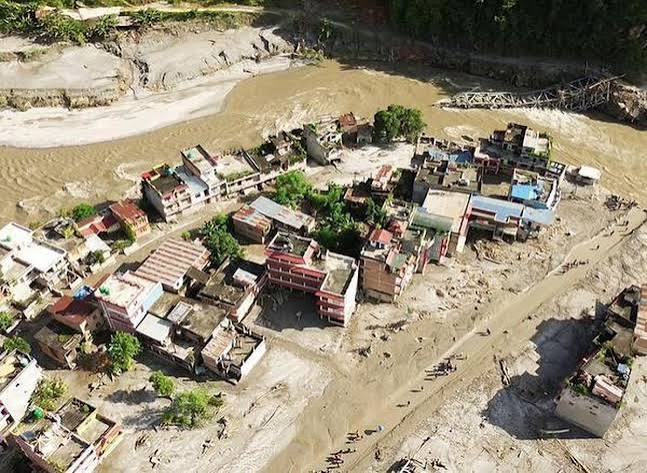
The human consequences are devastating. Reports indicate a substantial loss of life, while hundreds and potentially many more remain unaccounted for as search and rescue operations continue. Indian nationals constitute an important part of those affected, including pilgrims and travellers from several states. The presence of groups undertaking the Kailash Mansarovar pilgrimage has added extraordinary complexity to an already difficult rescue environment. Indian diplomatic and administrative agencies, including the Indian Embassy in Nepal and alongside Nepalese and Chinese authorities, have been engaged in tracing, identifying and assisting stranded Indians. This is where governance acquires its most humane meaning: not in files, procedures or institutional boundaries, but in the ability of governments to locate a missing citizen in an inaccessible mountain valley. The tragedy demonstrates that disaster response is ultimately a test of administrative coordination, technological capability and human compassion.
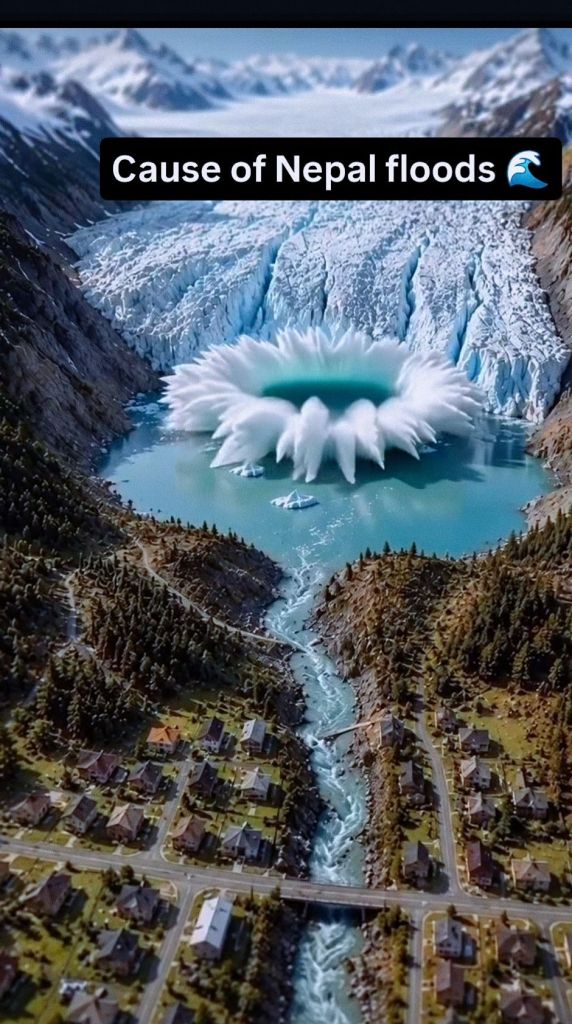
The destruction of strategic connectivity, including the Friendship Bridge at Rasuwagadhi and portions of the Pasang Lhamu Highway, carries an even larger lesson. Himalayan infrastructure cannot be designed merely for speed, convenience and economic efficiency; it must be designed for survival. A road that appears perfectly viable under ordinary conditions can become a lethal vulnerability when an entire mountainside moves. Bridges, tunnels, highways, border facilities and settlements therefore require geological, hydrological and climate-risk assessments based not on historical averages alone, but on future extremes. The definition of an “exceptional event” itself is changing. What engineers once classified as a once-in-a-century possibility may increasingly become a recurring risk. Resilience must therefore replace the old obsession with mere connectivity.
The Kailash Mansarovar pilgrimage illustrates the delicate balance between faith, mobility and environmental risk. Pilgrims can approach the region through multiple routes, including corridors via Kathmandu–Kerung, Simikot–Hilsa, Lipulekh, Nathu La and Tibet. Each possesses distinct political, climatic, altitude, logistical and geological vulnerabilities. The answer is not to abandon pilgrimage or mountain tourism; it is to create a new doctrine of risk-informed mobility. Every major Himalayan journey should incorporate compulsory registration, real-time location capability, satellite-supported monitoring, weather and geological intelligence, reliable emergency communication and predetermined evacuation protocols. Pilgrimage management cannot remain merely an exercise in permits and logistics. In an increasingly unstable mountain environment, it must become an exercise in life protection.
Perhaps the greatest institutional lesson is the widening gap between prediction and preparedness. Conventional flood-warning systems may detect rising river levels, but an avalanche-generated debris flood can transform a valley before conventional alerts have practical value. Remote communities cannot depend exclusively on systems designed for slower-moving hazards. Satellite imagery, seismic monitoring, glacier surveillance, automated ground sensors, drones and artificial-intelligence-assisted hazard modelling should be integrated into a regional early-warning architecture. Yet technology alone is insufficient. A warning that reaches a control room but not a villager, pilgrim, driver or border worker is merely information—not protection. Equally important is cooperation among Nepal, India and China. Mountains, rivers, glaciers and atmospheric systems recognise no political boundary. Data on rainfall, river discharge, glacier instability and seismic activity should therefore move faster than geopolitical suspicion.
The final lesson is profoundly moral. Humanity has developed a dangerous habit of treating nature as infrastructure waiting to be occupied. We build first, exploit second and assess consequences later, before describing the resulting catastrophe as an unavoidable “act of God”. That vocabulary conveniently absolves human responsibility. The Rasuwa tragedy demands a different intellectual framework. Natural hazards may have natural triggers, but human choices often determine their scale, exposure and consequences. The immediate priority must remain rescue, identification, medical assistance, communication and restoration of essential connectivity. But the larger response must include comprehensive Himalayan hazard mapping, resilient infrastructure, glacier surveillance, community evacuation systems, climate adaptation and cross-border disaster protocols. Nature does not hate humanity, nor does it seek revenge. But gravity, geology, water and climate obey laws indifferent to human arrogance. The mountains have not become weaker. They have merely reminded us that our confidence was misplaced. The question is no longer whether the Himalayas will strike again. They will. The real question is whether we will continue building as though they cannot.
VISIT ARJASRIKANTH.IN FOR MORE INSIGHTS

