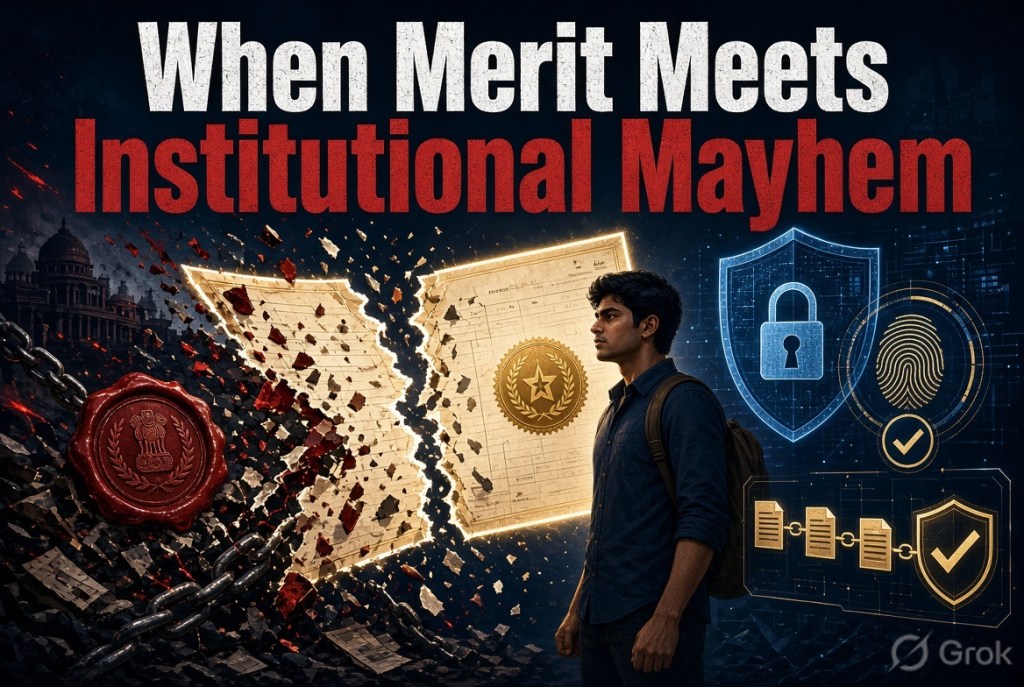
India’s public service examinations are meant to be among the purest instruments of constitutional governance—an impartial bridge between talent and public office. Yet recurring controversies surrounding State Public Service Commissions increasingly suggest that the bridge itself has developed structural cracks. The Jharkhand examination crisis of 2026 should therefore not be dismissed as another paper-leak or procedural controversy. It exposes deeper weaknesses in institutional design, administrative supervision, examination technology, outsourcing, accountability and crisis management. For millions of aspirants, a competitive examination is not merely a test; it is a life-changing opportunity. When its credibility collapses, the damage extends far beyond a cancelled paper. It undermines faith in meritocracy and creates the dangerous perception that entry into public service may depend upon institutional proximity, manipulation or administrative arbitrariness rather than competence and merit.

One uncomfortable structural question deserves serious national debate: have several State Public Service Commissions gradually become post-retirement destinations for senior bureaucrats rather than specialised institutions designed around examination expertise? Administrative experience undoubtedly has value, but retirement seniority cannot automatically be equated with expertise in modern examination management. Conducting examinations involving lakhs of candidates requires specialised knowledge of encrypted question-paper systems, biometric authentication, cyber-security, secure logistics, digital evaluation, data analytics, vendor management and forensic auditing. A distinguished career in general administration does not necessarily provide competence in these highly specialised domains. The issue is therefore not the integrity of individual retired officers, but institutional suitability. Public bodies entrusted with enormous constitutional responsibility must possess equally strong professional capability, measurable performance standards and clearly enforceable accountability.
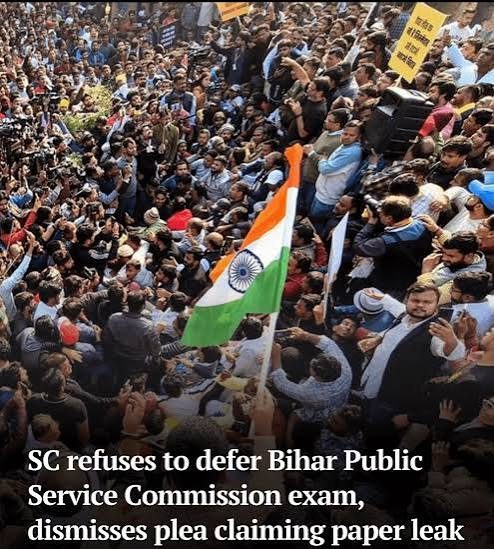
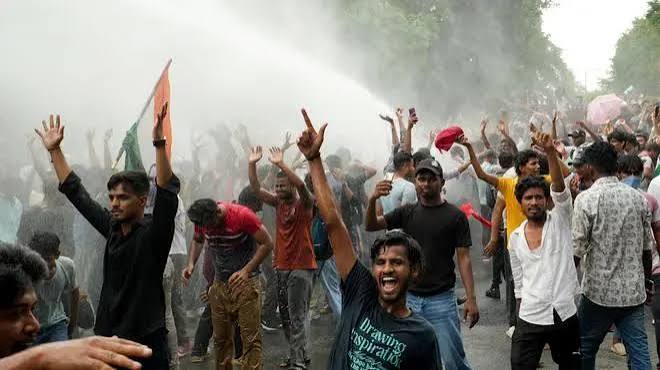
The Jharkhand episode illustrates the consequences of institutional vulnerability. Irregularities surrounding the JPSC Combined Civil Services Preliminary examination—including concerns relating to category-wise cut-offs, an unsigned merit list and an anomalous OMR sheet—became symbols of a much larger credibility crisis. What followed was public protest, hunger strikes, demands for independent investigation and scrutiny of earlier recruitment processes. The reported cancellation, suspension and review of numerous recruitment exercises transformed what might initially have appeared to be an examination-management problem into an institutional crisis. The lesson is profound: when basic procedural safeguards become questionable, every subsequent recruitment becomes vulnerable to suspicion. In public examinations, perception of fairness is almost as important as fairness itself. Once trust disappears, even a technically correct result struggles to regain legitimacy.
The growing reliance on private examination-processing agencies adds another layer of complexity. Outsourcing technology is understandable; outsourcing constitutional accountability is not. Question-paper security, candidate databases, OMR processing, digital evaluation and examination logistics may be performed by external agencies, but responsibility for the integrity of the process remains squarely with the public authority. The critical governance question is therefore: who watches the watcher? Every outsourced function should have independent certification, access controls, encrypted audit trails, segregation of duties, surprise inspections and post-examination forensic verification. A contractor may be operationally responsible, but the Commission remains institutionally accountable. Otherwise, responsibility becomes fragmented across departments, vendors and committees, creating the perfect environment in which everybody performs a function but nobody owns the failure.
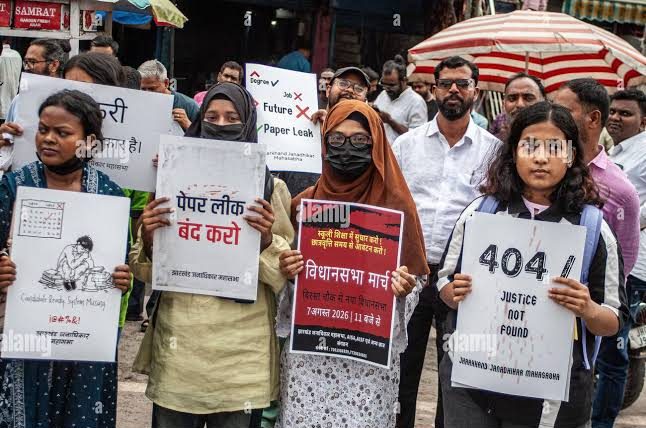
Weak guidelines can be as dangerous as deliberate manipulation. Missing signatures, unclear cut-off procedures, inadequate documentation, poorly defined responsibilities, insufficient audit trails and ambiguous evaluation protocols create what may be called “administrative loose ends.” These spaces allow negligence, manipulation or collusion to hide. Examination systems require zero ambiguity because every ambiguity becomes a potential dispute. India has witnessed controversies across different recruitment and entrance examinations involving leaks, evaluation, answer keys, technology, logistics and prolonged litigation. The answer cannot be another circular after every scandal. India needs a standardised examination governance framework covering question-paper creation, encryption, custody, transportation, centre management, candidate authentication, evaluation, result publication, grievance redressal and data retention. Every critical stage must have an identifiable officer, digital audit trail and independent verification.

The greatest casualty of examination failure is time. An aspirant may invest five or even seven years preparing for public service. One compromised examination can destroy an entire recruitment cycle; cancellation can consume another year; litigation can consume several more. For candidates approaching age limits, the loss is irreversible. The State cannot restore lost years merely by announcing a fresh examination. Innocent candidates are effectively punished twice—first by institutional failure and then by its correction. This is why examination authorities must recognise candidate rights as a governance responsibility. Recruitment calendars should be sacrosanct, examinations should be conducted within predictable timelines, vacancies should not remain indefinitely unfilled, and extraordinary delays should require publicly recorded reasons. A recruitment system that wastes the productive years of an entire generation cannot claim administrative efficiency.
Nor should the debate become confined to whether the CID or CBI should investigate after a crisis. Investigation is necessary when wrongdoing is suspected, but investigation begins after institutional controls have already failed. The more fundamental question is why the failure occurred despite layers of officers, committees and administrative supervision. Who certified the examination agency? Who verified question-paper security? Who monitored digital access? Who audited evaluation? Who examined abnormal result patterns? Who authorised the final result? A system can have hundreds of officials and still have no effective accountability if responsibility is diffused. India must move from personality-dependent administration to process-dependent integrity. Chairpersons and members should be evaluated not merely by reputation but by measurable institutional outcomes—timeliness, examination cancellations, litigation, vacancies filled, security breaches, complaints and adherence to published procedures.

The time has come for a National Examination Integrity Architecture. This need not abolish State Public Service Commissions or dilute their constitutional role. Instead, examination management could be professionally standardised through a national centre of excellence under appropriate Government of India oversight, providing common technological and security standards to states while allowing state-specific recruitment policies to remain intact. Such an architecture could establish uniform protocols for encrypted question papers, accredited vendors, biometric verification, secure printing, randomisation, digital evaluation, forensic audits, AI-assisted anomaly detection and transparent grievance mechanisms. UPSC’s institutional discipline—predictable calendars, structured procedures and procedural consistency—offers useful principles. State commissions should similarly become institutions of professional excellence, not post-retirement comfort zones. The real reform is simple but revolutionary: recruitment must move from patronage to procedure, personality to professionalism, secrecy to auditability and administrative discretion to institutional accountability. The young aspirant asks only one constitutional question: Was I given a fair chance? If the State cannot confidently answer “yes”, the crisis is no longer an examination crisis—it is a crisis of the credibility of the State itself.
VISIT ARJASRIKANTH.IN FOR MORE INSIGHTS

