
A democracy can survive political disagreement; it cannot survive the disappearance of deliberation. India’s Parliament was constitutionally conceived not merely as a voting chamber but as the nation’s principal forum for debate, scrutiny, representation and executive accountability. Yet the Monsoon Session of 2026 presents a deeply unsettling paradox: Parliament is spending dramatically less time deliberating while legislating with extraordinary speed. The Lok Sabha functioned for barely 15% of its scheduled time and the Rajya Sabha for around 33%, even as 11 Bills were passed in the Lok Sabha, nine reportedly without substantive discussion beyond the introducing minister’s remarks. The Registration of Births and Deaths (Amendment) Bill reportedly took just two minutes; the Supreme Court (Number of Judges) Amendment Bill four minutes. Parliament appears to be becoming remarkably efficient at doing something a democracy should fear: making consequential decisions faster than it can adequately examine them.
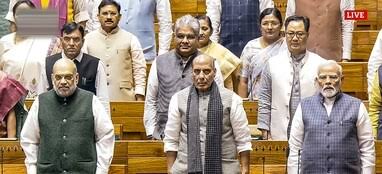
This is not merely a question of parliamentary productivity; it is a crisis of institutional purpose. The first Lok Sabha sat for an average of 135 days annually, while the second and third averaged around 116–117 days. By the 10th Lok Sabha, the figure had declined to 93 days, and the 14th and 15th to approximately 66–71. The 16th averaged about 66 days. The 17th Lok Sabha averaged only 55 sitting days annually—the lowest for a full-term Lok Sabha—and met for just 274 days between 2019 and 2024. By comparison, the UK Parliament typically sits for more than 150 days a year. India’s National Commission to Review the Working of the Constitution recommended a minimum of 120 sitting days for the Lok Sabha and 100 for the Rajya Sabha. That recommendation now resembles an institutional relic: acknowledged, admired and ignored. The declining calendar is not administrative housekeeping; it represents the shrinking physical space available for democratic reasoning.
The most dangerous misconception is that fewer sitting days combined with more legislation constitute efficiency. In reality, they may represent legislative compression. A Bill is not a parcel whose administrative merit increases because it reaches the destination quickly. It is a constitutional proposition capable of altering rights, obligations, institutions, markets and the relationship between citizen and state. Such propositions require questions, evidence, scrutiny, dissent and revision. When nine of eleven Bills can pass without meaningful floor debate, Parliament risks changing character—from a deliberative legislature into a legislative conveyor belt. Speed can be valuable in government, but parliamentary speed without scrutiny is not efficiency; it is a transfer of decision-making from the legislature to the executive. The democratic cost may not be visible when a Bill is passed, but it emerges later through litigation, implementation failures, contradictory rules and unintended consequences.
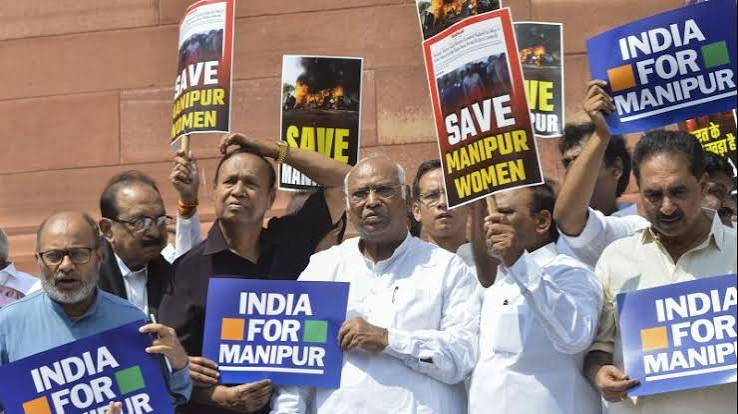
Disruption is undeniably part of the problem, but blaming only the Opposition is intellectually convenient and institutionally inadequate. Indian parliamentary history contains repeated episodes of confrontation—from the 2G controversy to the Andhra Pradesh bifurcation debate, demonetisation and numerous subsequent political conflicts. Yet disruption often flourishes where legitimate procedural avenues for dissent appear inadequate. Governments too have a responsibility to create parliamentary space for disagreement rather than treating every interruption as an assault on governance. Mature democracies do not eliminate conflict; they institutionalise it. The Opposition must distinguish principled obstruction from persistent paralysis, but the government must also recognise that dissent is not an operational inconvenience—it is part of Parliament’s constitutional function. If grievances cannot be expressed through recognised procedures, the well of the House becomes the political language of last resort.
The deterioration of the parliamentary committee system is therefore particularly alarming. Committees are Parliament’s institutional laboratory: they allow legislation to move beyond televised confrontation into evidence-based examination, stakeholder consultation and technical scrutiny. Yet only around 16% of Bills in the 17th Lok Sabha were referred to committees, compared with more than 70% roughly a decade earlier. This decline weakens Parliament’s capacity to detect unintended consequences before laws are enacted. Committees also provide MPs with space to question provisions without the immediate pressures of party rhetoric, media attention and the whip. A government with a strong majority may understandably find extensive scrutiny inconvenient. But that is precisely why committees matter. Democratic institutions are not designed merely for convenient majorities; they are designed to prevent majorities from confusing numerical strength with infallibility.
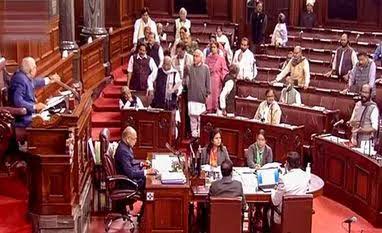
Question Hour provides an even more disturbing measure of parliamentary decline. During the 2026 Monsoon Session, Lok Sabha Question Hour reportedly functioned for only about 1% of its scheduled time. Of 380 questions listed for oral answers, only two were reportedly answered on the floor, with approximately nine minutes of Question Hour taking place. That transforms one of Parliament’s most direct accountability mechanisms into an administrative ritual. Ministers are constitutionally and politically answerable to Parliament; MPs are answerable to citizens. When questions do not reach the floor, the chain of accountability breaks at both ends. The problem is not simply that MPs lose speaking time. Citizens lose an institutional mechanism through which their concerns can compel ministerial answers, generate public records and expose administrative failures. A democracy cannot claim robust executive accountability when its principal questioning mechanism is routinely disrupted or compressed.
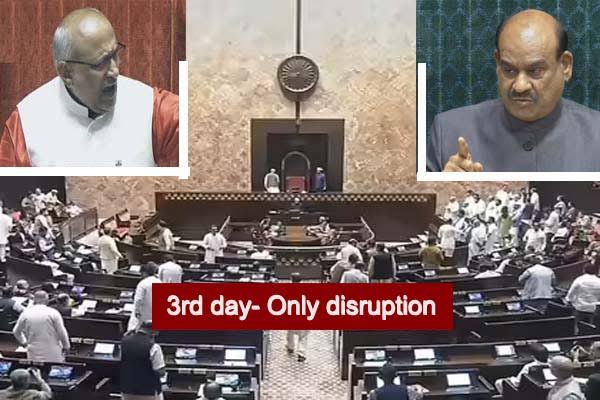
The institutional imbalance is compounded by the prolonged vacancy of the Deputy Speaker since 2019. The office is not ceremonial decoration; it embodies the principle that the House belongs to Parliament as an institution, not exclusively to the government of the day. Executive dominance also becomes more visible when Bills appear unexpectedly on the agenda, leaving MPs inadequate time to consult experts, stakeholders and constituents. The Anti-Defection Law adds another constraint: party discipline has narrowed the space for individual parliamentary judgment, often converting MPs from independent legislators into disciplined voting units. At the federal level, the consequences are even more significant. The Rajya Sabha exists partly to give states a meaningful voice in national legislation. Excessive reliance on Money Bill certification can diminish that role, while voice votes on contentious matters can obscure individual voting accountability. The cumulative effect is subtle but profound: fewer debates, weaker committees, reduced scrutiny and less visible individual responsibility gradually hollow out representative government.
The answer is not another committee report destined for a shelf. India needs institutional rules that make deliberation structurally unavoidable. Parliament should establish a statutory or constitutionally backed minimum of 100–120 sitting days for the Lok Sabha and 90–100 for the Rajya Sabha, with a predictable annual calendar. The proposal that Parliament work for at least five days every month deserves serious consideration. Bills should ordinarily undergo committee scrutiny, while major legislation should receive minimum guaranteed debate time. Question Hour should be protected from routine adjournments, with unanswered questions requiring time-bound written responses. India should introduce formal Opposition Days, providing the Opposition guaranteed procedural space for debate rather than forcing every grievance towards disruption. Private Members’ Business and adjournment debates should receive meaningful time. A parliamentary code of conduct should impose escalating consequences for persistent disruption, while the Speaker’s institutional autonomy must be strengthened. Finally, a Parliamentary Performance Index should publicly measure sitting days, productive hours, time lost to disruption, Bills debated, committee referrals, Question Hour performance and voting records. What gets measured becomes visible; what becomes visible becomes politically accountable.
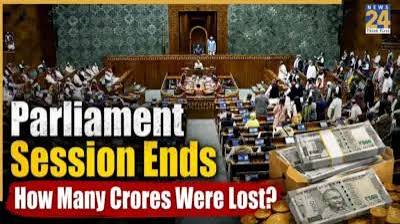
The ultimate danger is not that Parliament becomes inefficient. It is that Parliament becomes efficient at avoiding its real job. The 17th Lok Sabha sat for fewer days than any full-term Lok Sabha since independence while legislation continued to move rapidly. That is not automatically evidence of institutional success; it may indicate that legislative power is becoming increasingly detached from legislative deliberation. A Parliament that cannot sit cannot scrutinise. A Parliament that cannot question cannot hold the executive accountable. A Parliament that cannot debate cannot adequately represent India’s extraordinary diversity. And a Parliament that passes consequential legislation in two or four minutes risks teaching citizens that democracy itself is a shortcut. The demand for five working days every month is therefore hardly extravagant. It is a modest institutional minimum for the world’s largest democracy. India does not need a louder Parliament; it needs a Parliament that listens, questions, examines, records, debates and then decides. The real measure of a legislature is not how many laws it can pass—it is how intelligently it can think before passing them.
VISIT ARJASRIKANTH.IN FOR MORE INSIGHTS

