
Kashmir may be approaching a defining tourism inflection point. The August 19, 2026 visit of US Ambassador Sergio Gor to Srinagar, accompanied by his indication that Washington could review its Level 4 “Do Not Travel” advisory, represents more than a diplomatic gesture. It potentially signals a shift in the international risk perception surrounding Jammu and Kashmir—from a destination predominantly viewed through the prism of security to one increasingly evaluated for its tourism, connectivity and economic potential. His acknowledgement of Jammu and Kashmir as an important part of India, alongside recognition of improvements in the security environment, carries considerable economic significance. Travel advisories influence insurance premiums, tour-operator decisions, airline planning, corporate travel policies and individual perceptions. If international confidence begins returning, Kashmir could move from being predominantly a domestic tourism giant to becoming a globally competitive destination.

The opportunity is extraordinary, but so is the asymmetry. Jammu and Kashmir has demonstrated enormous domestic tourism demand, recording more than 2.3 crore tourist visits in 2024. Yet international tourism remains disproportionately small, with only around 36,000 foreign tourists reported in 2025–26. This gap is not merely a statistic; it represents an enormous unrealised economic market. International visitors generally generate higher foreign-exchange earnings and can support longer-stay, experience-oriented tourism. The strategic objective should therefore not simply be to increase arrivals, but to diversify the visitor base. North America, Europe, Southeast Asia and the Gulf offer distinct segments—from adventure travellers and winter-sports enthusiasts to heritage tourists, luxury travellers, wellness seekers and cultural explorers. Kashmir already possesses the product. What it needs is sustained international confidence and a globally credible delivery ecosystem.
Tourism’s economic importance makes this transformation far larger than the hotel industry. The sector contributes an estimated 7% to Jammu and Kashmir’s economy and supports the livelihoods of nearly five lakh people directly and indirectly. Its multiplier reaches taxi drivers, guides, restaurants, artisans, farmers, transport operators, retailers, houseboat owners, handicraft producers and thousands of small enterprises. Kashmir’s carpets, shawls, papier-mâché, saffron, dry fruits and traditional crafts gain visibility and market access through tourism. Consequently, every additional visitor can generate a chain of economic transactions extending deep into local communities. The challenge is to maximise that multiplier rather than allow tourism revenue to concentrate in a few metropolitan or premium hospitality segments. A globally connected tourism economy should become an engine of distributed regional prosperity.
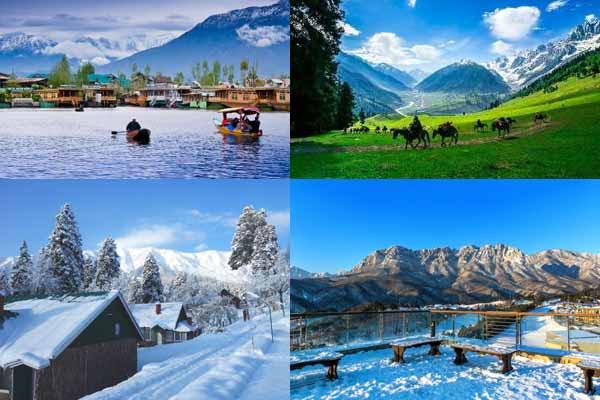
But Kashmir’s tourism equation has one variable that cannot be negotiated: security. The April 22, 2025 Pahalgam terrorist attack, which killed 26 people, predominantly tourists, demonstrated the extraordinary vulnerability of destination confidence. A single high-profile incident can destroy years of branding, investment and visitor trust. The strategic objective therefore cannot be simply to persuade foreign governments that Kashmir is safe today. It must be to create an institutional security architecture resilient enough to prevent, detect and rapidly contain threats tomorrow. Security should become an invisible layer of tourism infrastructure—present everywhere, but experienced by visitors primarily through confidence rather than confrontation. The test of governance is whether a tourist can enjoy a valley, trek or market without constantly thinking about the security system protecting them.
That requires moving from reactive security to predictive, integrated security governance. Parliamentary scrutiny has highlighted vulnerabilities involving integrated surveillance, periodic security audits, inter-agency coordination and unified command-and-control mechanisms. These weaknesses acquire special significance in mountainous terrain, where geography can magnify response times. Counter-drone systems, high-altitude surveillance, secure communications, real-time intelligence sharing, geospatial monitoring and rehearsed evacuation protocols should therefore be integrated into tourism planning. Emergency preparedness must extend beyond Srinagar to major tourist circuits, trekking routes, ski destinations and remote rural attractions. Medical evacuation capacity, trauma care, emergency communications and rapid-response mechanisms should be designed around the geography of tourism rather than the geography of administrative boundaries.
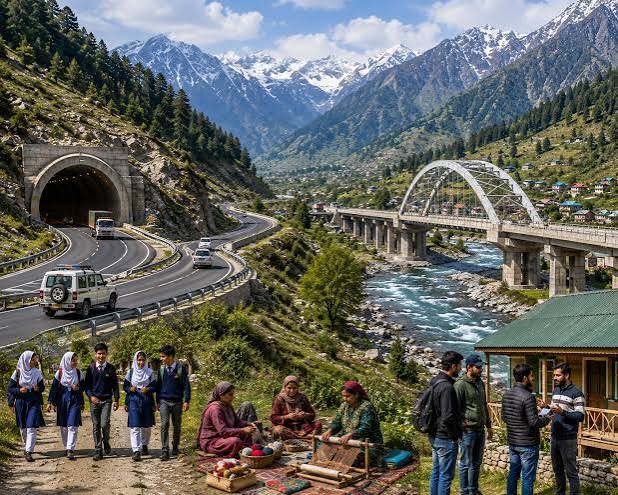
Connectivity is another transformational variable. The USBRL railway connection, Vande Bharat services and the Z-Morh Tunnel have significantly strengthened Kashmir’s integration with the national transport network. Expansion of Srinagar Airport, alongside hundreds of tourism-related projects, river tourism, ropeways and emerging circuits, is widening the region’s tourism capacity. But infrastructure creates a paradox: successful connectivity can generate demand faster than destinations can absorb it. Roads, airports, accommodation, waste management, telecommunications, medical facilities, parking, ATMs and emergency services must therefore scale ahead of demand. Otherwise, the very tourism boom created by improved connectivity could produce congestion, ecological stress and declining visitor experience. Infrastructure planning must consequently shift from project completion to capacity management.
Kashmir should also reject the temptation to measure tourism success purely through visitor numbers. Three crore visitors generating congestion, waste and environmental degradation may produce less sustainable value than a smaller number of visitors staying longer and spending more. The future should therefore belong to high-value, diversified and geographically distributed tourism. Adventure tourism, skiing, eco-tourism, rural homestays, wellness, heritage, film tourism, handicraft trails, religious tourism and river-based experiences can extend the tourism season and disperse economic activity beyond Srinagar, Gulmarg and Pahalgam. International standards will increasingly matter: multilingual emergency information, trained tourist police, internationally credible medical evacuation, digital travel platforms, transparent weather and road updates, reliable telecommunications and professionally certified adventure operators should become components of the Kashmir tourism brand.
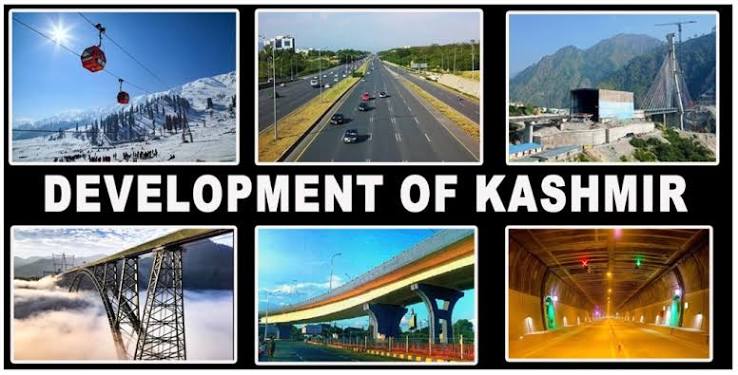
The deeper opportunity is to transform tourism from an industry into a community-owned development strategy. Local youth can become trained guides, hospitality professionals and adventure specialists. Women’s Self-Help Groups can participate in homestays, local cuisine and handicraft enterprises. Farmers can integrate agricultural experiences and supply chains into tourism. Village tourism can create direct economic incentives for preserving landscapes, water bodies and cultural traditions. Kashmir can learn selectively from mountain destinations such as Switzerland, Austria, New Zealand and Bhutan—not by copying their models, but by adapting their principles of safety, rescue preparedness, environmental stewardship, high-value tourism and visitor management. The strategic principle should be sequencing: strengthen security, emergency medicine, connectivity, hospitality and ecological safeguards first; accelerate global marketing thereafter. The US advisory review is therefore not simply about whether Americans can visit Kashmir. It is a test of whether Kashmir can build an ecosystem worthy of global confidence. India already possesses the destination. The next challenge is to build the trust. If security, sustainability and service converge, Kashmir can move beyond being merely “Paradise on Earth” to becoming one of Asia’s most sophisticated, resilient and valuable tourism economies.
VISIT ARJASRIKANTH.IN FOR MORE INSIGHTS

