
India expects its police force to be everywhere, every day, in every weather, at every hour—and often with an assumption that endurance is simply part of the uniform. Yet the institution entrusted with protecting citizens frequently operates under conditions that expose its own personnel to exhaustion, pollution, inadequate infrastructure, psychological stress, technological pressures and competing institutional demands. This creates a profound paradox: the state expects resilience from the police while sometimes underinvesting in the conditions that produce resilience. A vulnerable police force inevitably produces a vulnerable public-order system. Police reform, therefore, cannot be reduced to recruitment numbers, vehicles, weapons or surveillance systems. It must begin with a more fundamental question: what kind of working life does India provide to those responsible for maintaining the rule of law?

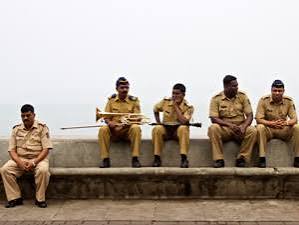
The vulnerability is most visible in the daily physical environment of policing. Traffic personnel in major cities spend prolonged hours amid vehicle emissions, dust, heat and noise. In Delhi and other polluted urban centres, this is not merely an environmental inconvenience; it is an occupational-health concern. A constable directing traffic for hours is simultaneously performing a public service and absorbing an invisible workplace hazard. Similar concerns arise inside police stations and barracks, where inadequate sanitation, drinking water, rest areas, ventilation and accommodation can undermine basic dignity. These are not peripheral welfare issues. Sleep deprivation, chronic fatigue, poor nutrition, financial pressures and prolonged separation from families accumulate over time, affecting judgement, temperament and operational effectiveness. The exhausted policeman does not leave his fatigue at the station gate; he carries it into every encounter with the public.
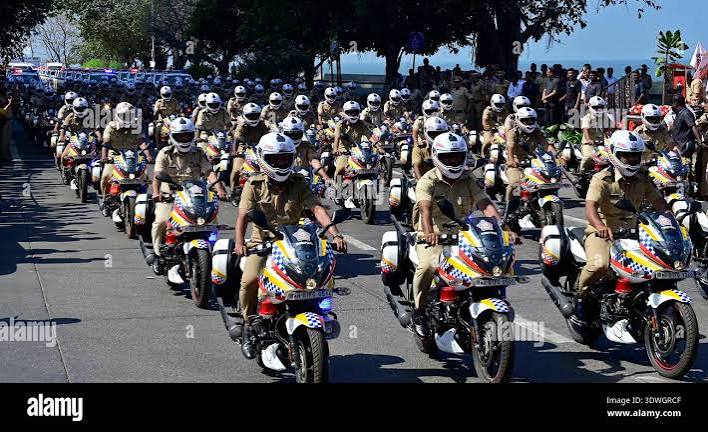
That accumulated fatigue becomes particularly consequential during demonstrations, communal tensions, festivals, elections, disasters and other high-pressure public-order situations. Crowd management is ultimately an exercise in calibrated judgement. It requires communication, patience, negotiation and a graduated response to escalating threats. When personnel are physically exhausted and psychologically overstretched, however, the distance between managing a crowd and confronting a crowd can become dangerously narrow. The principle of gradation of force must therefore become more than a textbook phrase. Dialogue, mediation, barriers, warnings, trained negotiators and non-lethal technologies should precede physical intervention wherever circumstances permit. A professional police force should be capable of distinguishing between dissent and disorder, inconvenience and violence, criticism and criminality. The legitimacy of policing depends not merely on restoring order, but on restoring order in a manner consistent with constitutional rights.
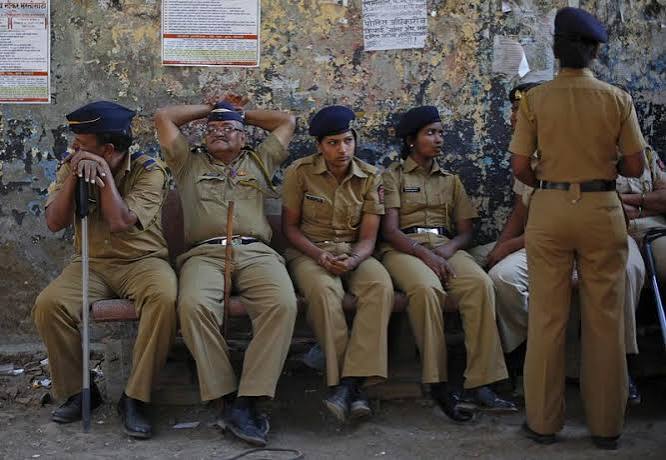
An equally important vulnerability is institutional rather than physical: professional autonomy. The policeman on the street is expected to enforce the law impartially, while the broader policing system can sometimes encounter political, bureaucratic or influential pressures. This creates an uncomfortable divide between the law as written and the law as experienced. When personnel believe that influence, status or connections can alter outcomes, morale suffers and public confidence deteriorates. The answer is not to isolate the police from democratic accountability. Police must remain accountable to elected governments, legislatures, courts and citizens. But accountability should not become arbitrary interference. A modern police institution requires transparent procedures, documented decision-making, professional leadership, fixed responsibilities and protection for lawful action. Political control of policing and political manipulation of policing are not the same thing. One is constitutional governance; the other corrodes institutional credibility.
India’s police-modernisation conversation should consequently become more human before it becomes more technological. Every police station should provide basic dignity: clean sanitation, drinking water, adequate ventilation, functional rest spaces and safe working conditions. Personnel routinely deployed in heavily polluted environments should receive appropriate protective equipment, periodic medical screening and rational rotation. Duty schedules should recognise that rest is not a privilege but an operational requirement. Housing and family-support systems deserve greater attention, particularly for constabulary-level personnel who bear the greatest burden of long working hours. The police officer should not be treated as an infinitely available state resource. A fatigued policeman is not simply an unhappy employee; he is an operational vulnerability. Investment in police welfare is therefore investment in public safety itself.
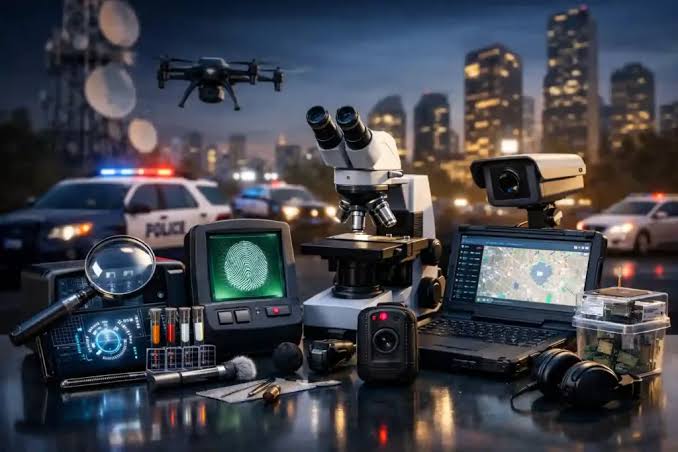
The second transformation must be technological—but with a crucial objective: not more technology around the policeman, but less unnecessary work for the policeman. Dubai’s experience with smart police stations, digital services, automated recognition systems, artificial intelligence and other technologies demonstrates how routine interactions can increasingly be shifted from physical counters to digital platforms. India need not replicate another jurisdiction’s model, but it can absorb the underlying principle. Police personnel should spend less time processing routine paperwork and repetitive administrative tasks and more time investigating crime, engaging communities, negotiating conflicts and responding to situations requiring human judgement. E-FIR systems, integrated criminal databases, drones, cybercrime platforms, automated analytics, digital evidence management and AI-assisted investigation can significantly enhance this transition.
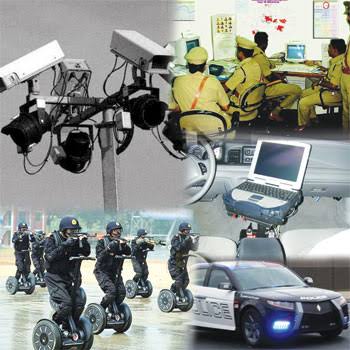
The ideal future may paradoxically involve fewer routine police interactions because technology has made policing smarter, faster and more accessible. But technological policing creates its own constitutional responsibility. Facial recognition, predictive analytics, automated surveillance, biometric databases and AI-assisted decision-making can increase institutional capability while simultaneously creating risks involving privacy, discrimination, data security and due process. A technologically powerful police force must therefore be matched by equally powerful safeguards. Every new capability should have clear legal authority, defined purposes, audit mechanisms, access controls, retention limits and avenues for redress. Technology should strengthen the credibility of policing, not create a black box around it. India’s digital transformation offers an extraordinary opportunity to build evidence-driven policing, but the objective must remain unmistakably democratic: technology should make the state more accountable, not merely more capable of watching its citizens.

Ultimately, India’s police reform challenge is not about creating a larger police force or a more muscular police force. It is about creating a healthier, better-equipped, better-trained, technologically empowered and professionally confident police institution. The policeman has lungs that inhale polluted air, a body that becomes exhausted, a mind that accumulates stress and a family that needs time and attention. If India wants citizens to respect the law, it must build an institution in which those who enforce the law are themselves treated with dignity. The police are trained to shield society from vulnerability. It is time for the state to build a shield around them. India cannot build 21st-century policing on 20th-century working conditions. The real measure of police modernisation will not be how intimidating the uniform looks, but how confidently, humanely and professionally the person wearing it can serve the republic.
VISIT ARJASRIKANTH.IN FOR MORE INSIGHTS


One response to ““THE POLICE ARE THE SHIELD—WHO IS SHIELDING THE SHIELD?””
A well penned down article. Couldn’t agree more.
LikeLike