
The history of the Indian rupee is, in many respects, a compressed history of India itself. It has travelled from colonial dependence to political sovereignty, from princely monetary fragmentation to national integration, from administered exchange rates to market-driven volatility, and from physical currency to digital sovereign money. Yet the rupee has never been merely a medium of exchange. It has been an instrument of state power, a reflection of economic capacity, a casualty of geopolitical shocks and, above all, a barometer of confidence in India’s institutions and productive strength. Its journey from roughly ₹3.3 to the US dollar at Independence to around ₹100 in 2026 should therefore not be read simplistically as a story of “decline”. It is the numerical record of a country that moved from a protected, inward-looking economy into one deeply integrated with global trade, capital and energy markets.

The modern rupee emerged from an uncomfortable paradox: India possessed a currency before it possessed monetary sovereignty. Colonial currency infrastructure reflected imperial dependence, with notes initially printed outside India. The establishment of the Currency Note Press at Nashik in 1928 represented an important step towards domestic monetary capability, while the creation of the Reserve Bank of India in 1935 established a more institutionalised monetary architecture. Independence transformed these institutions into instruments of national sovereignty. Partition demonstrated with extraordinary force that money could itself become geopolitical ammunition. The RBI initially functioned within the monetary arrangements affecting both India and Pakistan, while the dispute over the division of cash balances became entangled with the Kashmir conflict. Gandhi’s intervention over the release of Pakistan’s share revealed something profound: financial obligations between nations can become questions of ethics, trust, war and peace.
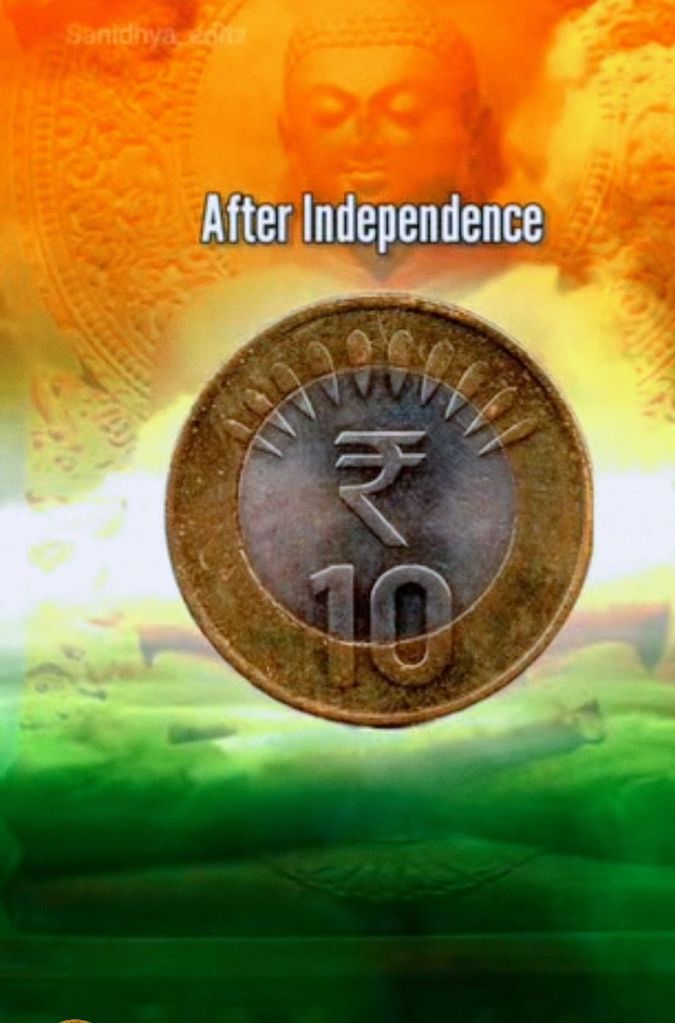
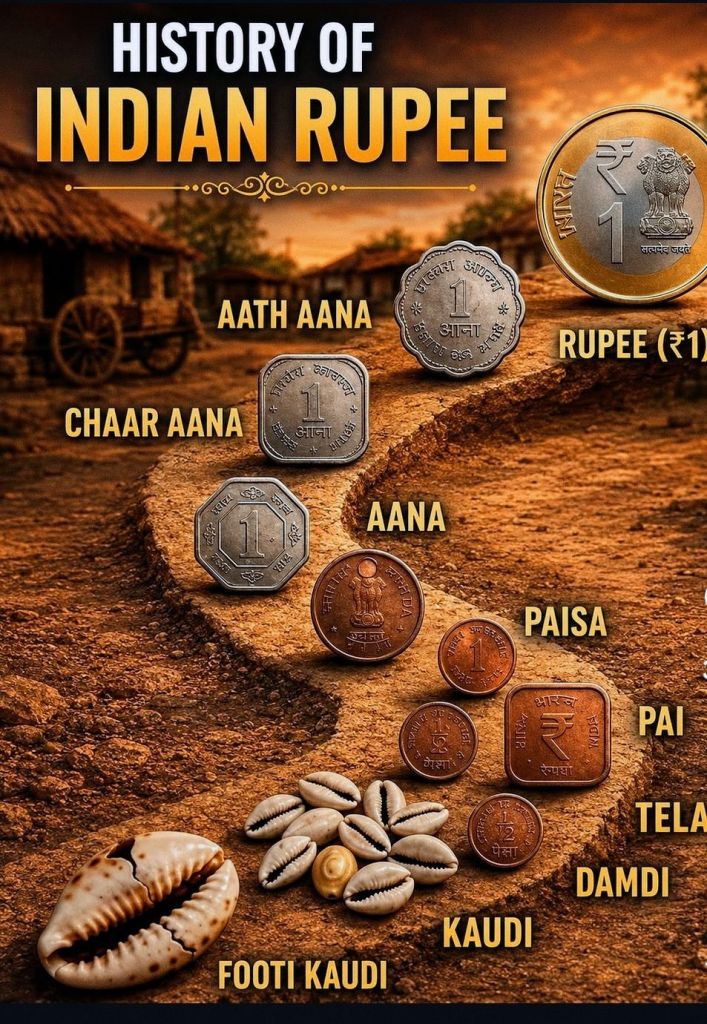
The 1949 devaluation further demonstrated that exchange rates are never merely technical decisions. India followed Britain in devaluing the rupee, whereas Pakistan initially chose a different course. The resulting disruption to bilateral trade showed how monetary policy can become an expression of national strategy. Independent India subsequently used currency as an instrument of political integration. Colonial imagery gradually gave way to symbols of the Republic, while princely monetary traditions disappeared into a common national currency architecture. Decimalisation in 1957, replacing the sixteen-anna system with 100 paise to the rupee, represented modernisation but also demonstrated that monetary reform has social consequences. Whenever the State changes the unit, denomination or physical form of money, millions of citizens must adapt—and the transition can create both efficiency and opportunities for confusion or unfair pricing.
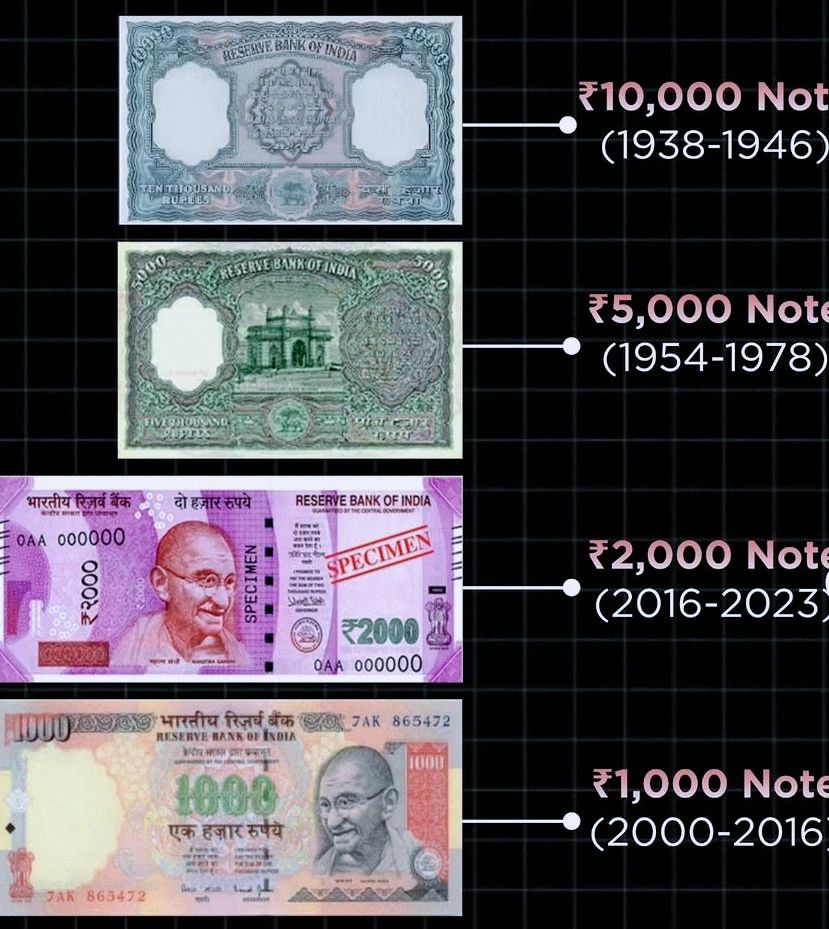
The rupee’s physical evolution became equally significant. Gandhi first appeared on a commemorative ₹100 note in 1969 and subsequently became the defining face of Indian currency. Security threads, watermarks, intaglio printing, latent images and increasingly sophisticated anti-counterfeiting technologies followed. Currency became an extraordinary technological contest between the State and counterfeiters: every improvement in security generated another attempt at replication. Yet the story was also one of inclusion. Tactile features and differentiated note characteristics demonstrated that monetary design could serve citizens with visual disabilities. In this sense, a banknote is more than printed paper. It is a technological interface between the State and citizen—carrying symbols of sovereignty, security features, accessibility mechanisms and public confidence in every transaction.
The deeper transformation, however, was economic. The controlled exchange-rate regime initially insulated the rupee from many international market forces. But wars, fiscal pressures, foreign-exchange constraints and import dependence eventually exposed the limitations of the system. The 1966 devaluation moved the rupee sharply lower against the dollar, while the following decades of the Licence Raj, persistent fiscal pressures and restricted external integration created structural vulnerabilities. Then came 1991—the decisive rupture. Foreign-exchange reserves had fallen to critically low levels, forcing India to devalue the rupee and undertake sweeping economic reforms. Liberalisation changed the character of Indian money permanently. The rupee increasingly became sensitive to global capital flows, commodity prices, interest-rate cycles and investor sentiment. It was no longer protected primarily by administrative controls; it increasingly had to compete within the global monetary ecosystem.
The post-2000 rupee therefore belongs to a fundamentally different economic universe. Oil prices, US monetary policy, portfolio flows, geopolitical instability and global risk appetite can now transmit almost immediately into Indian currency markets. The 2013 taper tantrum pushed the rupee beyond ₹60 per dollar, while subsequent years reflected the cumulative influence of inflation differentials, India’s energy-import dependence, trade pressures and global financial conditions. By 2026, geopolitical turbulence and elevated energy pressures pushed the currency towards the ₹100 range. But the correct analytical question is not simply, “Why is the rupee falling?” It is, “What does the exchange rate reveal about India’s structural position in the world economy?” A country importing a large majority of its crude oil naturally generates substantial dollar demand. Currency depreciation can therefore reflect both vulnerability and integration.
The RBI consequently confronts a delicate balancing act. Aggressively defending a particular exchange-rate level can consume reserves and distort market adjustment; excessive tolerance of disorderly depreciation can amplify imported inflation and destabilise expectations. The objective of sophisticated monetary management is therefore not to defend a symbolic number but to prevent disruptive volatility while allowing the exchange rate to reflect underlying economic conditions. The durable solution lies beyond intervention: stronger exports, deeper domestic capital markets, stable foreign investment, greater energy security, improved productivity and wider international use of the rupee. Expanding rupee-denominated trade settlement, developing GIFT City, strengthening bilateral currency arrangements and leveraging India’s digital public infrastructure could gradually reduce structural dependence on the dollar. The energy transition is equally strategic: every barrel of imported crude represents not merely an energy purchase but a continuing demand for foreign currency.
The next frontier is digital sovereignty. For centuries, monetary sovereignty meant controlling mints, coins, banknotes and printing presses. Increasingly, it means controlling the digital infrastructure through which sovereign money is created, distributed and settled. The e-rupee could eventually become more than another payment mechanism; it could form part of a broader architecture for programmable, traceable and potentially cross-border sovereign money. Combined with UPI, digital identity infrastructure and India’s expanding financial technology ecosystem, this could give India an unusual opportunity to influence the future architecture of payments and monetary circulation. But technological sophistication alone cannot create monetary strength. Digital money still ultimately derives credibility from the institution behind it, the economy supporting it and the public willing to trust it.
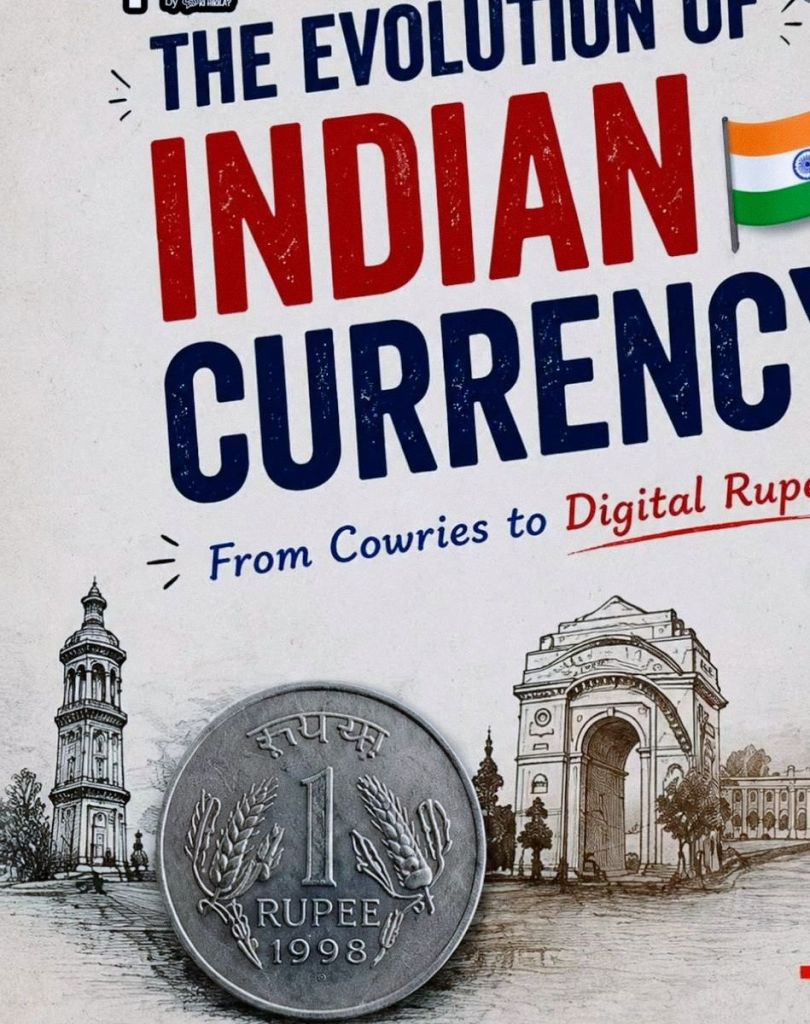
The rupee’s extraordinary journey—from colonial printing presses to digital currency, from approximately ₹3.3 to nearly ₹96 against the dollar—therefore tells a story far more complicated than appreciation or depreciation. A strong currency is not necessarily one with the highest exchange value; it is one supported by productive capacity, macroeconomic stability, credible institutions, resilient external finances and international confidence. India’s ultimate monetary ambition should not be to defend a particular rupee-dollar number. It should be to build an economy in which the world increasingly wants to hold, trade, invest and settle in rupees. The rupee’s next revolution will therefore not be won in the foreign-exchange market alone. It will be won in factories, laboratories, energy systems, export markets, financial centres and digital networks. From ₹3 to ₹100 was India’s journey into the world economy. The journey from ₹100 to genuine monetary influence will determine how much of that world India can shape.
VISIT ARJASRIKANTH.IN FOR MORE INSIGHTS


One response to ““FROM ₹3 TO ₹100: THE RUPEE’S 250-YEAR JOURNEY FROM EMPIRE TO DIGITAL SOVEREIGNTY””
The concept of trying to lower our imports and be athmanirbaan and export more goods in volumes will definitely gain back the strength of our rupee
LikeLike