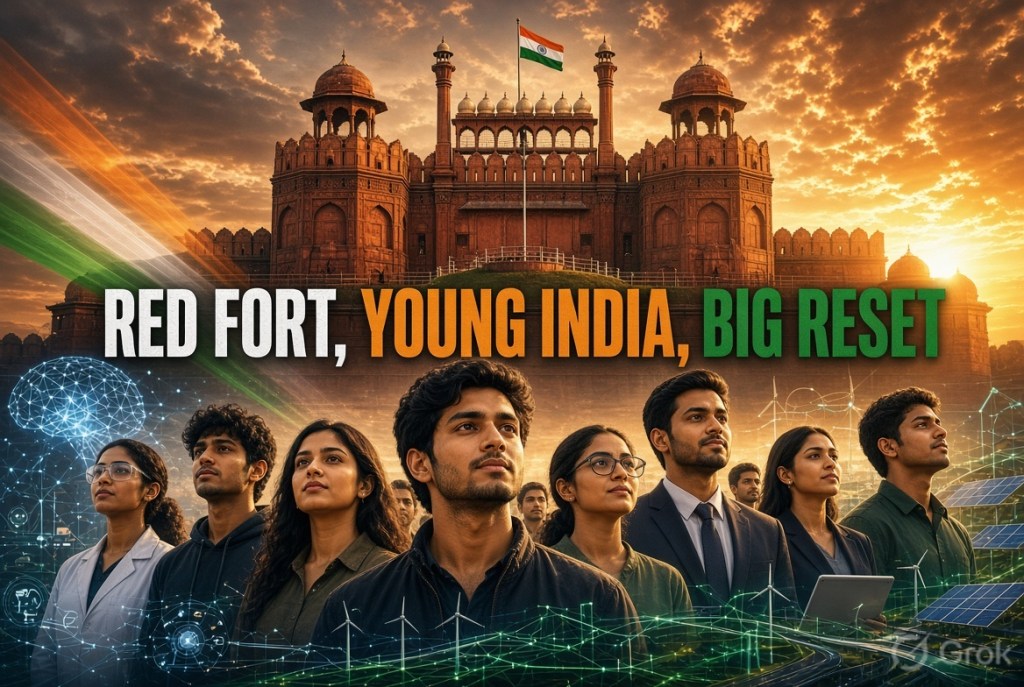
India’s 2026 Independence Day address, delivered from the Red Fort on August 15, was framed less as a ceremonial reflection on the past and more as a strategic conversation about the country’s next quarter-century. The 80th Independence Day speech placed comparatively greater emphasis on internal capability than external confrontation, directing attention towards youth, employment, skills, technology, manufacturing, resilience and national capacity. Its central proposition was developmental: India’s future strength will depend increasingly on how effectively it converts demographic scale into human capability and economic opportunity. The speech consequently connected national aspiration with institutional preparedness, suggesting that the coming decades will be shaped not merely by the size of India’s economy, but by the quality of its people, productivity, technological depth and ability to create opportunities at scale.
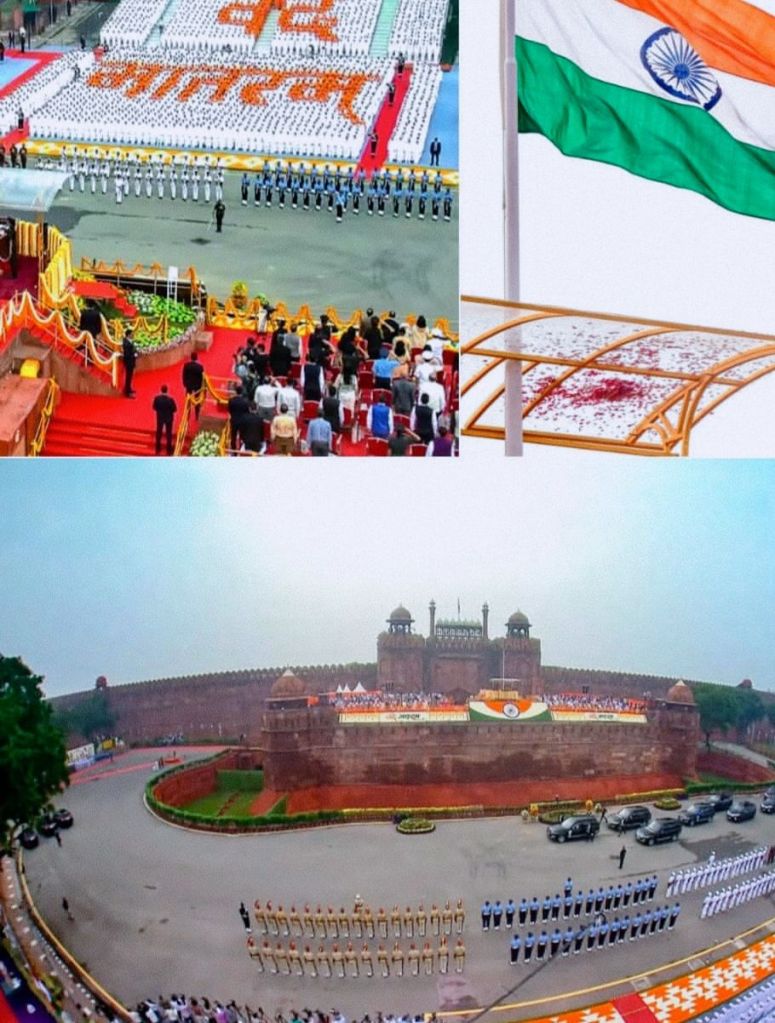
The prominence accorded to young Indians was particularly striking. The words “youth” and “young” were reportedly used 43 times during the 75-minute address, compared with 29 times in 2025 and 16 times in 2014. Beyond the numerical repetition lies a significant demographic reality. With young voters expected to constitute an increasingly influential share of India’s electorate by 2029, the aspirations of this generation will inevitably shape the country’s developmental priorities. Their expectations increasingly extend beyond conventional narratives of national progress. Education, employability, entrepreneurship, technological competence, mobility and meaningful participation in the economy have become closely interconnected aspirations. The youth focus therefore reflects both demographic opportunity and the necessity of creating institutional pathways through which talent can translate into productive outcomes.
The proposed initiatives reflected this broader approach. The proposed training of one crore young people in artificial intelligence, free online coaching for competitive examinations and a national talent-identification programme for children between five and fifteen years of age indicate an attempt to develop capabilities across different stages of the human-capital pipeline. Artificial intelligence training addresses emerging technological demand; examination support seeks to widen access to competitive opportunities; and early identification of talent potentially strengthens India’s long-term capabilities in sports, science, culture and other fields. Taken together, these proposals suggest that youth policy is increasingly being viewed as an ecosystem rather than a single employment programme. Their long-term significance, naturally, will depend on implementation quality, accessibility, institutional coordination and the ability to connect training with genuine opportunities.

The broader “Saptadhara” framework provides an economic context for this emphasis on human capital. Manufacturing, agriculture and food processing, Gati Shakti and connectivity, defence capabilities, technology, the green economy and India’s cultural and soft-power potential were presented as interconnected dimensions of national development. This architecture recognises that employment generation cannot be separated from economic transformation. AI skills acquire greater value when technology-intensive industries expand; manufacturing becomes more consequential when skilled workers can participate in sophisticated production; agricultural transformation gains significance when it raises productivity and incomes; and connectivity becomes a multiplier when physical and digital infrastructure allow people, goods, services and ideas to move efficiently. The underlying developmental proposition is therefore one of integration—linking human capability, infrastructure, technology and productive sectors.

National resilience was another important dimension of the address. The reference to the declining presence of armed Naxalism and the use of the expression “Dimaagi Naxal” placed questions of security, ideology and national cohesion within the broader narrative of a strong and resilient Republic. In a constitutional democracy, however, the distinction between violent extremism and legitimate disagreement remains institutionally important. National security requires the capacity to address violence, radicalisation and organised threats, while democratic vitality depends upon space for lawful debate, criticism and intellectual diversity. The larger developmental framework can potentially contribute to resilience by strengthening education, employment, opportunity and institutional confidence. Security, economic inclusion and social stability are consequently not isolated policy domains; they increasingly intersect within the broader concept of national resilience.

The address also highlighted measurable expansion in national capabilities. Defence production reportedly reached ₹1.78 lakh crore in 2025–26, while railway electrification, infrastructure expansion and growth in higher educational capacity reflected continuing investment in productive systems. The next stage of development, however, naturally places greater importance on outcomes. More universities acquire greater significance when they produce employable graduates, researchers, entrepreneurs and innovators. Electrified railways become transformative when they enhance mobility, reduce logistical costs and improve connectivity. Increased defence production becomes strategically valuable when it deepens domestic technology, strengthens supply chains, generates high-value employment and creates export opportunities. The broader message is that infrastructure and institutional expansion increasingly need to be viewed through the lens of productivity, quality and national capability.
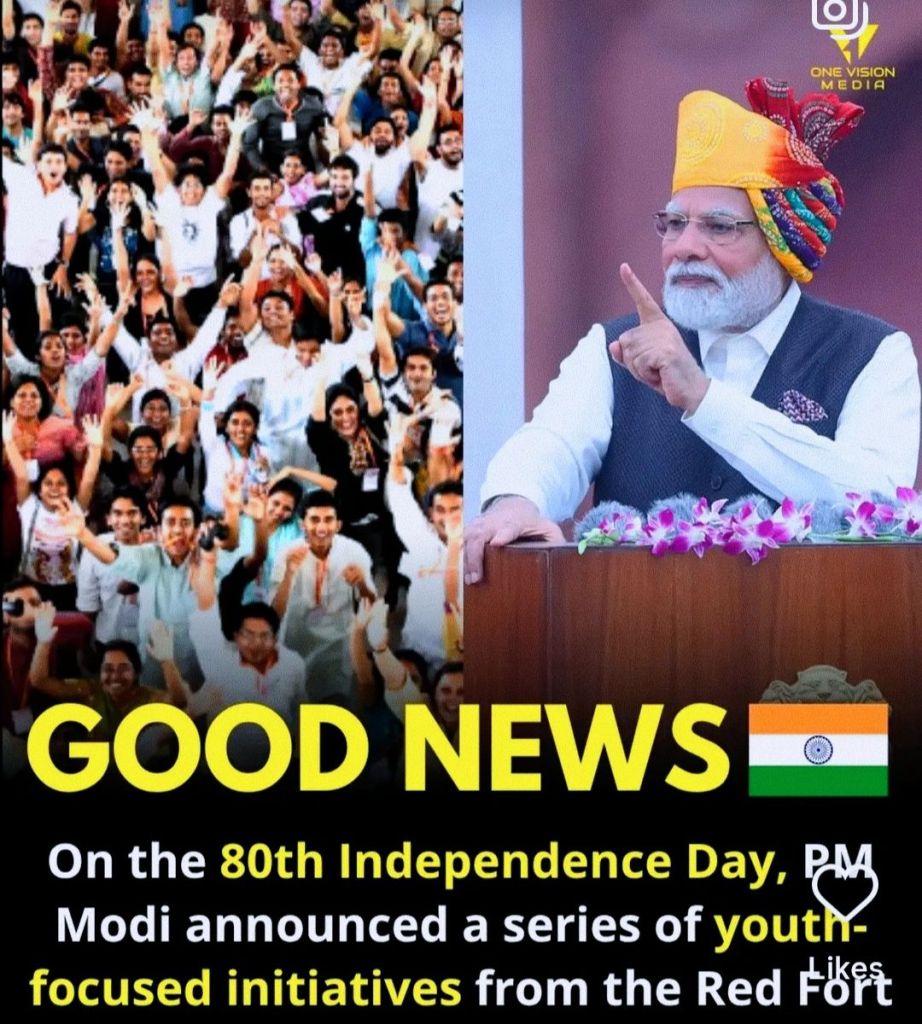
The evolving relationship between Atmanirbharta and globalisation also emerged as an important theme. Contemporary self-reliance is increasingly compatible with international integration when domestic capabilities enable India to compete effectively in global markets. Strategic autonomy does not necessarily require producing everything domestically; rather, it can involve building sufficient technological, manufacturing, financial and institutional capacity to participate confidently in global value chains. The opportunity lies in converting international partnerships, investment and market access into Indian employment, exports, intellectual property, resilient supply chains and innovation. In this formulation, self-reliance becomes less about economic insulation and more about competitive strength. India’s ambition can therefore be simultaneously domestic in capability and global in orientation.
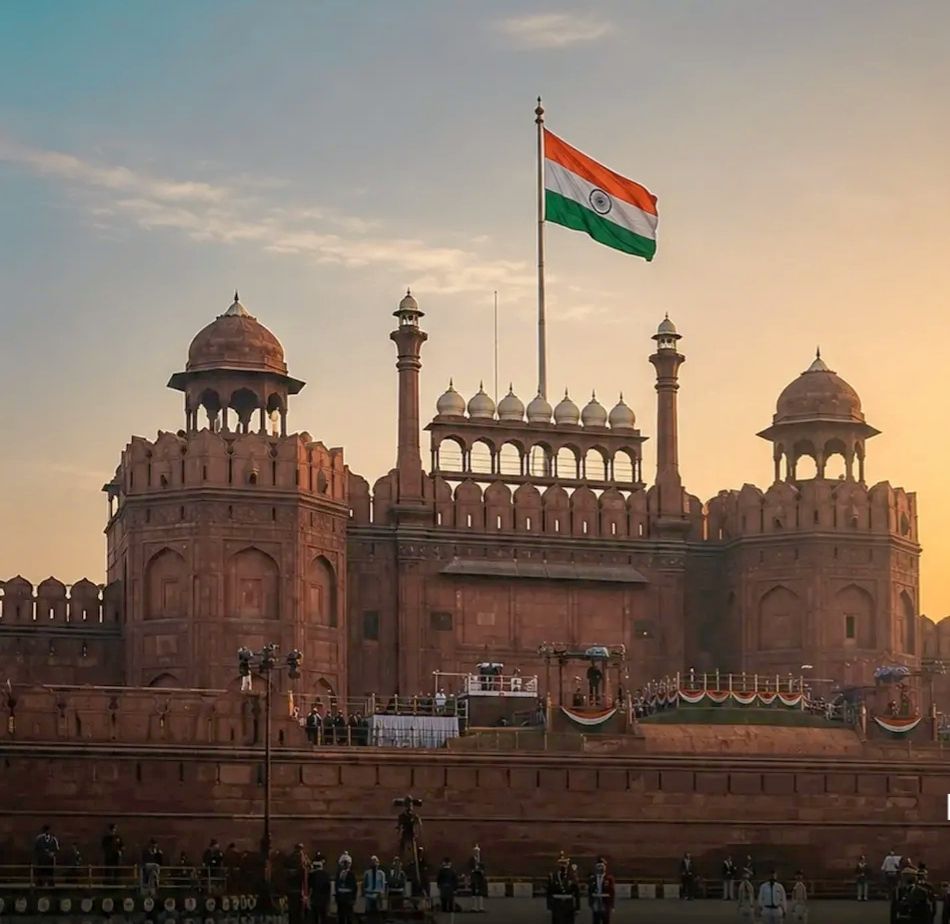
Ultimately, the 2026 Independence Day address presented the next 25 years as a period of accelerated national transformation, while placing particular urgency on the years immediately ahead. The underlying question extends beyond the political calendar: Can India convert its demographic advantage into a durable demographic dividend? The answer will depend on how effectively education, skills, technology, manufacturing, green growth, infrastructure, defence capability and global economic integration are connected into a coherent opportunity architecture. The real legacy of the speech will therefore not be measured simply by its rhetoric or the frequency with which “youth” was invoked. It will be measured by whether young Indians experience the Republic as a credible platform for ambition, mobility and achievement. The Red Fort has articulated the direction; the next challenge is turning that direction into lived national capacity.
VISIT ARJASRIKANTH.IN FOR MORE INSIGHTS

