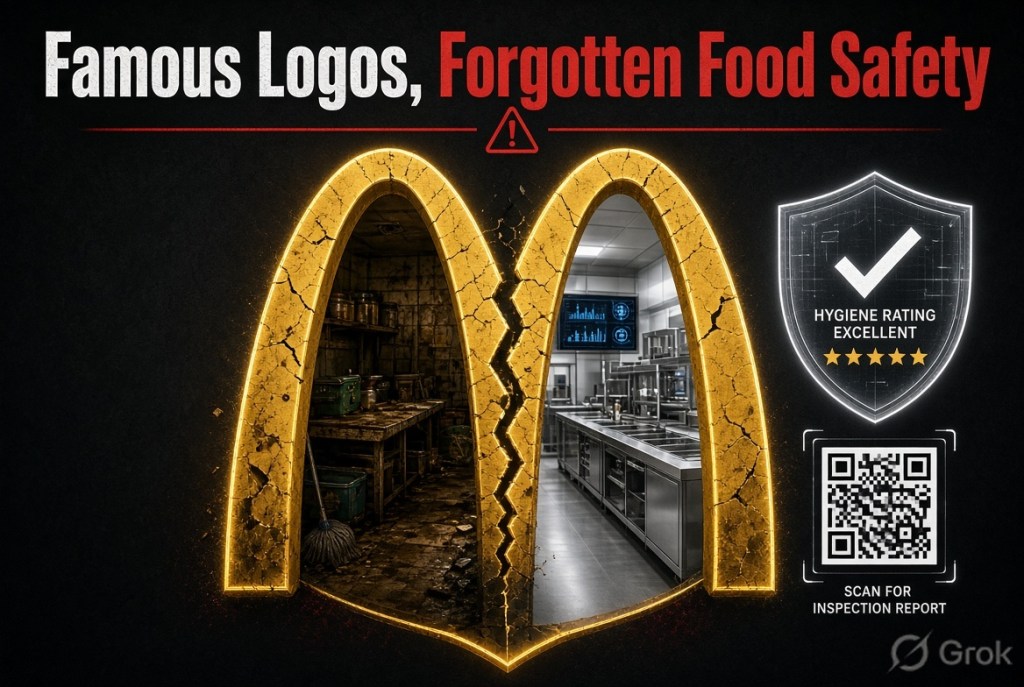
India has long associated global food brands with a reassuring vocabulary of cleanliness, consistency and corporate sophistication. Familiar logos, standardised menus, polished interiors and carefully designed packaging create an implicit promise: what reaches the consumer has passed through a disciplined, globally managed safety system. Maharashtra’s recent “Safe Food, Safe Maharashtra” enforcement drive has sharply punctured that assumption. Between July 10 and August 11, 2026, the Maharashtra Food and Drug Administration reportedly inspected 104 outlets of major chains including Domino’s, KFC, Pizza Hut, McDonald’s, Subway, Burger King, Starbucks and Monginis, issuing 95 improvement notices and suspending 11 licences. A reported non-compliance rate approaching 91 percent among prominent branded outlets is not merely a collection of kitchen-level failures. It is a warning about the distance between brand reputation and regulatory reality.

The disturbing issue is not simply that violations were detected, but the nature of those violations. Inspections at some Domino’s outlets reportedly identified inadequate potable-water testing, poor food storage, pest-control deficiencies, weak temperature monitoring, inadequate hygiene facilities, missing sanitation schedules, incomplete documentation and failures to follow FIFO/FEFO practices. Some outlets reportedly recorded compliance scores of only 47 and 54 percent. At a Pizza Hut outlet in Karad, inspectors reportedly found common ovens and baking trays being used for vegetarian and non-vegetarian products, while certain sauce and condiment packets lacked appropriate packing or expiry information. These are not complex technical disputes involving obscure food chemistry. They are basic disciplines of commercial food safety. When elementary controls fail within businesses whose competitive advantage depends heavily on standardisation, the problem cannot be dismissed as merely an inattentive employee or careless outlet manager. It raises questions about supervision, training, auditing and corporate accountability.
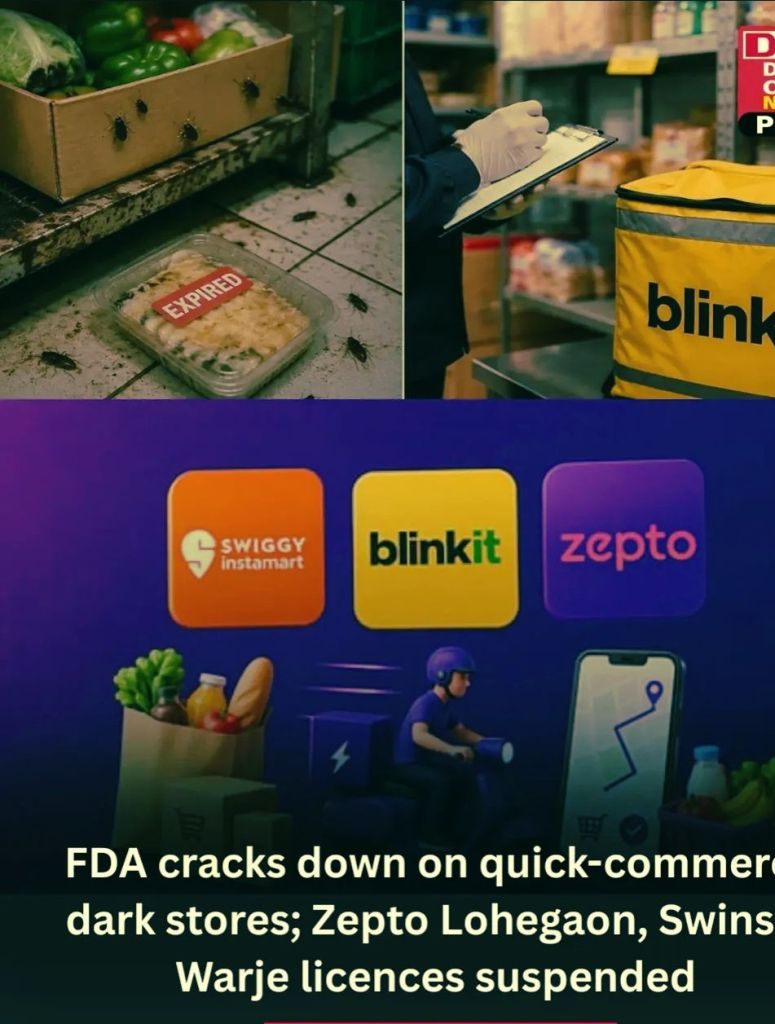
The episode exposes one of the central myths of modern consumer capitalism: a powerful brand does not automatically guarantee a powerful safety system. A multinational or national chain may maintain sophisticated headquarters manuals and still deliver inconsistent practices at individual outlets. The franchise structure creates multiple layers between policy and execution. Headquarters establishes standards; franchisees implement them; suppliers feed the network; employees operate kitchens; contractors provide cleaning and pest control; and regulators inspect the final establishment. Responsibility becomes fragmented precisely where accountability should be concentrated. Commercial pressures can further encourage shortcuts in maintenance, staffing, sanitation, temperature control and training. Yet consumers do not see this complexity. They see one logo. The regulatory system, however, encounters hundreds of individual establishments operating with different levels of discipline.
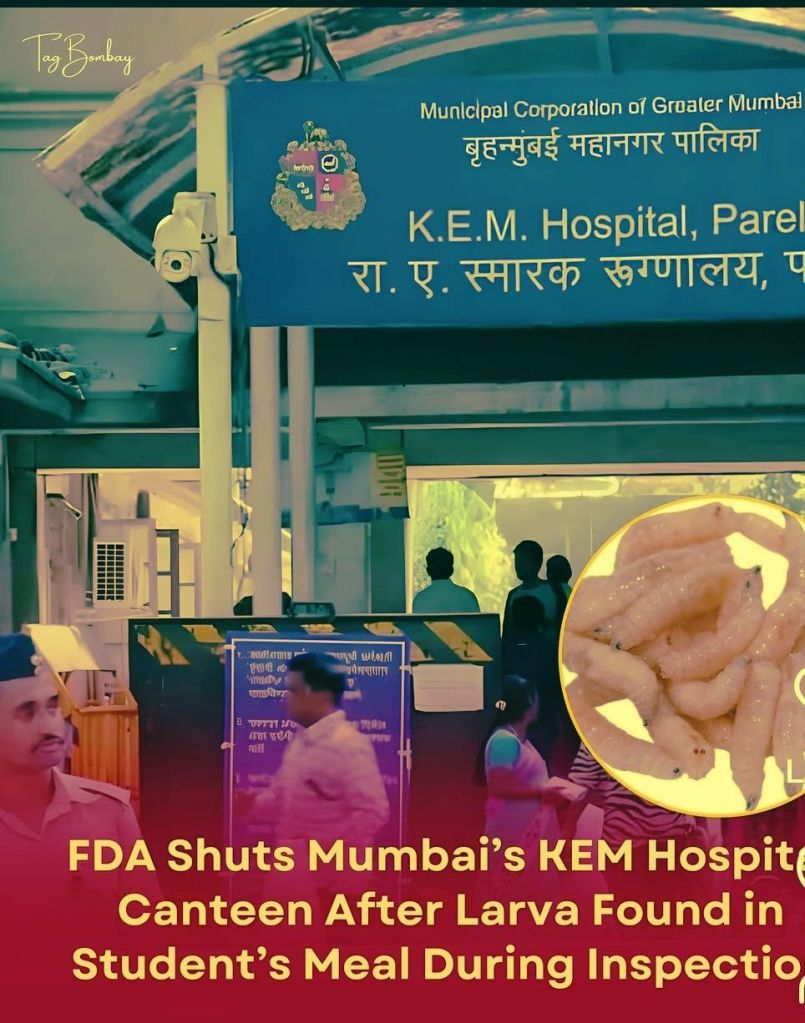
This is why outlet-level enforcement, while essential, cannot be the entire solution. If a very high proportion of inspected outlets are found deficient, repeatedly penalising individual restaurants may address the symptoms without confronting the operating architecture that produced them. The regulatory question must evolve from “Which outlet failed?” to “Why did the system allow the outlet to fail?” Corporate headquarters cannot indefinitely externalise responsibility to franchisees when it controls branding, procurement standards, menus, training systems, technology, operating manuals and quality expectations. A serious regulatory framework must therefore distinguish between an isolated local lapse and a recurring systemic weakness. Repeated failures across multiple outlets of the same chain should trigger scrutiny of the parent company’s governance, auditing and franchise-management systems—not merely another notice to another restaurant.
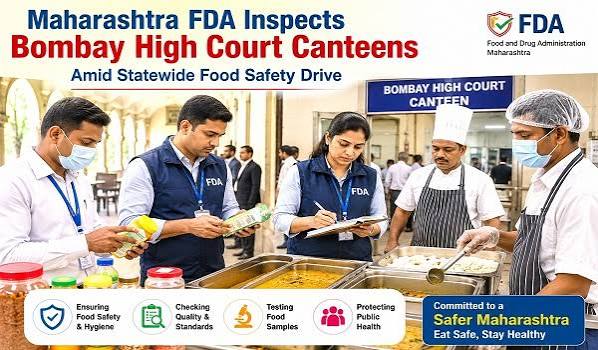
The controversy also highlights the importance of regulatory independence. Food regulation inevitably operates at the intersection of public health and commercial power. Large food companies possess substantial economic influence, sophisticated legal resources and significant employment footprints. Regulators therefore need not only statutory authority but also institutional confidence and transparency. Regulatory hesitation does not automatically prove corporate capture, but repeated delays, opaque decisions or inconsistent enforcement can create that perception. Public trust depends on a simple principle: the regulator must be seen to apply the same standard to a global brand, a local restaurant and a small street-food establishment. Food safety cannot become a two-speed system in which reputation substitutes for evidence or commercial scale dilutes regulatory scrutiny.
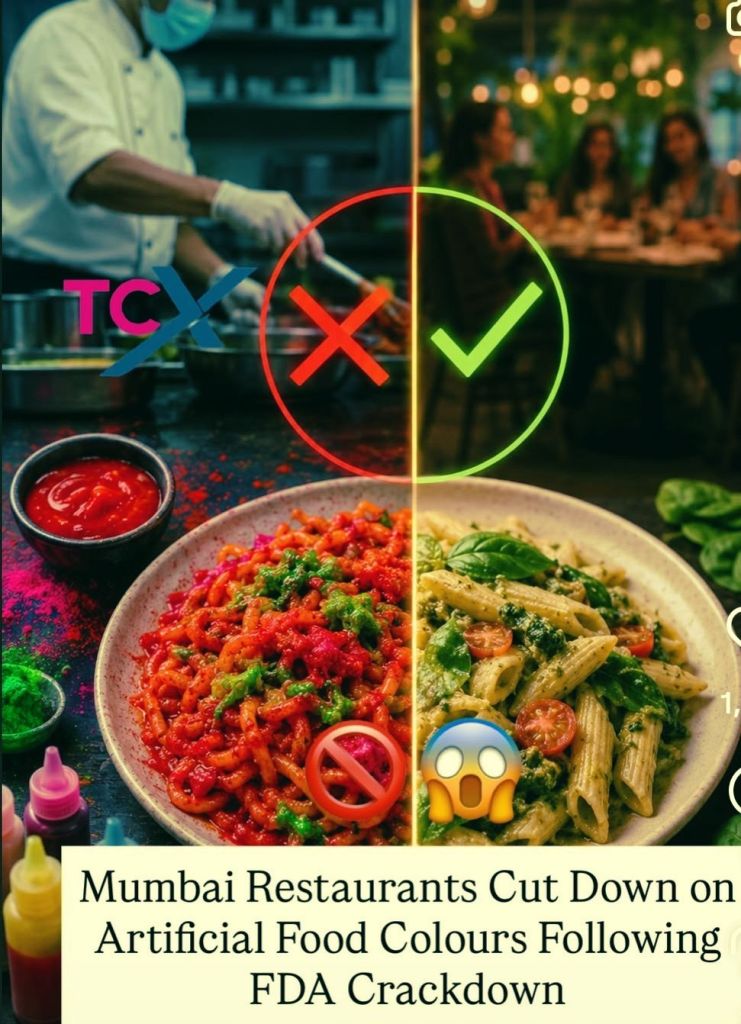
India should consequently move beyond episodic inspection campaigns towards continuous, preventive food-safety governance. International experience offers useful lessons. Public hygiene-rating systems can allow consumers to see a restaurant’s compliance status before purchasing food. Written and auditable food-safety programmes can make responsibility explicit within establishments. Preventive regulatory models can shift the focus from discovering contamination after the fact to identifying and controlling risks before they reach consumers. For major chains, digital systems could monitor refrigerator temperatures, cleaning schedules, pest-control records, staff training, laboratory testing and expiry dates. Unannounced inspections should complement scheduled audits. The objective should be to create a system in which compliance is continuously generated by management processes rather than temporarily manufactured for the day an inspector arrives.
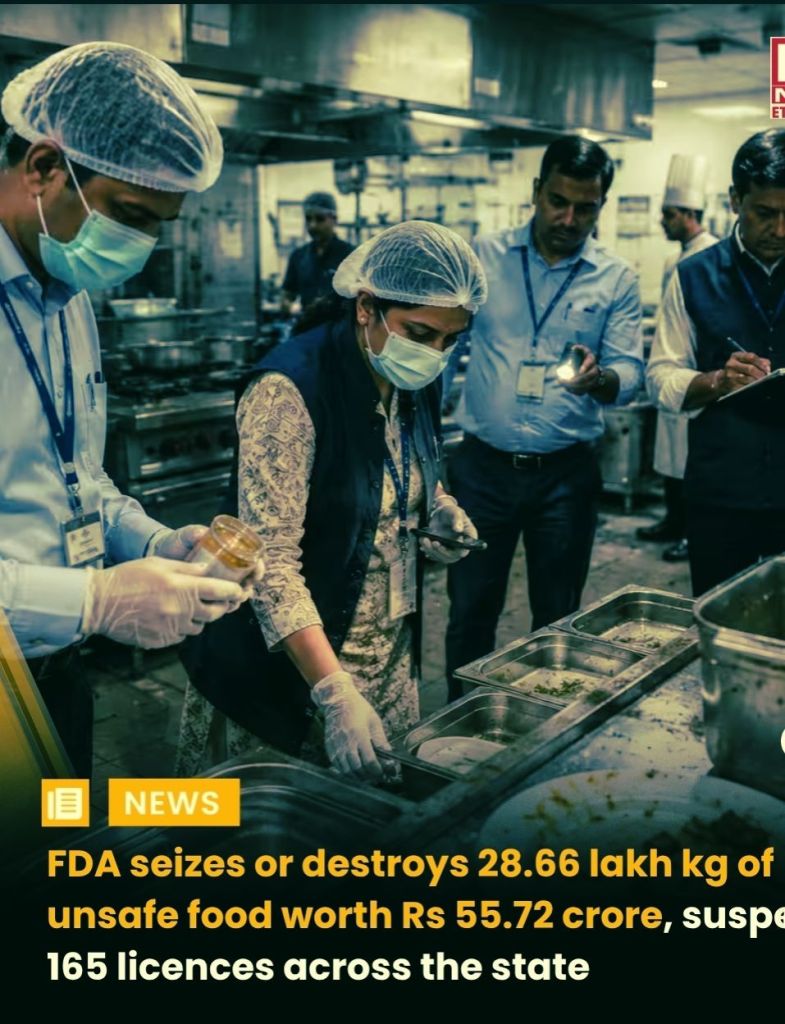
The next step should be system-level corporate accountability. Major food chains operating hundreds or thousands of outlets should periodically demonstrate that their entire franchise architecture is capable of maintaining statutory standards. Headquarters should undertake independent audits, submit compliance reports and face escalating penalties when similar violations recur across locations. High-risk establishments should receive more frequent inspections, while serious or repeated failures should have consequences beyond the individual franchise. Technology can create a national compliance trail, allowing regulators to identify patterns across states rather than treating each violation as an isolated event. A chain repeatedly failing basic standards should not be able to reset its regulatory reputation simply because the next inspection occurs at another outlet in another city.
Transparency could become the most powerful ally of enforcement. Major food outlets should display a clearly visible hygiene rating, supported by a QR code linking consumers to recent inspection findings, violations, corrective actions and compliance history. This would transform consumers from passive recipients into participants in regulation. Imagine a customer scanning a code before spending ₹500 on a meal and discovering that the establishment recently failed a hygiene inspection. Brand reputation would no longer function as an invisible shield; it would become an asset that companies must continuously earn. At the same time, food-safety authorities need stronger staffing, laboratories, digital tools, trained inspectors and interoperable databases capable of tracking violations across state boundaries.
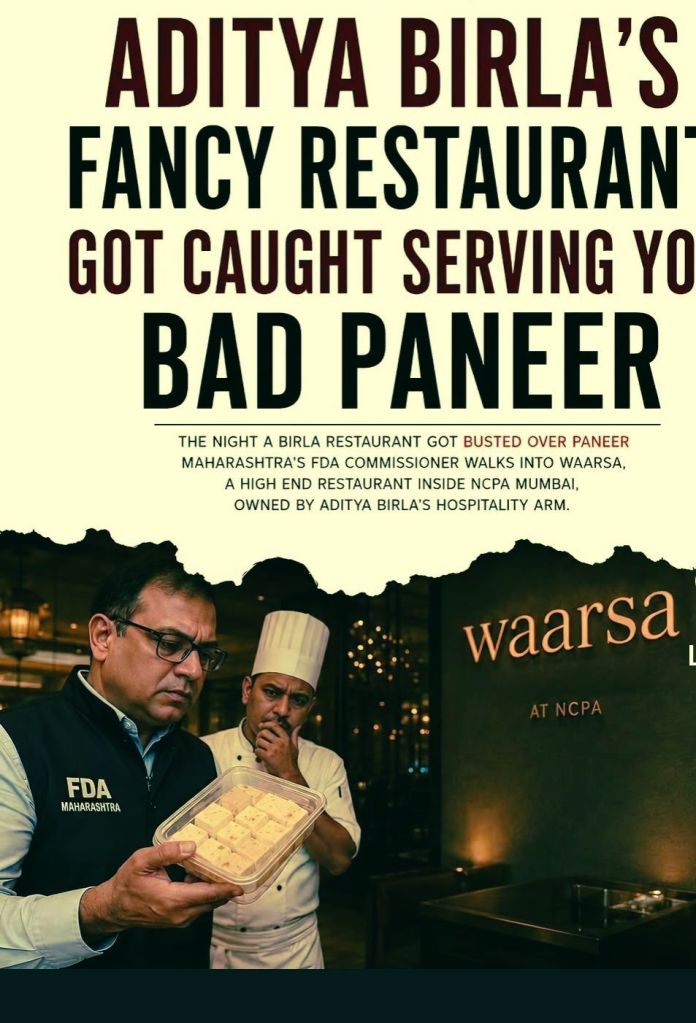
The deeper lesson is that food safety is not merely a licensing exercise. It is public-health infrastructure. Millions of consumers and food-service workers depend on systems that must function precisely when nobody is watching. A kitchen should not become clean because an inspector is expected tomorrow; it should remain safe because its management system makes unsafe behaviour difficult, detectable and costly. Maharashtra’s enforcement drive therefore deserves to be viewed not simply as a crackdown but as a governance stress test. The logo is not the licence to trust. The kitchen is. India’s challenge is no longer merely to inspect restaurants—it is to build a food-safety system in which trust is earned by evidence, continuously verified and impossible for reputation alone to manufacture.
VISIT ARJASRIKANTH.IN FOR MORE INSIGHTS

