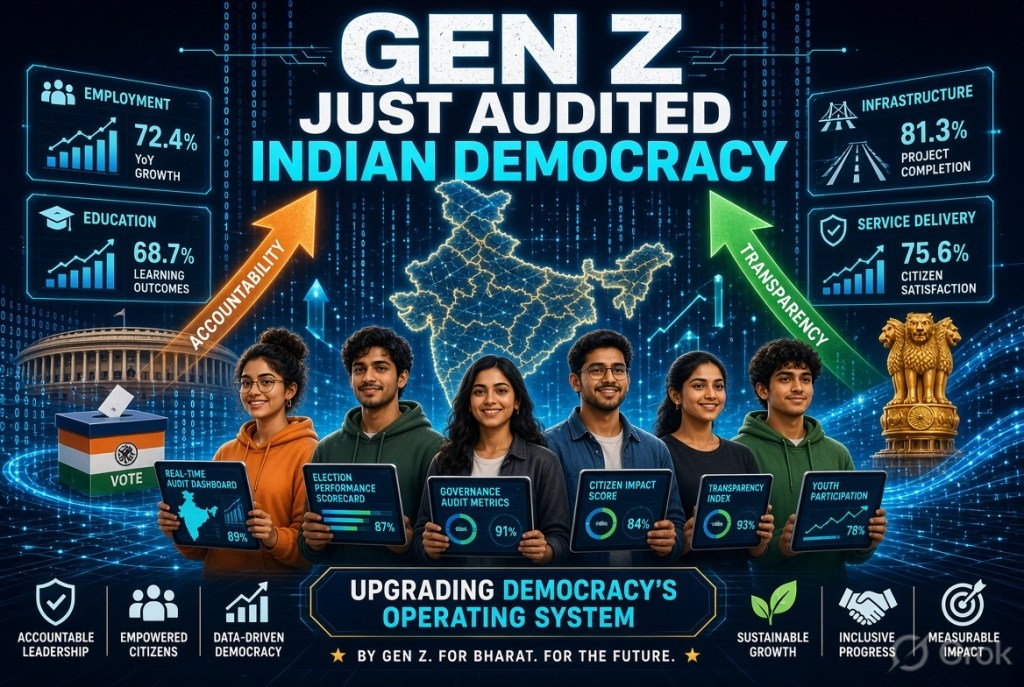
India’s democracy is entering a generational transition in which the meaning of political participation itself is being rewritten. For decades, electoral politics was substantially shaped by identity, ideology, patronage, personality and inherited loyalties. These forces remain powerful, but a new democratic vocabulary is emerging, particularly among Generation Z. Born into smartphones, instant information, global comparisons and unprecedented aspirations, young Indians are increasingly asking a deceptively disruptive question: What did governance actually deliver? This is not democratic disengagement; it is democratic escalation. The 2026 Bankipur Assembly by-election provides an instructive lens into this transition. Its larger significance lies not merely in electoral arithmetic but in the possibility that citizenship is moving from symbolic participation towards performance-based participation, where every vote increasingly resembles a periodic audit of political promises and administrative outcomes.

Gen Z encounters authority fundamentally differently from previous generations. It has grown up in an information environment where government communication is no longer the final word but the beginning of public scrutiny. A policy announcement can be searched, compared, archived, challenged and fact-checked within minutes. A political promise can be measured against delivery in real time. Political communication is consequently moving from the traditional “leader speaks, citizen listens” model towards an interactive ecosystem in which citizens question, verify, circulate and contest information. Digital connectivity has also radically expanded the benchmark against which young Indians evaluate governance. They no longer compare their city merely with another Indian city; they compare public transport, universities, employment ecosystems, digital services, environmental standards and urban infrastructure with global examples. Their political imagination is therefore increasingly benchmarked not against yesterday’s India, but against what they believe tomorrow’s India should be capable of delivering.

This generational transformation becomes particularly visible in the issues that dominate youth consciousness: employment, examination integrity, education quality, entrepreneurship, urban infrastructure, environmental sustainability, technological opportunity and institutional fairness. Examination-paper leaks and recruitment delays have acquired extraordinary political salience because they directly affect the life trajectories of millions of young Indians. For a student who has spent years preparing for a competitive examination, a paper leak is not simply an administrative irregularity; it is a breach of the social contract. For an unemployed graduate, recruitment delays can mean lost years, financial dependence and psychological uncertainty. Governance is therefore no longer experienced as an abstract constitutional concept. It is encountered through the fairness of an examination, the availability of a job, the reliability of public transport, the quality of a university, the speed of grievance redressal and the credibility of an institution. For Gen Z, governance has stopped being theoretical. Governance has become personal.

The Bankipur experience is significant because it illustrates how electoral competition can become a laboratory for this changing democratic consciousness. The emergence of new political formations and issue-based campaigning demonstrates that established political structures can no longer assume that electoral loyalties will automatically transfer across generations. Identity politics has certainly not disappeared, nor is it likely to disappear soon. But identity alone may increasingly struggle to satisfy a generation that expects visible competence and measurable outcomes. Employment, education, traffic management, waterlogging, public services and migration are immediate concerns that cut across conventional political categories. The greater significance lies in the willingness of voters to consider alternatives when they believe those alternatives are credible. Competitive democracy then becomes more than a mechanism for choosing rulers; it becomes an instrument for extracting better performance from those seeking public office. The ballot box begins to resemble a performance-management system.

Perhaps the most consequential transformation is the emergence of continuous citizenship. Earlier models of democratic accountability were predominantly vertical: citizens voted periodically, while elected representatives and bureaucrats exercised authority between elections. Gen Z is adding powerful horizontal mechanisms through social media, citizen journalism, public databases, online petitions, digital campaigns, fact-checking and real-time scrutiny. A delayed project can become a public issue overnight. A broken road can become evidence. A promise can become a searchable digital record. An administrative failure can generate thousands of questions before the next election is even remotely visible. This does not automatically produce better democracy; digital platforms can equally amplify misinformation, outrage, polarisation and manipulation. Yet the structural change is undeniable. Political and administrative authority is increasingly operating under continuous public observation. The politician is no longer merely elected; the politician is permanently reviewable. The bureaucrat is no longer invisible; the institution itself is increasingly observable.

This creates a profound institutional challenge. Political parties will have to evolve from campaign-oriented organisations into permanent policy, research and citizen-engagement institutions. Candidate selection, youth representation, local leadership, evidence-based policy and measurable commitments will become increasingly important. Governments, meanwhile, will face rising expectations for transparent recruitment, predictable timelines, measurable service delivery and responsive grievance mechanisms. The bureaucracy cannot afford to treat citizen feedback as an external disturbance; it must increasingly regard it as an input into institutional performance. The administrative state of the future will require outcome dashboards, service-level commitments, transparent communication, data-driven monitoring and real-time feedback—not merely files, circulars and compliance reports. The citizen is becoming an evaluator of the State, while government increasingly has to demonstrate not simply that a decision was taken, but that the decision produced the intended public outcome.
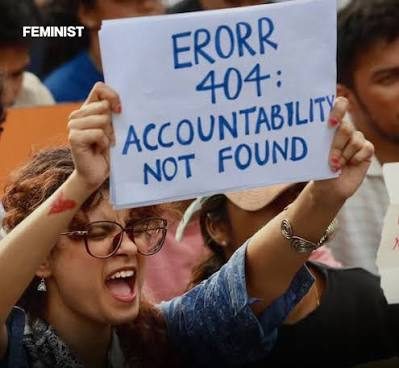
Yet democratic impatience must not be confused with democratic maturity. Gen Z’s demand for speed and transparency is healthy, but governance cannot always operate at the speed of a social-media feed. Complex public decisions require consultation, evidence, fiscal prudence, legal safeguards and sometimes unpopular choices. A mature democracy therefore requires citizens capable of distinguishing policy failure from implementation difficulty, corruption from administrative complexity, misinformation from evidence and legitimate criticism from digital manipulation. Equally, institutions must learn to respond without becoming prisoners of online outrage. The ideal social contract is neither an unquestioning citizen nor an omnipotent State. It is a relationship in which citizens demand performance, institutions explain constraints honestly, governments accept scrutiny and both sides remain anchored in constitutional principles. The future belongs not to instant democracy, but to intelligent accountability.

India may consequently be witnessing the gradual movement from an identity-driven democracy towards an accountability-driven democracy. The transition will neither be uniform nor linear, and traditional political identities will continue to matter. But the democratic grammar is changing. The old question was: Who are you voting for? The emerging question is: What did they deliver? The old expectation was representation; the new expectation is responsiveness. The old political cycle was election, promise, victory and governance; the emerging cycle is promise, implementation, measurement, scrutiny and renewed electoral judgment. Gen Z is not abandoning Indian democracy; it is demanding that democracy perform better. Its most important contribution may therefore be psychological: reminding citizens that politicians and bureaucrats are not distant authorities to be passively accepted, but public institutions to be continuously questioned, evaluated and improved. India’s youngest voters are not overthrowing the democratic operating system—they are upgrading it.
VISIT ARJASRIKANTH.IN FOR MORE INSIGHT

