
The twenty-first century will not be dominated solely by nations that produce more steel, oil or semiconductors. It will increasingly belong to those that generate ecological wealth. Hidden along the fertile banks of the Godavari near Rajahmundry, Kadiyam has quietly built an economy on perhaps the world’s most valuable resource—living capital. Spread across nearly 5,000 acres, with over 2,500 nurseries cultivating more than 5,000 varieties of ornamental, fruit, medicinal and avenue plants, Kadiyam has emerged as India’s largest nursery ecosystem. Supporting nearly 50,000 livelihoods and generating an annual turnover of ₹500–800 crore, it represents one of India’s greatest entrepreneurial success stories. Yet its true potential extends far beyond horticulture. In an era defined by climate resilience, biodiversity restoration and green infrastructure, Kadiyam can evolve into the World’s Green Capital and become the nucleus of India’s emerging green economy.
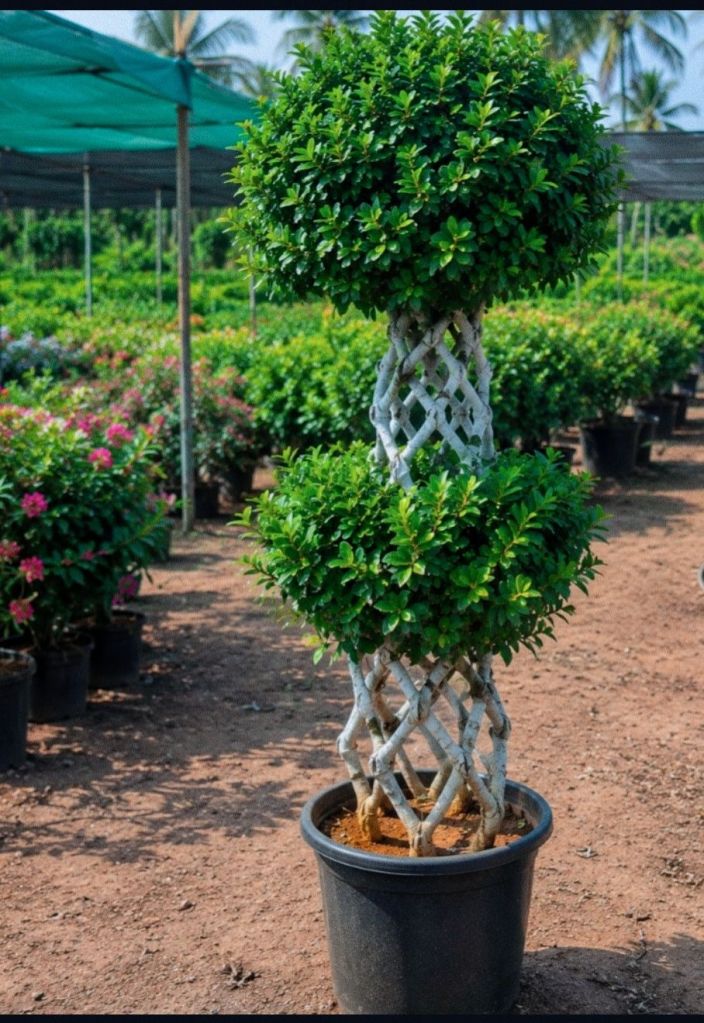
Kadiyam’s remarkable journey demonstrates how natural endowments, scientific knowledge and entrepreneurial energy can transform rural landscapes into engines of prosperity. Blessed with fertile alluvial soils, assured irrigation from the Godavari delta and generations of horticultural expertise, the region has developed a globally competitive nursery ecosystem almost entirely through family-driven enterprise. Over four decades, it has earned an enviable reputation for quality, diversity and reliability. Yet a striking contradiction persists. While Kadiyam greens millions of homes, farms, industries and cities across India, its presence in international horticultural markets remains disproportionately small. A cluster capable of serving global demand continues to function largely as a domestic supplier.

This untapped opportunity has acquired unprecedented significance as the global economy undergoes a profound green transition. Governments are investing billions in urban forests, ecological restoration, climate-resilient infrastructure, biodiversity conservation, carbon sequestration and nature-based solutions. Cities across the world are embracing sustainable landscaping, vertical gardens, green corridors and urban forestry as essential infrastructure rather than aesthetic luxuries. Environmental, Social and Governance (ESG) commitments are reshaping corporate investment, while consumers increasingly demand sustainable products. Horticulture is no longer merely an agricultural activity; it has become an integral pillar of environmental economics. Positioned at this intersection of ecology, commerce and climate policy, Kadiyam possesses every comparative advantage to become India’s gateway to the global green marketplace.

Despite its enormous strengths, structural bottlenecks continue to constrain Kadiyam’s global ambitions. Only a limited number of nurseries possess export licenses, compelling thousands of growers to depend upon intermediaries who capture much of the international value. Awareness of phytosanitary certification, global quality standards, export logistics, digital marketing and international branding remains uneven. Consequently, Kadiyam exports plants but not its identity. The real opportunity lies not merely in increasing exports, but in creating a globally recognised “Kadiyam Global” brand synonymous with quality, sustainability, traceability and innovation. Branding, rather than production alone, will determine future competitiveness.

Climate change further reinforces the urgency for transformation. Rising temperatures, cyclones, erratic rainfall, labor shortages, escalating wages and increasing environmental pressures threaten conventional nursery practices. Dependence on fertile topsoil for potting media is becoming ecologically unsustainable, while inadequate testing laboratories, logistics infrastructure and cold-chain facilities restrict expansion into premium global markets. Equally important is the human dimension. Nearly half the workforce comprises women whose contributions deserve stronger support through safer workplaces, healthcare, childcare, insurance, sanitation and skill development. In global trade, social responsibility has become a competitive advantage, making worker welfare as important as product quality.

The next phase of Kadiyam’s evolution must therefore be driven by institutions rather than individual enterprise alone. A Kadiyam Global Export Facilitation Centre should integrate nursery registration, phytosanitary certification, quality testing, packaging, logistics, customs support and international market intelligence under a single institutional platform in partnership with APEDA. Simultaneously, the National Horticulture Board’s Cluster Development Programme should modernize production systems, export infrastructure, branding and post-harvest management. Such coordinated interventions would enable growers to access international markets directly, command premium prices and significantly increase export earnings.

Scientific innovation must become Kadiyam’s defining competitive advantage. Technologies such as Arka Fermented Cocopeat have already demonstrated how research can reduce freight costs, improve plant survival and conserve fertile topsoil. The next frontier lies in integrating tissue culture, protected cultivation, artificial intelligence, IoT-enabled irrigation, drone-based monitoring, automation and digital inventory management into everyday nursery operations. Collaboration with the National Institute for Research on Commercial Agriculture (NIRCA), ICAR institutions and agricultural universities can establish Kadiyam as India’s premier centre for climate-smart horticulture. A dedicated School of Horticulture and Green Entrepreneurship can create a new generation of globally competitive green entrepreneurs equipped with expertise in landscape architecture, export compliance, digital commerce and sustainable business management.

Kadiyam’s economic future extends far beyond selling plants. It can become India’s national hub for landscape architecture, urban forestry, biodiversity restoration, ecological consulting, rooftop gardens, vertical greening, carbon-positive infrastructure and environmental design. Its expertise in transplanting mature trees has already created “Instant Green” solutions for airports, highways, industrial corridors, smart cities and premium real estate. Integrating horticulture with botanical gardens, flower festivals, nursery tourism, educational trails and Godavari riverfront experiences can create an entirely new visitor economy. Every sapling leaving Kadiyam should represent not merely a commercial product but a symbol of climate resilience, ecological restoration and sustainable development.

The defining question before policymakers is no longer whether Kadiyam can produce more plants. It is whether India can build an internationally competitive green economy around Kadiyam. With visionary leadership, export-oriented infrastructure, scientific innovation, institutional convergence and entrepreneurial confidence, this extraordinary nursery cluster can become far more than India’s Nursery Capital. It can emerge as the World’s Green Capital—a global model where biodiversity generates business, sustainability creates wealth, innovation powers exports and ecological restoration becomes economic strategy. In the century of climate change, Kadiyam’s greatest harvest may not be measured in saplings alone, but in jobs created, exports expanded, carbon captured and a greener future built for generations to come.
VISIT ARJASRIKANTH.IN FOR MORE INSIGHTS


One response to ““The Green Gold Revolution: Kadiyam Could Become India’s Trillion-Rupee Green Economy” ”
Excellent development !
How old the institution is ?
How to buy saplings from Kadiyam ?
sahshashibhushan @ gmail.com
LikeLike