
Climate change has moved far beyond the boundaries of environmental policy; it has become a defining economic, industrial and geopolitical challenge of the twenty-first century. India stands at the centre of this global dilemma—an emerging economic powerhouse seeking rapid industrialisation while also carrying the responsibility of reducing one of the world’s largest carbon footprints. As the third-largest carbon emitter globally, India releases nearly 2.8–3 billion tonnes of carbon dioxide annually, yet millions of citizens still require access to energy, infrastructure and economic opportunity. Achieving the ambitious target of net-zero emissions by 2070 therefore requires solutions that go beyond renewable energy expansion. Carbon Capture, Utilisation and Storage (CCUS) has emerged as a critical strategic instrument in this transition. The Union Budget 2026–27 allocation of ₹20,000 crore over five years represents India’s strongest policy commitment towards making carbon management commercially viable. However, the fundamental question remains: is CCUS the missing link in India’s climate strategy or an expensive technological gamble with uncertain returns?

The argument for CCUS is built on industrial reality. While renewable energy can significantly reduce emissions from electricity generation, several sectors produce carbon dioxide through unavoidable chemical processes. Cement manufacturing, steel production, refineries, fertilisers, chemicals and hydrogen production cannot achieve deep decarbonisation through electrification alone. Nearly 70 percent of India’s emissions are linked to coal-based power generation, while heavy industries contribute a substantial additional share. For these sectors, carbon capture may represent one of the few pathways to achieving meaningful emission reductions without disrupting economic growth. India’s first comprehensive CCUS roadmap, released by the Department of Science and Technology, reflects this strategic understanding by targeting capture capacity of hundreds of millions of tonnes of CO₂ annually by 2050. Beyond climate commitments, CCUS is also becoming an economic necessity as global markets increasingly demand low-carbon products and trade mechanisms penalise carbon-intensive exports.

Despite growing policy attention, India’s CCUS journey remains at an experimental stage. Existing projects demonstrate technical capability but are still far from the scale required for national transformation. Facilities such as Jindal Steel’s carbon capture initiative at Angul, NTPC’s Vindhyachal project converting captured CO₂ into methanol, Tuticorin Alkali’s carbon utilisation model and various cement-sector mineralisation experiments highlight India’s emerging expertise. However, the challenge lies in moving from thousands of tonnes of captured carbon to managing hundreds of millions of tonnes annually. The difference between a successful pilot project and a commercially sustainable national ecosystem is enormous. CCUS requires not only engineering innovation but also reliable infrastructure, long-term investment confidence and market mechanisms capable of supporting decades of operation.
The greatest barrier facing CCUS is not scientific feasibility but economic competitiveness. Capturing carbon remains expensive, particularly from coal-based power plants where carbon dioxide concentrations are relatively low compared with industrial processes. Capture systems can significantly increase operational costs due to additional energy requirements, often creating a substantial efficiency penalty. Without strong economic incentives, industries have little motivation to adopt expensive carbon capture technologies. Global experience demonstrates that successful CCUS projects depend on supportive policy environments. Norway’s long-running Sleipner project benefited from strong carbon pricing mechanisms, while the United States’ Petra Nova project revealed the vulnerability of CCUS economics when dependent on fluctuating market conditions. The lesson for India is clear: technology cannot succeed unless carbon reduction has a measurable economic value.

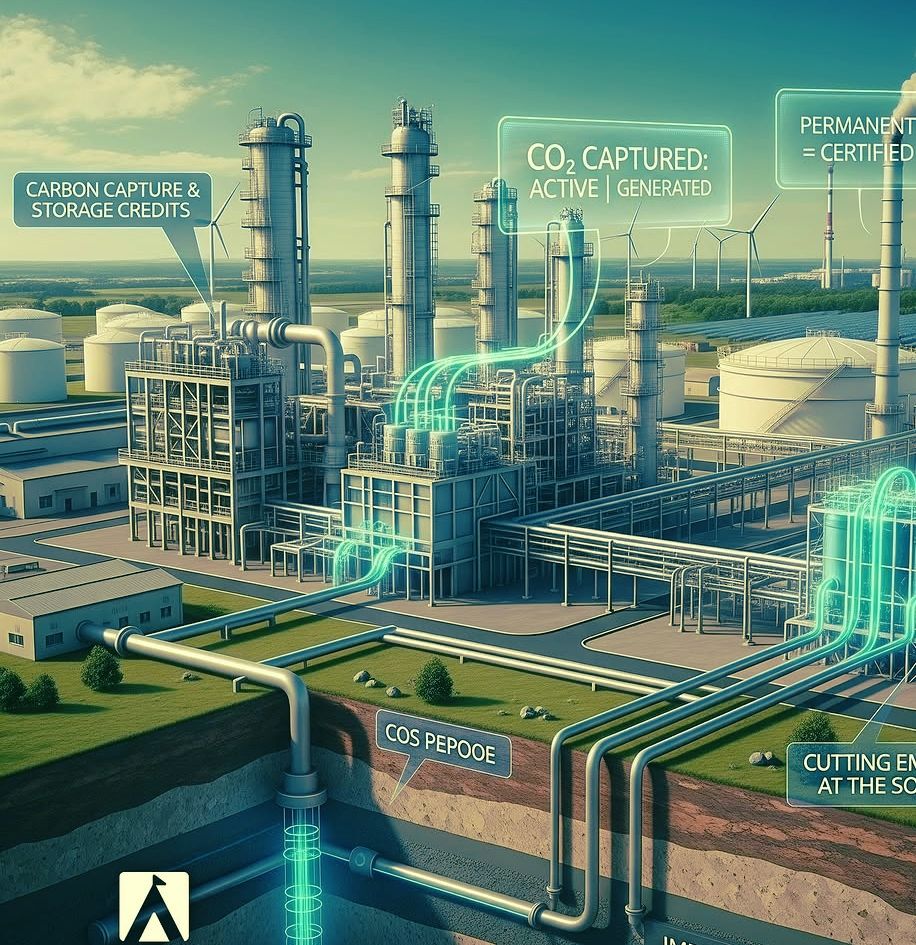
Another major challenge is the absence of a complete carbon management ecosystem. Capturing carbon is only the first step. The captured CO₂ must be transported through dedicated infrastructure, injected into secure geological formations and monitored for decades. India currently lacks large-scale CO₂ pipeline networks, certified storage locations and comprehensive legal frameworks defining responsibility for long-term storage risks. This creates a classic infrastructure coordination problem. Industries hesitate to invest because transport and storage systems are unavailable, while infrastructure developers hesitate because demand remains uncertain. Financial institutions also remain cautious because carbon storage liabilities may continue long after commercial operations end. Government-backed mechanisms for risk sharing, insurance and liability management will therefore be essential for transforming CCUS from a concept into a bankable infrastructure sector.

Ironically, India’s greatest advantage in the CCUS race may lie beneath its own land. Geological assessments suggest enormous carbon storage potential in formations such as the Deccan Trap basalt regions, where captured CO₂ can potentially be converted into stable mineral forms with minimal leakage risks. Additional opportunities exist in deep saline aquifers, depleted oil and gas reservoirs and coal seams. Institutions including ONGC, Geological Survey of India and scientific research organisations are exploring these possibilities across multiple regions. However, geological potential alone does not create a carbon storage industry. Extensive seismic studies, drilling, monitoring systems, environmental assessments and regulatory approvals are required before these resources can become commercially operational. India possesses the geological foundation, but converting that foundation into infrastructure will require patience, investment and institutional capacity.

India’s CCUS strategy must therefore focus on realistic priorities. The technology should initially target sectors where emissions are hardest to eliminate, particularly cement, steel, fertilisers, chemicals and clean hydrogen production. Attempting to use CCUS primarily as a mechanism to prolong inefficient coal plants may create economic and environmental complications. A stronger carbon market with credible pricing signals, shared industrial carbon hubs, government-supported transport networks, viability gap funding and clear long-term liability frameworks can accelerate adoption. Public-private partnerships, international technology cooperation and independent regulatory oversight will be essential to ensure that carbon management develops as a transparent and commercially sustainable industry rather than a collection of isolated demonstrations.

Ultimately, CCUS is neither a magical solution nor a meaningless distraction. It is a strategic bridge that can help India balance economic growth with climate responsibility. The ₹20,000 crore investment represents an important beginning, but financial allocation alone cannot guarantee success. The future of carbon capture will depend on whether India can align technology, economics, regulation and infrastructure into one integrated ecosystem. If successful, India’s geological resources and industrial capabilities could become a major competitive advantage in the emerging global low-carbon economy. If poorly designed, CCUS may become another expensive experiment remembered more for ambition than achievement. In the race towards net zero, the greatest challenge is not merely capturing carbon—it is capturing the commercial, institutional and policy conditions required to make carbon capture succeed.
VISIT ARJASRIKNTH.IN FOR MORE INSIGHTS

