
The true strength of a constitutional democracy is measured not by the elegance of its Constitution but by the speed, accessibility, credibility and fairness with which justice reaches the ordinary citizen. Constitutions distribute power, legislatures enact laws, executives administer governance and courts safeguard constitutional values. Yet every constitutional promise ultimately succeeds or fails in the courtroom where an ordinary citizen seeks timely justice. For decades, India’s judiciary has remained the sentinel of fundamental rights, democratic accountability and constitutional morality. Today, however, it stands at a defining moment. Social transformation, economic expansion, digital disruption and rising public expectations are advancing far more rapidly than institutional reforms. With nearly five crore pending cases, persistent judicial vacancies, uneven technological capacity and increasingly complex litigation, the challenge before the judiciary is no longer confined to deciding disputes. It is about redesigning the architecture of justice itself. Judicial reform has therefore ceased to be an administrative exercise; it has become a constitutional imperative.

The foremost priority is strengthening institutional capacity. India continues to have one of the lowest judge-to-population ratios among major constitutional democracies, placing enormous pressure on existing courts. Increasing judicial strength towards the long-recommended benchmark of fifty judges per million population is no longer an aspirational objective but an operational necessity. Equally important is filling vacancies through a transparent, predictable and time-bound appointment process that inspires public confidence while preserving judicial independence. The continuing debate surrounding the Collegium system and the earlier proposal for a National Judicial Appointments Commission reflects a broader institutional quest for transparency, diversity and merit-based selection. Likewise, the proposal to establish an All India Judicial Service under Article 312 deserves renewed consideration as a mechanism to attract talented young legal professionals through a nationally competitive and professionally managed recruitment framework. Raising the retirement age of judges could further preserve institutional memory, reduce vacancies and ensure continuity in judicial administration.
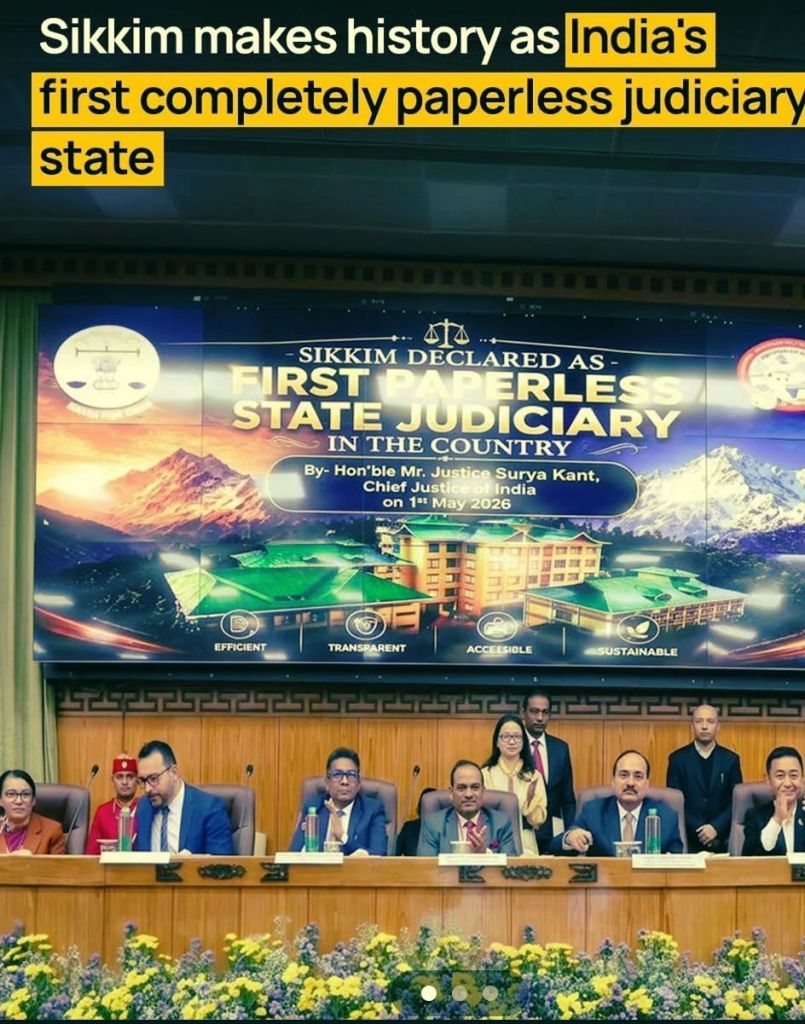
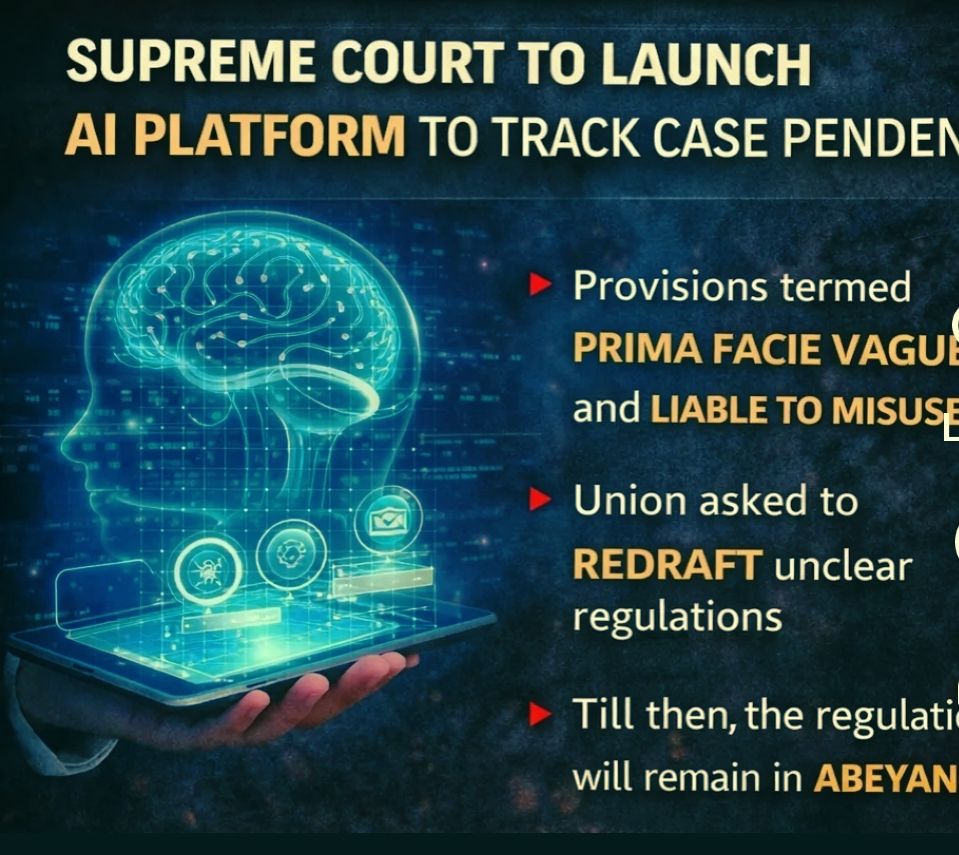
Technology constitutes the second pillar of transformational reform. The ₹7,210-crore e-Courts Phase III programme presents an unprecedented opportunity to create a fully digital, interoperable and citizen-centric judicial ecosystem. Electronic filing, digital records, intelligent case allocation, AI-assisted legal research, automated transcription, smart scheduling and hybrid hearings can significantly improve judicial productivity while reducing procedural delays. Emerging initiatives such as SUPACE and the Interoperable Criminal Justice System demonstrate how technology can support judicial decision-making without replacing judicial discretion. Yet technology must remain a constitutional enabler rather than a technological barrier. Digital justice cannot succeed if litigants from rural India, economically weaker sections, senior citizens or digitally excluded communities encounter new obstacles in accessing courts. Investments in digital literacy, assisted facilitation centres, multilingual interfaces and robust cyber security must therefore evolve alongside technological modernisation.
Procedural reform is equally indispensable because justice delayed is often justice structurally denied. Indian courts continue to struggle with repeated adjournments, fragmented hearings, inconsistent case management and avoidable procedural complexity. Modern judicial administration requires scientific scheduling, strict regulation of adjournments, mandatory written submissions in appropriate matters, digital case tracking and structured timelines for different categories of litigation. Cases involving identical questions of law should increasingly be grouped through cluster hearings to minimise repetitive adjudication and reduce conflicting judicial outcomes. Simultaneously, mediation, arbitration, conciliation and Lok Adalats must evolve from peripheral alternatives into mainstream mechanisms for dispute resolution. Governments, being the country’s largest litigants, must institutionalise litigation management policies that encourage withdrawal of obsolete appeals, settlement of minor disputes and reduction of avoidable statutory prosecutions that unnecessarily burden the judicial system.
Institutional independence must be complemented by institutional accountability. Judicial independence remains the cornerstone of constitutional governance and must remain beyond compromise. However, independence should never be mistaken for administrative opacity. Public confidence is strengthened when institutions voluntarily embrace transparency. Periodic disclosure of judicial assets, objective administrative performance indicators reflecting workload and case complexity, transparent roster management, effective in-house disciplinary mechanisms and standardised administrative practices across High Courts can significantly enhance institutional credibility without affecting decisional independence. Accountability in a constitutional democracy is not designed to subordinate institutions but to reinforce public trust through openness, consistency and ethical governance.

Accessibility remains the moral foundation of every meaningful judicial reform. Justice cannot become a privilege determined by geography, language, disability or economic status. Court infrastructure must become universally accessible through barrier-free facilities, child-friendly and survivor-centric courtrooms and technology-enabled public service centres. Artificial intelligence can play a transformative role by translating judgments into regional languages, simplifying legal documents and making judicial information understandable to ordinary citizens. Strong legal aid institutions, affordable digital access and simplified procedural requirements are essential if Article 14’s promise of equality before law is to become a lived constitutional reality rather than a theoretical guarantee. A justice system is truly democratic only when every citizen can understand, approach and meaningfully participate in it.

The contemporary judicial reform discourse reflects an important philosophical shift—from reactive adjudication towards proactive institutional redesign. Instead of treating pendency merely as a statistical problem, policymakers increasingly recognise that delays originate from fragmented procedures, administrative bottlenecks and institutional asymmetry. Permanent secretariats for judicial appointments, data-driven performance management, nationwide procedural harmonisation and seamless information sharing across courts represent structural reforms capable of transforming judicial governance. International experience offers valuable lessons. The United Kingdom’s merit-based appointments process, Singapore’s integrated digital courts, and structured case management systems adopted by leading commercial jurisdictions demonstrate that judicial efficiency and constitutional independence are not competing objectives but mutually reinforcing principles. India’s challenge is not to imitate foreign models but to adapt global best practices to its own constitutional, linguistic and federal realities.

Ultimately, the future of India’s judiciary will not be determined by the number of judgments it delivers but by the confidence citizens place in the justice it administers. A modern judiciary must be swift without becoming mechanical, technologically advanced without excluding the vulnerable, transparent without compromising independence and efficient without sacrificing fairness. Judicial reform is therefore not about reducing statistics alone; it is about renewing the constitutional compact between the citizen and the State. If India succeeds in building a judiciary centred on institutional capacity, technological innovation, procedural discipline, accountability and universal accessibility, it will accomplish far more than clearing a backlog of cases. It will redefine constitutional governance for the twenty-first century and reaffirm the Republic’s most enduring promise—that justice is not merely delivered in the name of the people but is experienced by every citizen as timely, impartial and worthy of unwavering public trust.
VISIT ARJASRIKANTH.IN FOR MORE INSIGHTS


One response to ““The Five-Crore Verdict Waiting Room: India’s Judiciary Must Reinvent Itself Before Society Moves On””
Good article
LikeLike