
Every enduring democracy derives its strength not from the longevity of governments but from the credibility of its institutions. Governments are temporary; institutions are the permanent custodians of constitutional values. India today stands at an important democratic crossroads where rapid economic transformation and expanding state capacity coexist with increasing public expectations for transparency, accountability, and institutional responsiveness. Elections continue to be conducted on an unprecedented scale with remarkable administrative efficiency, reaffirming India’s democratic vitality. Yet modern governance is judged by far more than electoral mandates. It is increasingly measured by how effectively institutions respond to citizens between elections. The growing visibility of farmers’ movements, student concerns, demands for regulatory transparency, debates over corporate influence, and rising expectations of participatory governance reflects a larger structural challenge—the widening distance between institutional authority and public confidence. When accountability becomes reactive rather than preventive, governance gradually shifts from inspiring trust to managing perceptions.

The earliest indicators of institutional stress are often visible within the very institutions that shape future generations. Universities, examination agencies, autonomous regulatory bodies, and academic institutions have increasingly become subjects of intense public scrutiny. Recurrent controversies surrounding competitive examinations have affected millions of students whose careers depend upon transparent and credible evaluation systems. Every examination irregularity extends far beyond an administrative lapse; it raises fundamental questions about institutional competence and public trust. In a knowledge-driven economy, educational credibility is itself a national asset. Nations that aspire to become global innovation leaders cannot afford repeated uncertainty in their systems of talent identification. Institutional legitimacy is strengthened not by claiming infallibility but by acknowledging shortcomings, fixing them swiftly, and ensuring that accountability becomes visible rather than symbolic.

Equally transformative is the evolving relationship between economic power, political influence, and digital technology. Rising electoral expenditure has intensified debates regarding campaign finance, transparency, and the role of corporate participation in democratic processes. Simultaneously, digital platforms have emerged as powerful architects of political discourse. Information now travels through algorithms capable of shaping public opinion, amplifying emotions, and influencing political narratives at extraordinary speed. Questions surrounding data governance, algorithmic transparency, artificial intelligence, digital sovereignty, and online political communication have therefore become central democratic concerns across advanced and emerging economies alike. The challenge before policymakers is no longer merely regulating technology but ensuring that technological progress strengthens democratic participation while protecting institutional neutrality, informed citizenship, and electoral integrity.

Public protests constitute another important barometer of democratic health. Farmers seeking policy predictability, students demanding examination reforms, workers seeking social security, women advocating greater representation, and civil society organisations calling for transparency are not necessarily signs of democratic weakness. On the contrary, peaceful public participation represents the constitutional vitality of an engaged republic. Democracies flourish when institutions remain accessible to dialogue and responsive to evolving public concerns. However, prolonged grievances, delayed institutional responses, and inadequate consultation can gradually transform temporary disagreements into deeper crises of confidence. Sustainable governance rarely emerges through confrontation alone. It is built through consultation, evidence-based policymaking, transparent communication, and the institutional willingness to continuously engage with diverse stakeholders even when consensus remains difficult.

India’s development journey presents an equally compelling paradox. The nation has achieved remarkable progress in infrastructure creation, digital public platforms, financial inclusion, manufacturing capabilities, startup innovation, and public service delivery. Yet improvements in educational quality, employment generation, healthcare outcomes, labour productivity, and income distribution have not always progressed at the same pace. While the services sector has become the principal engine of economic growth, quality employment opportunities continue to remain uneven across regions and social groups. The rapid expansion of the gig economy has created unprecedented flexibility and entrepreneurship while simultaneously raising legitimate questions regarding social security, insurance coverage, retirement benefits, and labour protections. Sustainable economic development ultimately depends not merely upon increasing Gross Domestic Product but upon expanding opportunities that allow every citizen to participate meaningfully in national prosperity.
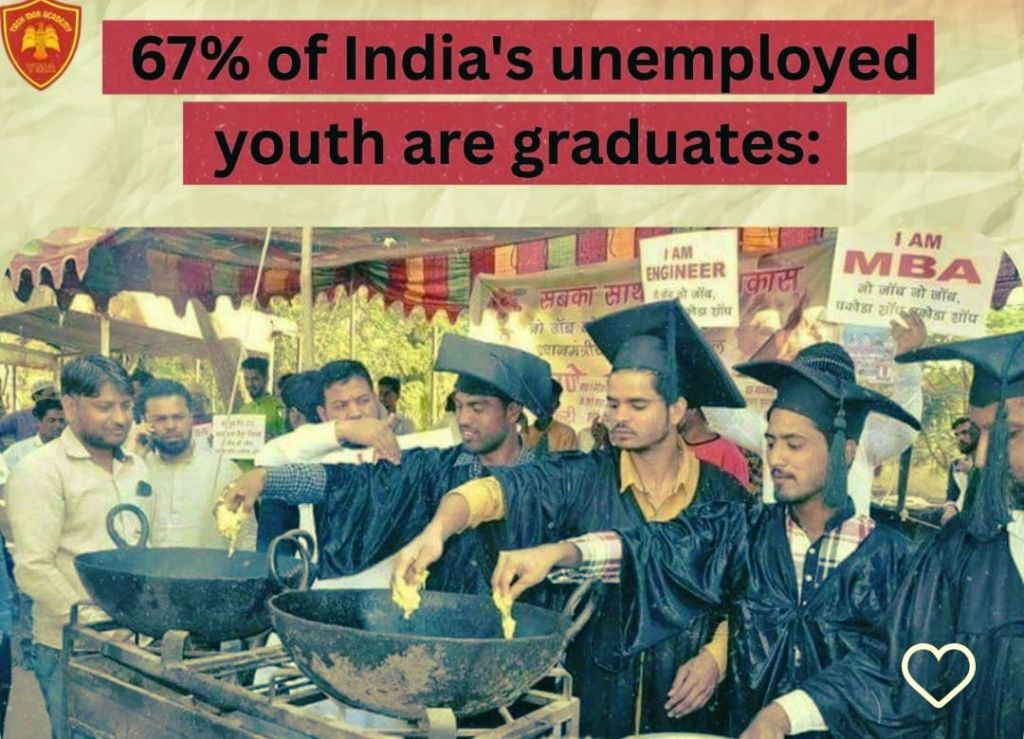
Despite these challenges, India has also demonstrated that institutional innovation can substantially improve governance outcomes. Platforms such as PRAGATI have accelerated infrastructure monitoring, the Government e-Marketplace has enhanced procurement transparency, CPGRAMS has strengthened citizen grievance redressal, faceless taxation has reduced discretionary decision-making, and digital governance initiatives have simplified public service delivery while improving administrative efficiency. These reforms illustrate a larger governance principle: technology alone cannot strengthen institutions unless accompanied by transparency, accountability, measurable outcomes, and ethical administration. The next phase of governance reform should therefore extend similar institutional disciplines to higher education, regulatory bodies, labour administration, agricultural governance, judicial processes, and public examinations, ensuring that every citizen experiences the same standards of accountability across all public institutions.

The future of Indian democracy depends not upon strengthening personalities but upon strengthening institutions. Universities require greater academic autonomy alongside measurable accountability. Examination systems require independent oversight, technology-enabled safeguards, and transparent grievance mechanisms. Electoral finance deserves continuous institutional refinement to enhance public confidence. Digital governance requires stronger safeguards for privacy, transparency, and responsible algorithmic oversight. Agricultural policymaking should evolve through wider stakeholder consultation and predictable regulatory frameworks. Simultaneously, social security for gig workers, higher female labour force participation, institutional capacity building, judicial efficiency, and evidence-based public administration must become central components of governance reform. Mature democracies recognise scrutiny not as an obstacle to governance but as one of its most valuable instruments for continuous institutional improvement.
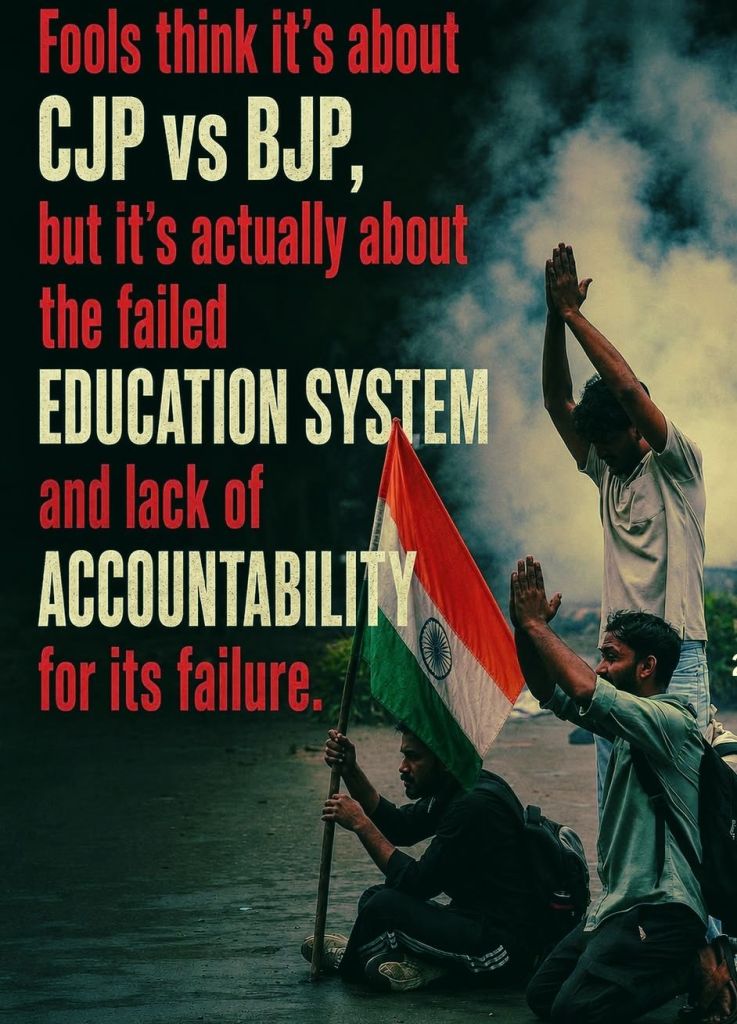
India’s greatest democratic achievement has never been the absence of disagreement; it has always been the constitutional capacity to manage disagreement through resilient institutions. History repeatedly demonstrates that nations rarely decline because citizens ask difficult questions. They weaken when institutions gradually lose the ability to provide credible, transparent, and timely answers. The true measure of governance therefore lies not in the number of policies announced nor in the magnitude of electoral victories, but in the confidence citizens continue to repose in the institutions implementing those policies. As India advances towards becoming a developed nation by 2047, institutional trust will become its most valuable strategic asset. Highways, digital infrastructure, and economic growth will undoubtedly shape national prosperity, but only strong, transparent, and accountable institutions can sustain that prosperity across generations. In the final analysis, the strongest pillar of the Republic is neither political power nor economic wealth—it is the enduring trust that binds citizens to their constitutional institutions.
VISIT ARJASRIKANTH.IN FOR MORE INSIGHTS

