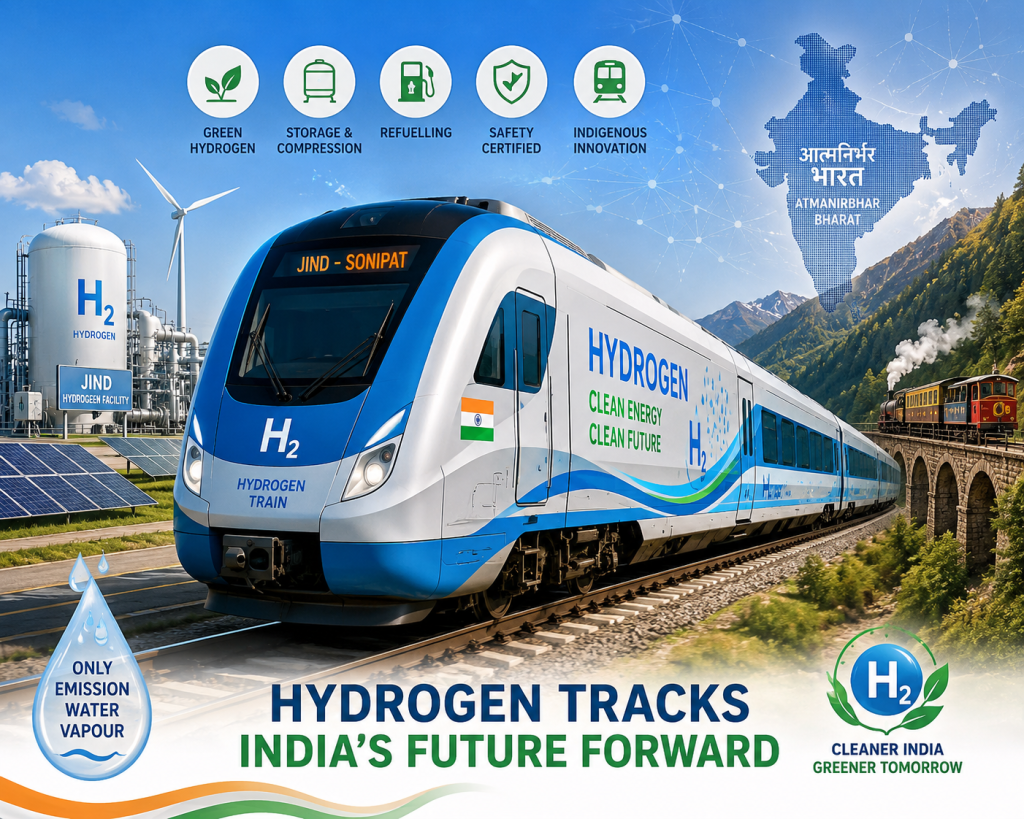
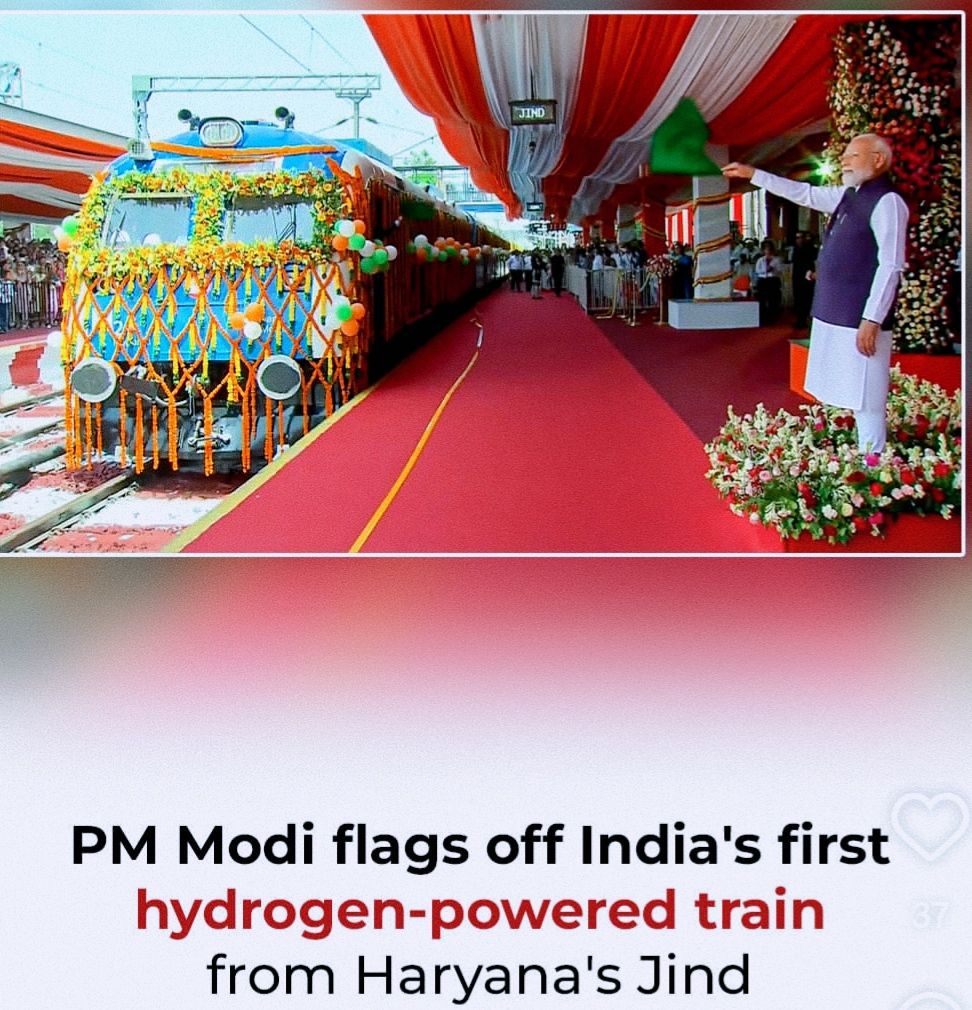
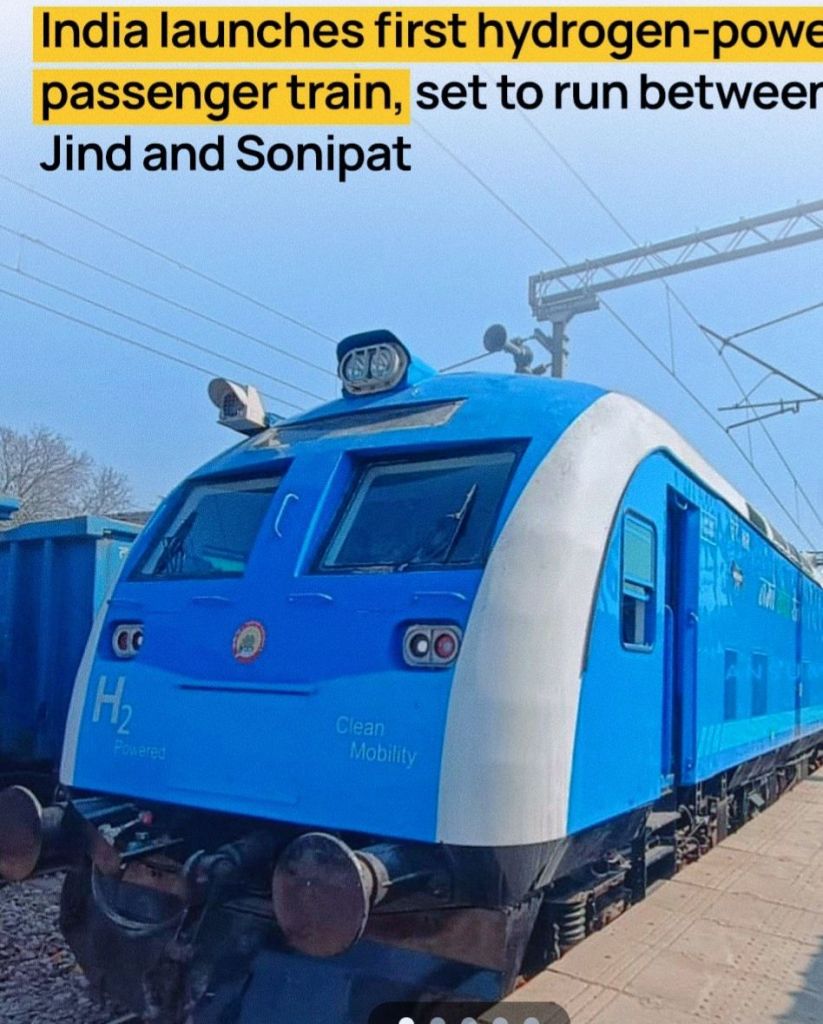
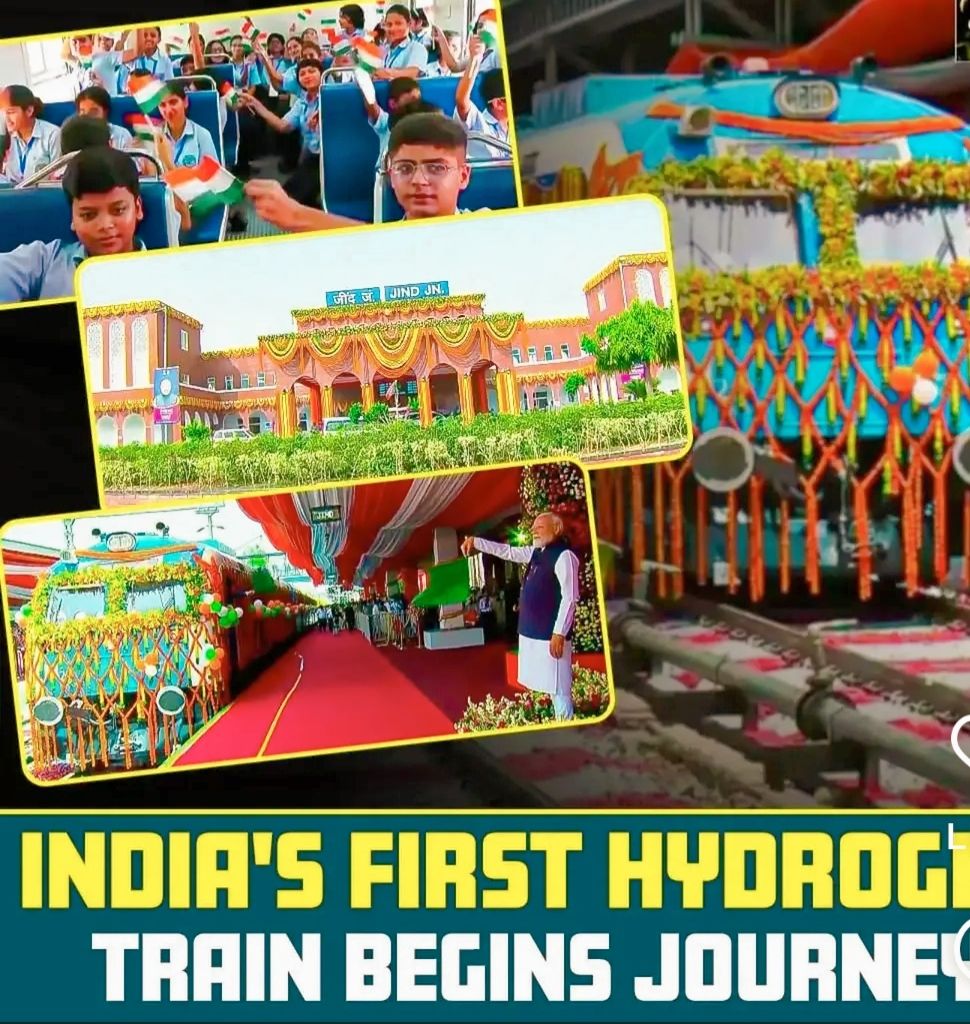
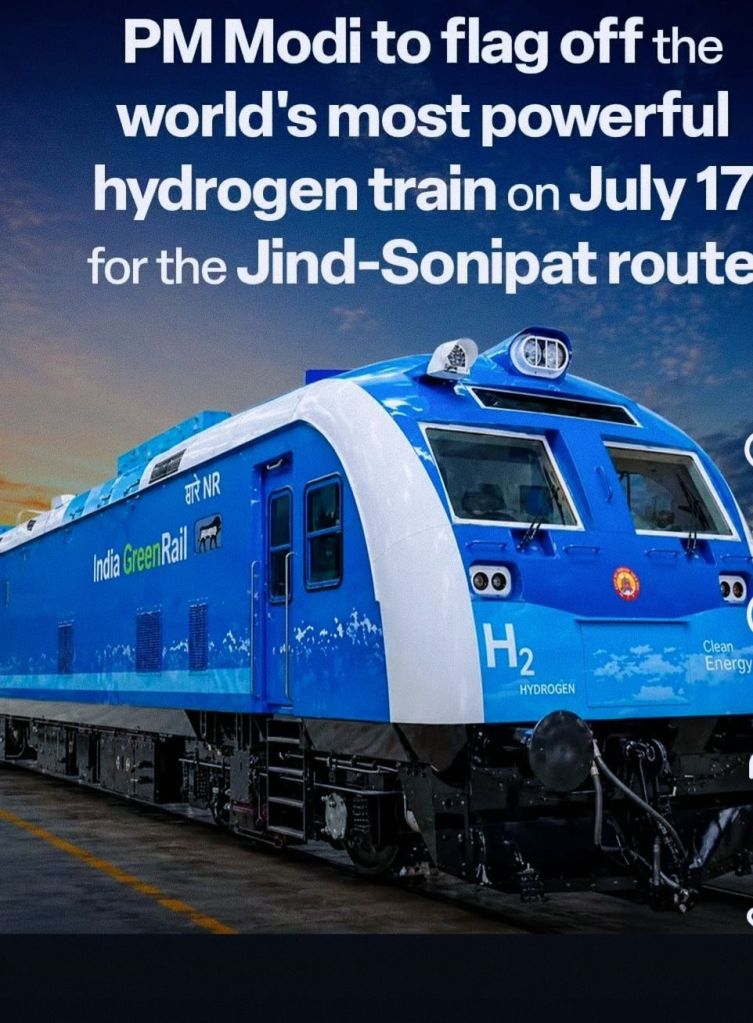
On 17 July 2026, India crossed an invisible technological frontier when Prime Minister Narendra Modi flagged off the country’s first indigenously developed hydrogen-powered passenger train on the Jind–Sonipat section of Northern Railway. At one level, it was another milestone in India’s expanding portfolio of engineering achievements. At another, it marked India’s formal entry into one of the world’s most strategic clean-energy frontiers. By successfully designing, integrating and operating a hydrogen-powered passenger train, India joined a select league of countries including Germany, France, Japan, China and the United States that are shaping the next generation of sustainable mobility. Yet the true significance of this achievement lies not in the train itself but in the larger strategic question it raises: what role should hydrogen play in a nation whose railway network is already among the world’s most comprehensively electrified? The answer transforms this inauguration from a transport story into a national technology strategy.

The engineering behind the project reflects remarkable indigenous capability. The ten-coach trainset, comprising two Hydrogen Driving Power Cars and eight passenger coaches, accommodates nearly 2,600 passengers and is powered by a combined 2,400 kW propulsion system. Operating on the 89-kilometre Jind–Sonipat route, it represents far more than a rolling prototype. At Jind, Indian Railways has simultaneously established the country’s largest railway hydrogen ecosystem, capable of producing approximately 430 kilograms of green hydrogen daily through electrolysis while storing nearly 3,000 kilograms for uninterrupted operations. Hydrogen is compressed, dispensed and managed through internationally certified safety systems approved by the Petroleum and Explosives Safety Organisation. This integrated ecosystem demonstrates that India is not merely assembling imported technology but developing competencies across the entire hydrogen value chain—from production and storage to transportation, refuelling and operational management.
The science powering the train is elegantly simple yet technologically sophisticated. Unlike conventional electric trains that continuously draw electricity from overhead wires, hydrogen trains generate electricity onboard. Hydrogen stored in high-pressure tanks combines with oxygen from the atmosphere inside Proton Exchange Membrane fuel cells to produce electricity, which drives the traction motors. Lithium iron phosphate batteries supplement power during acceleration and recover surplus energy during cruising and braking. The result is an electric train that carries its own power station. Most importantly, the only direct emission is water vapour. There is no carbon dioxide, particulate matter, sulphur oxide or nitrogen oxide released during operation. In an era where transport decarbonisation has become central to climate policy, hydrogen trains demonstrate how mobility can become virtually emission-free without sacrificing operational flexibility.
Internationally, hydrogen rail technology remains an emerging rather than a mature solution. Germany pioneered commercial hydrogen rail services in 2018 and continues expanding regional operations. China has integrated hydrogen propulsion into advanced commuter rail systems, while Japan’s Hybari prototype combines Toyota fuel cells with sophisticated battery technologies. The United States has demonstrated extraordinary operational efficiency through long-distance hydrogen train trials. Against this backdrop, India’s achievement is distinctive because of its scale and ambition. Most operational hydrogen trains globally consist of two to four coaches. India’s ten-coach passenger configuration positions it among the world’s largest hydrogen-powered trainsets, reflecting confidence in indigenous engineering and signalling the country’s broader commitment to Atmanirbhar Bharat and the National Green Hydrogen Mission. Rather than following global trends, India has demonstrated the capacity to shape them.
Ironically, however, the greatest challenge facing hydrogen rail in India arises from one of Indian Railways’ greatest successes. More than 90 percent of the country’s broad-gauge railway network has already been electrified, making conventional electric traction one of the cleanest, most efficient and economically viable transport systems anywhere in the world. From an engineering perspective, directly transmitting electricity through overhead equipment remains substantially more efficient than generating green hydrogen through electrolysis, compressing it, transporting it, storing it and reconverting it into electricity onboard. Multiple international studies estimate that direct electrification can be three to eight times more energy efficient than hydrogen propulsion. Consequently, hydrogen is unlikely to replace electric traction across mainstream railway operations. Instead, India’s technological success has paradoxically limited the commercial scale of its own innovation.
Economic considerations reinforce this conclusion. Hydrogen infrastructure requires substantial capital investment, while green hydrogen production remains significantly more expensive than conventional energy sources. Moreover, hydrogen’s environmental credentials depend entirely on its origin. Hydrogen produced using renewable-powered electrolysis genuinely advances decarbonisation. Hydrogen generated through fossil fuels merely shifts emissions upstream, reducing its environmental advantage. The long-term viability of hydrogen trains therefore depends upon dramatic reductions in renewable electricity costs, improved electrolyser efficiency, expanded storage technologies and large-scale production that lowers overall costs. Until these conditions emerge, hydrogen trains will function less as immediate commercial alternatives and more as strategic demonstration platforms that prepare India for the broader hydrogen economy.
That does not diminish their importance. Hydrogen’s greatest value lies precisely where electrification becomes economically or technically impractical. Heritage railways such as the Kalka–Shimla Railway and the Darjeeling Himalayan Railway, remote mountain corridors, environmentally sensitive landscapes and isolated regional routes could all benefit enormously from hydrogen propulsion without the need for expensive overhead infrastructure. In such environments, hydrogen becomes complementary rather than competitive. It fills operational gaps where conventional electrification delivers diminishing returns. This targeted deployment mirrors international best practices, where hydrogen trains primarily serve regional, rural and difficult terrains instead of replacing established electric networks. Strategic deployment, rather than universal adoption, is likely to define hydrogen’s long-term success in Indian Railways.

The true legacy of the Jind–Sonipat project, therefore, extends well beyond railway transportation. It is India’s first large-scale learning laboratory for the hydrogen economy. Every journey generates operational experience in fuel production, storage, refuelling, maintenance, safety management, system integration and workforce capability. These competencies possess immense spillover potential for buses, heavy trucks, ports, shipping, industrial manufacturing and future clean-energy systems. Nations that master hydrogen technologies today will influence tomorrow’s energy markets, industrial competitiveness and technological standards. India’s first hydrogen train should therefore be viewed neither as a replacement for electrification nor as a symbolic engineering exercise. It is a strategic investment in national capability. The locomotive running between Jind and Sonipat is powered by hydrogen, but it is driven by something far more valuable—India’s determination to lead the technologies that will define the twenty-first century.
VISIT ARJASRIKANTH.IN FOR MORE INSIGHTS

