
India is frequently portrayed as a land-scarce nation struggling to accommodate rapid urbanization, industrial corridors, renewable energy parks, logistics hubs, highways, affordable housing and expanding cities. Yet this narrative mistakes the symptom for the disease. India possesses sufficient land to sustain its developmental ambitions; what it lacks is legal certainty, administrative clarity and institutional credibility. Between a farmer’s field and a functioning industrial park lies a labyrinth of disputed titles, fragmented ownership, outdated land records, overlapping jurisdictions, regulatory complexity and prolonged litigation. This institutional fog inflates project costs, discourages investment, delays infrastructure and erodes public trust. The real scarcity in India is not land—it is certainty.
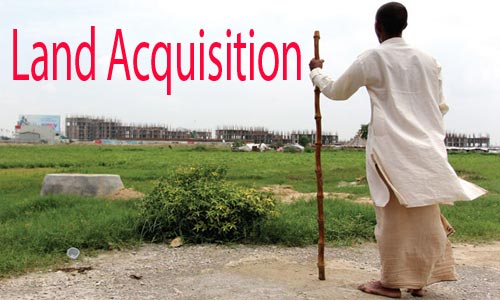
The origins of this challenge are deeply historical. The colonial Land Acquisition Act, 1894 empowered the State to compulsorily acquire private land for public purposes with minimal consultation. Although the Right to Fair Compensation and Transparency in Land Acquisition, Rehabilitation and Resettlement Act, 2013 significantly improved compensation, rehabilitation and procedural safeguards, it retained compulsory acquisition as the ultimate legal instrument. This continuity reflects a difficult reality. Successive governments have acknowledged that assembling land through purely voluntary negotiations is extraordinarily difficult because ownership is highly fragmented. Even advanced economies such as the United Kingdom retain compulsory acquisition powers, but these are generally exercised only after genuine attempts at negotiated settlement. In India, however, compulsory acquisition has too often become the first practical solution because institutional mechanisms for voluntary aggregation remain weak.
The first structural barrier is fragmentation itself. Generations of inheritance have divided agricultural holdings into innumerable small parcels with multiple legal heirs and co-owners. Every stakeholder effectively possesses the ability to delay or block transactions, creating the classic “holdout problem,” where individual owners demand disproportionate compensation once a project becomes inevitable. Negotiating with hundreds—or sometimes thousands—of landowners transforms acquisition into an uncertain, time-consuming and expensive exercise. The challenge is compounded by defective land records. Revenue registers, cadastral surveys, municipal records, forest notifications, planning maps and inheritance documents frequently contradict one another. Since most Indian land records provide presumptive rather than conclusive title, ownership itself often becomes a matter for prolonged litigation. Investors, financial institutions and governments consequently operate in an environment where legal certainty is elusive.

Even after land ownership is secured, development remains far from assured. Acquiring land does not automatically grant permission to build. Developers must obtain agricultural conversion approvals, land-use changes, zoning clearances, environmental permissions, pollution control consents, forest approvals, water-use permissions and utility connections from multiple independent agencies. Each authority follows its own procedures, timelines and compliance requirements. A clearance from one department provides no guarantee of approval from another. Instead of an integrated regulatory framework, investors navigate a fragmented administrative ecosystem where uncertainty accumulates at every stage. Consequently, regulatory complexity frequently becomes a greater obstacle than land acquisition itself.

Recognising these constraints, governments established industrial development authorities to aggregate land, develop infrastructure and allocate serviced plots to investors. Conceptually, this model reduces risk and accelerates industrialisation. In practice, however, governance failures have diluted its effectiveness. Several industrial authorities across India possess thousands of acres of developed or partially developed land that remains unutilised for years. Valuable public resources become locked in dormant industrial estates instead of generating employment, exports or manufacturing growth. Delayed infrastructure, weak demand assessment, inadequate monitoring and poor project execution have transformed several industrial zones into repositories of idle assets rather than engines of economic development.
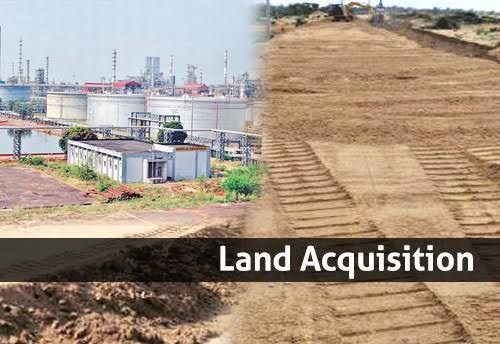
Speculative behaviour has further weakened the system. Since industrial plots are often allotted below prevailing market values, beneficiaries sometimes earn substantial capital appreciation without establishing productive enterprises. The incentive shifts from manufacturing to real estate speculation. Audit observations in several industrial regions, including Greater Noida, have highlighted large numbers of vacant plots, unauthorised transfers, payment defaults and violations of allotment conditions. Political economy compounds the problem. Governments gain immediate political visibility by acquiring and distributing land, but reclaiming idle plots requires prolonged legal proceedings with limited electoral returns. Weak enforcement allows scarce economic assets to remain unproductive for decades while genuine investors continue searching for suitable land.
Recent experiences demonstrate that land conflicts are fundamentally about institutional trust rather than compensation alone. Farmers in Gujarat protested transmission corridors for renewable energy despite the projects serving national climate objectives, illustrating that developmental intent alone cannot substitute for public confidence. Andhra Pradesh’s Amaravati initially showcased the remarkable potential of voluntary land pooling, with nearly 34,000 acres contributed by farmers who trusted the government’s long-term vision. However, when implementation slowed and policy uncertainty emerged, confidence diminished, protests intensified and institutional credibility suffered. Once trust erodes, even generous financial compensation cannot fully restore cooperation. Sustainable land governance therefore depends as much on predictable institutions as on attractive economic packages.

India’s future lies not in expanding compulsory acquisition but in strengthening institutional certainty. Voluntary land pooling, successfully practised in Gujarat and refined over decades in Japan, offers a more sustainable pathway. By allowing landowners to become partners in urban development rather than passive recipients of compensation, pooling aligns private incentives with public objectives. However, its success requires modern digital land records, conclusive land titles, integrated spatial mapping, transparent valuation, single-window approvals, time-bound clearances, strict enforcement against speculation and accountable implementation. India’s development challenge is ultimately institutional rather than geographical. The nation possesses abundant entrepreneurial energy, investment appetite and developmental ambition. Unlocking them requires transforming uncertain land into trusted assets. In the twenty-first century, the true measure of land governance will not be how much land governments acquire, but how confidently citizens, investors and institutions can build upon it.
VISIT ARJASRIKANTH.IN FOR MORE INSIGHTS

