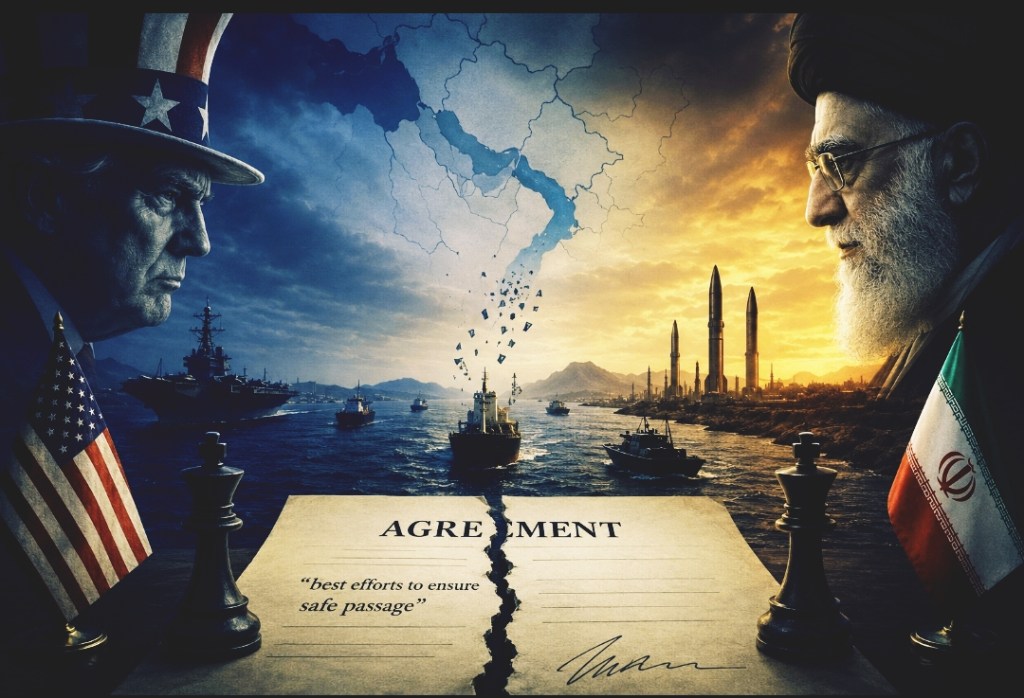
Peace agreements rarely collapse because of a single missile; they usually unravel because of a single misunderstood sentence. The dramatic breakdown of the June 2026 U.S.-Iran ceasefire demonstrates that modern diplomacy can fail not only through military aggression but through careless drafting, incompatible strategic objectives, and political miscalculation. What was celebrated as a breakthrough has rapidly evolved into a dangerous phase of “on-and-off hostility,” cantered on the Strait of Hormuz—the world’s most strategically significant maritime chokepoint. Far from ending confrontation, the agreement merely postponed it, leaving both Washington and Tehran trapped in an escalating cycle where every tactical move reinforces deeper structural mistrust.
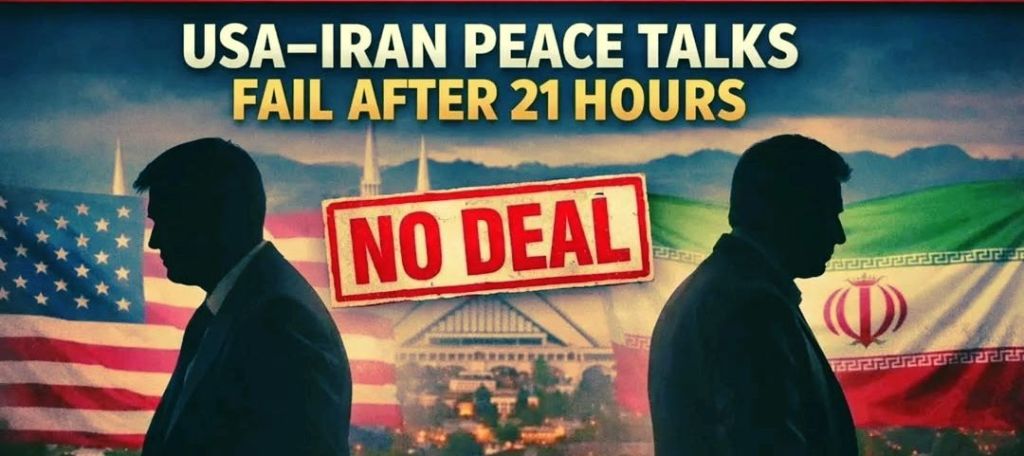
The seeds of failure were embedded in the agreement from its very conception. Rather than emerging from sustained face-to-face negotiations between seasoned diplomats, the understanding was hurriedly assembled through intermediaries, including Qatar and Pakistan, with messages passing indirectly between adversaries. Such diplomacy inevitably sacrificed clarity for speed. Even more striking was the absence of experienced Iran specialists on the American negotiating team. Previous landmark negotiations involved veteran diplomats possessing deep knowledge of Iranian political culture, nuclear policy, and regional strategy. By contrast, the latest process reflected a transactional mindset that viewed diplomacy as a commercial bargain capable of persuading Tehran through economic incentives. This approach fundamentally underestimated the ideological foundations of the Iranian state, where revolutionary identity, national pride, and strategic autonomy consistently outweigh purely economic calculations.
The agreement’s fatal flaw resided in Paragraph Five, a deceptively simple provision requiring Iran to make “its best efforts” to ensure the safe passage of commercial vessels for sixty days. In diplomatic language, vague expressions such as “best efforts” often become invitations for conflicting interpretations. Washington assumed the clause required the complete reopening of the Strait of Hormuz under pre-war conditions. Tehran interpreted the same words as obligating only reasonable efforts within areas under its direct jurisdiction. By opening merely the navigation channel closest to its territorial waters, Iran argued that it had fully complied with the agreement while simultaneously preserving substantial leverage over maritime traffic.
The disagreement was not accidental; experienced observers immediately recognized that undefined language concerning “safe passage” would become the agreement’s most dangerous loophole. Diplomacy collapsed precisely where legal ambiguity met geopolitical ambition.
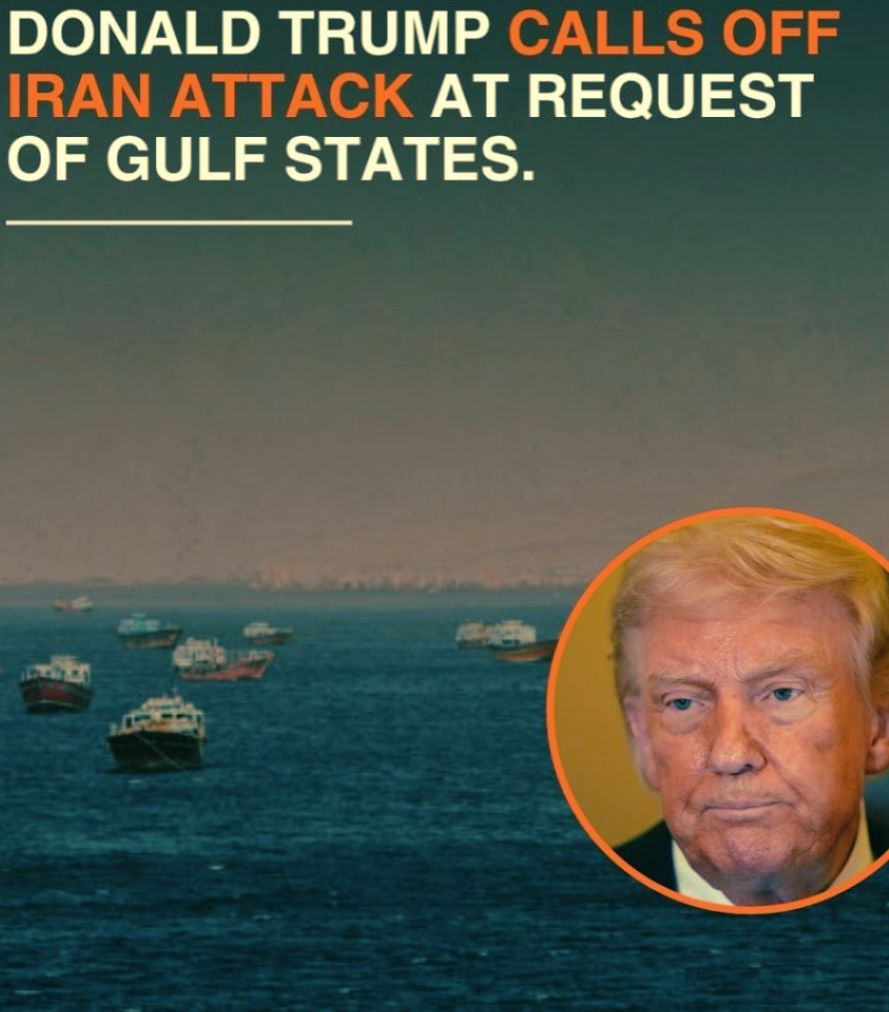
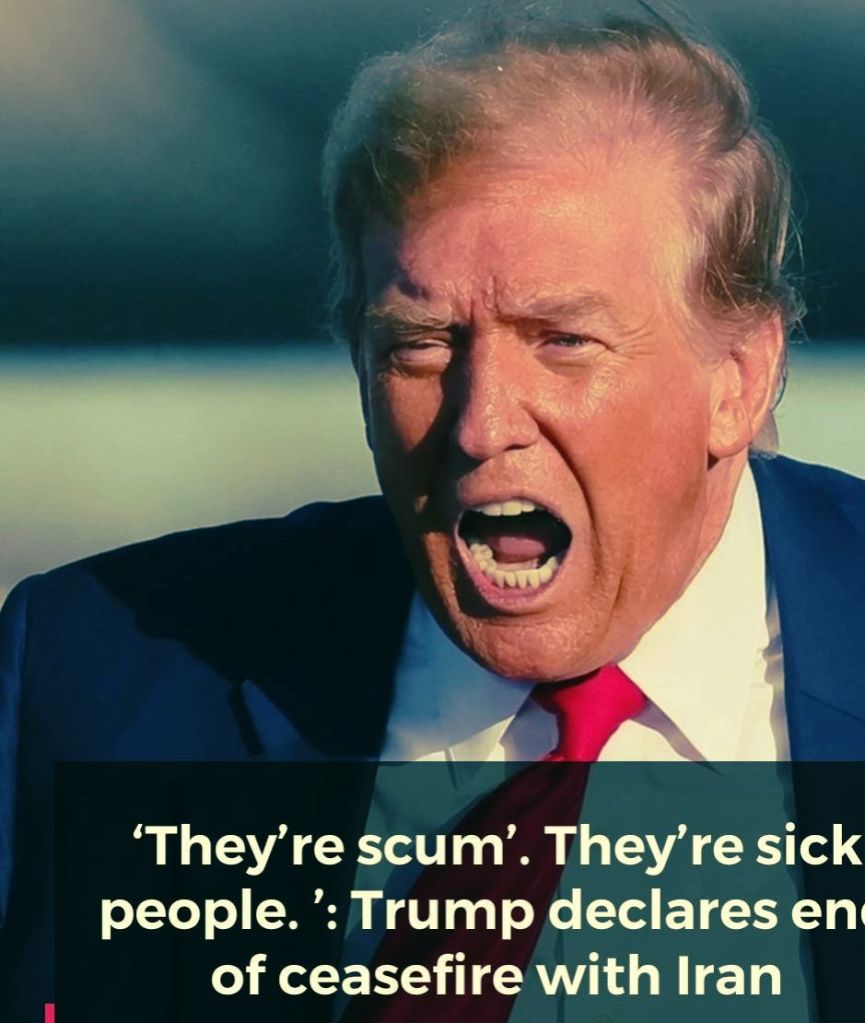
Washington’s response transformed a flawed agreement into a renewed strategic confrontation. The announcement of a blockade targeting Iranian ports effectively removed one of the ceasefire’s central pillars while introducing new military risks. Instead of restoring freedom of navigation, the blockade exposed the U.S. Navy to prolonged operations within heavily contested waters where Iran enjoys significant geographic advantages.
Unlike conventional battlefields, the Strait of Hormuz compresses naval forces into narrow channels vulnerable to missiles, drones, mines, and fast attack craft. Military superiority therefore becomes less decisive than geographic reality. Iran does not require complete control of the Strait to achieve strategic success; it merely needs sufficient capability to create uncertainty, elevate insurance costs, disrupt shipping schedules, and inject volatility into global energy markets.
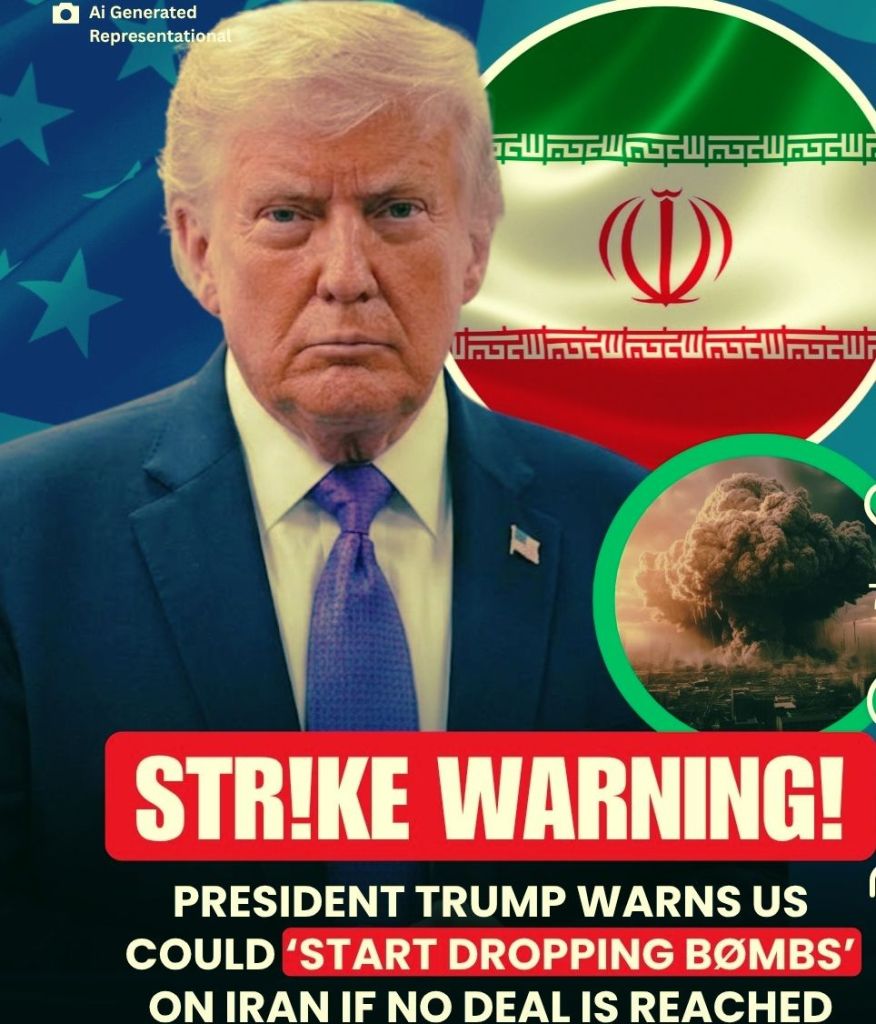
Iran’s strategic doctrine further complicates the confrontation. Its approach has consistently emphasized asymmetric escalation rather than direct conventional warfare. The first objective involves controlling or disrupting maritime traffic through Hormuz, thereby increasing international economic pressure on Washington and its allies. The second involves calibrated missile or drone attacks against American military facilities across the Gulf, demonstrating that hosting U.S. forces carries tangible costs for regional partners. Such actions are designed less to achieve military victory than to alter political calculations. By increasing operational and political costs without crossing thresholds that trigger full-scale invasion, Tehran seeks to exploit America’s domestic reluctance for another prolonged Middle Eastern war.
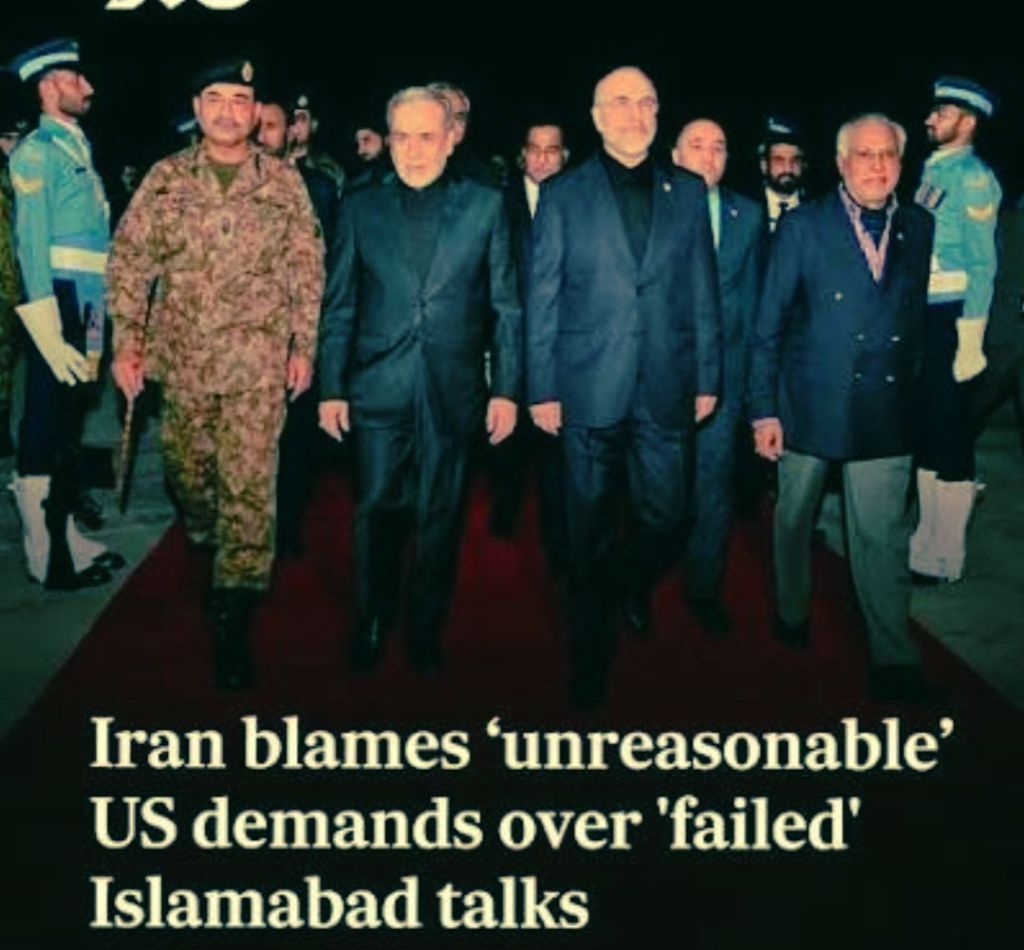
Domestic political realities significantly constrain American strategic options. Initial expectations that limited military strikes and economic pressure would force Iranian concessions have proven unrealistic. Public support for another major ground conflict remains limited, while Congress exhibits little appetite for long-term military commitments involving substantial casualties. Consequently, Washington searches for alternatives ranging from intensified maritime enforcement to broader regional security arrangements capable of preserving deterrence without triggering open war. Simultaneously, regional actors have begun adapting independently. Saudi Arabia’s renewed use of alternative pipeline infrastructure illustrates how energy exporters increasingly seek to reduce dependence on Hormuz, gradually weakening the Strait’s monopoly over Gulf oil exports. Strategic geography remains important, but technological adaptation and infrastructure diversification steadily reduce the coercive value of chokepoints.
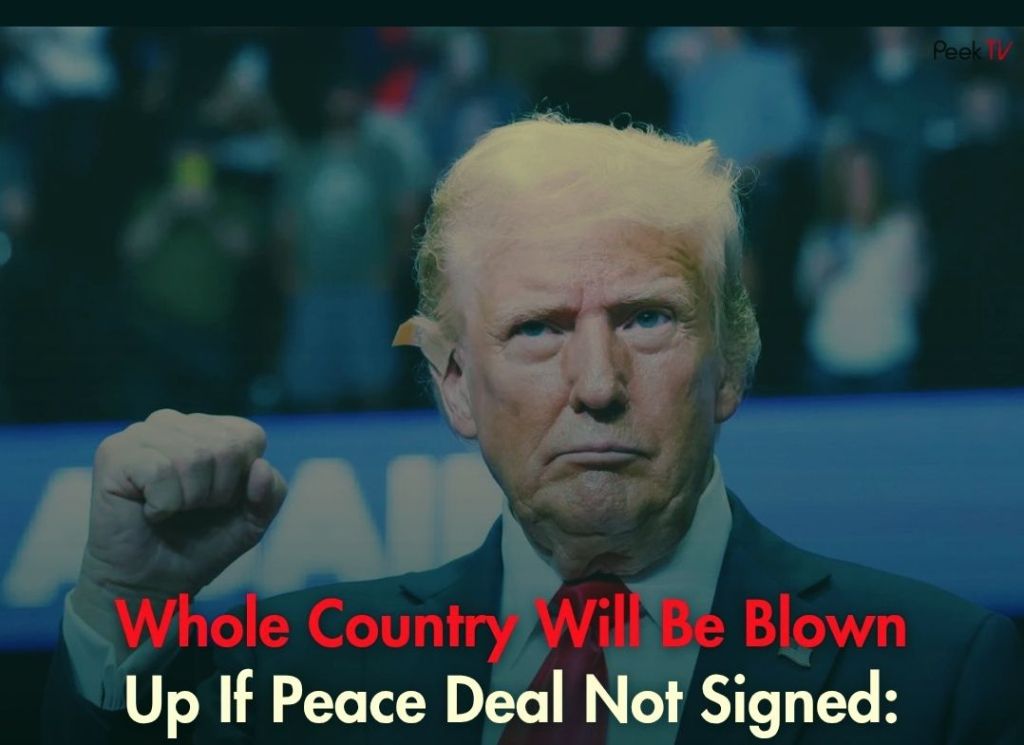
Beyond immediate military tensions lies a much deeper geopolitical contest that diplomacy alone cannot resolve. Washington continues pursuing a regional order that protects longstanding alliances, limits Iranian influence, and preserves freedom of navigation. Tehran, meanwhile, seeks recognition as an independent regional power whose security interests cannot be subordinated to external pressure. The legacy of sanctions, covert operations, shifting American administrations, and the collapse of previous agreements has convinced Iranian policymakers that declaratory assurances carry little value without verifiable implementation. Simultaneously, Iran’s expanding relationships with Russia and China, participation in emerging Eurasian economic corridors, and support for alternative financial arrangements increasingly place the dispute within the broader framework of global great-power competition rather than a purely bilateral disagreement.
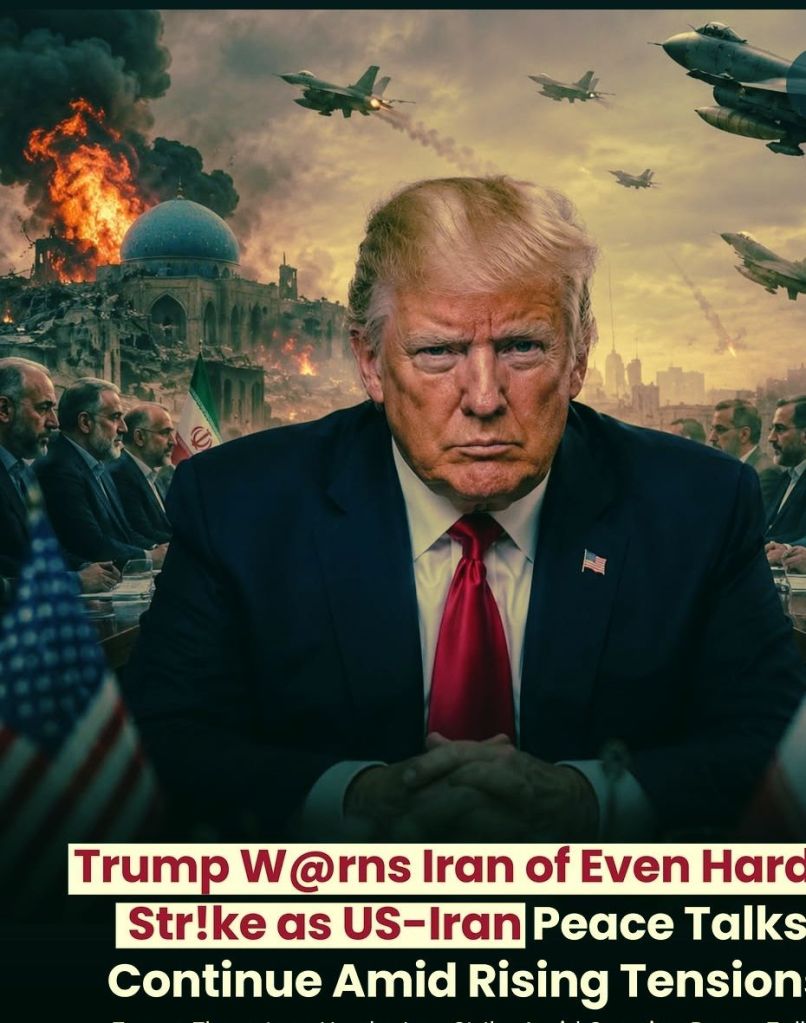
The tragedy of the latest ceasefire is therefore not merely its collapse but what it reveals about contemporary international politics. Military power remains formidable, yet it is no longer sufficient to produce durable political outcomes. Economic interdependence ensures that disruptions in the Gulf reverberate through inflation, trade, and financial markets worldwide. Multipolarity has expanded the strategic options available to regional powers, reducing the effectiveness of unilateral coercion while increasing the complexity of diplomatic compromise. Lasting peace between the United States and Iran will require more than carefully worded memoranda or temporary pauses in hostilities. It demands negotiations grounded in strategic realism, legal precision, mutual verification, and recognition that enduring stability emerges not from imposing victory upon an adversary but from constructing institutions capable of managing permanent disagreement. Until that transformation occurs, every ceasefire in the Strait of Hormuz risks becoming merely another intermission between chapters of the same unfinished conflict.
VISIT ARJASRIKANTH.IN FOR MORE INSIGHTS

