
India’s aspiration to become a developed nation by 2047 is often measured through soaring GDP, world-class infrastructure, digital transformation, and global economic influence. Yet the true maturity of a nation is revealed not by the wealth it creates, but by the dignity it provides when citizens are no longer able to create wealth themselves. Hidden beneath India’s impressive economic rise lies a silent national challenge—a pension system that remains fragmented, inadequate, and dangerously unprepared for one of the largest demographic transitions in human history. If India succeeds in becoming rich without ensuring retirement security, it risks creating an economy that prospers while millions of its elderly struggle to live with dignity. The defining question for the Republic is therefore no longer how fast it grows, but how securely its citizens can grow old.

International comparisons expose the depth of the problem. The Mercer–CFA Institute Global Pension Index 2025 placed India among the weakest pension systems globally, awarding it a ‘D’ overall rating and an even more troubling ‘E’ for adequacy. These assessments indicate that retirement incomes remain insufficient to meet even basic living standards for a significant section of the elderly. Such rankings should concern policymakers because pension systems are not merely financial products; they reflect a nation’s long-term social contract with its workforce. An economy aspiring to rank among the world’s largest cannot simultaneously remain among the least prepared to provide financial security after retirement.

The constitutional vision itself recognises this responsibility. Article 41 of the Constitution envisages public assistance in cases of old age, unemployment, sickness, and disability. However, this commitment is qualified by the State’s “economic capacity and development,” making pension protection more a matter of fiscal policy than an enforceable legal entitlement. Consequently, retirement security has evolved unevenly across the country, shaped by changing political priorities and budgetary considerations rather than by a uniform national guarantee. The result is a welfare framework that provides varying levels of support depending on geography instead of ensuring equal dignity for every elderly citizen.

Perhaps no example illustrates policy stagnation more starkly than the Indira Gandhi National Old Age Pension Scheme. The Central Government’s contribution of merely ₹200 per month has remained unchanged since 2007 despite nearly two decades of inflation. While several states supplement this amount with generous top-ups, many others provide only limited assistance, producing wide disparities in old-age income security. Inflation has steadily eroded the purchasing power of the central pension to a fraction of its original value, transforming what was once modest assistance into a largely symbolic payment.
Retirement dignity should never become dependent upon one’s postal address or the fiscal capacity of individual states.

The structural weaknesses extend beyond inadequate benefits. India’s pension architecture resembles a collection of disconnected islands rather than an integrated national system. The Employees’ Provident Fund Organisation, the National Pension System, the Atal Pension Yojana, numerous state pension programmes, and sector-specific arrangements all operate under different rules, contribution structures, regulatory frameworks, and tax treatments. This institutional fragmentation complicates administration, confuses contributors, and reduces portability across occupations. The absence of a unified national pension database further limits policymakers’ ability to assess retirement preparedness or design evidence-based reforms for an increasingly mobile workforce.

Even more concerning is the vast scale of exclusion. Less than one-fourth of India’s workforce participates in formal pension arrangements, while only around 29 percent of senior citizens receive any form of pension. Nearly 85 percent of Indian workers remain employed in the informal sector, where retirement savings are irregular, employment relationships are unstable, and institutional pension coverage is virtually absent. The rapid expansion of gig work and platform-based employment introduces additional uncertainty, as millions of younger workers may spend entire careers outside conventional retirement systems. Without structural reforms, today’s informal workers are likely to become tomorrow’s financially vulnerable elderly population.

Demographic trends make delay increasingly dangerous. India’s elderly population is projected to nearly double by 2050, reaching approximately 347 million people, while the number of citizens above the age of 80 is expected to grow even more rapidly. Simultaneously, the demographic dividend that currently supports economic expansion will gradually diminish, increasing dependency ratios and intensifying fiscal pressures. Ironically, India faces the prospect of becoming an ageing society before establishing the institutions necessary to support old age. Pension reform is therefore no longer simply a welfare initiative; it is essential economic planning for a demographic reality that is already unfolding.

Yet ageing should not be viewed solely through the lens of dependency. Older Indians continue contributing significantly through paid employment, family caregiving, community service, mentoring, and voluntary work. Many retirees possess decades of accumulated professional knowledge that remains economically valuable.
Surveys consistently indicate that a large majority of senior citizens are willing to continue working, provided suitable opportunities exist. Productive ageing must therefore become a central pillar of pension policy. Encouraging flexible employment, phased retirement, lifelong learning, and senior entrepreneurship can reduce fiscal pressures while transforming longevity from a perceived burden into what economists increasingly describe as a “silver dividend.”
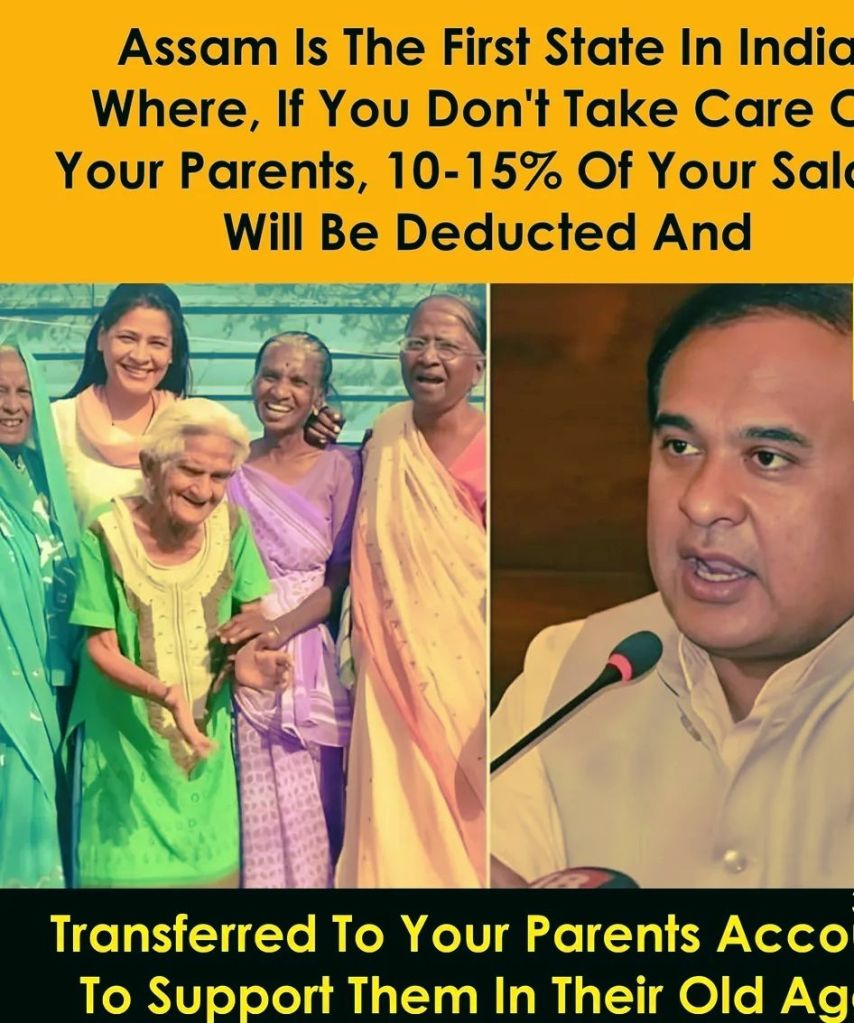
The coming decades demand a comprehensive, multi-pillar pension architecture capable of balancing adequacy with fiscal sustainability. Every elderly citizen should be guaranteed a universal minimum pension floor that ensures dignity, particularly those outside formal employment. Mandatory contributory savings for organised workers must be strengthened, while flexible, portable pension accounts should accompany workers across changing careers, sectors, and states. Inflation-indexed retirement incomes, unified digital pension registries, simplified regulation, expanded financial literacy, and stronger incentives for voluntary retirement savings are equally essential. Governments already spend substantial public resources on pensions, and fiscal discipline remains indispensable. However, postponing reform will almost certainly prove more expensive than implementing it. India’s pension debate is therefore not about generosity—it is about national preparedness. A country that dreams of becoming a global economic leader must ensure that retirement is remembered not as the beginning of financial insecurity, but as the reward for a lifetime of contribution to the Republic.
VISIT ARJASRIKANTH.IN FOR MORE INSIGHTS

