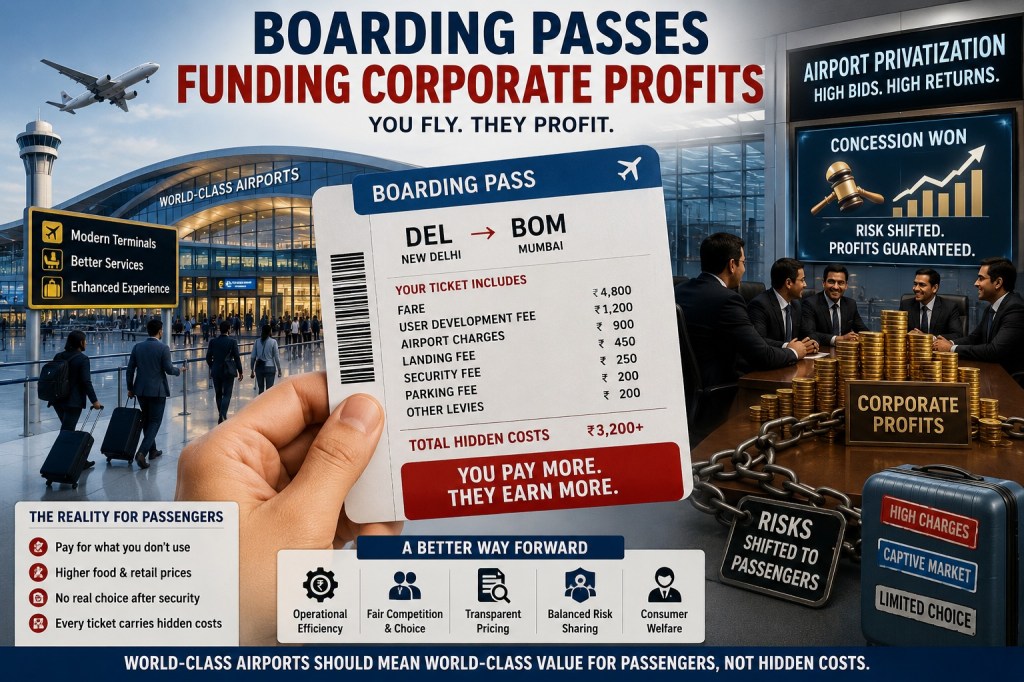
India’s aviation revolution is often showcased as one of the country’s most remarkable infrastructure achievements. Glittering airport terminals, world-class architecture, digital boarding systems, expanding regional connectivity, and record passenger traffic collectively project the image of a rising global power. Since the privatization of major airports beginning with Delhi and Mumbai in 2006, followed by successive rounds involving several other airports, India has fundamentally transformed its aviation ecosystem. With the national vision of expanding from around 163 operational airports today to nearly 400 by 2047, private investment is undeniably essential. Yet beneath the polished terminals lies an uncomfortable economic truth: airport privatization is increasingly shifting commercial risks away from private operators and onto ordinary passengers. Every boarding pass now carries invisible costs that extend far beyond the airfare itself.
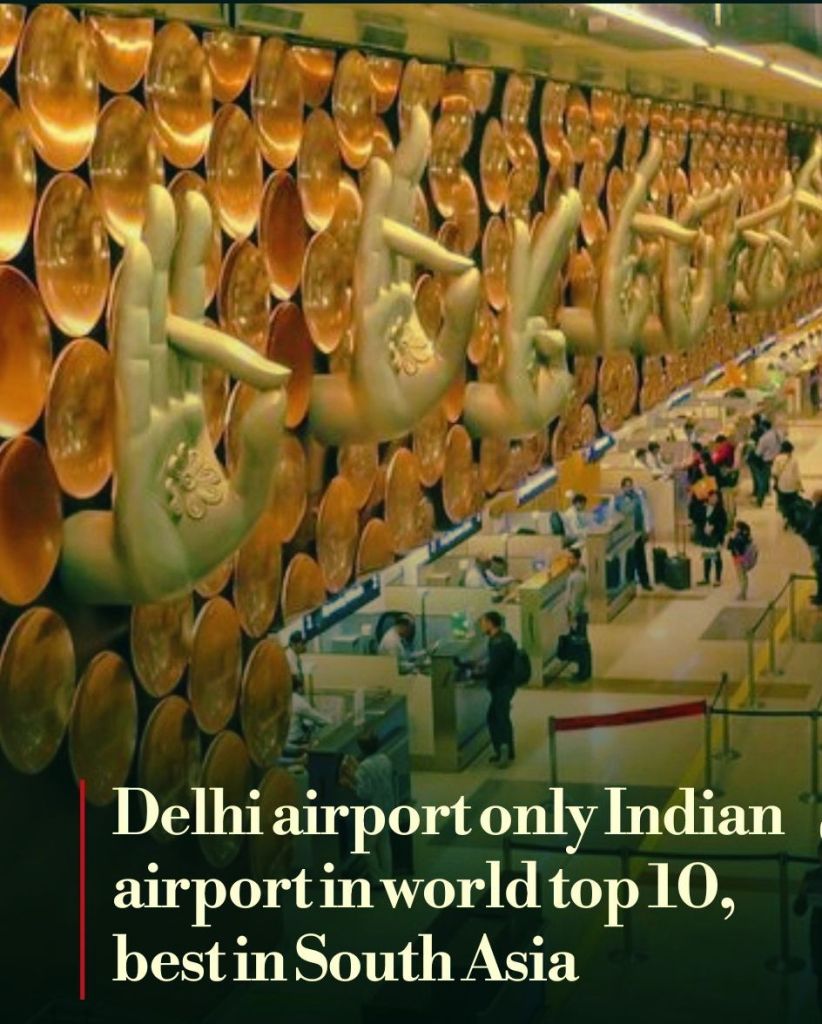
Private participation has undoubtedly accelerated modernization at a pace that public finances alone could scarcely have sustained. Larger terminals, improved passenger amenities, advanced baggage systems, and global service standards have significantly enhanced the travel experience. However, infrastructure should ultimately be evaluated not merely by architectural grandeur but by whether efficiency lowers costs for citizens. In India’s airport sector, the opposite trend is becoming increasingly evident. Instead of productivity driving profitability, aggressive concession bids have encouraged operators to recover enormous financial commitments through escalating airport charges, effectively transforming passengers into the principal financiers of privatized infrastructure.
The second phase of airport privatization illustrates this structural distortion. Concessions were awarded primarily on the basis of the highest per-passenger fee offered to the government rather than on demonstrated operational efficiency or long-term affordability. Companies willingly submitted exceptionally high bids because they anticipated that regulatory frameworks would eventually permit recovery through User Development Fees (UDF), airport charges, landing fees, parking charges, and various other levies. The government secured impressive concession revenues, operators obtained valuable long-term infrastructure assets, while the actual burden quietly shifted to millions of passengers purchasing airline tickets. Commercial risk, rather than being borne by investors, became embedded within the price of every journey.
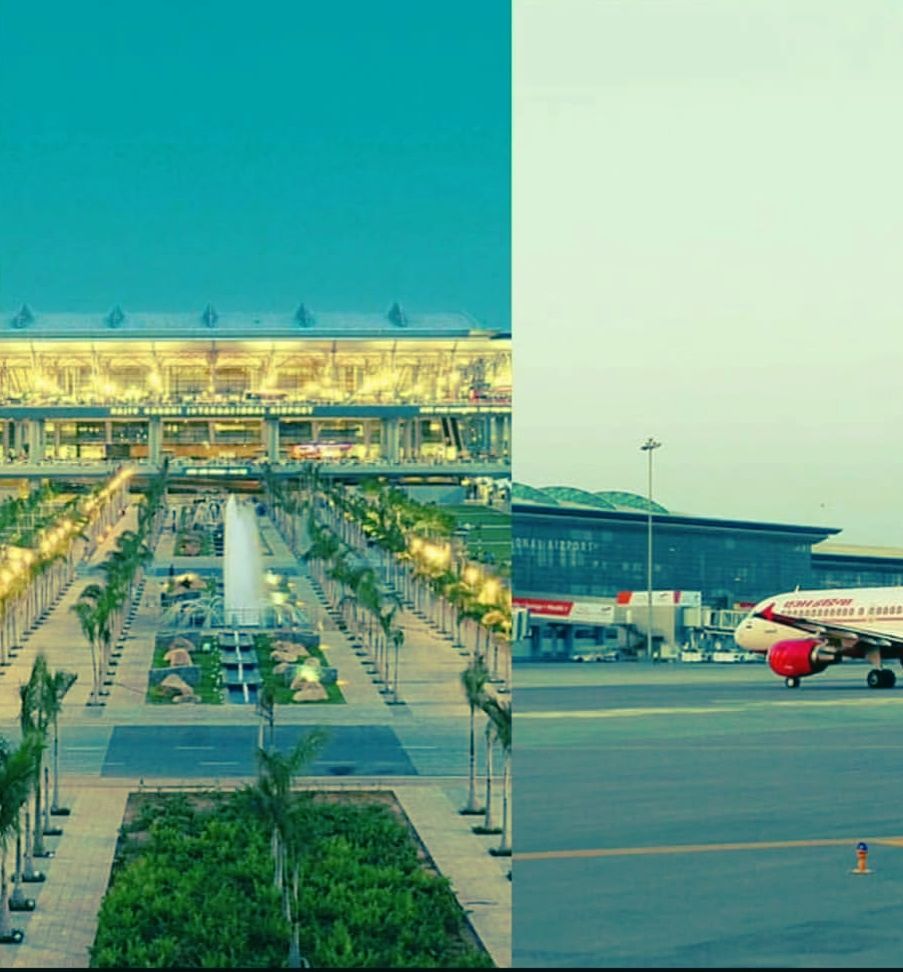
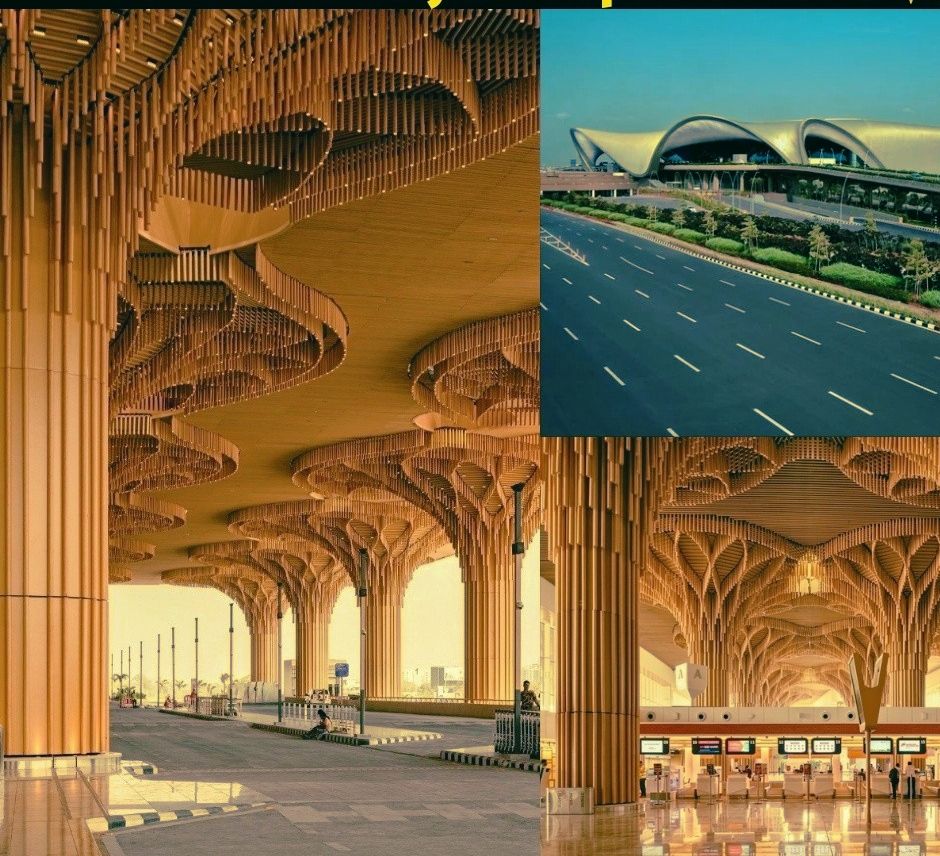
The financial burden does not end with airport tariffs. Aviation Turbine Fuel already constitutes one of the largest components of airline operating costs, particularly in India where taxation remains relatively high. Privatized airports have introduced another layer of unavoidable expenditure—the cost of maintaining expansive terminals, luxury interiors, premium lounges, decorative architecture, retail complexes, landscaped spaces, and high-end commercial infrastructure. Whether or not travellers use these facilities becomes irrelevant. Every passenger contributes to financing the airport’s premium ecosystem simply by purchasing a ticket. The distinction between essential aviation infrastructure and commercial real estate has gradually blurred.
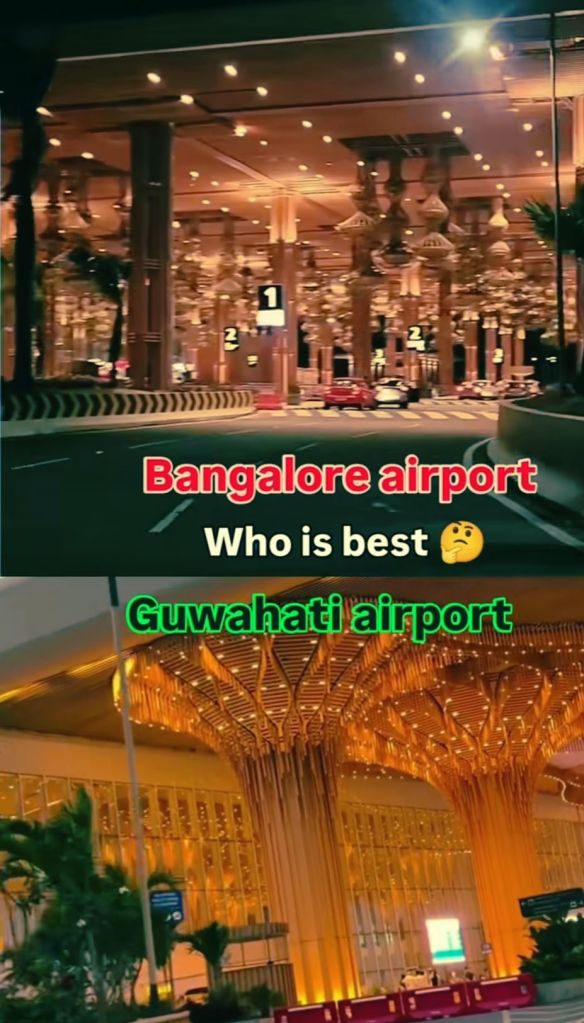
This hidden financial obligation is particularly inequitable because it is largely unavoidable. A traveller carrying home-cooked food, declining lounge access, avoiding restaurants, making no purchases from duty-free outlets, and spending only a few minutes inside the terminal still pays airport development charges embedded within the ticket. Even passengers who merely enter the terminal, board the aircraft, and exit at their destination without consuming a single commercial service subsidize an ecosystem built around premium retail and hospitality. Airports have evolved into compulsory consumption zones where payment is detached from actual usage, challenging the fundamental principle that consumers should pay primarily for services they choose to use.
Another emerging concern is the growing concentration of market power. India’s aviation sector increasingly resembles an oligopolistic structure in which a limited number of airlines dominate passenger traffic while a handful of infrastructure conglomerates control multiple airports. Earlier privatization rounds imposed few meaningful restrictions on the number of airports a single bidder could secure, enabling extensive concentration of ownership. Recognizing the potential consequences, the Ministry of Civil Aviation has proposed limiting the number of airport bundles any one operator can acquire in future bidding exercises. Such corrective thinking implicitly acknowledges that excessive consolidation weakens competition, reduces consumer choice, and risks concentrating strategic infrastructure within a narrow corporate landscape.
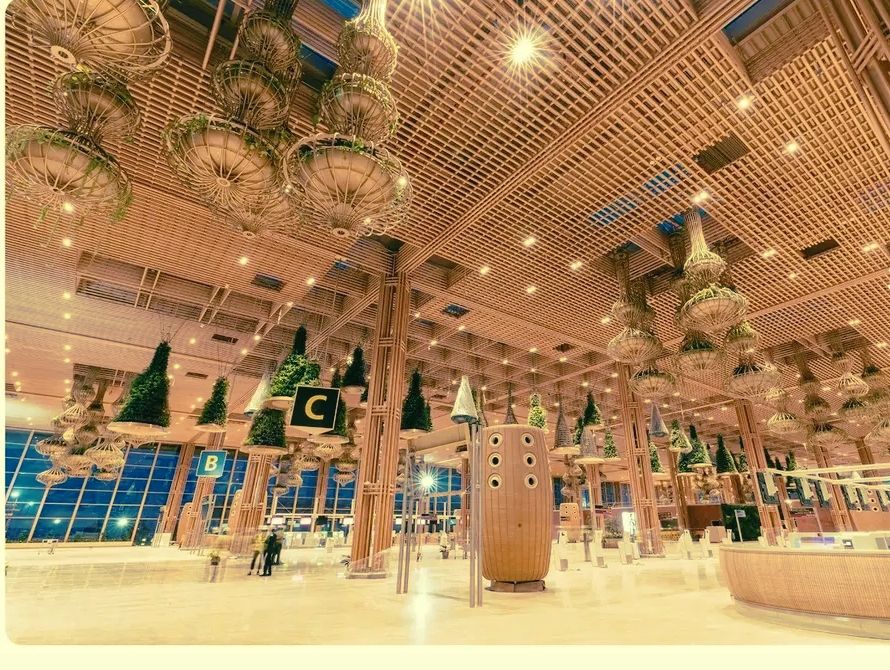
The monopoly extends well beyond airport ownership into everyday passenger experience. Once travellers pass through security checkpoints, they enter one of India’s most perfectly captive retail markets. Food, beverages, medicines, books, convenience items, and essential travel products are frequently sold at prices several times higher than those prevailing outside the airport. Consumers have virtually no competitive alternatives because concessionaires operate under exclusive agreements with airport authorities. While regulators scrutinize aeronautical tariffs, retail pricing often remains outside meaningful oversight. The result is an enclosed commercial ecosystem where passengers possess purchasing power but almost no market choice, reinforcing the perception that airports have become profit-maximizing commercial destinations rather than public transport facilities.
International experience demonstrates that privatization need not function this way. Singapore’s world-renowned airport consistently ranks among the finest globally not because it extracts the highest revenue from passengers but because it relentlessly pursues operational efficiency.
Automation, artificial intelligence, autonomous baggage systems, seamless immigration processes, optimized passenger movement, and disciplined asset management reduce operating costs while improving customer experience. Similarly, Europe’s successful low-cost aviation ecosystem is built upon lean airport operations, rapid aircraft turnaround, standardized procedures, and relentless productivity improvements. Profitability arises through efficiency, not through continuously increasing passenger charges or imposing unavoidable commercial costs.

India certainly requires world-class airports to support economic growth, tourism, trade, regional connectivity, and its aspirations of becoming a developed nation. However, world-class infrastructure must be judged not only by architectural magnificence but equally by affordability, transparency, competition, and public trust. Privatization should distribute commercial risks fairly among governments, investors, and consumers rather than transferring them disproportionately onto travellers. Future concession models must reward operational excellence instead of aggressive financial bidding, strengthen regulatory oversight over both aeronautical and major non-aeronautical charges, encourage genuine retail competition, and ensure complete transparency of every airport-related fee appearing on passenger tickets. A boarding pass should represent the cost of travel—not an invisible contribution toward monopolies, speculative bids, luxury infrastructure, and commercial risks that rightly belong to those who choose to invest.
VISIT ARJASRIKANTH.IN FOR MORE INSIGHTS

