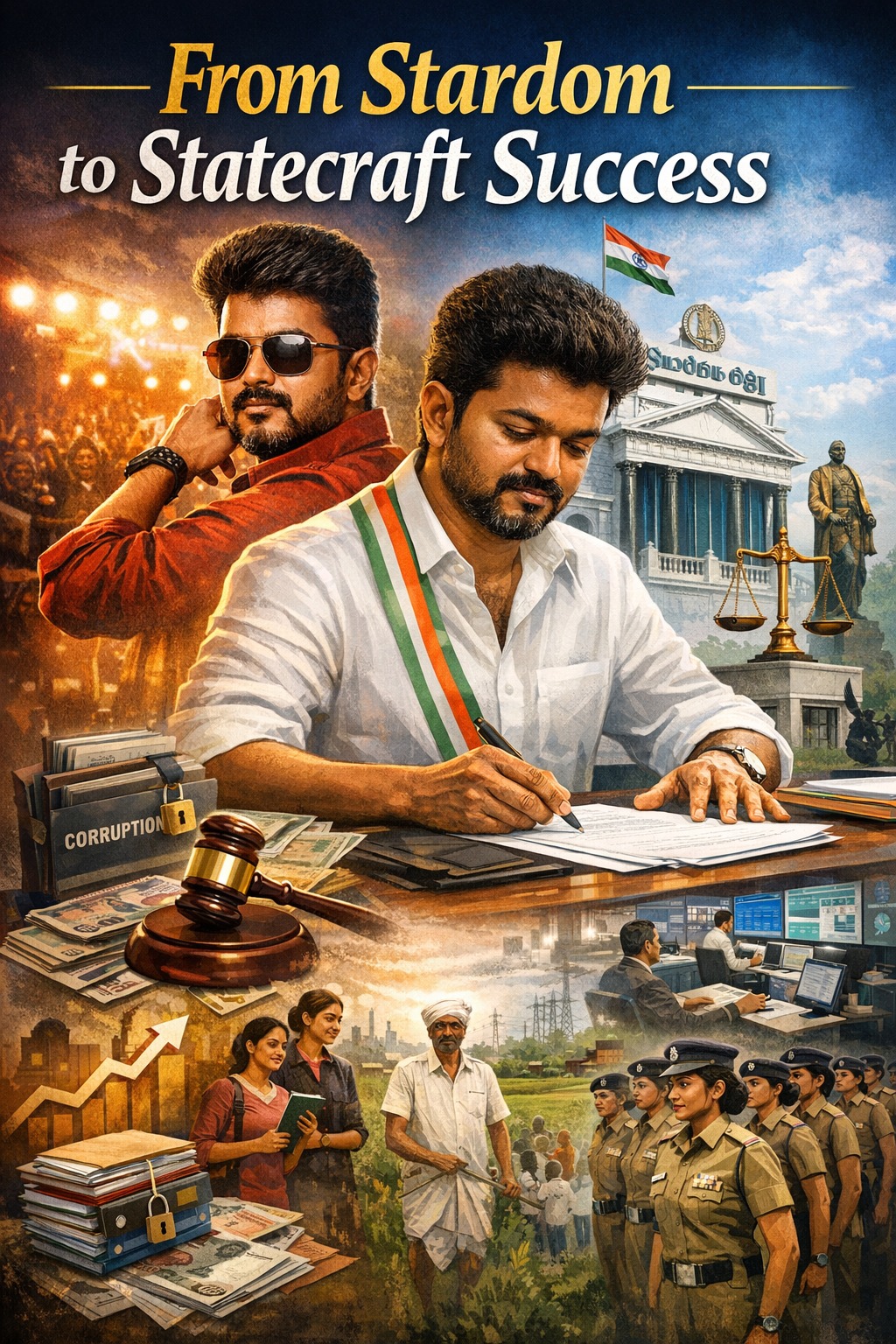
In democratic politics, charisma may win elections, but institutions determine legacies. Tamil Nadu’s Chief Minister C. Joseph Vijay has already achieved what many political observers considered improbable: he transformed cinematic popularity into a decisive political movement capable of disrupting a Dravidian political order that had dominated the state for nearly six decades. His ascent is not merely the story of a film star entering public life; it represents the emergence of a new political aspiration among voters seeking alternatives to entrenched structures of power. Yet history repeatedly demonstrates that electoral victories are moments, whereas governance is a marathon. The first month of Vijay’s administration therefore deserves examination not as a celebration of political success, but as an indicator of whether a charismatic leader can evolve into a transformative statesman.
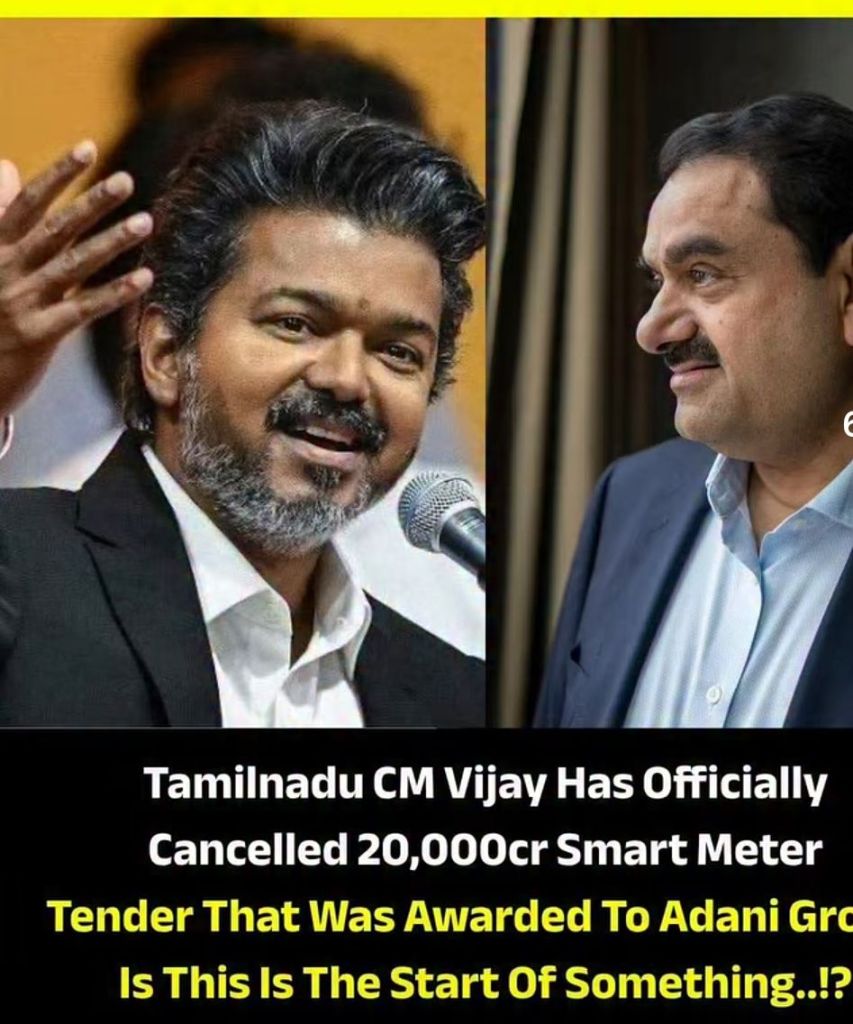
The magnitude of Vijay’s political achievement is extraordinary. Without inheriting a political dynasty, established cadre network, or decades of legislative apprenticeship, he built a movement that secured more than 1.7 crore votes and emerged as the central force in Tamil Nadu politics. His success was constructed upon four pillars: a cinematic image associated with justice and social reform, an extensive grassroots fan ecosystem, deep resonance among younger voters, and the symbolic decision to abandon one of India’s most lucrative film careers. Unlike many celebrity politicians whose popularity remains confined to public admiration, Vijay succeeded in converting emotional capital into organizational strength. That distinction is critical because elections are not won by popularity alone; they are won by structures capable of translating sentiment into votes.

Perhaps the most surprising feature of his first month in office has been the relative absence of theatrical politics. Instead of relying solely on symbolism, the administration has focused on cultivating administrative discipline. Reports of punctual attendance at the Secretariat, insistence upon bureaucratic accountability, and efforts to improve responsiveness within government departments may appear mundane when compared to grand electoral promises. Yet governance often succeeds or fails because of precisely such institutional habits. Administrative culture shapes service delivery more profoundly than political speeches. A bureaucracy that functions predictably, transparently, and efficiently creates confidence not merely among citizens but also among investors, administrators, and civil society. By emphasizing discipline from the top, Vijay appears to recognize an important truth: governance begins with systems before it produces outcomes.

The government’s anti-corruption posture has further strengthened this perception. Early interventions targeting irregularities in public administration, measures against entrenched rent-seeking practices, and actions designed to reduce discretionary corruption have projected the image of an administration attempting to distinguish itself from conventional patronage politics. Whether these initiatives evolve into durable institutional reforms remains uncertain, but their political significance is undeniable. New governments often enjoy a brief window during which public expectations are high and resistance from entrenched interests remains fragmented.

Successful leaders use this period not merely to announce reforms but to alter administrative incentives. If anti-corruption efforts become embedded within procurement systems, digital governance mechanisms, and departmental accountability structures, they could outlast the current political cycle.
Equally important are the welfare-oriented decisions that reflect continuity with Tamil Nadu’s long tradition of socially responsive governance. Enhanced support for households, renewed focus on affordable public services, women-centric safety initiatives, and a broad governance vision document indicate an attempt to blend welfare politics with administrative modernization. This balance is particularly important in Tamil Nadu, where voters have historically rewarded governments that combine social justice with effective service delivery. Welfare is often misunderstood as a fiscal burden. In reality, well-designed welfare programmes function as investments in human capability, social stability, and economic participation. Vijay’s challenge will be ensuring that these programmes move beyond announcement-driven politics and become instruments of measurable social transformation.

Yet sustaining success requires confronting realities that electoral campaigns can postpone but governance cannot avoid. Tamil Nadu faces significant fiscal pressures, inherited debt obligations, infrastructure demands, and rising public expectations. Welfare commitments must coexist with financial sustainability. Administrative reforms must survive resistance from vested interests. Coalition dynamics require negotiation without compromising policy priorities. Most importantly, governments must transition from the politics of promise to the politics of delivery. Citizens eventually judge administrations not by the elegance of their vision documents but by employment opportunities, quality healthcare, educational outcomes, infrastructure improvements, and public safety. The true test of Vijay’s leadership will therefore be whether early momentum can be translated into sustained administrative performance.

One area demanding immediate strategic attention is communication. Democratic legitimacy is strengthened when governments explain not only their achievements but also their constraints. Public trust grows when leaders engage transparently with criticism, acknowledge challenges honestly, and provide measurable timelines for reform. Political history offers numerous examples of governments that performed reasonably well but suffered from poor communication. Conversely, administrations that maintained regular dialogue with citizens often retained public confidence even during difficult periods. Vijay’s immense popularity provides him with a unique opportunity to shape public discourse constructively. However, popularity alone cannot substitute for institutional transparency. Regular media engagement, public performance dashboards, and independent evaluation mechanisms would reinforce the credibility of his reform agenda.

The long-term sustainability of Vijay’s success will depend upon his ability to transform political energy into institutional strength. His ambitious governance vision should be translated into measurable quarterly targets monitored through transparent review mechanisms. Women’s safety initiatives must evolve into robust enforcement systems. Digital governance should reduce corruption by minimizing discretion and increasing accountability.
Fiscal prudence must accompany welfare expansion. Most importantly, institutions must become stronger than personalities. History remembers leaders not merely for winning elections but for building systems that continue functioning effectively after they leave office. Durable governance is measured by the quality of institutions created, not by the scale of applause received.

Ultimately, Vijay’s political journey represents a larger democratic experiment: can emotional legitimacy be converted into administrative legitimacy? He has already demonstrated the capacity to inspire, mobilize, and disrupt established political equations. The more demanding challenge lies ahead. If he successfully combines welfare with fiscal responsibility, reform with stability, and popularity with institutional excellence, he may emerge as one of the most consequential regional leaders of contemporary India. If not, his story will reaffirm a timeless lesson of democratic governance: public affection may open the doors of power, but only performance keeps them open. Tamil Nadu is now witnessing the most difficult transformation in public life—the evolution of a celebrated hero into a tested administrator. The applause has ended; governance has begun.
VISIT ARJASRIKANTH.IN FOR MORE INSIGHTS

