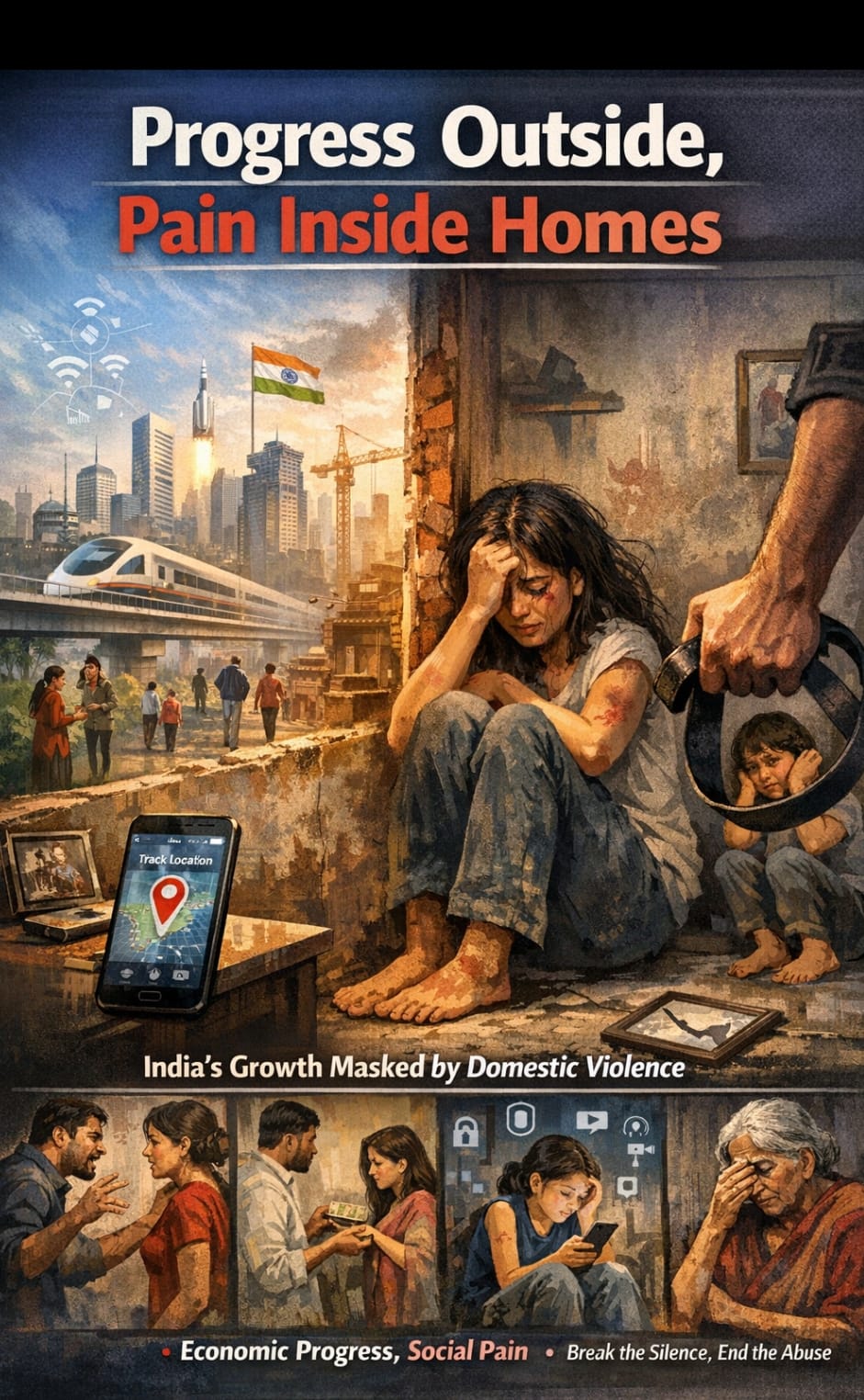
India’s rise in the twenty-first century is often celebrated through the language of expressways, digital innovation, economic expansion, and geopolitical ambition. Yet beneath the triumphant narrative of a nation racing toward great-power status lies a quieter and far more disturbing reality. While India builds smart cities and dreams of a multi-trillion-dollar economy, millions of women and children continue to face violence within the one institution that should provide safety, dignity, and emotional security—the family. This contradiction reveals one of the deepest paradoxes of modern development: a nation may modernize its infrastructure rapidly, yet remain trapped by social structures that continue to normalize suffering behind closed doors. The true measure of progress is not merely what a society builds in public, but what it permits in private.
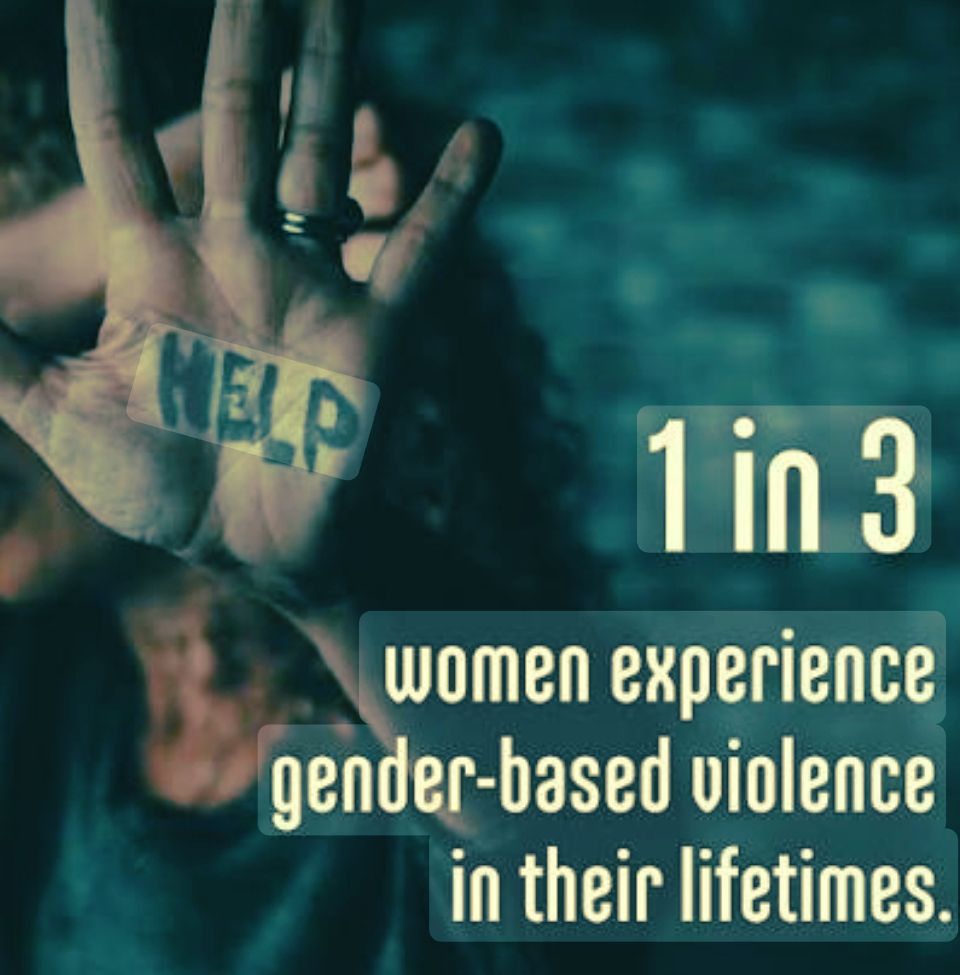
Family violence has emerged as one of India’s most pervasive yet under-recognized developmental challenges. It is often viewed narrowly as a domestic matter, a private dispute, or an occasional law-and-order issue. In reality, it is a multidimensional crisis that intersects with public health, economic productivity, human rights, education, social stability, and national development. Violence within families weakens not only individual lives but also the social foundations upon which economic and political progress ultimately depend. Every instance of abuse represents a failure of protection, justice, and social accountability. When violence becomes embedded within the family, it undermines the very institution that forms the first school of citizenship and human values.
Official statistics present only a partial picture of the crisis. Cases of cruelty by husbands and relatives consistently constitute one of the largest categories of crimes against women in India. Yet experts widely acknowledge that recorded cases represent only a fraction of the actual incidence of abuse. Social stigma, economic dependence, emotional manipulation, fear of retaliation, concern for children, and distrust of institutional remedies discourage countless survivors from seeking help. The result is a vast hidden landscape of suffering that remains invisible to formal systems. The silence surrounding family violence is not evidence of its absence; it is evidence of the social barriers that prevent victims from speaking. In many households, violence survives not because it is accepted, but because resistance appears impossible.
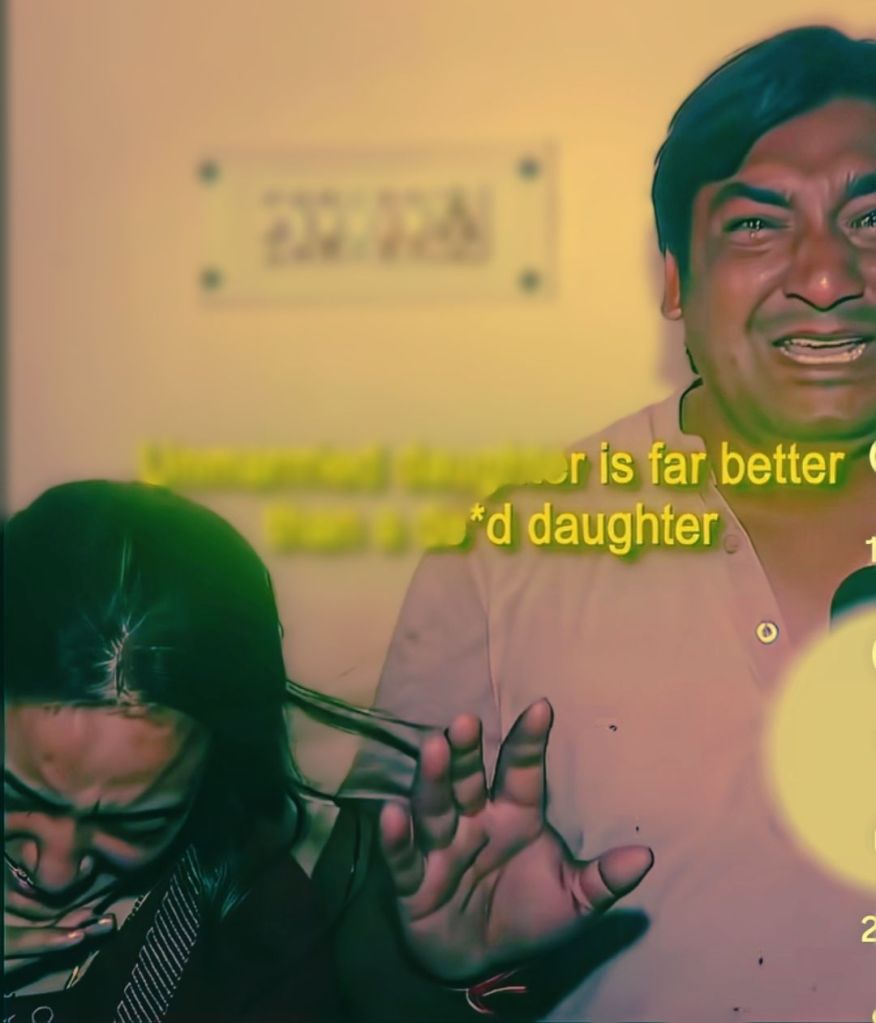
The normalization of abuse constitutes perhaps the most dangerous dimension of the problem. Across generations, many women have been socialized to view endurance as virtue, sacrifice as duty, and silence as responsibility. Family honour is often prioritized over personal dignity, while reconciliation is valued more than accountability. Such cultural conditioning transforms extraordinary acts of injustice into ordinary experiences of daily life. When violence becomes normalized, victims internalize suffering, communities become indifferent, and institutions intervene only after significant harm has already occurred. A society’s greatest moral failure is not merely the existence of injustice but its ability to regard injustice as routine.

At the heart of family violence lies the enduring architecture of patriarchy. Domestic abuse is fundamentally about power, control, and unequal relationships rather than isolated episodes of anger. It thrives where social norms grant authority without accountability and where women’s autonomy is perceived as negotiable. The persistence of expectations that women must tolerate mistreatment to preserve family unity demonstrates how deeply embedded these hierarchies remain. Even in economically advanced and educated households, control over finances, mobility, career choices, social interactions, and personal decisions often becomes a mechanism through which dominance is exercised. Development may alter lifestyles, but it does not automatically transform power relations.
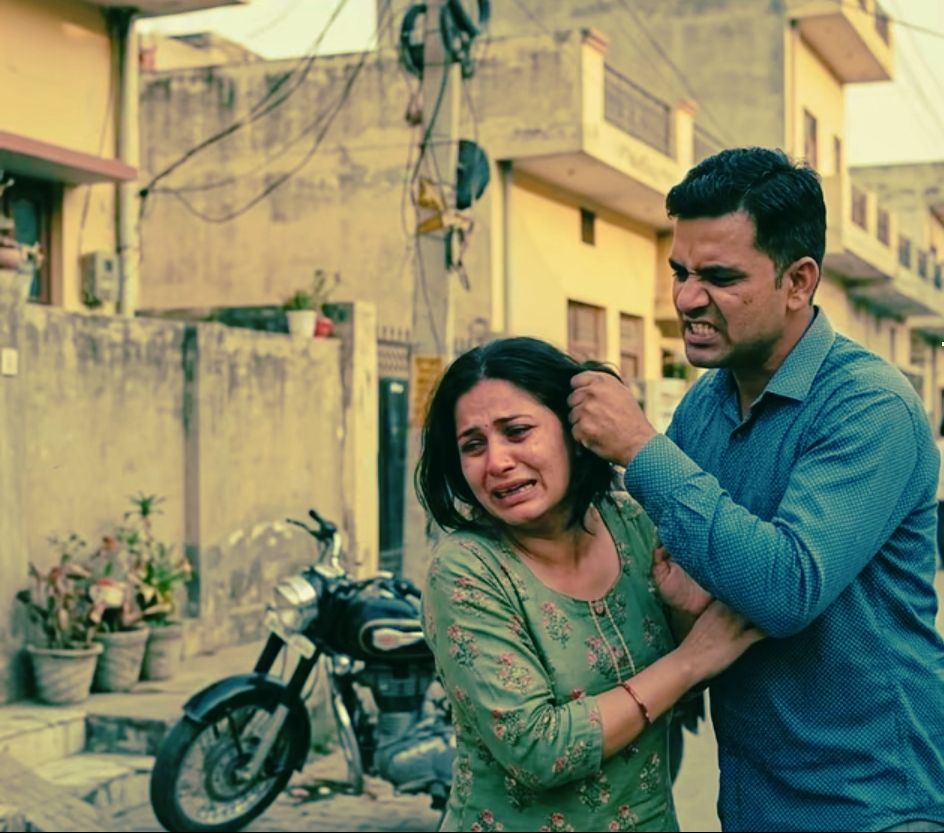
Contemporary scholarship has significantly expanded our understanding of violence by highlighting the concept of coercive control. Abuse is no longer understood solely through visible physical harm. Emotional manipulation, financial deprivation, intimidation, isolation, humiliation, surveillance, and psychological domination often inflict deeper and more enduring wounds than physical assault. Many victims remain trapped not by force alone but by carefully constructed systems of dependency. The digital age has intensified these dynamics. Smartphones, social media platforms, location tracking, and unauthorized monitoring of private communications have enabled new forms of continuous surveillance. Technology, which promises empowerment and connectivity, has simultaneously become an instrument through which coercive control extends beyond physical spaces into every aspect of daily life.

Children bear some of the most profound consequences of this hidden crisis. Describing them merely as witnesses understates the extent of the harm they experience. Exposure to violence fundamentally shapes emotional development, behavioural patterns, and future relationships. Research consistently links childhood exposure to domestic abuse with anxiety, depression, academic difficulties, substance dependence, aggression, and increased likelihood of involvement in abusive relationships later in life. Violence therefore reproduces itself across generations, creating cycles of trauma that persist long after the immediate incidents have faded from memory. Every child raised in an atmosphere of fear carries invisible scars that ultimately affect society as a whole. Family violence is not confined to one household; its consequences ripple across communities and generations.

India possesses a substantial legal framework to address these challenges, including the Protection of Women from Domestic Violence Act, 2005, alongside various criminal and welfare provisions. However, legislation alone cannot transform social realities.
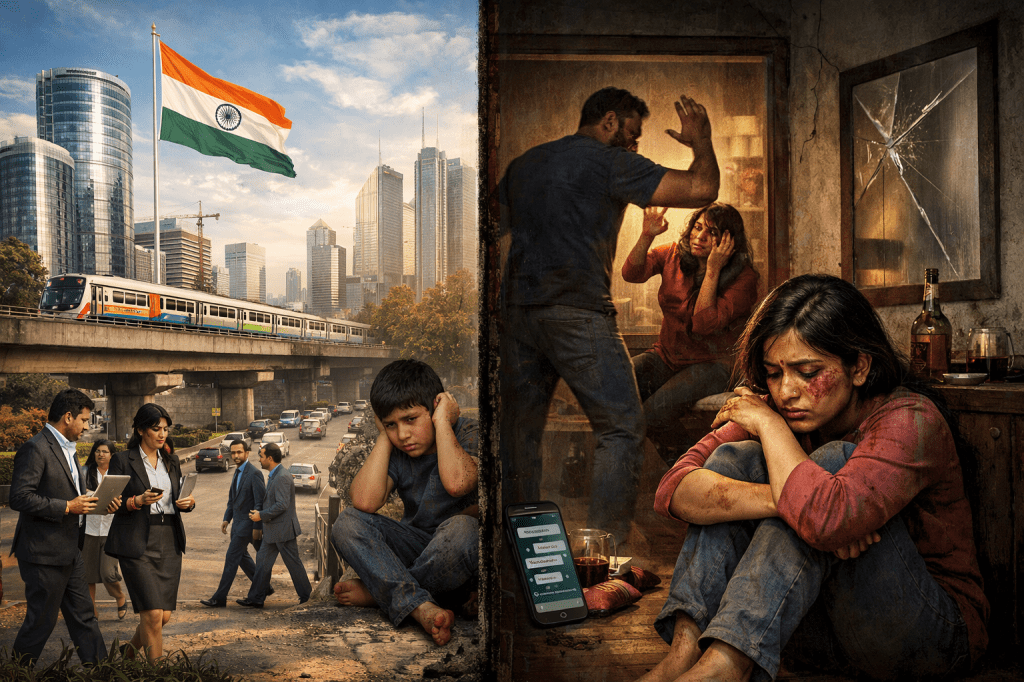
Shortages of Protection Officers, inadequate shelter facilities, delayed judicial processes, limited access to counselling, and institutional tendencies to prioritize compromise over safety continue to undermine effective implementation. The challenge therefore demands a broader societal response involving education, economic empowerment, gender-sensitive governance, mental health support, community engagement, and cultural transformation. Ultimately, family violence is not merely a women’s issue; it is a test of the Republic’s moral and developmental maturity. A nation cannot claim complete progress while fear resides within its homes, trauma becomes a family inheritance, and dignity remains uncertain behind closed doors. Until India confronts this silent siege with the same seriousness it applies to economic growth and national security, the promise of inclusive development will remain unfinished, and the family will continue to be both a sanctuary for some and a battlefield for many.
VISIT ARJASRIKANTH.IN FOR MORE INSIGHTS

