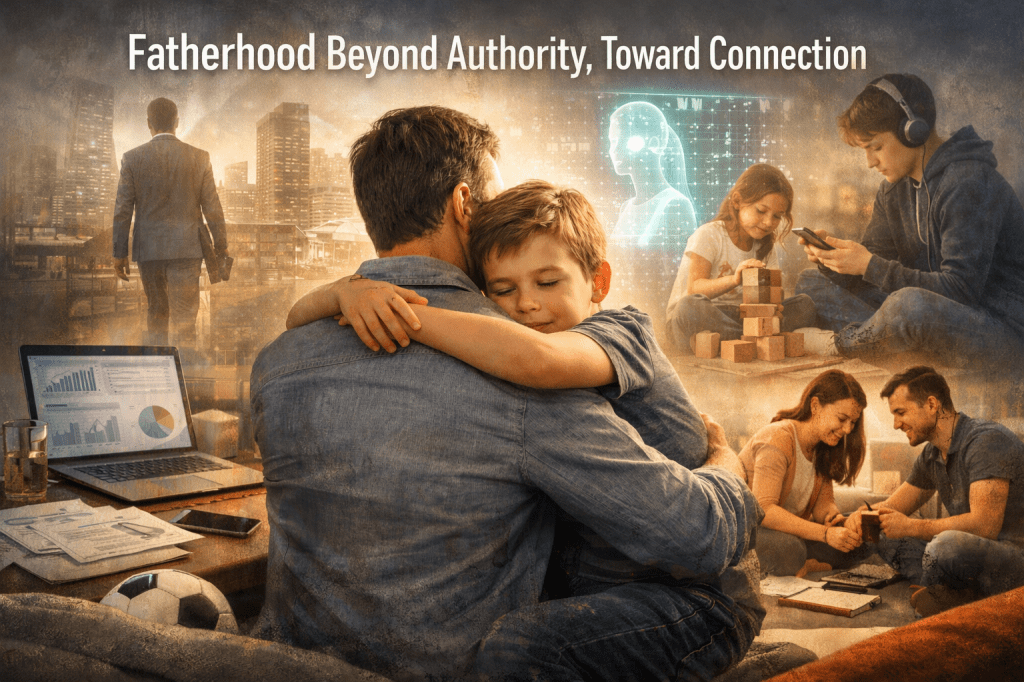
Father’s Day on 21 June 2026 is far more than a ceremonial tribute to paternal affection. It arrives at a historic inflection point when fatherhood itself is being fundamentally redefined. Across societies, the modern father stands at the intersection of powerful social, economic, technological, and cultural transformations. No previous generation of fathers has been expected to perform such a diverse range of roles simultaneously. He must be provider and nurturer, disciplinarian and friend, strategist and caregiver, protector and therapist. In many ways, contemporary fatherhood has evolved from a clearly defined social role into a complex leadership assignment. The father is no longer judged merely by his ability to earn a livelihood; he is increasingly evaluated by his emotional intelligence, availability, parenting skills, relationship management, and capacity to navigate an increasingly uncertain world.

For centuries, fathers operated within a social ecosystem that distributed responsibility across extended family networks. Joint families acted as reservoirs of emotional support, childcare, wisdom, and crisis management. Grandparents transmitted values, relatives shared responsibilities, and communities functioned as informal institutions of social stability. The father exercised authority but rarely carried the entire burden alone. Modern urban life has dismantled much of this architecture. Migration, globalization, shrinking households, and geographic mobility have transformed families into small, self-contained units. Consequently, fathers now shoulder responsibilities that were once collectively absorbed by an entire kinship structure. The modern father often functions as the chief executive officer of a miniature society, responsible for maintaining stability in a household with far fewer support mechanisms than previous generations enjoyed.

The challenge becomes even more pronounced when raising Generation Z children, the first cohort born entirely into the digital age. Unlike earlier generations, Gen Z has grown up surrounded by smartphones, social media ecosystems, artificial intelligence, and an uninterrupted flow of information. Knowledge is no longer scarce; it is abundant and instantly accessible. This has triggered an unprecedented shift in family dynamics. Historically, fathers commanded authority because they possessed knowledge and experience unavailable to their children. Today, a teenager can access information within seconds that once required years of expertise. The father no longer monopolizes knowledge. Instead, he competes with algorithms, influencers, search engines, and AI platforms for relevance. This transformation has quietly altered the very foundations upon which paternal authority traditionally rested.
The result is what may be described as the “relevance challenge” of twenty-first-century fatherhood. Authority can no longer be inherited through age, position, or social convention. It must be earned continuously through trust, authenticity, and emotional credibility. Modern children are less responsive to hierarchy and more responsive to genuine connection. Consequently, fathers are being compelled to reinvent themselves. The successful father of today is not the unquestioned commander issuing instructions from a distance but the engaged mentor capable of influencing through dialogue and example. Leadership within families has become collaborative rather than authoritarian. Influence now flows from emotional investment rather than positional power, requiring fathers to cultivate listening skills, empathy, and adaptability alongside traditional virtues such as responsibility and discipline.

Simultaneously, economic realities have made the provider role more demanding than ever. Housing costs, healthcare expenses, educational investments, and rising aspirations have dramatically increased financial pressures on families. This creates a painful paradox. Families require financial security in an increasingly expensive world, yet they also demand greater parental involvement. Every additional hour devoted to career advancement strengthens economic stability but potentially weakens family engagement. Conversely, greater involvement at home may appear to slow professional growth. Sociologists increasingly refer to this tension as “time poverty”—a condition in which individuals possess neither sufficient time for work nor adequate time for family. Modern fathers frequently find themselves trapped between two equally legitimate obligations, unable to satisfy one without compromising the other.
Encouragingly, younger fathers are responding by challenging long-standing assumptions about masculinity itself. Many Millennial and emerging Gen Z fathers are rejecting the emotional detachment that characterized earlier models of fatherhood. They attend parent-teacher meetings, participate actively in childcare, discuss emotions openly, share domestic responsibilities, and increasingly seek professional guidance when necessary. Scholars describe this evolution as the rise of “caring masculinities,” a framework that recognizes empathy, emotional presence, and caregiving as strengths rather than weaknesses. This represents one of the most significant cultural shifts in modern family life. Fatherhood is no longer viewed solely as a duty of provision but as an ongoing relationship requiring emotional labor, vulnerability, and active participation.
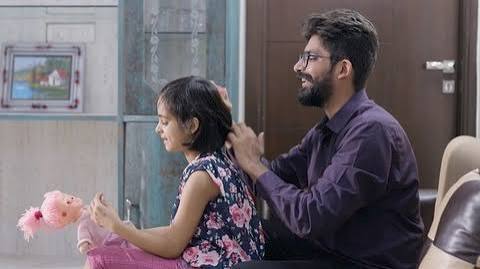
Yet beneath this positive transformation lies an often-overlooked reality. Modern fathers carry substantial psychological burdens that remain largely invisible. Within nuclear families, fathers frequently become crisis managers for every challenge confronting the household—academic pressure, digital addiction, mental health concerns, financial uncertainty, relationship tensions, and unforeseen emergencies. Society expects them to project resilience regardless of their internal struggles. While important conversations about maternal well-being have rightly gained prominence, paternal mental health remains comparatively neglected. Anxiety, burnout, loneliness, and self-doubt often remain hidden behind outdated expectations that equate masculinity with emotional silence. Ironically, those expected to provide reassurance and stability to others frequently have the fewest opportunities to seek support themselves.
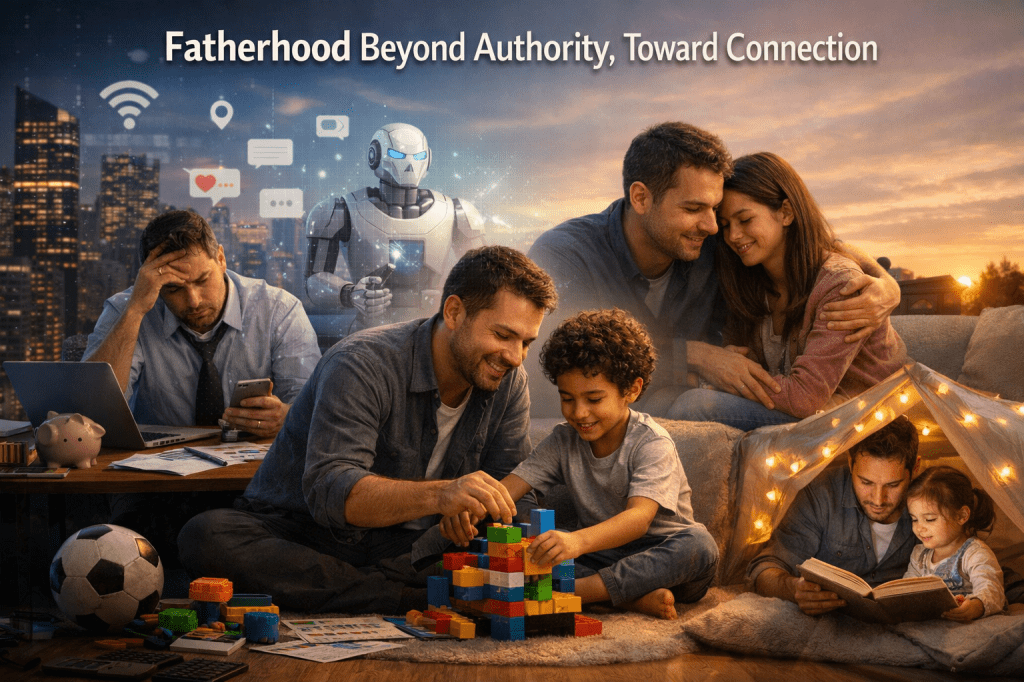
As Father’s Day 2026 is observed, the central question confronting society is no longer whether fathers care enough. Evidence suggests they are more involved, emotionally aware, and committed than any generation before them. The more urgent question is whether institutions are evolving rapidly enough to support them. Workplaces must recognize caregiving as a legitimate responsibility. Paternity leave, flexible work arrangements, father-inclusive healthcare systems, and stronger community support structures should become societal priorities rather than exceptional privileges. The modern father is not simply raising children; he is navigating one of the most profound social transitions of our age. He stands between tradition and transformation, between the algorithm and the cradle, attempting to preserve human connection in an increasingly fragmented world. If society expects fathers to become everything at once, it must also recognize that fatherhood is not merely a private obligation but a public institution essential to the future of families, communities, and civilization itself.
VISIT ARJASRIKANTH.IN FOR MORE INSIGHTS


One response to ““The Last Man Standing: Fatherhood in the Age of Isolation, Algorithms, and Anxiety””
Very lucid narrative, excellently articulated… exchoing truly what d institution call fatherhood is going thru today, across societies.
LikeLike