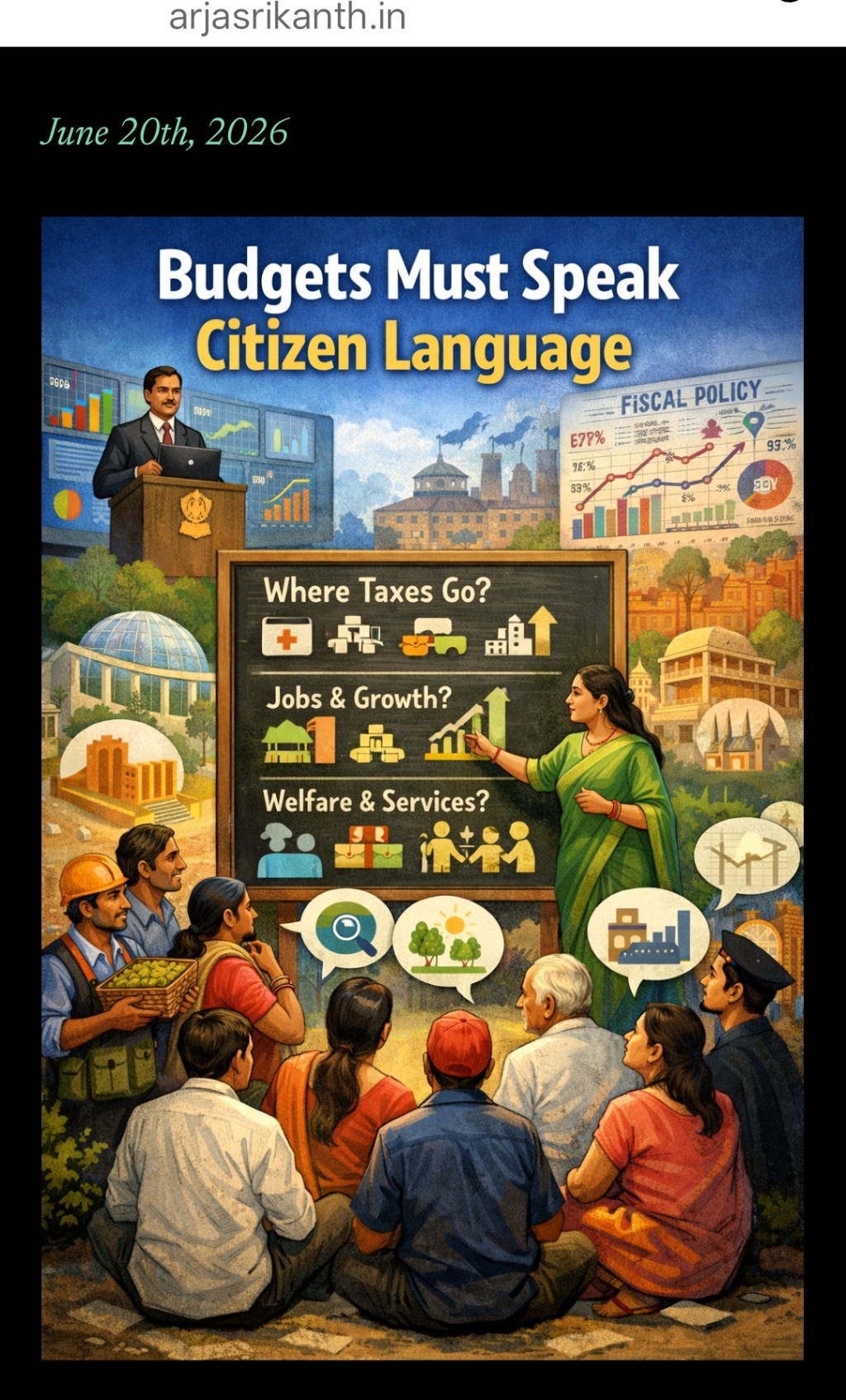
Every year, India witnesses one of the largest exercises in democratic governance—the presentation of the Union Budget followed by a cascade of State Budgets across the country. Television channels dissect tax proposals, economists debate fiscal projections, political parties claim victory or express outrage, and administrative machinery gears up for implementation. Yet, amid this annual spectacle, a fundamental paradox persists. The budget, arguably the most consequential public document affecting every citizen’s daily life, remains one of the least understood.
It determines how pople earn, save, invest, travel, educate their children, receive healthcare, and access public services. Yet for most Indians, it has evolved into a technical ritual observed from a distance rather than a civic instrument they can meaningfully engage with.
The challenge is not merely one of communication; it is embedded within the architecture of public finance itself. Over the decades, India’s fiscal system has grown into a highly intricate ecosystem of taxes, cesses, surcharges, grants, transfers, subsidies, guarantees, borrowings, and special assistance mechanisms. Even informed citizens often struggle to understand why certain revenues are shareable while others are not, why governments continue to borrow despite record tax collections, or how fiscal deficits at different levels of government influence economic stability. The result is a widening gap between those who design public finance and those whose lives are shaped by it. A democracy that prides itself on participation increasingly operates through fiscal documents that appear decipherable only to specialists.
At the Union level, complexity has become both a feature and a challenge. What was once a relatively straightforward taxation framework has transformed into a sophisticated network of direct taxes, indirect taxes, Goods and Services Tax components, cesses, surcharges, compliance obligations, user fees, and sector-specific levies. The average taxpayer experiences not clarity but exhaustion. Fiscal policy today resembles an engineering blueprint requiring expert interpretation. Citizens may celebrate an income tax concession or react to fuel price fluctuations, but very few can trace the journey of public money from collection to allocation. Transparency exists in form, yet comprehension remains elusive.
This growing opacity has subtly altered the relationship between governments and citizens. Budgets were traditionally viewed as instruments of the social contract—documents explaining how public resources would be mobilized and deployed for collective welfare. Increasingly, however, they are perceived as exercises in macroeconomic management. Governments highlight growth projections, capital expenditure, infrastructure investments, and fiscal prudence, while citizens assess budgets through far simpler questions: Will prices fall? Will jobs increase? Will healthcare improve? Will education become more affordable? The divergence between macroeconomic narratives and lived economic realities has become one of the defining tensions of contemporary public finance.
If Union Budgets suffer from complexity, State Budgets confront a different dilemma—the gradual erosion of fiscal autonomy. Constitutionally, states remain responsible for delivering many of the services that most directly affect citizens, including education, healthcare, policing, local infrastructure, water supply, and welfare administration. Yet their capacity to finance these responsibilities independently has steadily weakened. States account for a majority of public expenditure while controlling a significantly smaller share of total revenues. This structural imbalance has increased reliance on transfers, centrally sponsored schemes, borrowing programmes, and special financial assistance from the Union Government. The fiscal relationship between the Centre and the States is increasingly characterized not by autonomy but by interdependence.
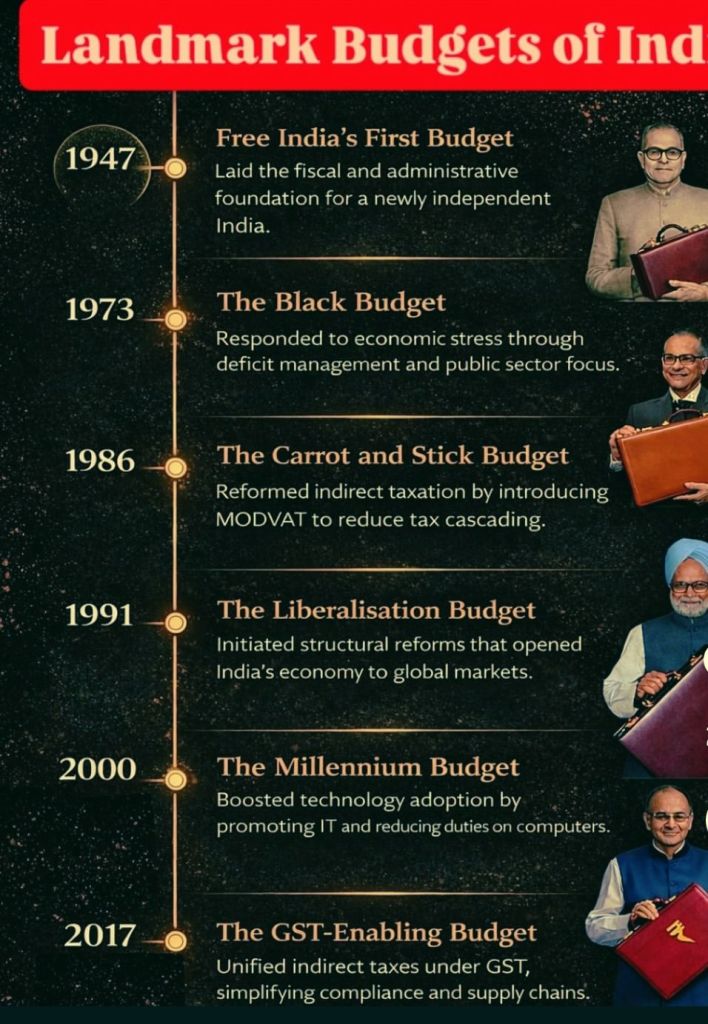
Beneath the reassuring language of fiscal discipline lies another emerging reality. State liabilities have expanded substantially over the past decade, even as governments continue to maintain deficits within prescribed limits. Much of the recent fiscal comfort enjoyed by states has been supported by special assistance programmes providing long-term, interest-free loans for capital expenditure. Initially conceived as extraordinary interventions during periods of economic stress, these mechanisms have gradually become integral components of state finances. While such support has undoubtedly enabled critical infrastructure investment, it has also transformed the nature of fiscal federalism. Grants are increasingly giving way to loans, and dependence is replacing flexibility. The immediate benefits are undeniable; the long-term implications remain uncertain.
Simultaneously, India is experiencing an unprecedented expansion of welfare commitments. Competitive electoral politics has produced a landscape where cash transfers, subsidies, social benefits, and entitlement programmes occupy an increasingly prominent place in public expenditure. These interventions often address genuine social needs and provide essential support to vulnerable populations. Yet they also convert short-term political commitments into long-term fiscal obligations. In several states, welfare spending now absorbs substantial portions of annual budgets, constraining investments in infrastructure, education, research, innovation, and productivity-enhancing sectors. The challenge is not whether welfare should exist, but how it can coexist sustainably with future-oriented development.
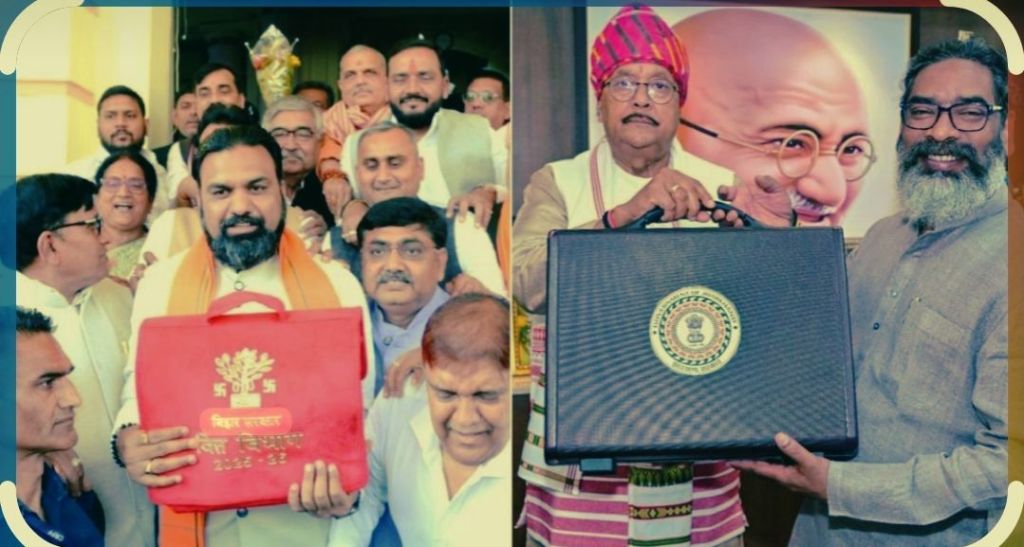
The deeper concern is that India’s budget discourse rarely focuses on the structural transformations that will define the nation’s future. Younger states require massive investments in skills, education, healthcare, and employment generation to convert demographic potential into economic advantage. Older states must prepare for rising healthcare costs, pension obligations, and ageing populations. Climate adaptation, urbanization pressures, contingent liabilities, public utility reforms, and future pay commission commitments are steadily increasing fiscal demands. Yet public debate often gravitates toward immediate announcements and short-term benefits while these larger structural questions remain confined to technical reports and policy circles.
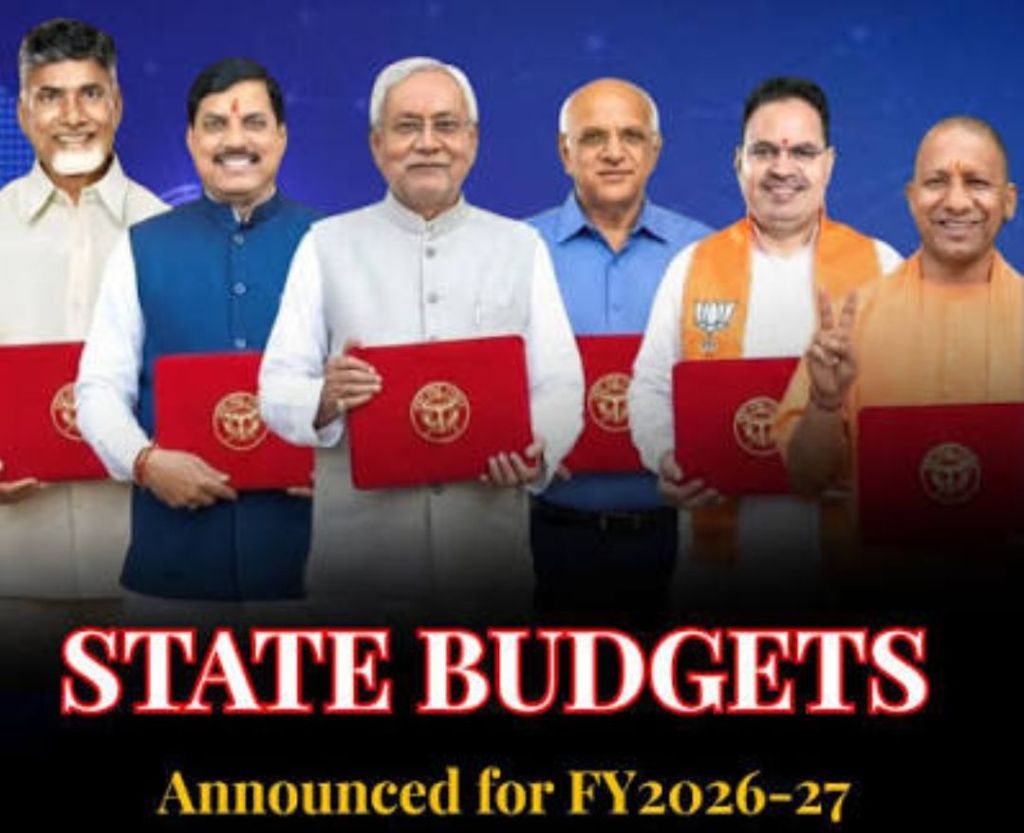
Ultimately, the challenge before India extends far beyond balancing revenues and expenditures. It concerns the democratization of fiscal understanding itself. Budgets must become more transparent, more intelligible, and more connected to the everyday experiences of citizens. Fiscal federalism requires recalibration, tax structures demand simplification, and states need greater autonomy alongside stronger accountability. Most importantly, governments must communicate public finance in a language that ordinary people can understand. The future of Indian democracy will not be determined solely by deficit ratios, debt indicators, or expenditure targets. It will depend on whether citizens once again see budgets as documents written for them rather than about them. A nation aspiring to global leadership cannot afford a fiscal system where the most important public document remains an annual puzzle understood by economists, auditors, and bureaucrats alone. The real challenge is not merely managing public money—it is restoring public ownership of the conversation about it.
VISIT ARJASRIKANTH.IN FOR MORE INSIGHTS

