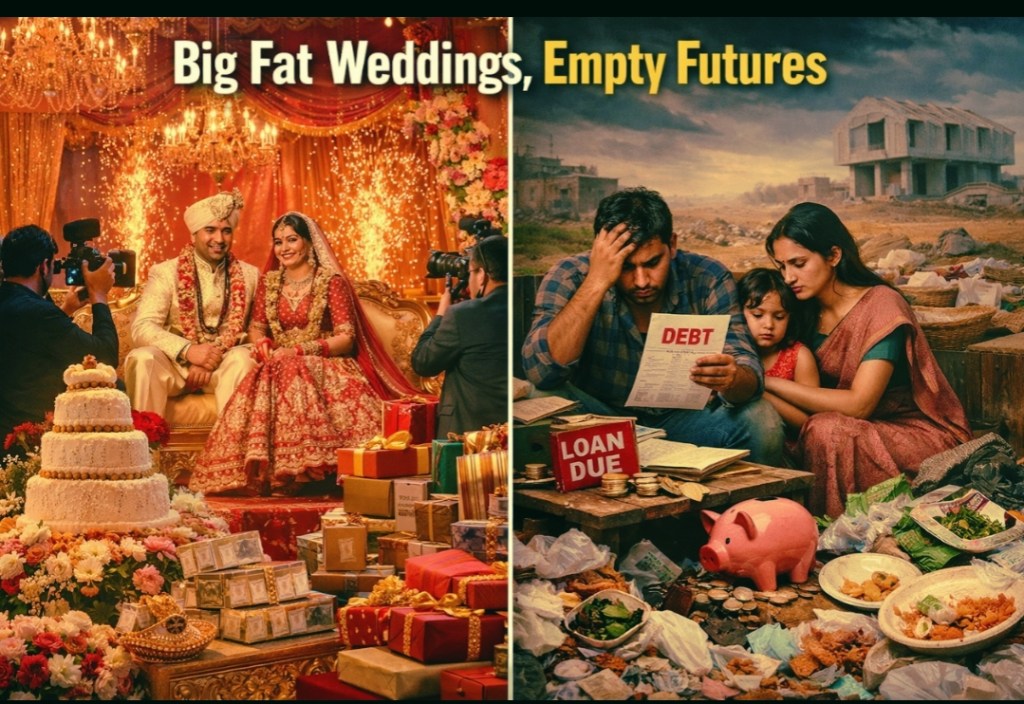
India may soon become the first civilisation where marriages are celebrated like royal coronations while families financially collapse like failed kingdoms. What was once a sacred institution rooted in companionship, cultural continuity, and collective blessings has increasingly mutated into an industry of competitive extravagance, psychological insecurity, and performative consumption. The modern Indian wedding is no longer merely a ceremony of union. It has evolved into a high-pressure economic spectacle where emotional meaning is often buried beneath choreography, luxury branding, and social exhibitionism. In many urban households today, weddings are planned less like family occasions and more like corporate events designed for public consumption.
The tragedy is that much of this expenditure is not driven by happiness but by fear. Fear of social judgment. Fear of appearing financially weak. Fear of relatives gossiping about “small arrangements.” Fear of failing to match the standards established by celebrity weddings, billionaire extravaganzas, or carefully curated Instagram fantasies. Across middle-class India, weddings have become exercises in temporary status manufacturing, where families willingly spend four or five times their annual income merely to project an illusion of prosperity for a few hours. Behind the glittering stages and cinematic photography often lies a landscape of hidden loans, mortgaged jewellery, emotional stress, and years of financial recovery.
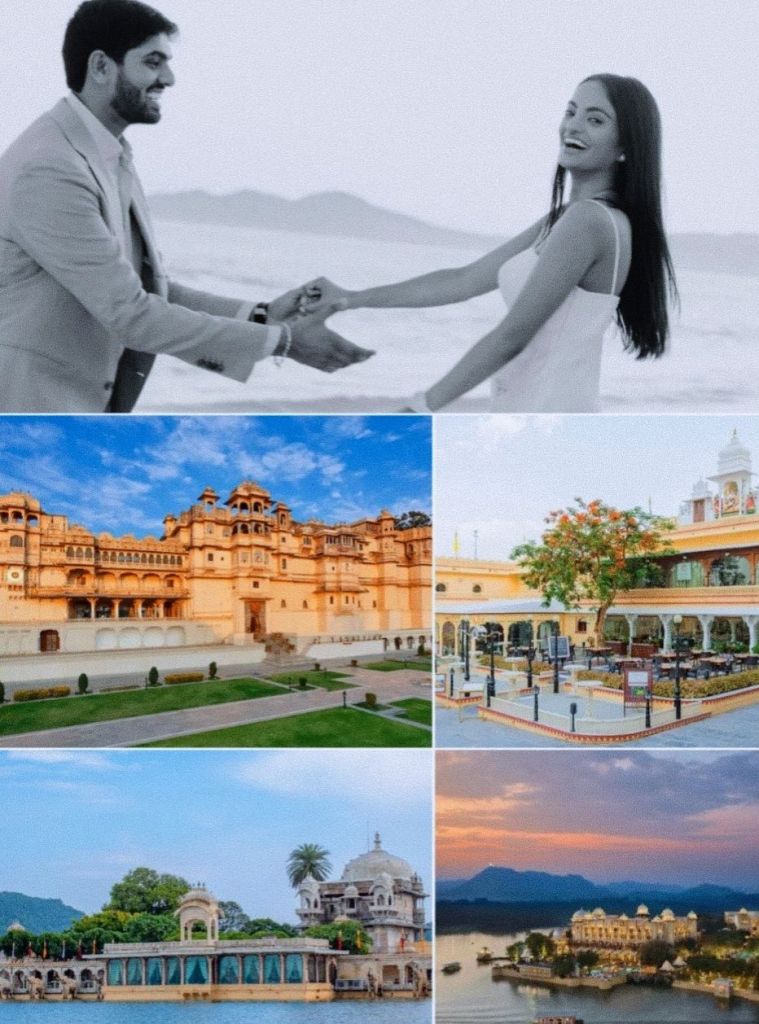
This phenomenon reflects a deeper psychological transformation within Indian society. Marriage ceremonies are increasingly functioning as public examinations of social worth. The number of pre-wedding functions, destination venues, imported flowers, celebrity performers, drone cinematography, designer outfits, and luxury menus are now interpreted as indicators of prestige and family status. Weddings have therefore become arenas of competitive signalling where social validation matters more than emotional authenticity. Nobody publicly admits financial strain, yet millions privately suffer beneath the burden of collective expectation. Modern Indian society has transformed celebration into coercion without formally acknowledging it.
Bollywood glamour and social media have accelerated this crisis dramatically. Cinema converted weddings into fantasy productions, while digital platforms transformed them into nonstop competitions for visibility and validation. Marriage is now curated not for memory but for virality. Families spend enormous amounts on “shareable moments” because contemporary culture increasingly rewards appearance over substance. The wedding album often becomes more important than the marriage itself. Ironically, a civilisation historically admired for simplicity, restraint, and spiritual philosophy is now drowning in decorative excess and emotional insecurity. Ancient rituals intended to symbolize sacred commitment are increasingly overshadowed by LED screens, luxury choreography, and commercial sponsorship culture.

The economic consequences are severe and deeply irrational. Across India, families liquidate savings, sell land, mortgage homes, or enter long-term debt merely to conduct socially “respectable” weddings. Money that could have funded education, healthcare, entrepreneurship, or long-term financial security is frequently consumed within a matter of days on luxury decoration, oversized catering arrangements, and symbolic display. In several regions, extravagant weddings have also become channels for unaccounted cash circulation, exposing how social vanity intersects with black money, tax evasion, and informal financial networks. The wedding economy today is not merely cultural; it has become a parallel ecosystem of conspicuous consumption sustained by social pressure.
Yet the moral contradiction becomes even sharper when one observes the environmental and social cost hidden behind these spectacles. Grand weddings routinely generate mountains of plastic waste, discarded flowers, excess food, diesel emissions, and noise pollution. Large marriage venues consume extraordinary quantities of electricity and water while simultaneously producing non-biodegradable garbage that worsens urban ecological stress. Studies estimate that nearly one-fifth of wedding food in India is wasted despite millions still facing hunger and malnutrition. After elite guests depart in luxury vehicles, it is often poorly paid workers who remain behind cleaning leftovers and garbage through sleepless nights. Indian weddings therefore reveal not merely economic inequality but the moral distance between spectacle and social conscience.
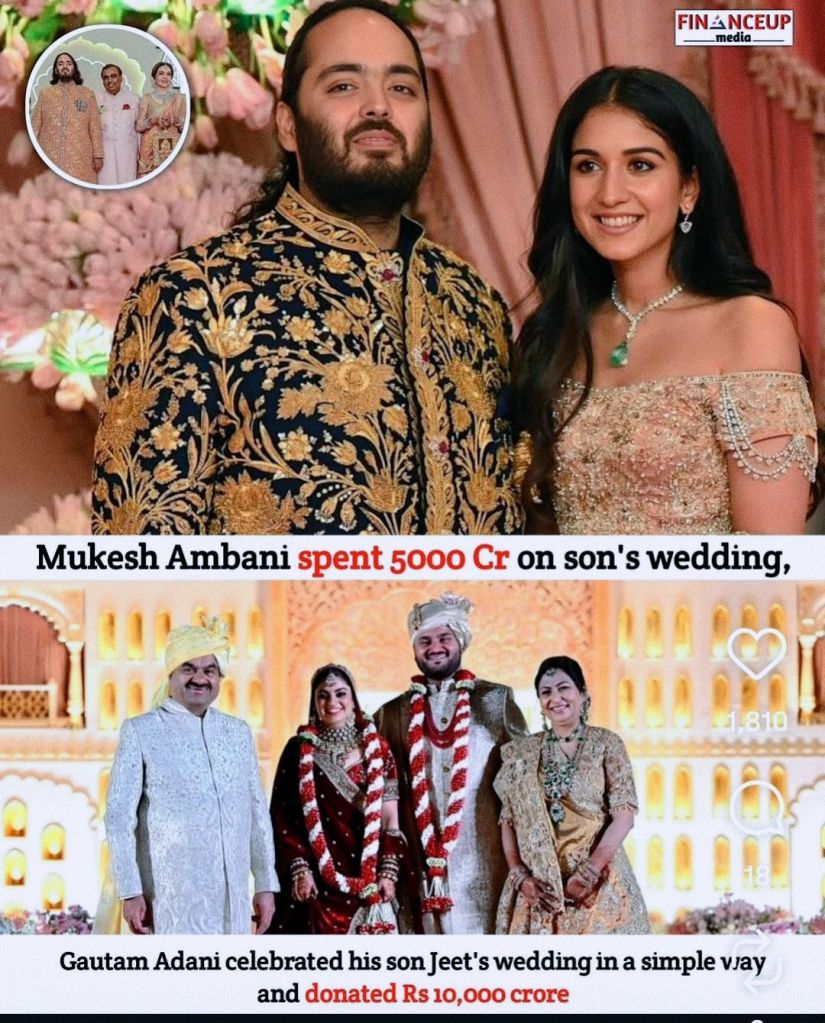
Interestingly, India’s wealthiest families themselves have recently presented two contrasting models of public celebration. The Ambani celebrations became global symbols of limitless opulence, reinforcing the perception that Indian weddings are transforming into planetary spectacles of wealth. Yet the family also organized mass weddings for underprivileged couples, offering financial support and essential resources. The Adani family, meanwhile, projected a more restrained and culturally rooted model while simultaneously expanding philanthropic initiatives toward healthcare, education, and support for vulnerable communities, including women with disabilities. These contrasting examples reveal an important truth: celebration and social responsibility need not be mutually exclusive. Wealth becomes meaningful not when displayed before the powerful, but when used to restore dignity to the vulnerable.
India now stands at a civilisational crossroads. The issue is not whether weddings should be celebrated. Human societies require festivals, rituals, joy, and collective memory. Celebration itself is culturally essential. The danger emerges when celebration mutates into economic coercion, environmental destruction, and psychological competition. Reforming this culture will not be easy because the wedding industry thrives upon aspiration and excess. Yet meaningful change is still possible. Several communities have already pioneered collective agreements limiting wasteful expenditure and extravagant gifting. NGOs recover excess wedding food to feed the hungry. Startups recycle discarded flowers into incense sticks and compost. Sustainable weddings using local sourcing, minimal plastic, daytime ceremonies, and financial moderation are slowly gaining social legitimacy among younger generations.
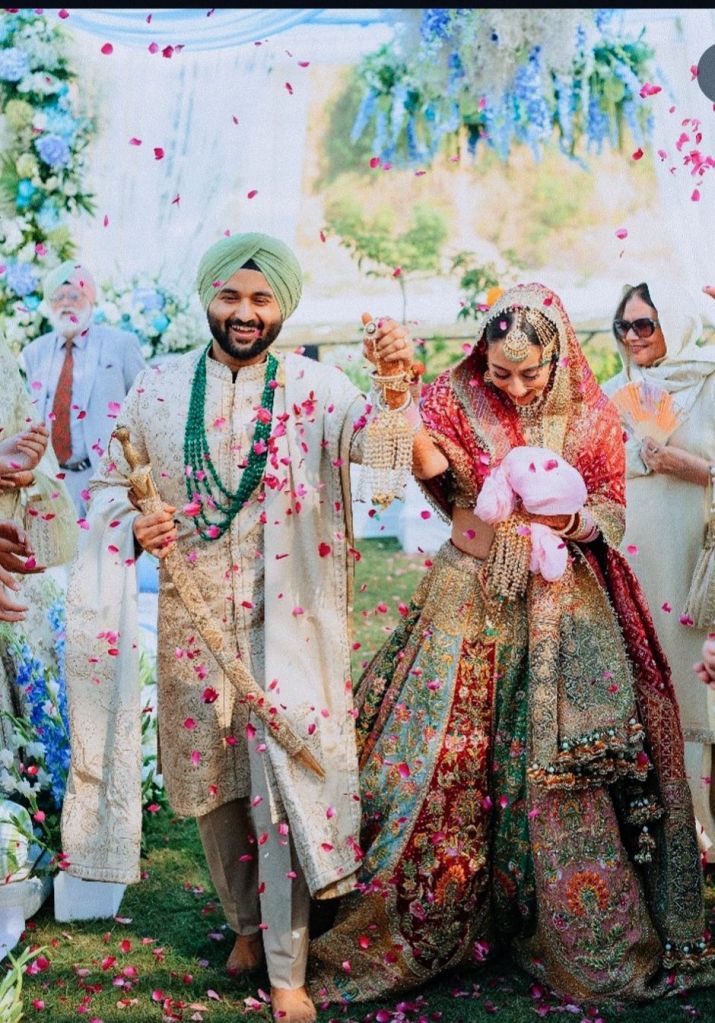
India therefore requires a new moral vocabulary around marriage. A successful wedding should no longer be measured by imported flowers, celebrity attendance, or the number of dishes served. It should be measured by emotional dignity, financial responsibility, environmental sensitivity, and social consciousness. The most beautiful weddings are not those that bankrupt families and create garbage mountains. They are those that begin married life free from debt, anxiety, and performative pressure. If current trends continue unchecked, weddings may eventually cease to be celebrations of companionship and become annual festivals of insecurity. Perhaps the time has come for India to rediscover a forgotten truth: love does not become deeper because the lighting becomes brighter.
VISIT ARJASRIKANTH.IN FOR MORE INSIGHTS

