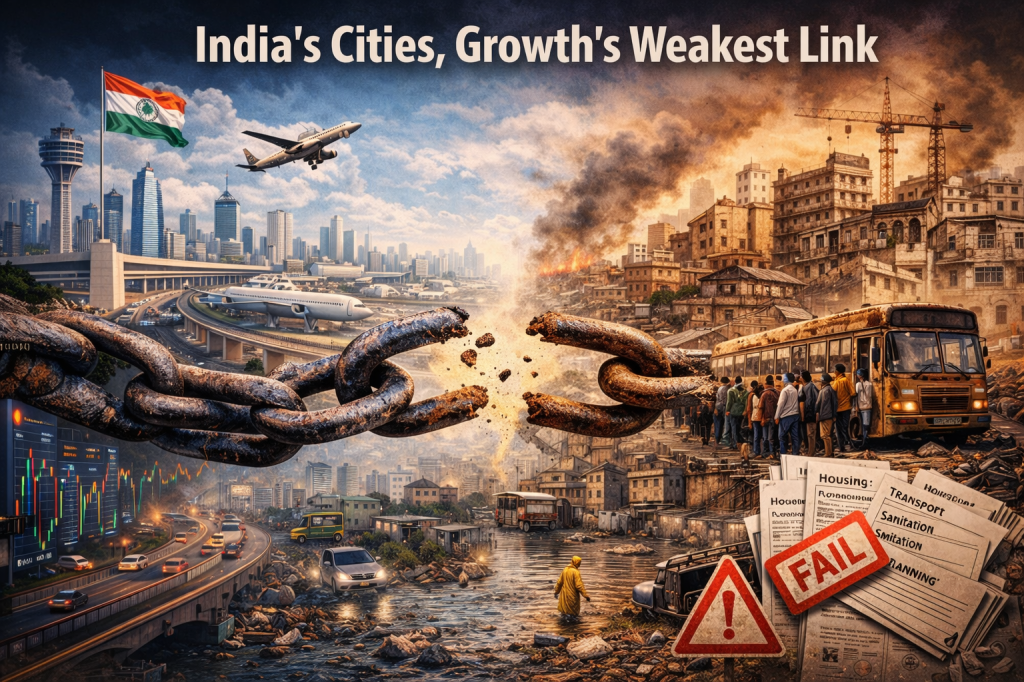
For more than three decades, India has projected itself as one of the world’s most compelling growth stories. It is the land of digital innovation, startup revolutions, technological ambition, demographic strength, and economic promise. New airports emerge across the landscape, expressways stretch across states, digital transactions reach unprecedented volumes, and policymakers confidently speak of a multi-trillion-dollar future. Yet beneath this narrative of ascent lies an uncomfortable contradiction. The nation aspiring to become a global economic superpower is still struggling to make many of its cities reliably liveable. The greatest threat to Brand India today is not a lack of ambition. It is the persistent crisis of urban misgovernance.
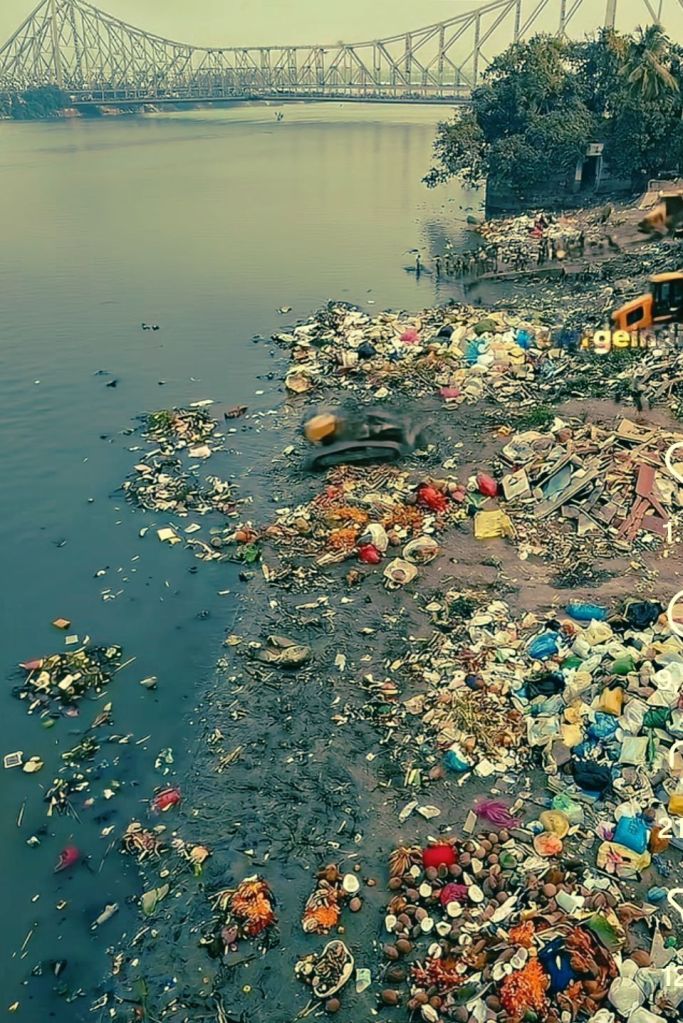
This challenge extends far beyond municipal administration. It is a national development emergency. Cities generate the majority of India’s economic output and serve as engines of employment, innovation, consumption, and investment. They should function as powerful productivity ecosystems. Instead, many increasingly resemble laboratories of institutional dysfunction where traffic paralysis, toxic air, recurring floods, unsafe buildings, fire hazards, infrastructure failures, and administrative confusion have become normalized features of daily life. India has become remarkably successful at building infrastructure assets, yet often struggles to govern the urban systems required to make those assets effective.
The fundamental problem is not one of engineering but of governance. Most Indian cities operate through a fragmented administrative architecture where responsibility is distributed among multiple agencies handling roads, transport, planning, sanitation, water supply, housing, electricity, drainage, policing, and land management. These institutions frequently function in isolation, with overlapping jurisdictions and limited coordination. When floods occur, roads collapse, garbage accumulates, or buildings fail, accountability becomes almost impossible to identify. Responsibility dissolves into a maze of departments, authorities, utilities, and committees. Citizens are left navigating a governance structure that produces paperwork with remarkable efficiency but struggles to produce integrated outcomes.
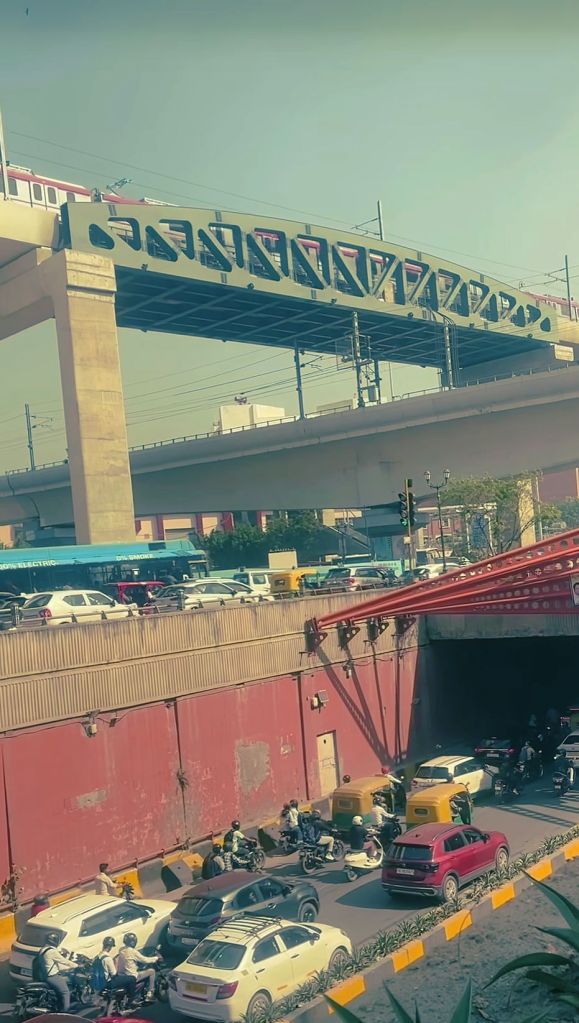
Contrary to popular perception, the crisis is not primarily financial. India is investing in infrastructure at a scale unimaginable a generation ago. The deeper challenge is institutional weakness. Urban local bodies remain politically constrained despite decades of decentralization rhetoric. Many city administrations lack meaningful fiscal autonomy, executive authority, and control over essential services. Cities are expected to solve twenty-first-century challenges using governance frameworks inherited from another era. Strategic decisions are often fragmented across multiple agencies reporting to different political and bureaucratic hierarchies. The result is a city without a captain, navigating increasingly complex waters.
Perhaps the most visible manifestation of this failure is the proliferation of legally ambiguous urban spaces. Unauthorized colonies, urban villages, and regulatory grey zones have evolved into dense residential and commercial ecosystems across major metropolitan regions. Buildings emerge without adequate structural safeguards, drainage systems, parking provisions, fire safety measures, or disaster resilience planning. When tragedy strikes, it is frequently described as an unfortunate accident. In reality, such incidents are often predictable outcomes of years of institutional neglect.
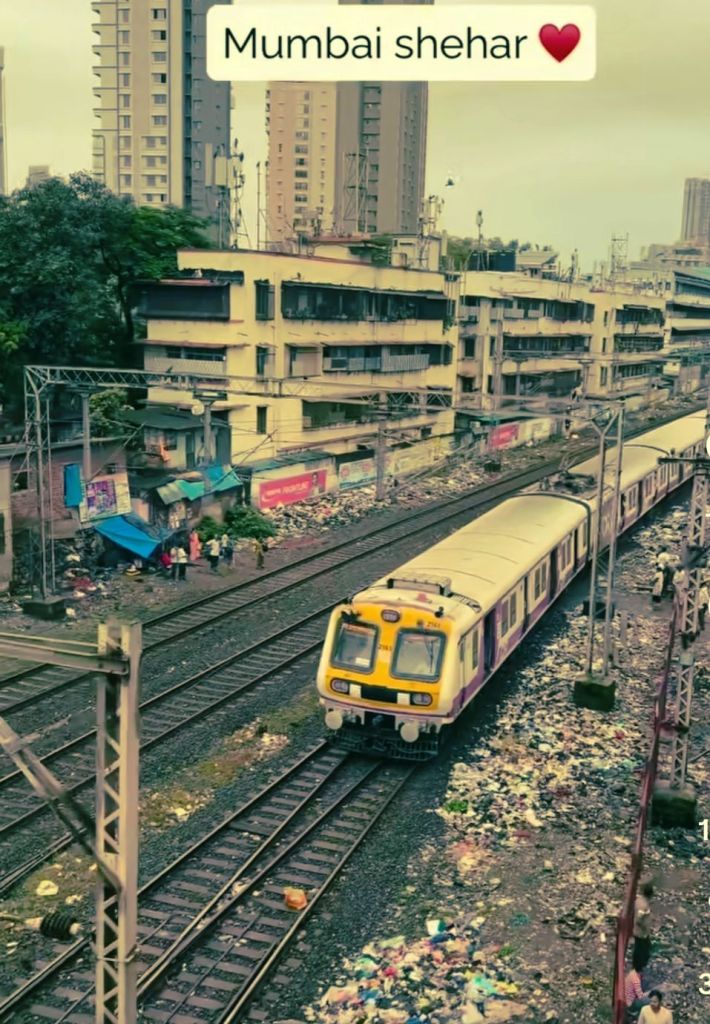
The political economy sustaining this pattern is particularly damaging. Electoral incentives frequently reward regularization rather than regulation. Informal settlements become vote banks. Illegal construction acquires political protection. Enforcement is postponed because the political cost of intervention is immediate, while the cost of inaction remains dispersed and delayed. Every disaster follows a familiar script: investigations are announced, compensation packages are declared, officials are suspended, and public outrage briefly intensifies. Then the system quietly returns to business as usual. Cities accumulate layers of what can only be described as engineered vulnerability—risks knowingly tolerated until they eventually become catastrophes.
The economic consequences are enormous. Great cities generate prosperity through agglomeration—the concentration of talent, capital, ideas, and opportunity. Efficient urbanization reduces transaction costs and increases productivity. However, many Indian cities increasingly experience the opposite effect. Congestion, pollution, unreliable infrastructure, administrative delays, and recurrent disruptions erode the benefits of scale. Workers lose productive hours commuting. Businesses absorb hidden costs resulting from uncertainty and inefficiency. Logistics networks become slower and more expensive. The issue is not that Indian cities are too large. It is that they are poorly governed.
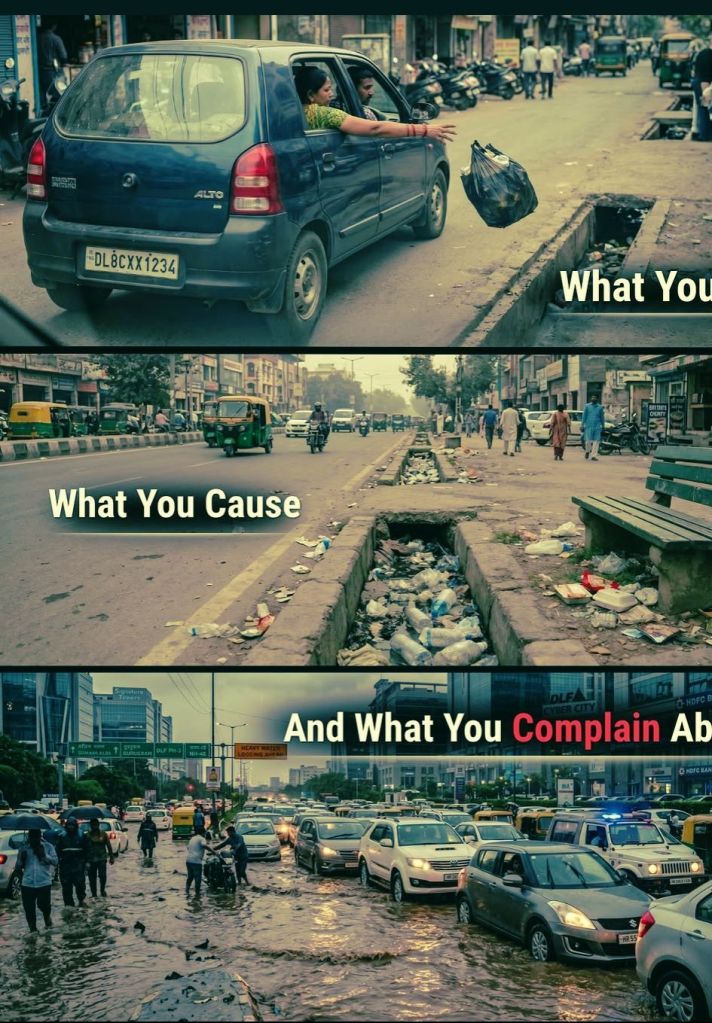
Environmental degradation further compounds the crisis. Several of the world’s most polluted urban centres are located in India. Air pollution has evolved from an environmental concern into a profound economic and public health challenge. Reduced life expectancy, increased healthcare costs, lower labour productivity, and declining quality of life impose significant economic burdens. Global investors, researchers, skilled professionals, and multinational firms increasingly evaluate cities through liveability metrics. Toxic urban environments therefore become direct obstacles to competitiveness.
Housing reveals another troubling contradiction. Luxury developments continue to expand while affordable housing struggles to keep pace with demand. Millions remain trapped between insecure informal settlements and inaccessible formal housing markets. Informality grows not because citizens prefer illegality, but because legal alternatives often remain unaffordable or unavailable. Demolition frequently substitutes for rehabilitation, creating cycles of displacement rather than sustainable urban inclusion.
Yet the future need not be pessimistic. Across India, promising examples demonstrate that governance innovation can deliver measurable improvements. Digital grievance systems, AI-assisted tax administration, integrated command centres, climate-resilient planning, electric mobility initiatives, and data-driven service delivery models have shown encouraging results. Technology can undoubtedly improve urban governance—but only when embedded within accountable institutions rather than layered over dysfunctional structures.
The central lesson is clear. India’s urban future will depend less on headline-grabbing infrastructure announcements and more on institutional redesign. Cities require empowered leadership, integrated governance structures, professional urban management cadres, fiscal independence, transparent accountability systems, and citizen-cantered planning. Public safety must become non-negotiable. Housing must be treated as economic infrastructure. Public transport, pedestrian mobility, and environmental sustainability deserve the same strategic priority as mega-projects and expressways.

Ultimately, India must abandon the illusion that urban dysfunction can coexist indefinitely with national ambition. A country cannot sustainably market itself as a premier investment destination while millions navigate collapsing infrastructure, unsafe housing, chronic flooding, administrative fragmentation, and hazardous air. Economic growth can temporarily conceal governance failures, but eventually those failures become growth constraints. The defining battle for India’s future will not be won in conference halls, branding campaigns, or investment summits. It will be won—or lost—in the daily governance of its cities. Until India learns to govern urbanization as effectively as it builds infrastructure, the greatest obstacle to its rise will not be external competition. It will be the silent decay of the urban foundations upon which its ambitions rest.
VISIT ARJASRIKANTH.IN FOR MORE INSIGHTS


One response to ““The Billion-Dollar Slum: Urban Misgovernance Is Sabotaging India’s Superpower Dream””
అందుకే అండి మానిటైజేషన్ తీసుకు వచ్చింది. Pppindia. Gov. In లో ఈ విషయాలను చెప్పారు అండి.
LikeLike