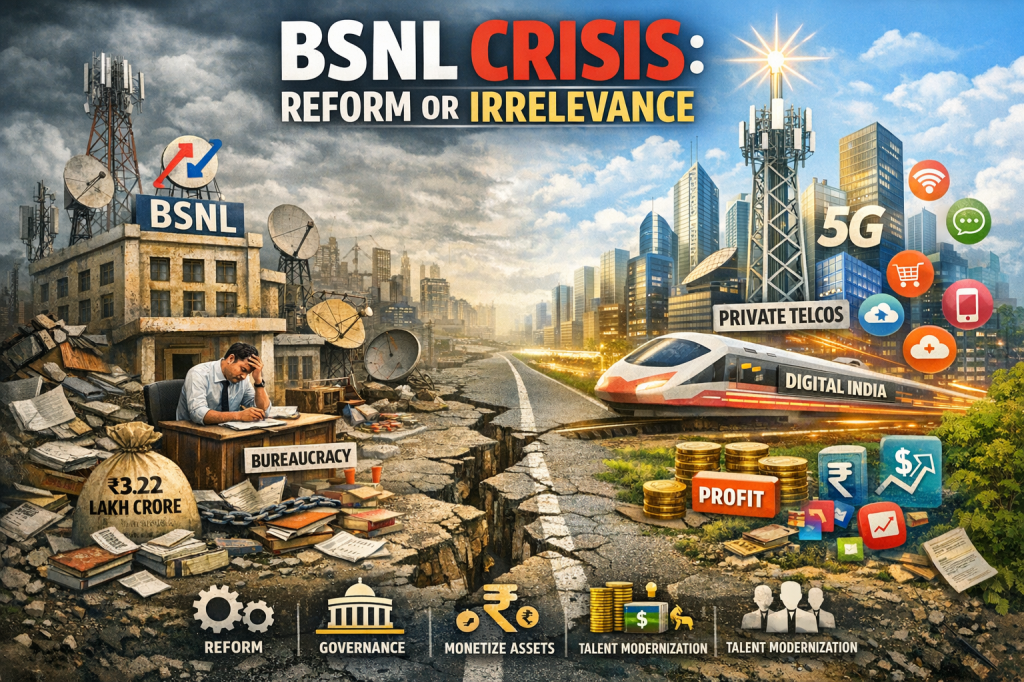
Few stories in India’s economic landscape are as fascinating—and as perplexing—as the divergent trajectories of Bharat Sanchar Nigam Limited (BSNL) and the country’s private telecom giants. One is a state-owned enterprise that inherited a nationwide network, extensive spectrum holdings, vast land assets, and sovereign backing. The other emerged as an aggressive private disruptor that transformed the telecommunications sector through speed, innovation, and customer-centric strategies. Since 2019, BSNL has received government support exceeding ₹3.22 lakh crore through revival packages, spectrum allocations, and financial assistance. Yet despite these unprecedented interventions, it continues to struggle for relevance in a market it once dominated. The question confronting policymakers is no longer why private operators have succeeded. The more important question is why BSNL continues to underperform despite possessing resources that could have revived many corporations multiple times over.
The most commonly cited explanation is technological lag. There is considerable merit in this argument. While private operators rapidly deployed 4G networks and invested heavily in preparing for the 5G era, BSNL remained entangled in prolonged procurement cycles, legacy infrastructure transitions, and delayed modernization efforts. Telecommunications is perhaps the most unforgiving of industries; consumers judge providers not by ownership structure but by service quality. Call drops, slow internet speeds, network interruptions, and inconsistent user experiences quickly erode customer loyalty. Even though BSNL has accelerated its modernization efforts and deployed nearly one lakh 4G sites across the country, it continues to face significant gaps in performance, coverage consistency, and customer perception. In the digital age, arriving late often means surrendering market leadership before the race even begins.
However, technology is merely the visible symptom of a much deeper institutional challenge. The real issue lies in governance. BSNL operates within a framework where the government simultaneously acts as owner, policymaker, regulator, and political stakeholder. Such overlapping roles create an environment where commercial priorities frequently become subordinate to administrative processes. Strategic decisions that private competitors execute in weeks often require months of approvals within public-sector structures. Procurement processes become cumbersome, investment decisions move through multiple layers of bureaucracy, and pricing flexibility remains constrained. In an industry defined by rapid innovation and intense competition, delayed decision-making becomes a structural disadvantage. The result is an organization attempting to compete in a sprint while carrying the weight of a marathon.
The leadership dimension further complicates the challenge. Transforming a large enterprise requires stable leadership, long-term vision, and operational autonomy. Successful corporate turnarounds rarely occur through temporary arrangements or short-term administrative extensions. They require leaders empowered to take calculated risks, allocate resources strategically, and drive institutional change over extended periods. Yet uncertainty at the top often permeates large public-sector organizations, fostering caution rather than innovation. Employees become more focused on procedural compliance than strategic execution. In highly competitive industries such as telecommunications, leadership uncertainty can be as damaging as financial weakness.
Beyond governance lies an equally significant cultural challenge. Modern telecom companies thrive on entrepreneurial energy. They reward experimentation, rapid adaptation, customer responsiveness, and innovation. BSNL, like many legacy public-sector enterprises, was designed during an era when administrative accountability was prioritized over market agility. Consequently, procedural correctness often takes precedence over business outcomes. Hierarchical decision-making structures discourage experimentation, while risk aversion becomes embedded in organizational behaviour. Over time, this culture creates institutional inertia. Talented professionals increasingly gravitate toward private firms that offer dynamic work environments, performance-based incentives, and exposure to emerging technologies. What remains is not a lack of commitment but a workforce constrained by systems that reward caution more than creativity.
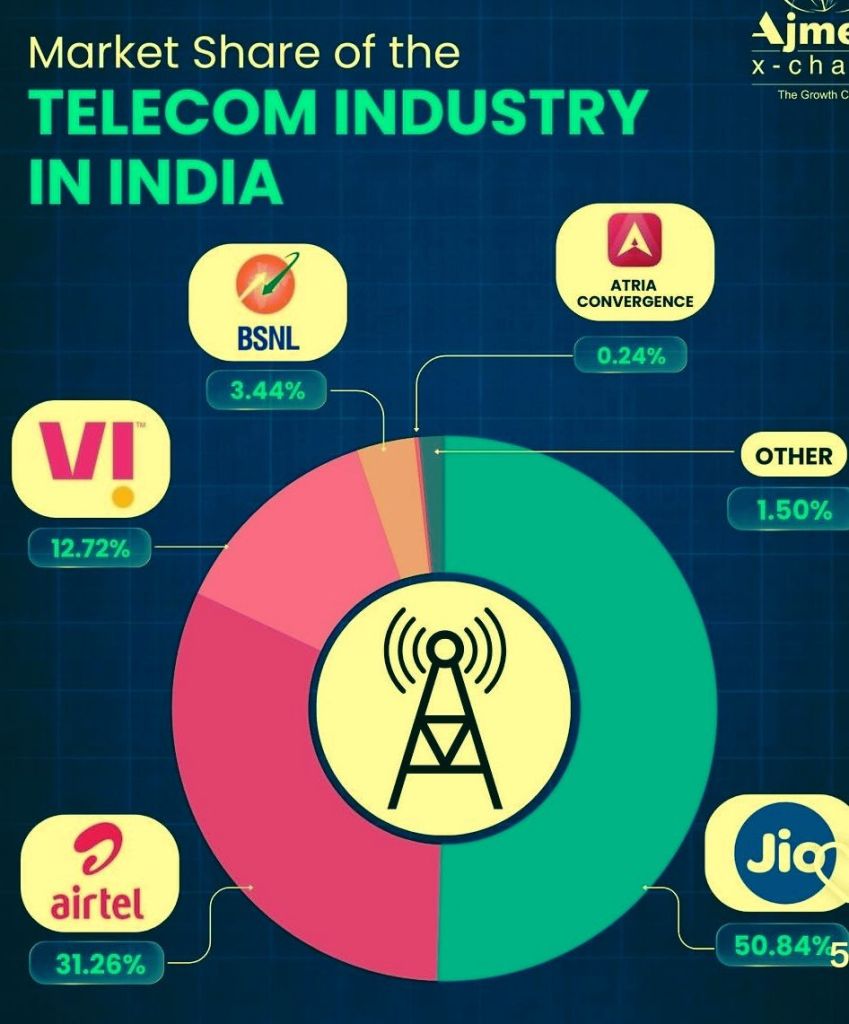
The financial challenge facing BSNL is equally complex. The company finds itself trapped in what economists describe as a revenue paradox. Its average revenue per user remains significantly lower than that of leading private competitors. A substantial proportion of its customer base consists of highly price-sensitive users, while premium consumers increasingly migrate toward private networks offering superior speeds, integrated services, and richer digital experiences. Modern telecommunications has evolved far beyond voice connectivity. Today’s telecom leaders function as digital platforms. Their revenues are increasingly generated through ecosystems encompassing entertainment, cloud services, digital payments, e-commerce, cybersecurity solutions, and data-driven consumer engagement. Private operators have successfully transformed themselves into technology ecosystems. BSNL, despite its infrastructure strength, continues to derive much of its identity from traditional connectivity services in an era where connectivity alone is no longer sufficient.
This reality explains why repeated financial bailouts have produced only limited transformation. Government support has undoubtedly prevented organizational collapse and preserved a strategically important national asset. However, financial assistance addresses symptoms rather than causes. Bailouts can buy time, but time alone does not generate competitiveness. Unless structural deficiencies are addressed, each revival package risks becoming another temporary intervention rather than a sustainable solution. The challenge is not the absence of funding; it is the absence of institutional transformation. Public money can stabilize balance sheets, but it cannot automatically create innovation, efficiency, or market relevance.5
The path forward therefore requires a fundamental reimagining of BSNL’s role. Rather than treating it as a protected government entity, policymakers must view it as a strategic national enterprise operating in a competitive marketplace. Genuine operational autonomy is essential. Global experience demonstrates that state ownership and commercial success are not mutually exclusive. Many successful public enterprises combine government ownership with professional governance and managerial freedom. BSNL requires a professionally empowered board, streamlined decision-making processes, and freedom to recruit talent, invest in technology, and respond swiftly to market dynamics. Simultaneously, the company must accelerate its transition toward cloud-native networks, software-defined infrastructure, artificial intelligence-driven operations, and digital-first service delivery.
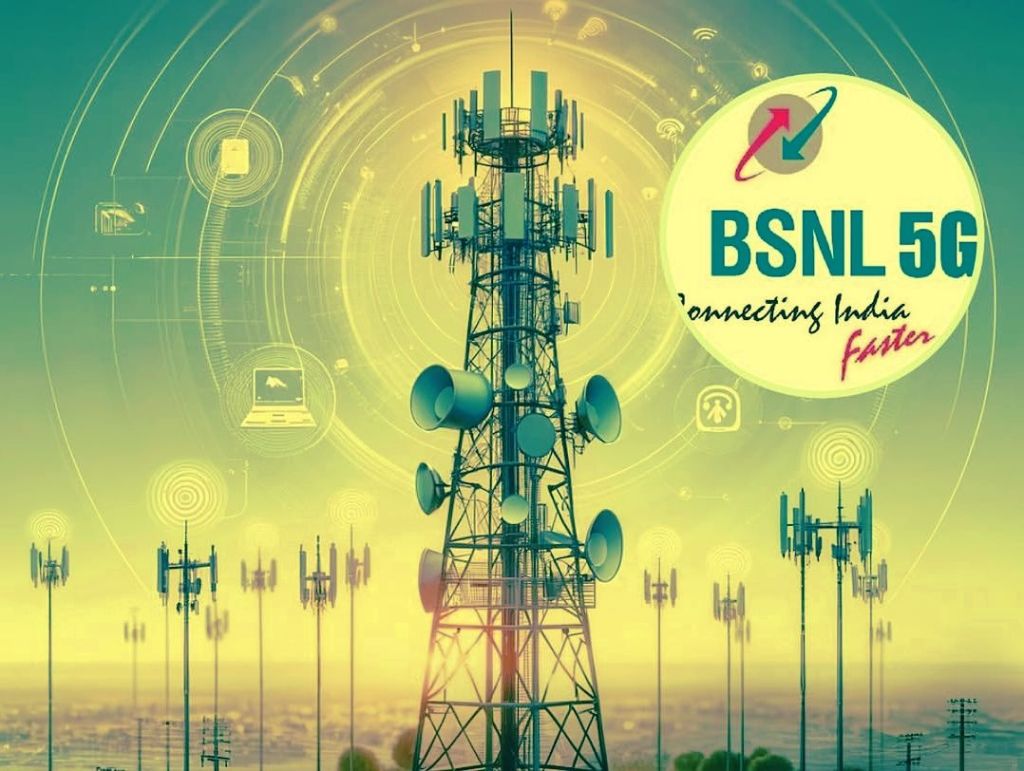
Equally important is the need to unlock value from BSNL’s extraordinary asset base. Few organizations possess comparable portfolios of fiber networks, telecom towers, strategic land parcels, and nationwide infrastructure. Properly monetized and professionally managed, these assets can generate substantial recurring revenues independent of traditional telecom operations. Talent strategy must also undergo radical reform. The future of telecommunications lies in artificial intelligence, cybersecurity, advanced analytics, cloud computing, and digital services. Competing in this environment requires attracting and retaining highly skilled professionals through market-linked incentives and performance-driven career pathways.
Ultimately, BSNL’s crisis is not primarily technological or financial—it is institutional. The company possesses capital, infrastructure, brand recognition, and strategic relevance. What it lacks is the organizational freedom to function like a modern enterprise. India needs BSNL not merely as another telecom operator but as a strategic instrument for digital inclusion, national resilience, and competitive balance. Yet no amount of public funding can substitute for structural reform. The lesson of the past decade is unmistakable: governments can rescue companies from bankruptcy, but only institutions can rescue them from irrelevance. The future of BSNL will depend not on the size of the next revival package, but on whether India is prepared to give it the autonomy, accountability, and competitive freedom necessary to thrive in the digital century.
VISIT ARJASRIKANTH.IN FOR MORE INSIGHTS

