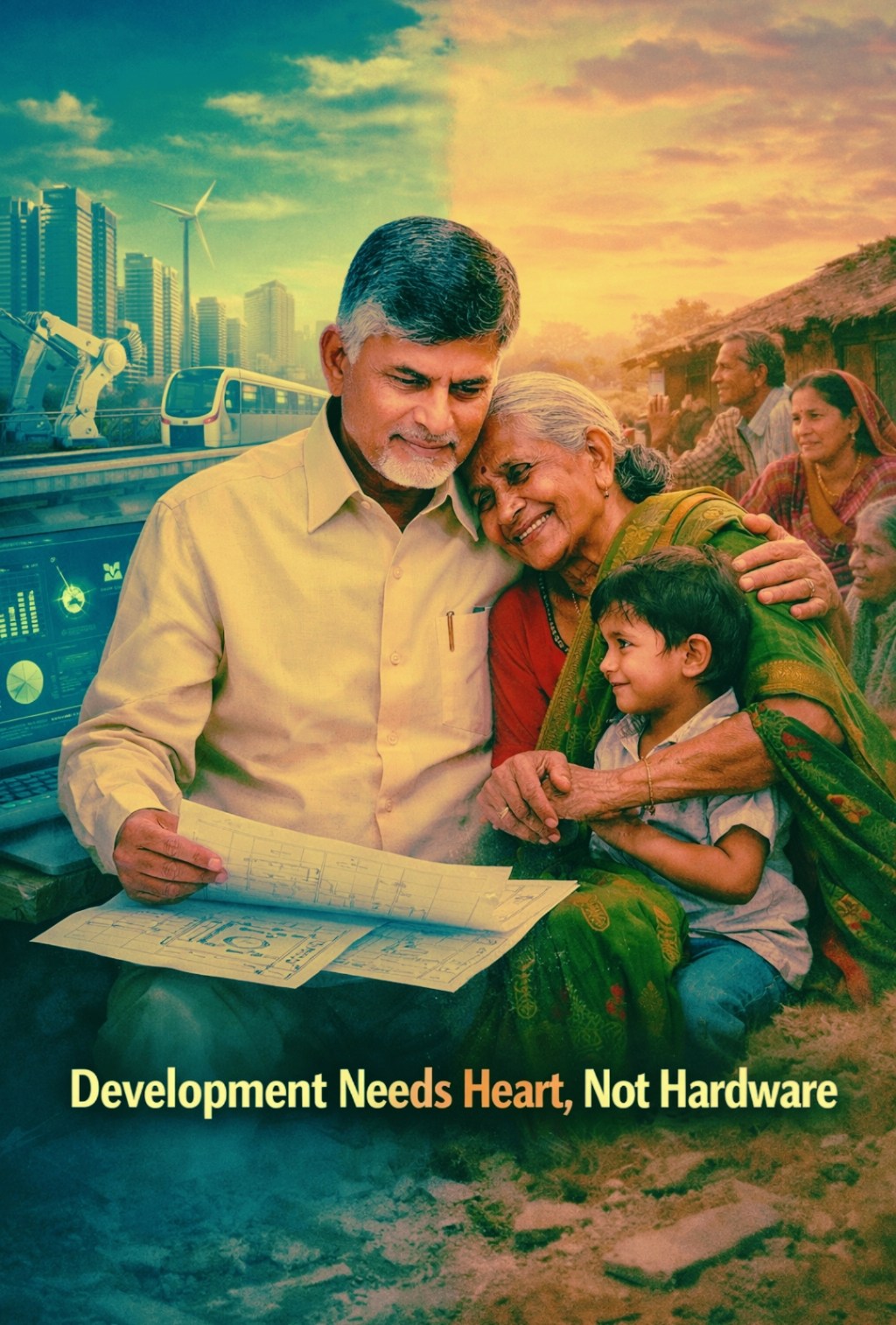
Politics is often described as a contest of ideologies, manifestos, and electoral arithmetic. Yet Andhra Pradesh has historically operated through a far more emotional democratic language. Elections in the state are not merely verdicts on governance; they are judgments on emotional intimacy. In this unique political culture, N. Chandrababu Naidu remains one of modern India’s most paradoxical leaders — admired for administrative brilliance, institutional discipline, and futuristic vision, yet repeatedly rejected whenever governance appears emotionally detached from everyday suffering. Andhra Pradesh has never treated Naidu as an ordinary politician. It has treated him as a technocratic rescuer summoned during moments of collapse and removed whenever citizens begin feeling invisible inside the machinery of development. His political career therefore reveals not only the story of one leader, but the emotional psychology of an entire state.
Naidu’s dramatic rise to power in 1995 was not a routine transfer of authority but a political rupture within the Telugu establishment. As the government of N. T. Rama Rao descended into internal instability, growing centralization, and controversy surrounding the influence of Lakshmi Parvati, Naidu emerged as the organizational strategist capable of restoring control. To critics, it resembled betrayal; to supporters, it was institutional necessity. Yet politics ultimately rewards outcomes more than sentiment. Naidu inherited a strained exchequer, weak industrialization, and a bureaucracy trapped in procedural lethargy. What followed was a remarkable administrative transformation. He introduced managerial governance, accelerated reforms, modernized bureaucratic functioning, and repositioned Hyderabad from a provincial capital into a rising global technology hub. At a time when most Indian states still functioned within old developmental frameworks, Naidu spoke the language of digitization, competitiveness, investment ecosystems, and governance efficiency.
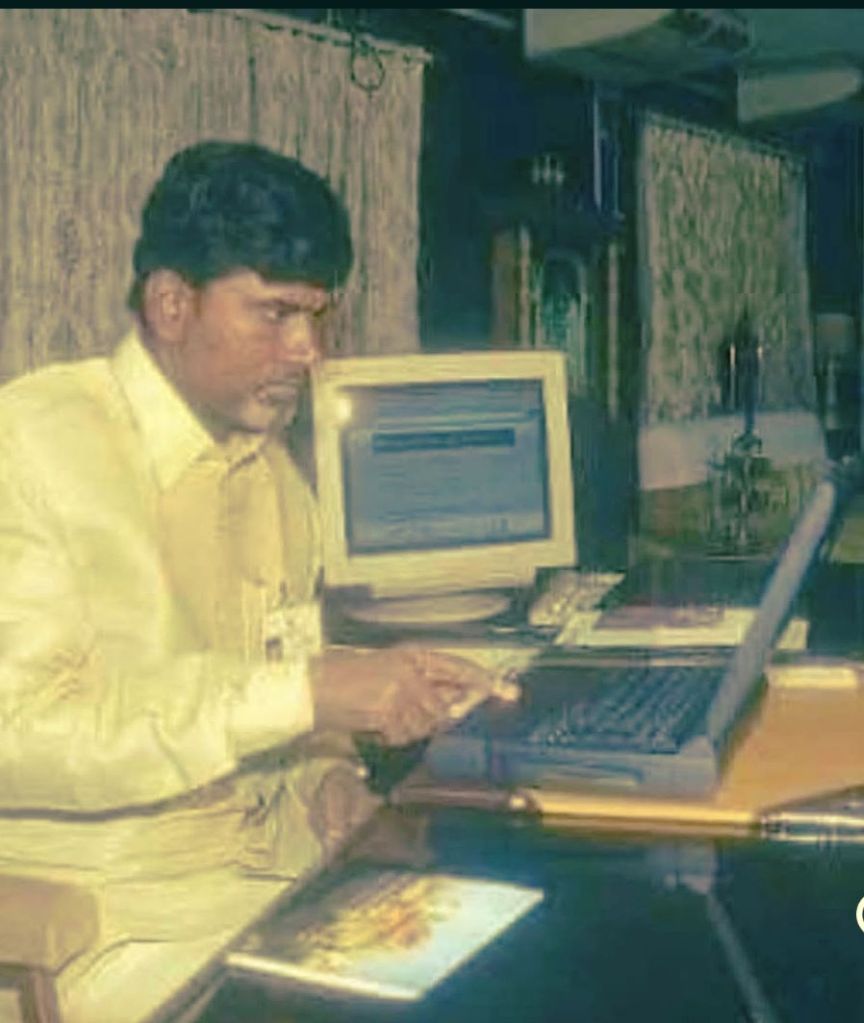
His sweeping victory in the 1999 Assembly elections validated this transformation politically. Winning 180 of 294 seats, Naidu demonstrated that controversial political ascents can be legitimized through delivery and performance. Hyderabad’s IT revolution expanded rapidly under his leadership. “Vision 2020” evolved beyond a planning document into a governing philosophy attempting to move Andhra Pradesh from survival politics toward long-term institutional planning. E-governance initiatives such as e-Seva reduced bureaucratic friction and symbolized the emergence of a technologically modern state. Public-private partnerships accelerated infrastructure development, while global corporations including Microsoft began viewing Hyderabad as a credible international destination. For urban India, Naidu became the embodiment of reform-era technocratic politics — a leader who governed less like a traditional politician and more like a corporate transformation strategist overseeing systemic modernization.
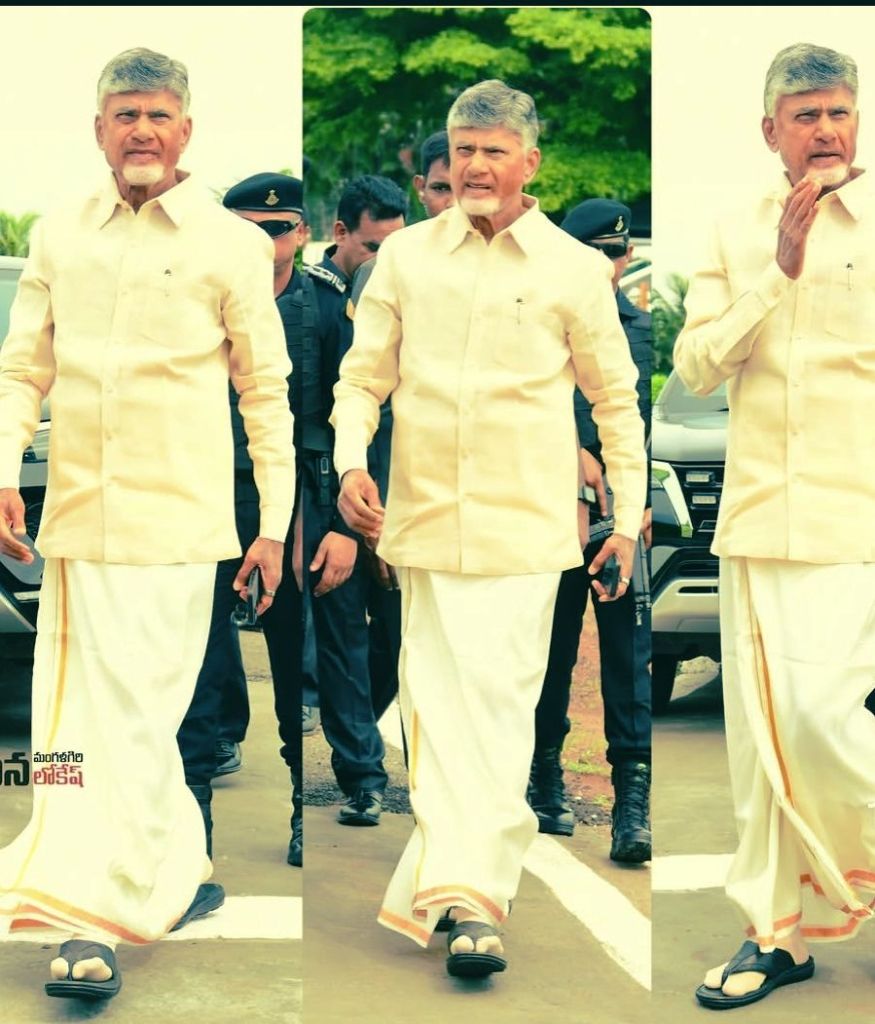
Yet democracies are not sustained solely through economic metrics, investment inflows, or infrastructure expansion. They survive through emotional legitimacy. Between 1999 and 2004, while Hyderabad gained international prestige, large sections of rural Andhra Pradesh experienced severe distress. Droughts devastated agriculture, farmer insecurity deepened, and rural anxieties intensified even as urban narratives celebrated cyber towers and technology summits. Naidu’s governance remained administratively efficient but politically began appearing urban-centric, managerial, and emotionally inaccessible. Into this emotional vacuum entered Y. S. Rajasekhara Reddy, whose famous padayatra transformed politics into physical reassurance. The 2004 election therefore became more than a defeat for Naidu; it became a sociological verdict. Andhra Pradesh was effectively communicating a profound democratic truth: competence may earn respect, but emotional accessibility earns loyalty. The electorate did not reject modernization itself. It rejected the perception of emotional distance within modernization.
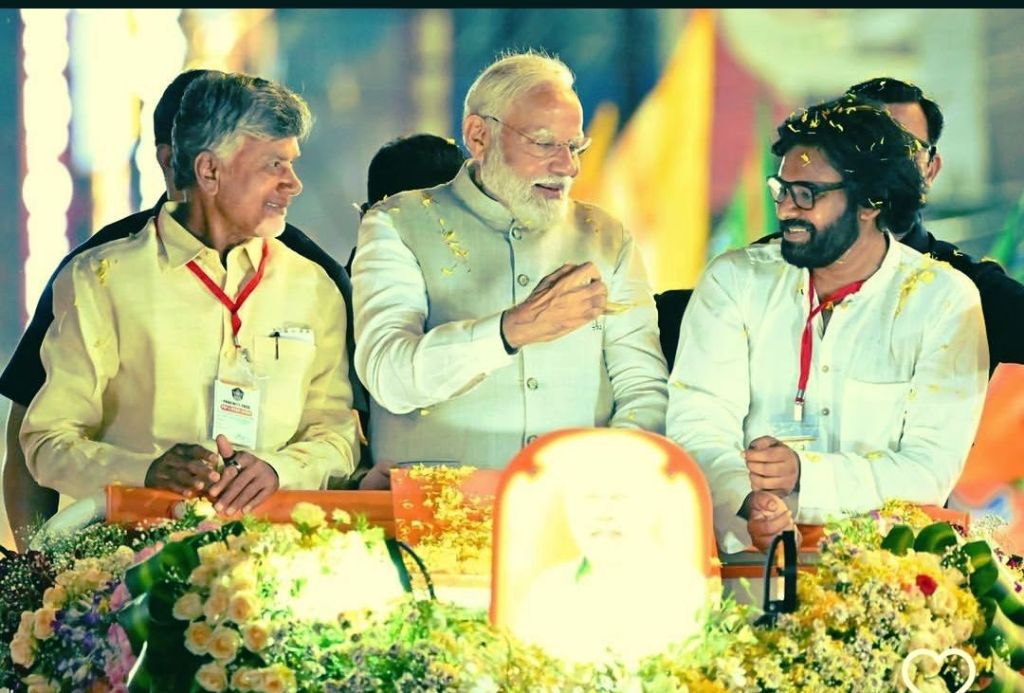
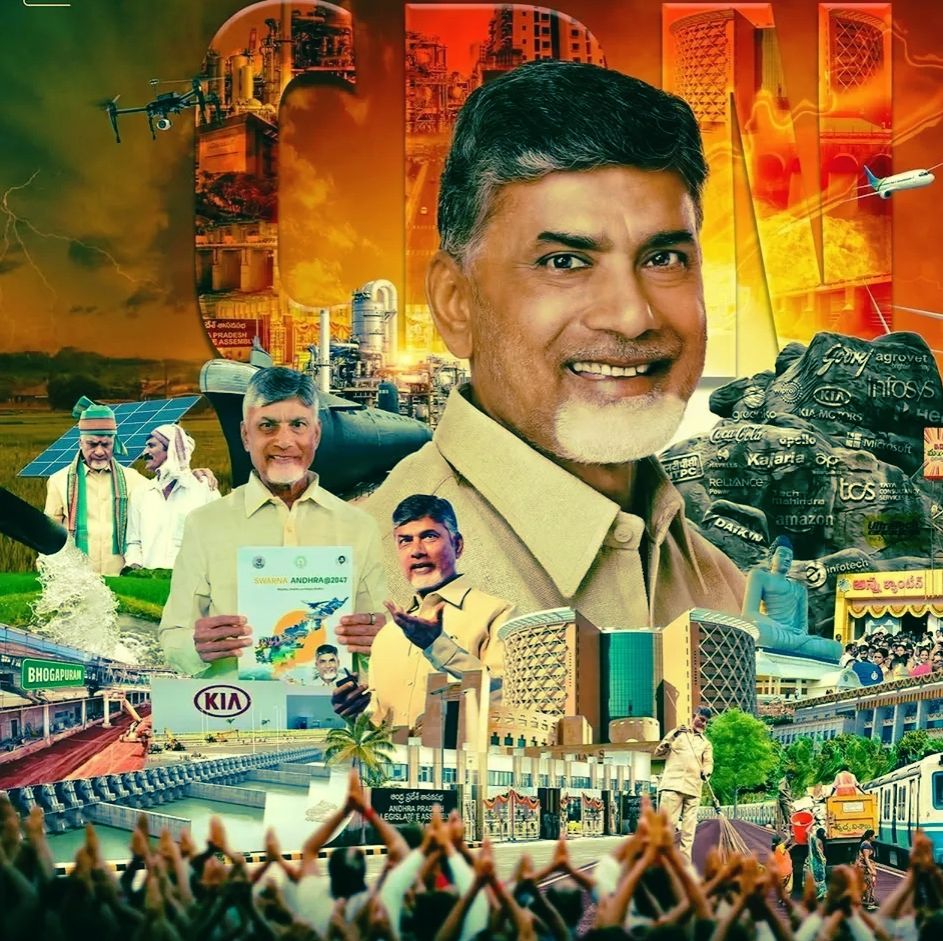
Naidu’s return to power in 2014 unfolded under entirely different historical circumstances. Following bifurcation, residual Andhra Pradesh was not merely economically weakened — it was psychologically amputated. Hyderabad, the state’s economic engine, was lost. Administrative infrastructure vanished almost overnight. Revenue uncertainty, institutional vacuum, and regional anxiety created conditions resembling political reconstruction after dislocation. In that moment, Naidu once again became politically inevitable. Sworn in on 8 June 2014 as the first Chief Minister of bifurcated Andhra Pradesh, he approached governance like a state architect rebuilding from institutional ruins. Amaravati emerged as an ambitious capital vision driven through innovative land pooling. The Polavaram Project gained renewed momentum as a transformational irrigation mission. Investments in electronics, renewables, manufacturing, and food processing were aggressively pursued. Projects such as Kia Motors symbolized attempts to reposition Andhra Pradesh as an industrial destination despite post-bifurcation trauma. It was not routine administration; it was structural reconstruction under extraordinary uncertainty.
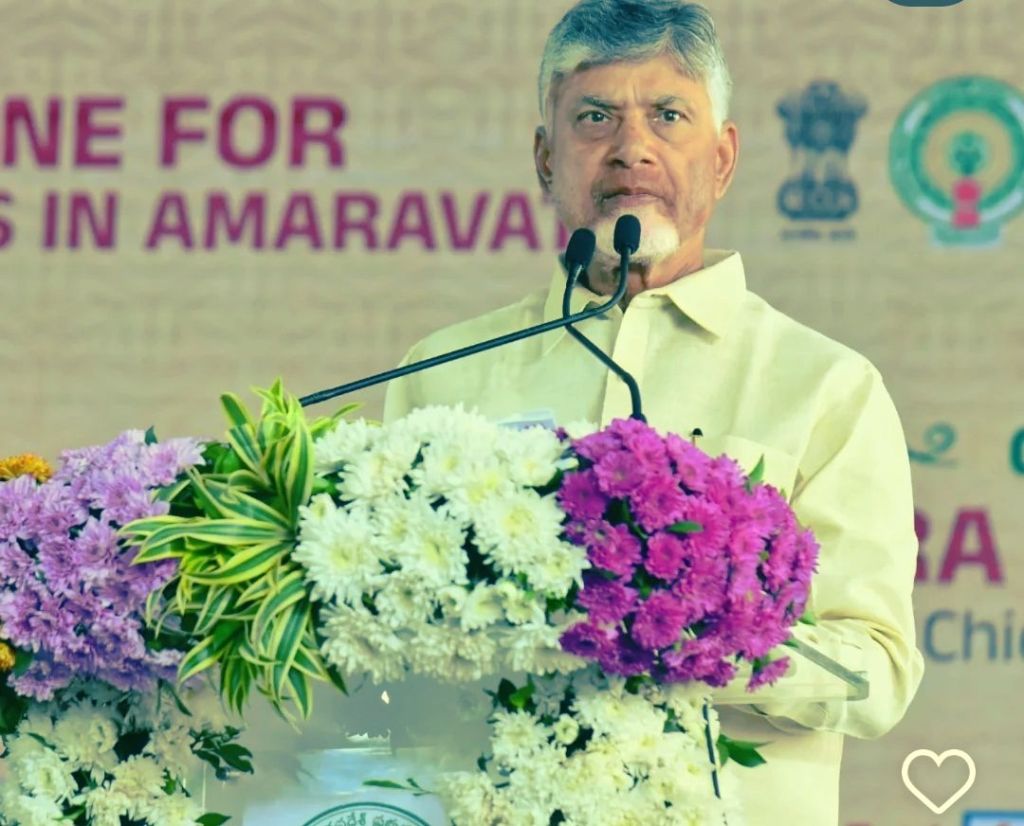
Yet the crushing defeat of 2019 once again exposed the recurring contradiction at the heart of Naidu’s politics. Y. S. Jagan Mohan Reddy succeeded not merely because of welfare schemes, but because he projected emotional proximity. Direct-benefit narratives, household-level outreach, and visible welfare politics created the perception of personal connection with ordinary citizens. Naidu’s governance appeared future-oriented but insufficiently attentive to immediate anxieties. The image of “administrative arrogance” became electorally devastating. Andhra Pradesh did not deny Naidu’s capability; it questioned whether ordinary citizens themselves remained emotionally visible inside his development model. This defines the enduring Naidu paradox. He governs like a systems engineer focused on macro-architecture, while voters often seek reassurance from someone who listens like family. His greatest strength — strategic long-term vision — repeatedly risks becoming his greatest political vulnerability at the grassroots level.
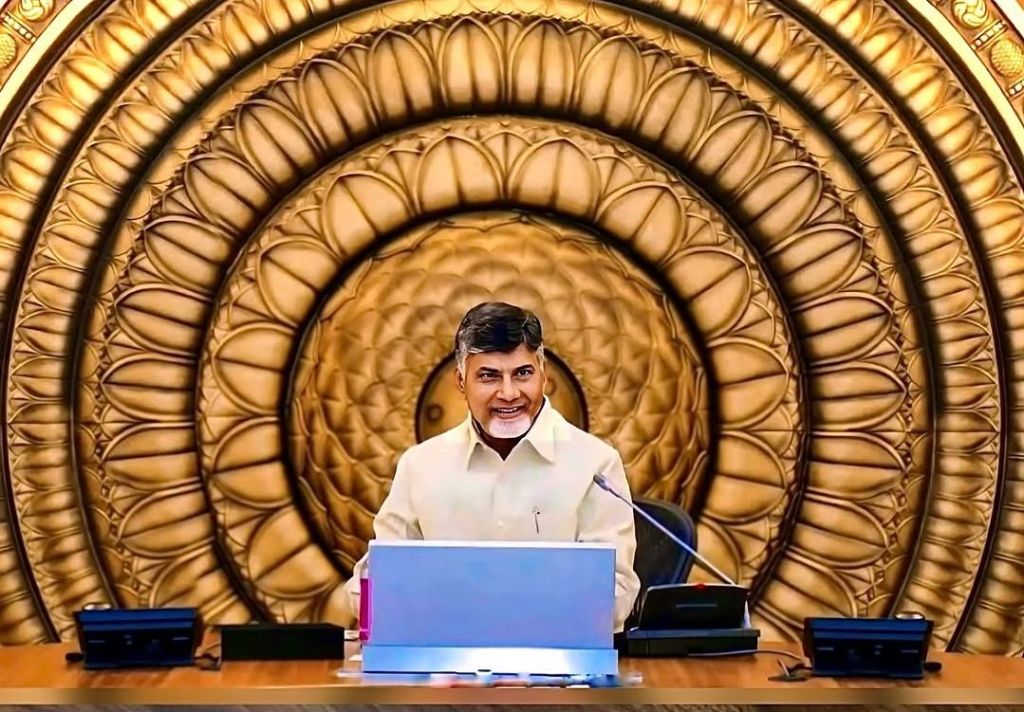
Across nearly three decades, Naidu has spent almost half his political career in opposition despite being among India’s most experienced administrators. Andhra Pradesh has alternated between rejecting him and recalling him whenever crisis demands institutional competence. This is not electoral inconsistency but democratic sophistication. Voters may tolerate hardship, but they rarely tolerate emotional invisibility. Ironically, the state itself has paid the price for this pendulum politics. Under Naidu, growth sometimes appeared disconnected from welfare emotions. Under welfare-dominant regimes, long-term economic momentum weakened. Andhra Pradesh became trapped between two incomplete governance models — development without sufficient emotional grounding and welfare without sufficient wealth generation. The state’s real challenge has never been choosing between growth and welfare. It has been learning how to institutionalize both simultaneously.
Now, with his historic return in 2024 and an overwhelming alliance mandate of 164 out of 175 seats, Naidu has received what may be the final transformative opportunity of his political life. But such mandates are conditional contracts, not permanent endorsements. His greatest challenge today is not merely Amaravati, investment summits, or infrastructure announcements. The true battlefield lies inside village secretariats, mandal offices, police stations, and public counters where ordinary citizens encounter delay, arrogance, petty corruption, and administrative indifference. Democracies rarely collapse dramatically; they decay silently through daily humiliation. A dismissive clerk, an inaccessible officer, or a rude constable can politically damage governments more deeply than opposition campaigns. If Naidu can now combine visionary economic architecture with humane, emotionally responsive governance — if he can institutionalize dignity alongside development — he may transcend the image of a technocratic reformer and emerge instead as a complete statesman. Andhra Pradesh has repeatedly demonstrated one enduring democratic truth: governments may build capitals, industries, and digital corridors, but they survive only when ordinary citizens feel heard at street level.
VISIT ARJASRIAKNTH.IN FOR MORE INSIGHTS

