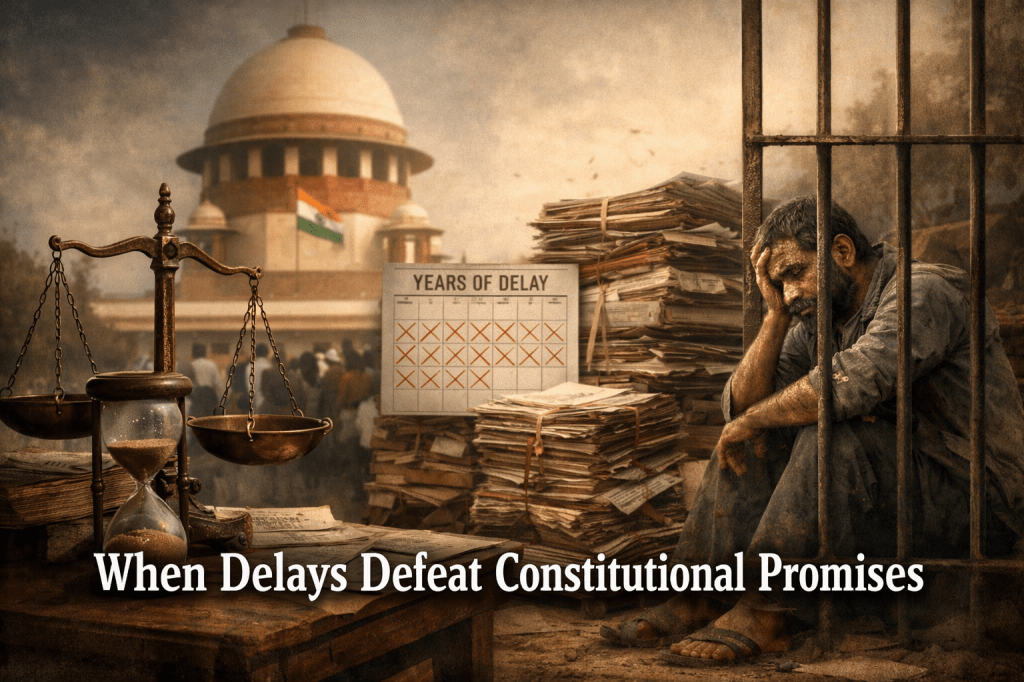
India rightly reveres its Supreme Court as the guardian of the Constitution, the sentinel of liberty, and the final protector of democratic values. From safeguarding fundamental rights to shaping constitutional morality, the institution has earned a unique place in the republic’s conscience. Yet beneath this constitutional prestige lies an increasingly uncomfortable reality. Can a court carrying more than 93,000 pending cases continue to embody timely justice for millions of citizens? More importantly, can an institution designed for constitutional adjudication remain effective when overwhelmed by an ever-expanding avalanche of litigation? The question confronting India today is not merely about pendency; it is about the future relevance, accessibility, and legitimacy of the country’s highest judicial institution.
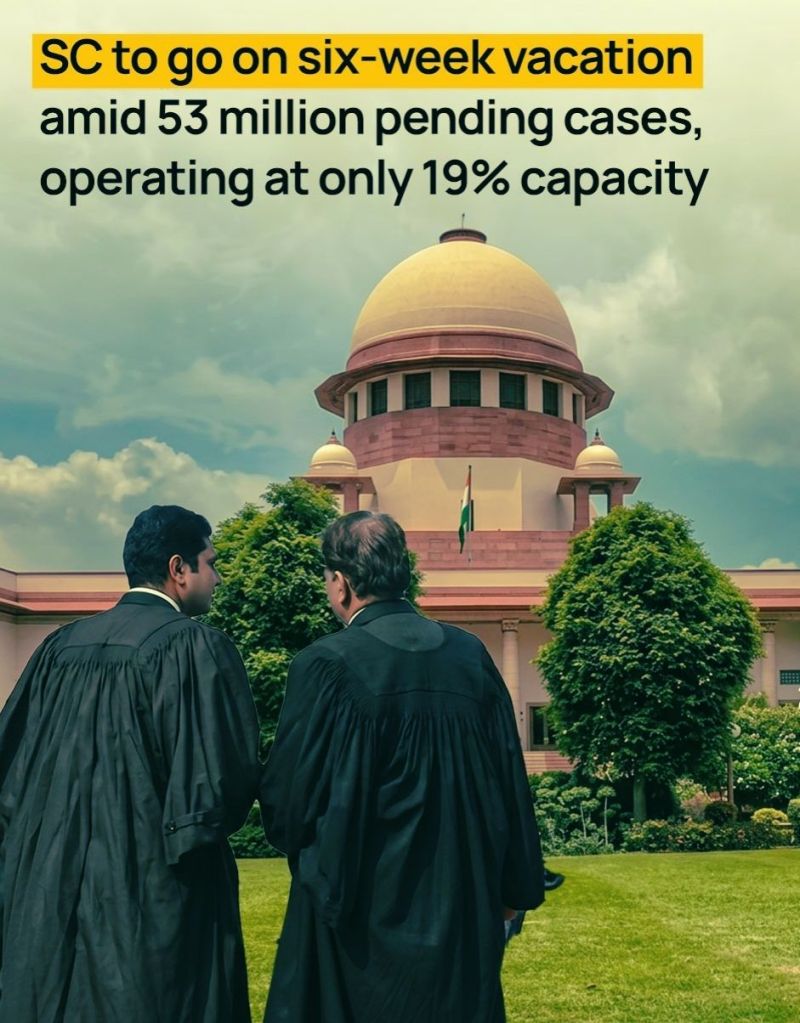
The challenge extends far beyond statistics. Every pending case represents a human story suspended in uncertainty. It may involve a family awaiting inheritance, a worker seeking compensation, a business trapped in commercial disputes, or an undertrial prisoner waiting for freedom. Across the country, nearly 5.8 crore cases remain pending at various judicial levels, creating what many observers describe as a silent crisis of governance. Justice delayed is no longer an abstract legal maxim; it has become a lived experience for millions. In a democracy, citizens measure institutions not only by their ideals but also by their responsiveness. A court that delivers justice after years of delay risks transforming constitutional rights into procedural promises.
The recent increase in the sanctioned strength of the Supreme Court to 38 judges is undoubtedly a welcome and necessary step. Greater judicial capacity can help manage increasing workloads and improve disposal rates. However, experience from judicial systems worldwide demonstrates that capacity expansion alone rarely resolves systemic congestion. Adding judges without addressing structural inefficiencies is analogous to widening a highway while leaving bottlenecks untouched. More judges may dispose of more cases, but unless the architecture of litigation changes, fresh filings will continue to outpace judicial resolution. The challenge is therefore not simply numerical but institutional.
At the heart of the problem lies a fundamental transformation in the Court’s role. The Supreme Court was conceived primarily as a constitutional court entrusted with interpreting the Constitution, resolving disputes of national significance, and protecting fundamental rights. Over time, however, it has increasingly become a court of routine appeals, bail matters, service disputes, and procedural litigation. Consequently, judicial time that could be devoted to landmark constitutional questions is frequently consumed by matters that arguably should have attained finality in subordinate forums. This expansion of jurisdiction has elevated accessibility in one sense but diluted institutional focus in another.
The dilemma raises a profound constitutional question: should the Supreme Court continue attempting to be everything for everyone, or should it redefine its core mission? Many mature democracies reserve their apex courts largely for constitutional interpretation and issues of exceptional public importance. India may need a similar conversation. A dedicated National Court of Appeals, frequently proposed by legal scholars and commissions, could absorb routine appellate work while enabling the Supreme Court to function primarily as a constitutional court. Such a reform would not diminish the Court’s authority; rather, it would strengthen its ability to perform its most important responsibilities.
Equally concerning is the issue of accessibility. Despite constitutional guarantees of equal justice, approaching the Supreme Court remains prohibitively expensive for many citizens. For individuals residing in distant districts and rural regions, litigation in Delhi often involves substantial travel expenses, legal fees, accommodation costs, and prolonged uncertainty. In practical terms, access to the apex court frequently depends on financial capacity rather than constitutional entitlement. This reality creates a troubling perception that justice becomes progressively less accessible as one moves higher in the judicial hierarchy. For a democracy committed to equality before law, such barriers deserve urgent attention.
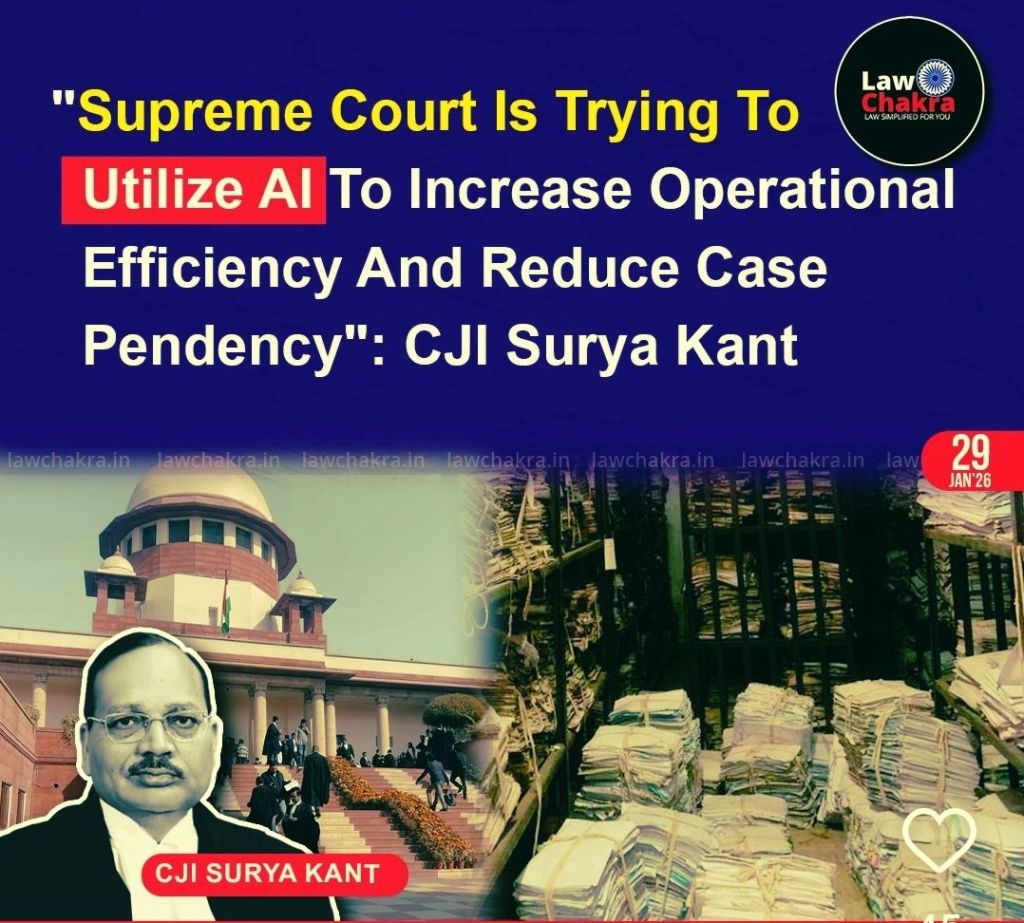
The consequences of delayed and inaccessible justice are visible across society. A significant proportion of India’s prison population consists of undertrial prisoners who have not been convicted but remain incarcerated while awaiting adjudication. Legal aid mechanisms, though valuable, remain inadequate relative to the scale of demand. Simultaneously, commercial disputes remain unresolved for years, affecting investment climates and economic efficiency. Citizens increasingly perceive litigation as a process to be endured rather than a remedy to be trusted. When legal outcomes become uncertain not because of law but because of delay, public confidence inevitably suffers.
Meaningful reform therefore requires imagination rather than incrementalism. Regional benches of the Supreme Court deserve serious consideration to reduce geographic barriers. Strengthening High Courts and limiting routine appeals to the apex level could restore institutional balance. Gram Nyayalayas and Lok Adalats must be revitalized to resolve disputes closer to communities before they escalate into prolonged litigation. Technology can accelerate processes through e-filing, virtual hearings, and digital case management, but technological modernization must remain inclusive. A justice system cannot become efficient at the cost of excluding those lacking digital access or literacy. True modernization combines innovation with accessibility.

Ultimately, the greatest challenge before the Supreme Court is not clearing files but renewing public trust. Courts derive authority not from force but from legitimacy, and legitimacy depends on citizens believing that justice is accessible, timely, and fair. Throughout its history, the Supreme Court has demonstrated the courage to scrutinize governments, legislatures, and executive authorities. The present moment calls for the same courage in examining its own structures and assumptions. Institutional self-correction is not a sign of weakness; it is the hallmark of enduring institutions. If the Court successfully reimagines itself for the demands of twenty-first-century India, it will emerge stronger than ever. If it does not, the danger is not merely administrative inefficiency but a gradual erosion of faith. And for a democracy, few risks are more profound than a citizenry that begins to doubt the accessibility of justice itself.
VISIT ARJASRIKANTH.IN FOR MORE INSIGHTS

