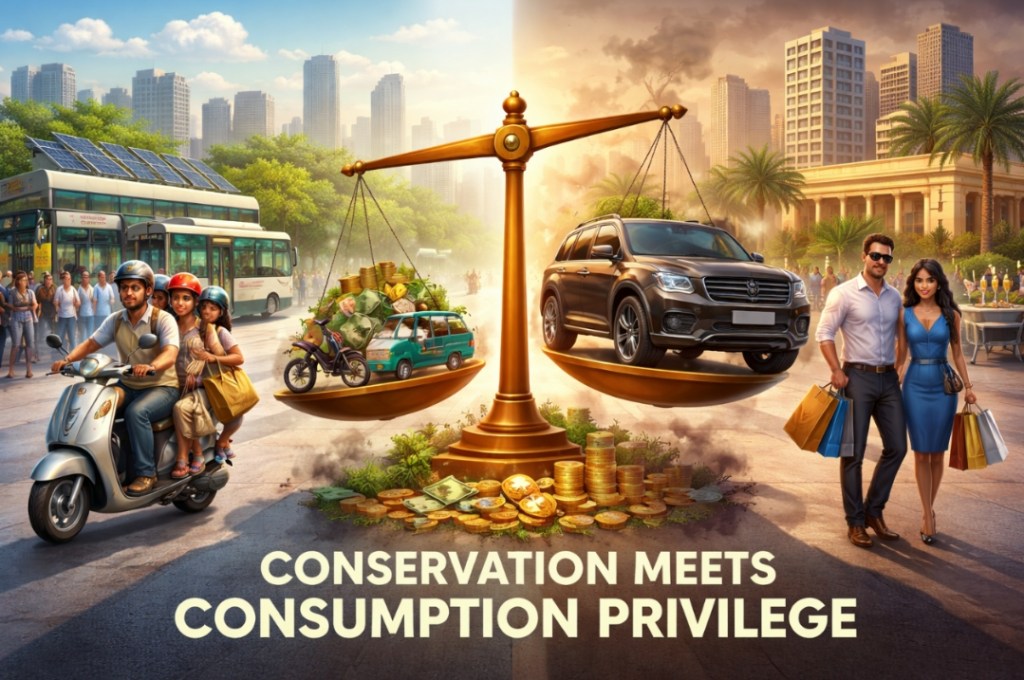
Modern democracies proudly proclaim equality before the law, equal citizenship, and shared national responsibility. Yet beneath these noble principles lies an uncomfortable contradiction that is increasingly visible on roads, in cities, and across environmental debates. Citizens are routinely urged to conserve fuel, reduce electricity consumption, embrace public transportation, and adopt sustainable lifestyles. Governments celebrate compact vehicles, electric scooters, and energy-efficient living as civic virtues. At the same time, highways are increasingly dominated by luxury SUVs, oversized vehicles, and premium consumption patterns that impose significantly larger environmental costs. This contradiction raises a profound question: Why does environmental responsibility often appear stricter for those who consume the least, while excessive consumption remains socially acceptable for those who consume the most?
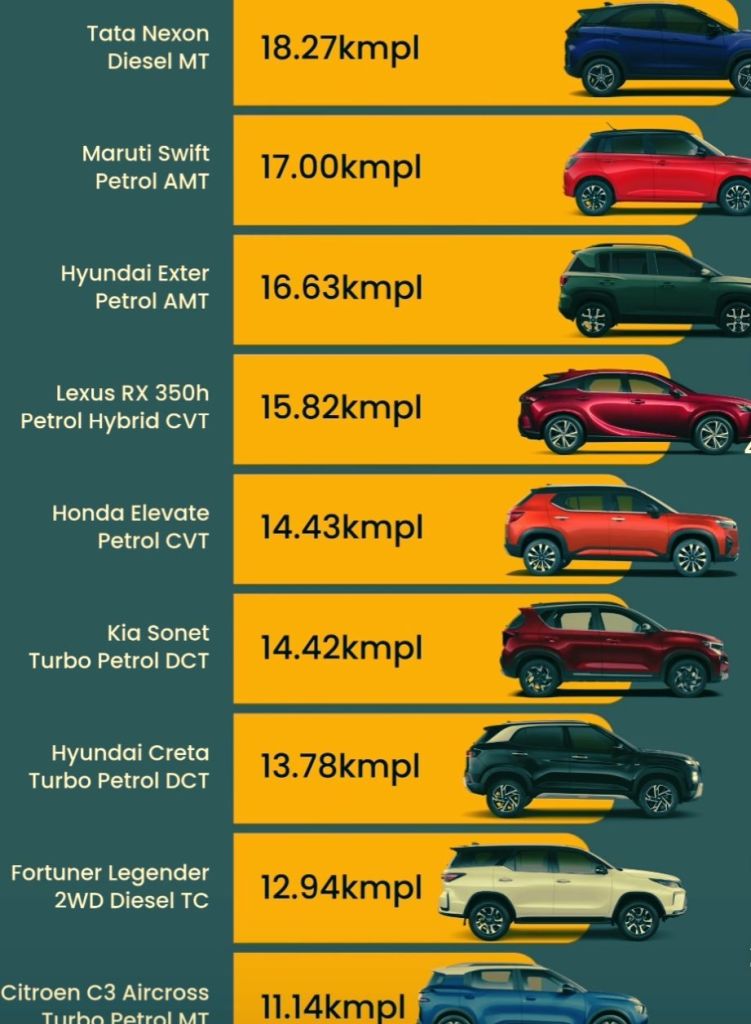
India’s development story reflects this paradox with remarkable clarity. Public campaigns encourage ordinary citizens to save every litre of fuel and every unit of electricity. Middle-class families are advised to downsize consumption, while lower-income households are expected to embrace restraint as a patriotic duty. Yet conspicuous consumption continues to flourish among affluent sections of society. Large luxury vehicles have become symbols of success, power, and status. The result is what may be called the “SUV Republic” — a social order in which sustainability is promoted as an obligation for the many while luxury remains a privilege for the few. The debate is therefore not merely about automobiles; it is about fairness, responsibility, and the distribution of environmental burdens.
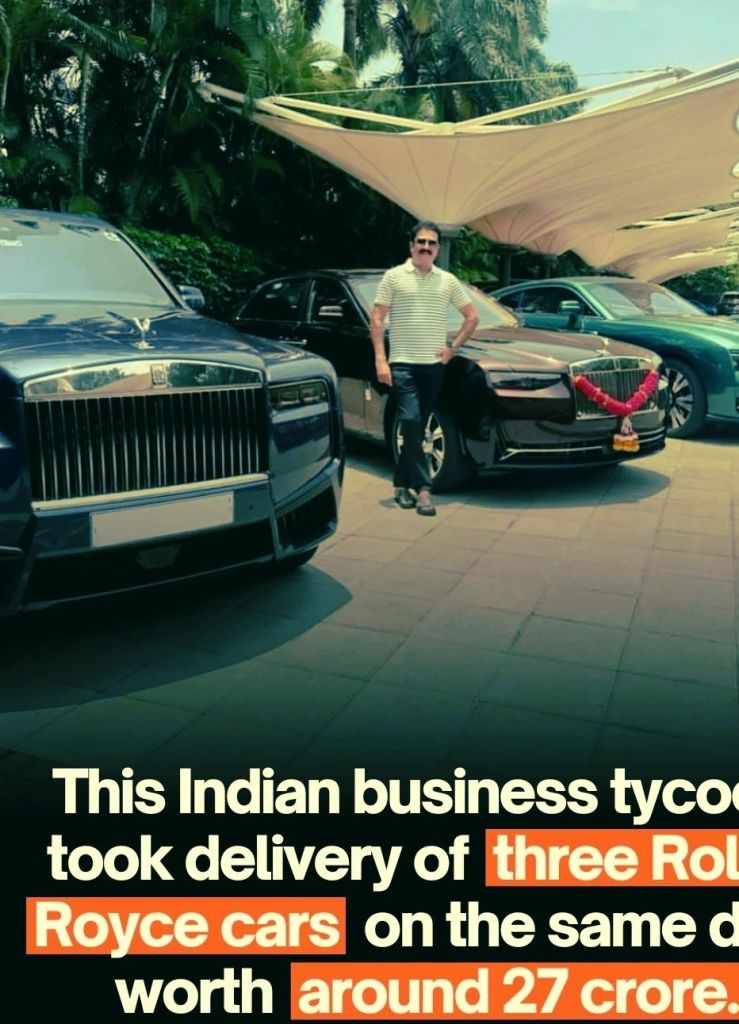
At first glance, the solution appears simple. If larger vehicles consume more fuel, occupy more public space, and generate greater emissions, why not impose extremely high taxes to discourage their use? Why should a school teacher driving a fuel-efficient hatchback be repeatedly reminded of conservation while an affluent SUV owner faces little social scrutiny? Such questions resonate because they touch a deep instinct for fairness. Citizens are often less concerned about inequality itself than about unequal expectations. They are willing to contribute to collective goals, but they expect those with greater resources to shoulder proportionately greater responsibility.
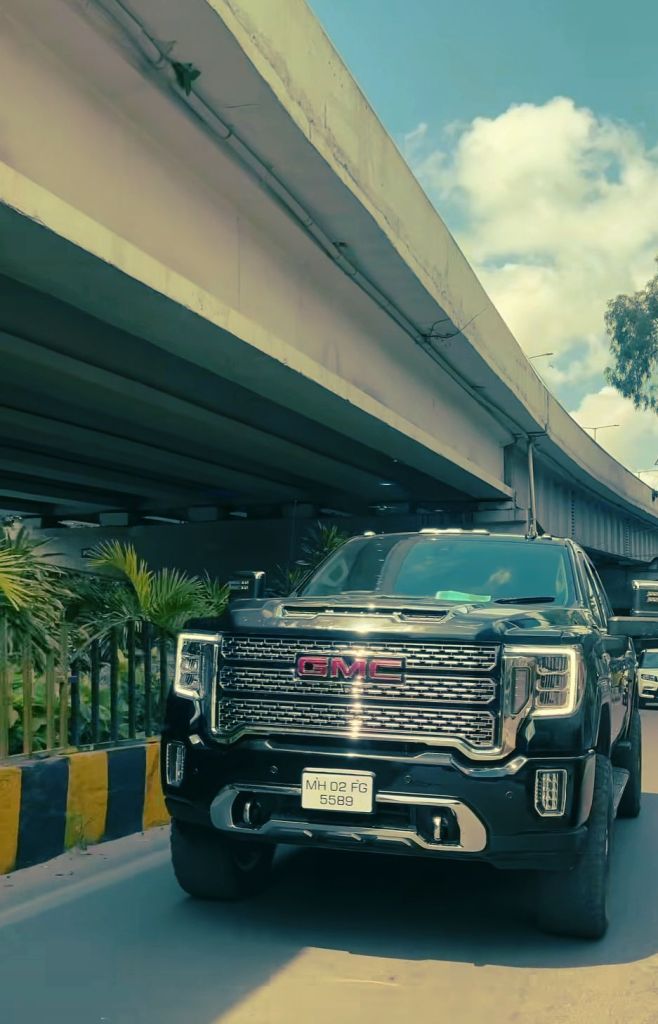
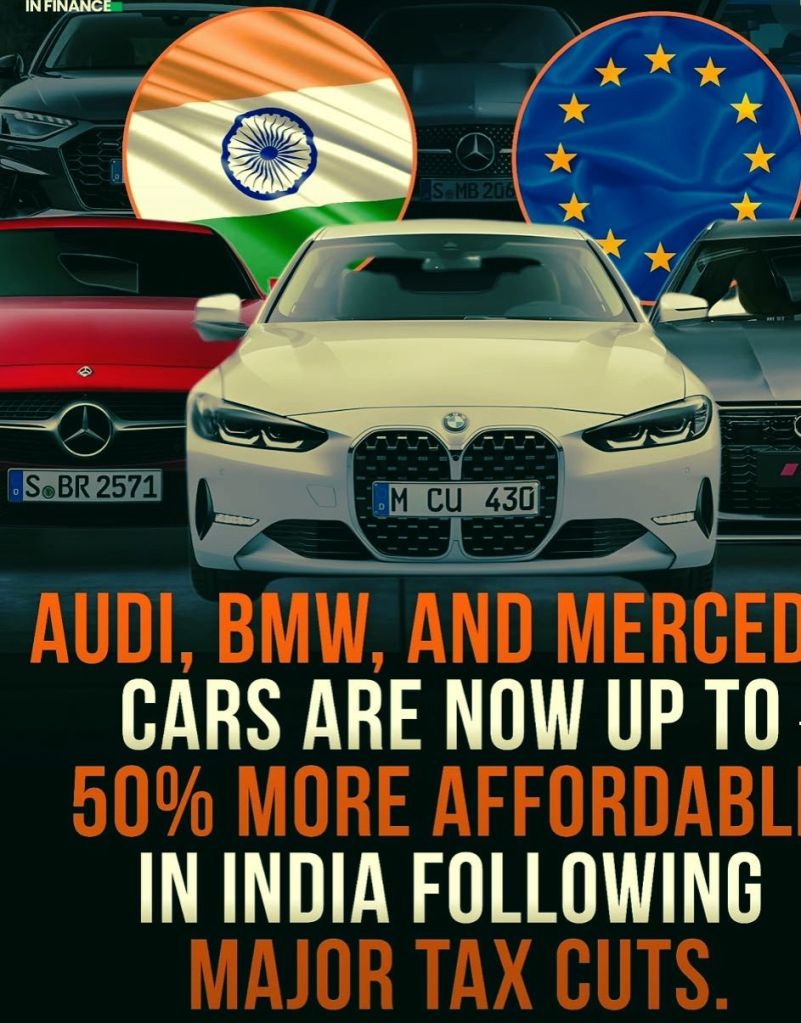
The reality, however, is more complex than public perception suggests. India already imposes substantial taxes on luxury vehicles through GST, compensation cess, registration fees, road taxes, and fuel duties. Owners of premium automobiles contribute significantly more to public revenues than ordinary vehicle owners. From a purely fiscal perspective, policymakers may argue that the affluent are already paying for their consumption. Yet the sense of unfairness persists because taxation alone rarely changes visible behaviour. For a middle-class family, an additional financial burden may alter purchasing decisions dramatically. For a millionaire, the same burden often represents only a marginal inconvenience. Consequently, higher taxation may generate revenue without reducing consumption. This reveals an important distinction: equality in taxation does not necessarily create equality in sacrifice.
The issue becomes even more pronounced when viewed through the lens of opportunity. Environmental responsibility is easiest for those who possess alternatives. In many Indian cities, public transportation remains overcrowded, walking infrastructure remains inadequate, and cycling continues to be unsafe. Citizens who rely on affordable transportation often make sacrifices because they have limited choices. Wealthier households, by contrast, can absorb rising fuel costs, maintain multiple vehicles, and purchase convenience whenever necessary. As a result, sustainability often feels less like a shared national mission and more like a burden unevenly distributed across economic classes. The perception emerges that environmental virtue is demanded from necessity at the bottom and practiced voluntarily at the top.

Psychology further deepens this divide. Luxury vehicles are not merely machines for mobility; they are instruments of social signalling. They communicate wealth, achievement, and prestige. Across societies, consumption frequently serves symbolic purposes that extend beyond practical utility. An oversized vehicle often functions as a public declaration of status rather than a transportation requirement. This creates a cultural paradox. The same society that praises environmental responsibility frequently rewards visible consumption with admiration and social recognition. Consequently, the market incentive to display success often overwhelms the moral incentive to conserve resources. Environmental policy thus confronts not only economic realities but also deeply embedded human aspirations.
History suggests that sustainable behavioural change rarely emerges through punishment alone. Excessive taxation, regulatory restrictions, and moral policing can generate resistance, avoidance, and unintended consequences. More effective solutions arise when societies redesign incentives rather than merely impose penalties. Sustainability must become aspirational rather than sacrificial. Cleaner technologies, electric mobility, and efficient transportation systems should be associated with intelligence, innovation, and social prestige. Congestion pricing, differentiated road-use charges, green certifications, and preferential urban access can align personal incentives with collective environmental goals. Equally important, revenues generated from high-consumption activities should visibly improve public transportation, creating alternatives attractive enough to influence behaviour across all income groups.

The broader lesson extends far beyond automobiles. Citizens rarely object to prosperity itself. Most people celebrate economic success and aspire to improve their own standard of living. What undermines public trust is the perception that responsibility is distributed asymmetrically while privilege remains concentrated. When governments ask citizens to conserve, comply, and sacrifice, they expect visible examples from those who possess the greatest resources and the largest environmental footprints. Trust in public policy ultimately depends not on equality of outcomes but on fairness of obligations. A society remains cohesive when privilege and responsibility rise together.
The future of sustainable development will not be secured by demanding restraint exclusively from those who already consume little. Nor will it be achieved by portraying prosperity as a social crime. The challenge is to create systems where environmental accountability grows proportionately with economic privilege. If conservation is a national duty, it must be visibly shared across all classes. Sustainable societies are built when responsibility, sacrifice, and accountability are distributed in proportion to capacity. Until that balance is achieved, the “SUV Republic” will continue to provoke an enduring democratic question: if environmental stewardship is everyone’s responsibility, why does it so often begin with those who have the least to consume and the most to endure?
VISIT ARJASRIKANTH.IN FOR MORE INSIGHTA

