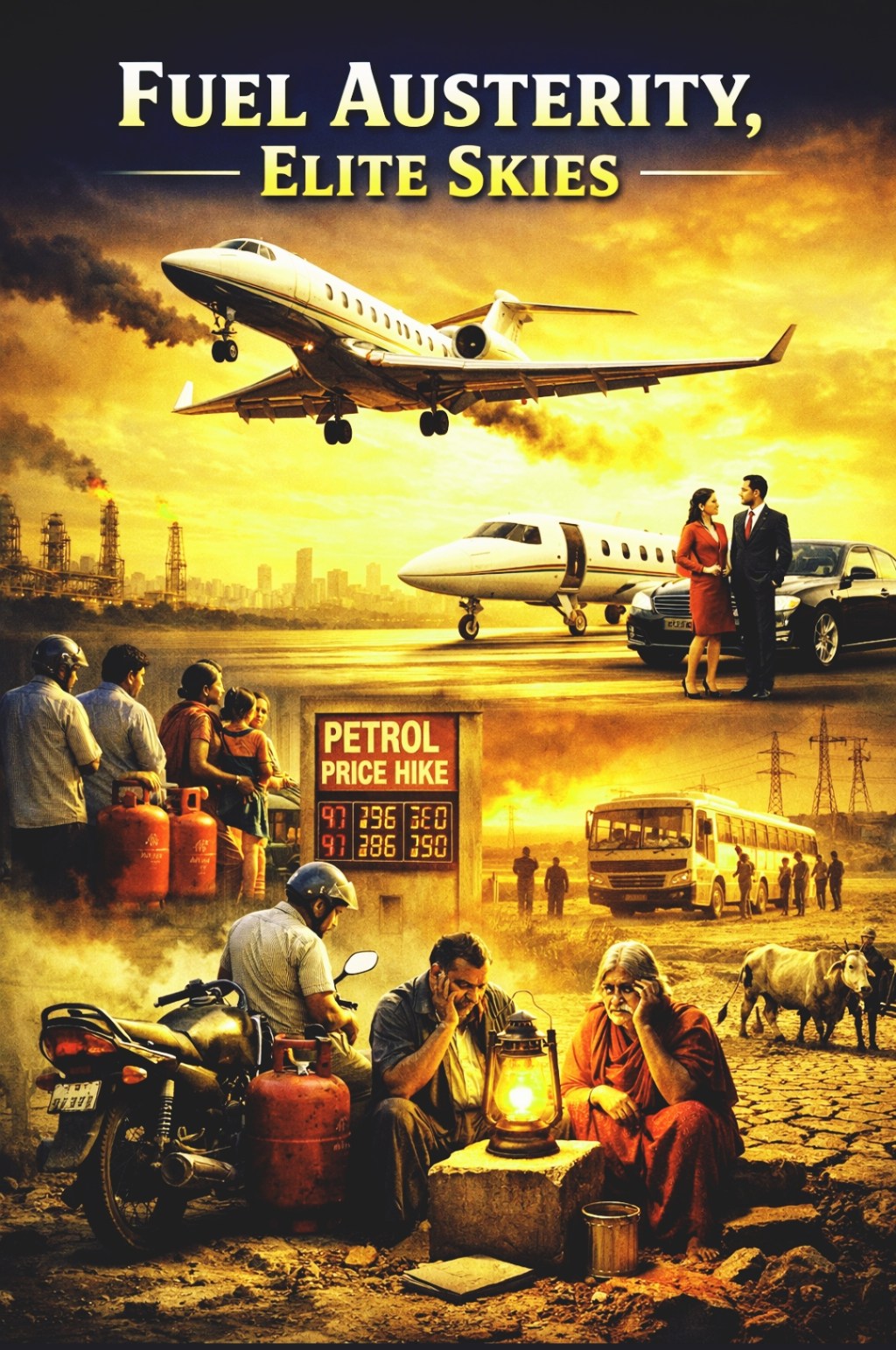
India today lives inside a striking contradiction. Citizens are repeatedly urged to conserve fuel, reduce imports, adopt austerity, and strengthen national self-reliance. Families are advised to switch off lights, optimize LPG usage, avoid unnecessary travel, and contribute toward economic discipline in the face of global uncertainty. Yet simultaneously, the nation’s airspace is increasingly occupied by luxury private jets whose fuel consumption in mere hours can exceed the daily energy requirements of entire urban neighborhoods. The contradiction is no longer merely economic; it has become moral and political. The uncomfortable national question emerging from this imbalance is simple: are sacrifice and austerity gradually becoming obligations reserved only for the middle class and the poor, while the wealthy continue consuming national resources with near-complete insulation from restraint?

The rapid rise of private aviation reveals the emergence of a deeply unequal energy culture in modern India. The country today possesses more than 500 private aircraft, including nearly 300 business jets, making it one of Asia’s fastest-growing elite aviation markets. Between 2019 and 2024, the fleet reportedly expanded by almost one-fourth. Delhi and Mumbai airports now witness continuous movement of chartered aircraft, luxury jets, and executive aviation traffic, especially during international summits, wedding seasons, political gatherings, and high-profile corporate events. During major global conferences hosted in Delhi, private jet traffic surged dramatically, transforming airports into symbols of concentrated privilege. Such numbers are not merely indicators of rising prosperity; they represent the consolidation of resource-intensive luxury within a country still struggling to provide affordable mobility and energy security to millions.

This contradiction becomes even sharper when viewed against India’s energy vulnerability. The country imports nearly 85 percent of its crude oil requirements. Every spike in global oil prices weakens the rupee, expands the current account deficit, fuels inflation, increases freight costs, and pressures foreign exchange reserves. Fuel conservation is therefore not just an environmental slogan but a strategic economic necessity tied directly to national stability. Yet private aviation operates almost like a parallel economic universe detached from the austerity expected from ordinary citizens. While auto drivers calculate every litre of diesel, farmers struggle with transportation costs, and salaried households absorb rising petrol prices, luxury aviation continues expanding through premium charters, corporate fleets, and aspirational consumption culture.

The arithmetic of this inequality is staggering. A private jet can consume nearly 850 litres of aviation fuel per flying hour. Over a full day of cumulative operations, a single aircraft may burn close to 20,000 litres of fuel. In a country where millions still rely on subsidized LPG cylinders and fuel-sensitive livelihoods, such consumption acquires ethical dimensions far beyond economics. The fuel consumed by luxury air mobility for a handful of elites could potentially sustain the cooking energy requirements of thousands of households or support daily transportation for countless commuters. The contrast becomes more disturbing when citizens are simultaneously reminded that India must conserve fuel to reduce import dependency and protect foreign exchange reserves. Conservation cannot become a one-directional sermon aimed downward while extravagance remains normalized upward.
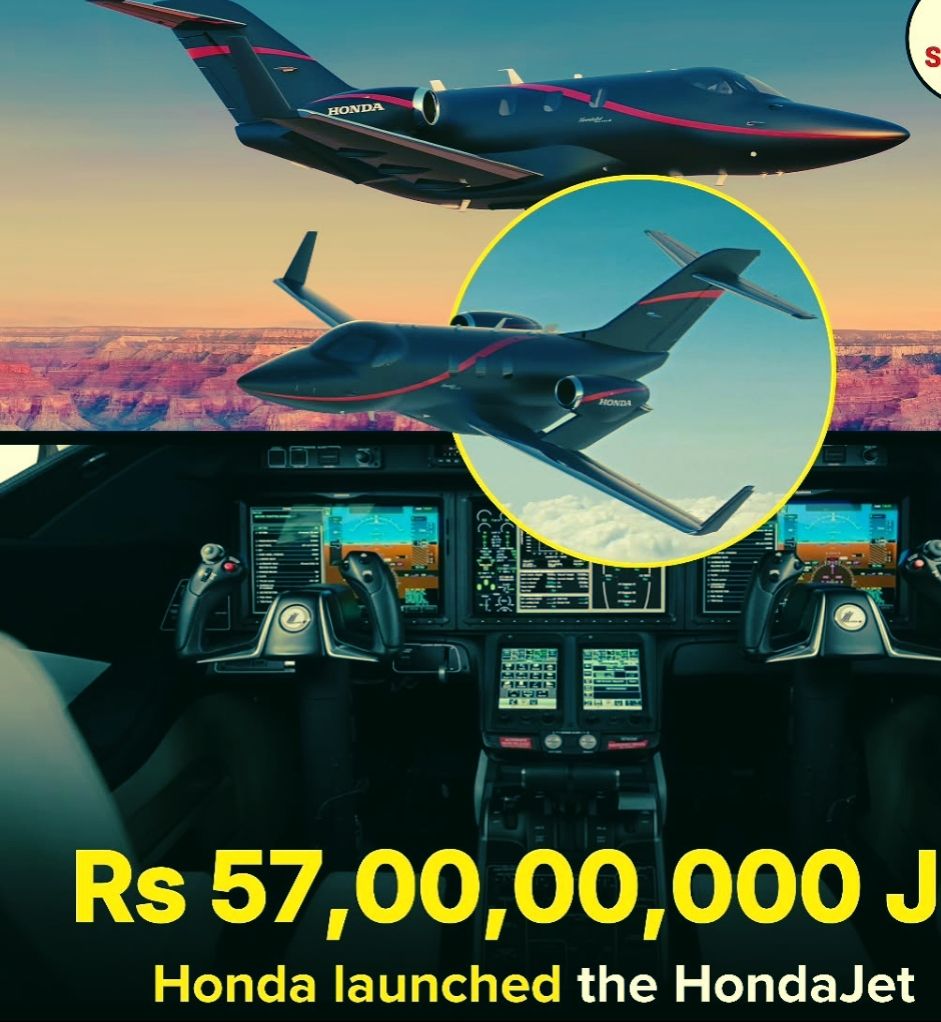
This is not an argument against technology, business efficiency, or executive mobility. Modern economies require rapid connectivity. Private aviation undeniably serves legitimate purposes including emergency evacuation, industrial coordination, medical access, infrastructure management, and time-sensitive investments. The issue lies elsewhere — in the widening gap between public messaging and elite behavior. Democracies function not only through policy but through moral signaling. Political leaders, industrialists, celebrities, and wealthy influencers shape public culture through visible conduct. When the same elite ecosystem advocating austerity continues displaying unchecked fuel extravagance, conservation loses social credibility. Citizens begin to internalize a dangerous perception: that discipline is expected only from those without privilege.
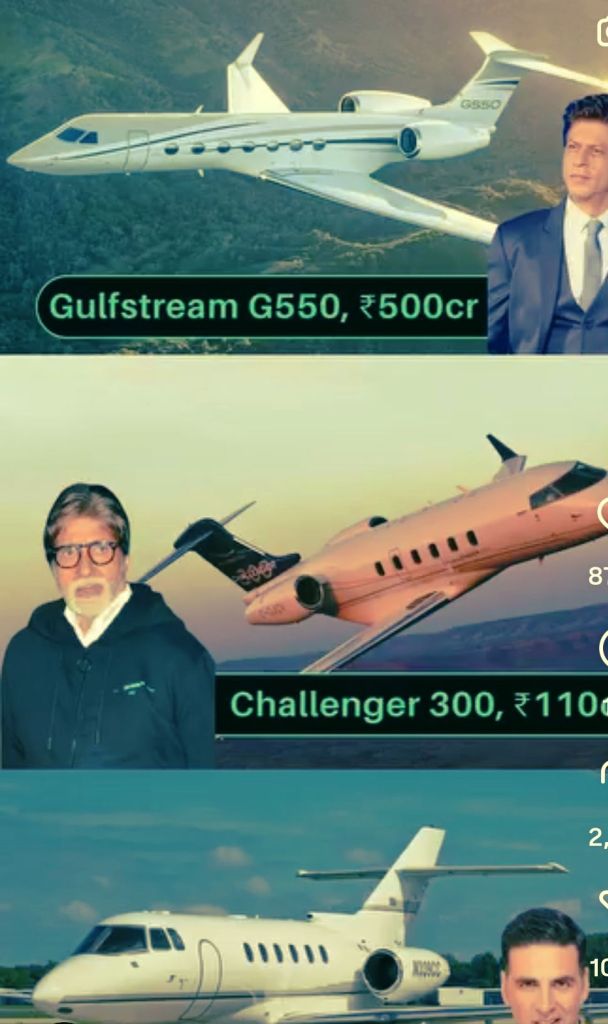
The symbolism matters because India remains an intensely unequal society. Rising fuel prices immediately alter the lives of delivery workers, small traders, middle-class employees, farmers, and public transport users. A modest increase in petrol prices affects monthly budgets, food inflation, commuting patterns, and household savings. Meanwhile, luxury aviation enjoys structural advantages through growing charter ecosystems, elite airport services, and aspirational wealth branding. This widening asymmetry gradually corrodes democratic trust. The perception that “rules are for the poor” becomes politically corrosive over time. Environmental implications deepen the contradiction further. A single private jet trip may emit nearly 3.6 tonnes of carbon dioxide, often several times higher per passenger than commercial aviation. At a time when India positions itself globally as a responsible climate actor, unchecked luxury emissions create reputational inconsistency between public diplomacy and domestic reality.

Yet simplistic populist responses such as outright bans on private jets would be economically counterproductive. Executive aviation supports pilots, engineers, airport workers, maintenance firms, logistics providers, charter operators, and hospitality ecosystems. The real issue is therefore not prohibition but proportional responsibility. If India genuinely seeks a culture of conservation, austerity must become visibly universal rather than selectively imposed. Luxury aviation fuel can reasonably attract stronger green surcharges, mandatory carbon disclosures, idle-time restrictions, and compulsory investments into Sustainable Aviation Fuel programs. Carbon offsetting should become enforceable responsibility rather than elite symbolism. More importantly, leadership by example is essential. Public trust deepens when those occupying positions of wealth and influence voluntarily demonstrate restraint during periods of economic stress. India’s developmental challenge is not merely about generating wealth; it is about distributing responsibility. A nation calling for sacrifice cannot sustain two separate moral economies — one of restraint for the masses and another of indulgence for elites. In an era demanding national discipline, even the skies must learn the ethics of limitation.
VISIT ARJASRIKANTH.IN FOR MORE INSIGHTS

