
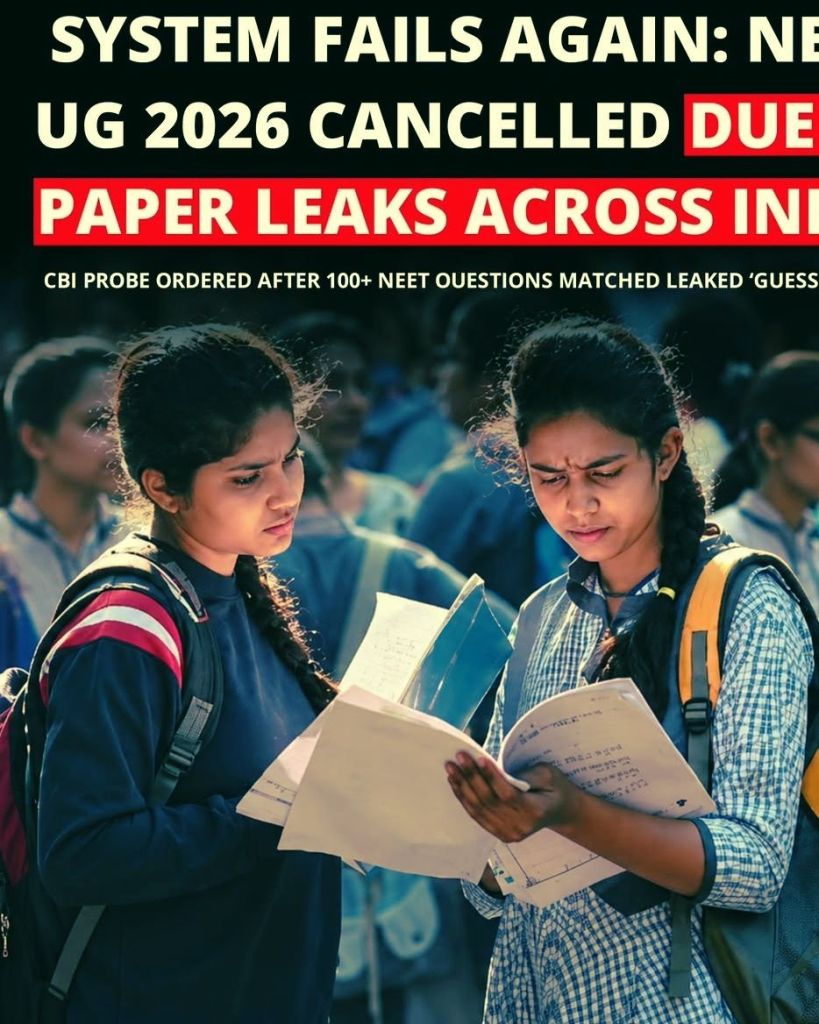
India has witnessed corruption scandals, administrative failures, and institutional embarrassment before. But the nationwide cancellation of NEET-UG 2026 is a different category of disaster. It is not merely a failed examination; it is the public collapse of credibility in India’s most important academic gateway. For the first time in its history, the National Eligibility cum Entrance Test (Undergraduate) was cancelled across the country, affecting nearly 2.28 million students. That figure is not just a number—it is a national psychological tremor. It means 2.28 million families were forced to confront a brutal possibility: in India’s most competitive exam, effort may not be the deciding factor. When the system collapses at this scale, the damage is not limited to admissions; it strikes the very idea of fairness as a functioning national principle.
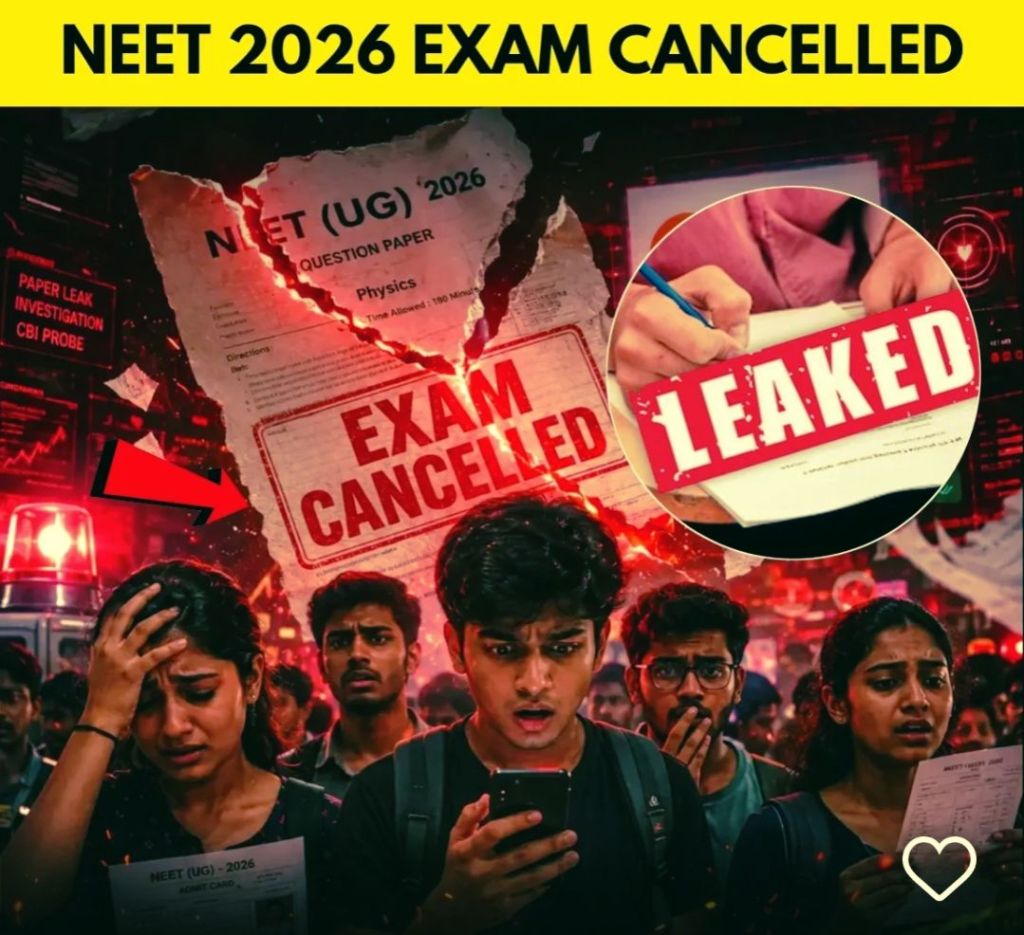
The 2026 episode reads less like administrative failure and more like organized crime operating with confidence. The exam was held on May 3, 2026, in a single shift from 2:00 PM to 5:00 PM, across more than 5,000 centres in India and abroad. Soon after, allegations surfaced that a 150-page “guess paper” PDF had circulated through WhatsApp groups before the exam. Investigators found that nearly 410 questions were included, and about 120 questions matched the actual paper, with Chemistry reportedly compromised almost entirely. The leak was traced to Rajasthan’s Sikar and Jhunjhunu, with extensions reported in Dehradun and Kerala. Even more disturbing was the alleged price mechanism: some reports suggested it was sold for ₹7.3 lakh per candidate, while others indicated it was distributed for as little as ₹30,000, suggesting a wide, tiered black-market model. This was not casual cheating. This was an underground industry where medical seats were treated like contraband.
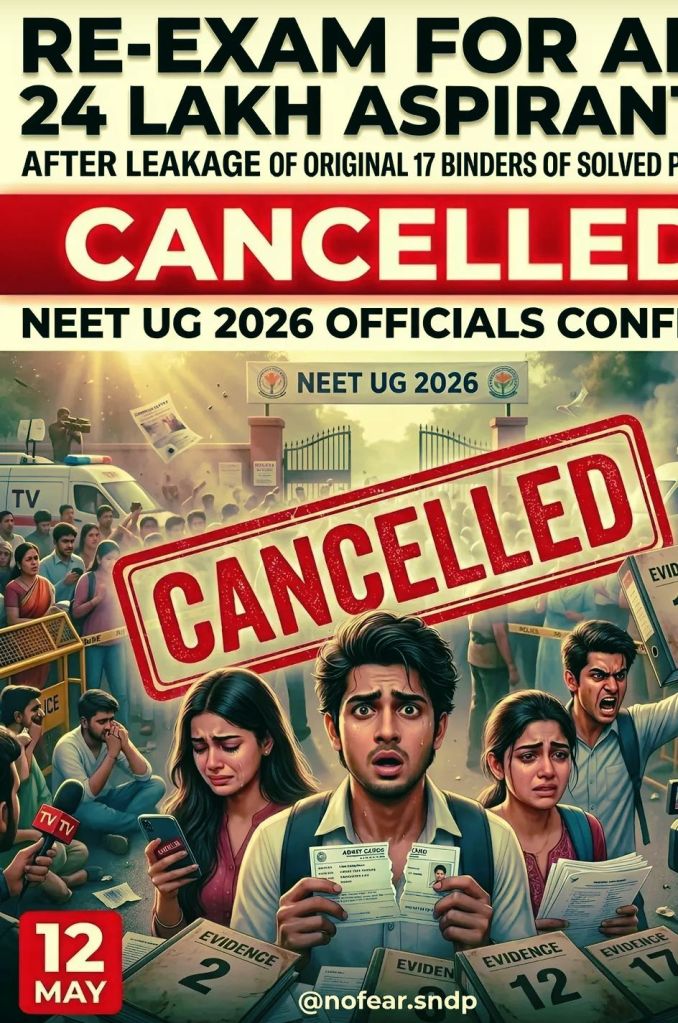
The National Testing Agency cancelled the exam on May 12, 2026, and the matter was handed over to the CBI. Rajasthan’s SOG questioned aspirants, and even a medical student in Nashik was detained for allegedly possessing a physical copy. But the intellectually lazy explanation would be to treat this as an isolated collapse. NEET’s crisis is not a one-time storm. It is a climate pattern. A system does not fail at this scale suddenly; it fails gradually, through repeated warning signals that were ignored, normalized, or managed with temporary solutions instead of structural reform.
India’s medical entrance ecosystem has been haunted by paper leaks for more than a decade. The Vyapam scam (2013) revealed impersonation networks, bribery systems, and institutional collusion so deep that it became a national synonym for academic fraud. In 2015, AIPMT was compromised using Bluetooth devices and micro-SIM vests, humiliating the invigilation system and forcing the Supreme Court to order a re-test. In subsequent years, impersonation rackets and solver gangs surfaced repeatedly across multiple states. Then came 2024, the warning that should have triggered a national redesign. Question papers were reportedly accessed from strongrooms, photographed, resealed, and sold for enormous sums. The Supreme Court acknowledged that sanctity had been affected but refused full cancellation, ordering limited remedies. That decision may have unintentionally signaled something dangerous: that even systemic fraud can be managed without systemic consequences. Two years later, the networks returned stronger, bolder, and better priced.
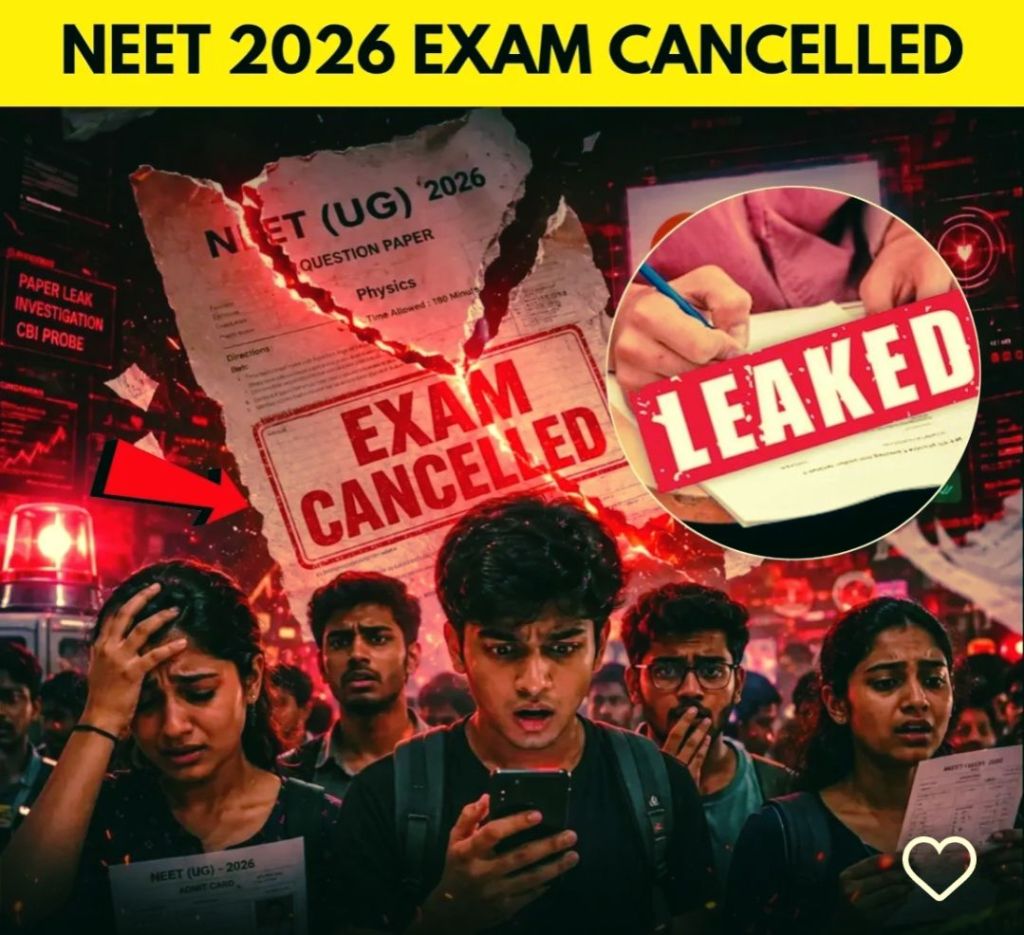
The most tragic cost of this collapse is not administrative embarrassment. It is moral injury inflicted on students. NEET aspirants are not casual test-takers. They prepare for two to four years under extreme coaching cycles, relentless mock tests, and emotional isolation. Families spend lakhs annually, often through loans. Students sacrifice festivals, relationships, and sometimes mental stability itself, believing the exam is an honest gatekeeper of merit. When such an exam collapses, the system does not merely cancel a test—it cancels a young person’s belief that fairness exists. Anxiety and depression are not “side effects” here; they are logical outcomes of prolonged effort betrayed by institutional weakness. The cruelest part is repetition: asking students to restart sacrifice without having committed any fault.
To understand why NEET remains uniquely vulnerable, one must examine its structural design. NEET handles nearly 23 lakh candidates annually, is conducted in pen-and-paper format, across thousands of centres, and crucially, in a single shift. That single shift becomes a national vulnerability because it creates a “single point of failure.” One compromised paper compromises the entire country. Compare this with JEE (Main), which is computer-based, conducted across multiple shifts, and normalized statistically. UPSC, though still pen-and-paper, operates with tighter security discipline, fewer centres, and a slower administrative pipeline. NEET sits in the worst middle ground: massive scale like JEE, but physical vulnerability like older exams, without the institutional seriousness of UPSC. It is a system architecturally designed to be exploited.
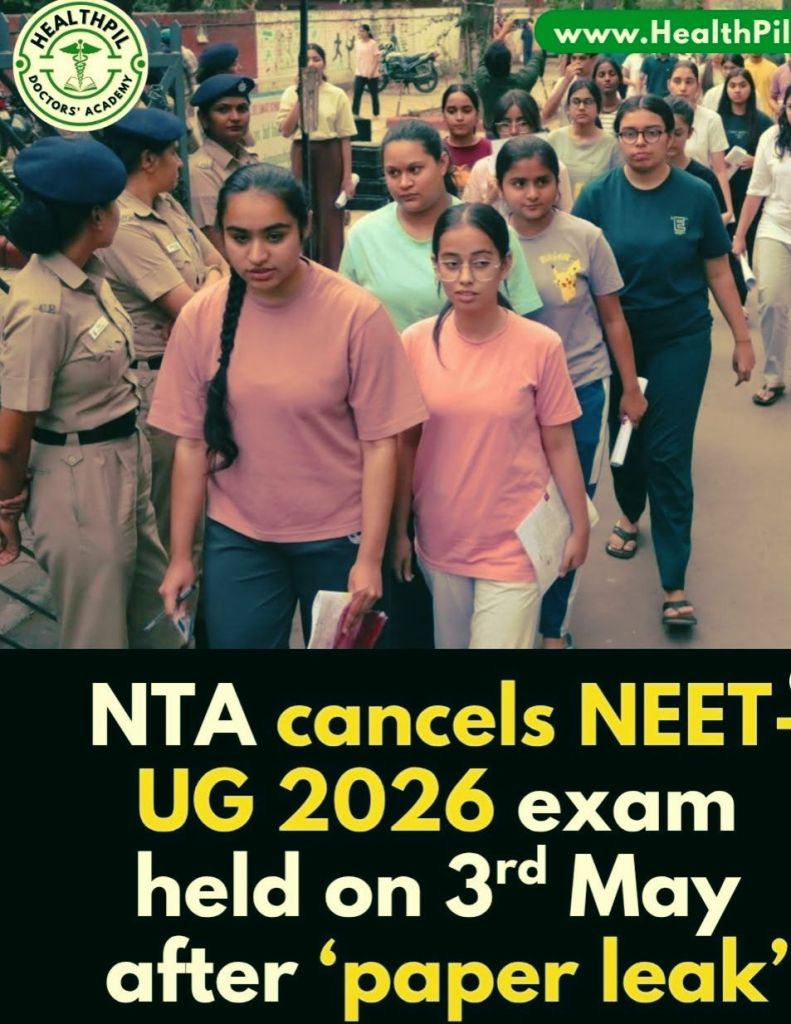
Authorities have not been entirely idle. For NEET-UG 2026, biometric verification included fingerprint checks, facial recognition, and Aadhaar eKYC. AI surveillance cameras were installed. Signal jammers, including 5G jammers, were deployed. Paper transport vehicles were GPS-tracked. Digital locks were introduced. Dress codes and frisking checkpoints were enforced.
Yet a WhatsApp PDF still circulated. This reveals the uncomfortable truth: technology can guard the exam hall, but it cannot protect the supply chain if human corruption exists at the printing, storage, and distribution layers. India’s exam system is like a high-tech vault built on a wooden foundation.
After 2024, India introduced the Public Examinations (Prevention of Unfair Means) Act, creating strict punishments including imprisonment and heavy fines, with offences categorized as cognizable and non-bailable. But laws are not deterrents simply because they exist. They become deterrents only when offenders are punished swiftly and visibly. If 2024 had reached timely closure with strong convictions, the criminal market might have hesitated in 2026. Instead, delay created confidence. In crime economics, delayed punishment is discounted punishment.
The future path is now politically uncomfortable but administratively unavoidable. The Radhakrishnan Committee recommended moving NEET to computer-based testing. Resistance exists because multiple shifts require normalization and could generate litigation. But the alternative is worse: continuing with a structure that makes national-level leakage mathematically inevitable. A transitional model may be necessary: encrypted digital papers printed at the last moment at the centre level, reducing transport vulnerability. Medium-term reform must involve multi-stage testing across days, eliminating single-point failure. Long-term reform demands a more radical solution: computer-adaptive testing, where each candidate receives a dynamically generated paper from a massive pool. When every paper is unique, the concept of a “leaked paper” becomes nearly meaningless.
Ultimately, NEET-UG 2026 is not just an examination controversy. It is a national warning about what happens when merit is auctioned. If medical education becomes a marketplace of fraud, the victims will not only be students—they will be future patients. A country that cannot protect the integrity of its doctors’ entry exam is not merely failing its youth. It is negotiating with disaster, one leaked PDF at a time.
VISIT ARJASRIKANTH.IN FOR MORE INSIGHTS


One response to ““2.28 Million Dreams Held Hostage by a 150-Page PDF: NEET’s Paper Leak is Not a Scandal, It’s a Systemic Collapse””
I feel Very Sad to see the down sliding Human Values in our Country.
LikeLike