
Politics is often generous in welcoming outsiders, but it is famously unforgiving toward amateurs. When a film icon enters public life, the democratic imagination immediately fractures into two competing hopes: one that charisma will cleanse the system like a sudden monsoon, and the other that governance will suffocate charisma under the weight of procedure, files, and slow-moving institutions. The rise of Vijay as Chief Minister of Tamil Nadu in 2026 is not merely a change of leadership; it is a disruption of a political operating system that had been running on familiar software for decades. A state that perfected mass politics, cultural symbolism, and party machinery has now handed the steering wheel to a man whose authority was built in theatres rather than in party offices. The real question is no longer whether he can win elections. It is whether he can survive reality.
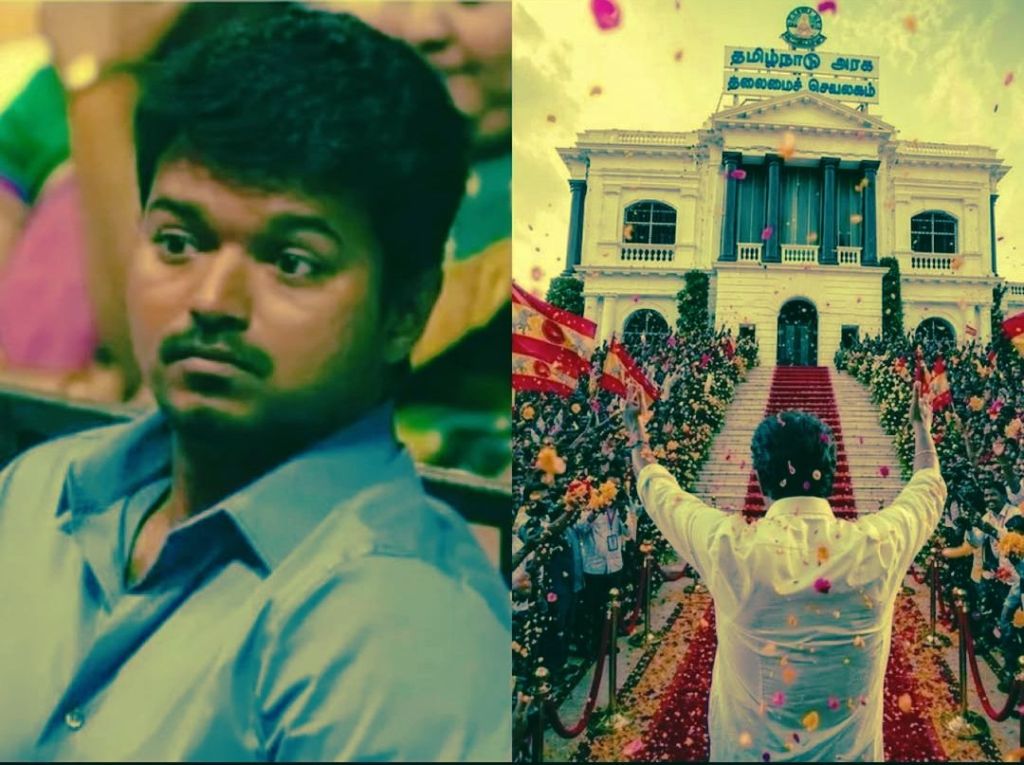
His ascent is historic precisely because it shattered an old certainty. Tamil Nadu has long been shaped by a duopoly of deeply rooted political machines, alternating power through ideological legacy, organisational strength, and cultural influence. Vijay’s party, contesting its first major election, broke this structure by emerging as the single-largest force. This was not a gradual transition of power; it was an electoral earthquake. The victory did not simply weaken established giants—it revealed public fatigue with predictable politics and created space for an alternative narrative. Yet the mandate was not absolute. The numbers left him short of a comfortable majority, and that is where the romance of victory ended and the mathematics of survival began.
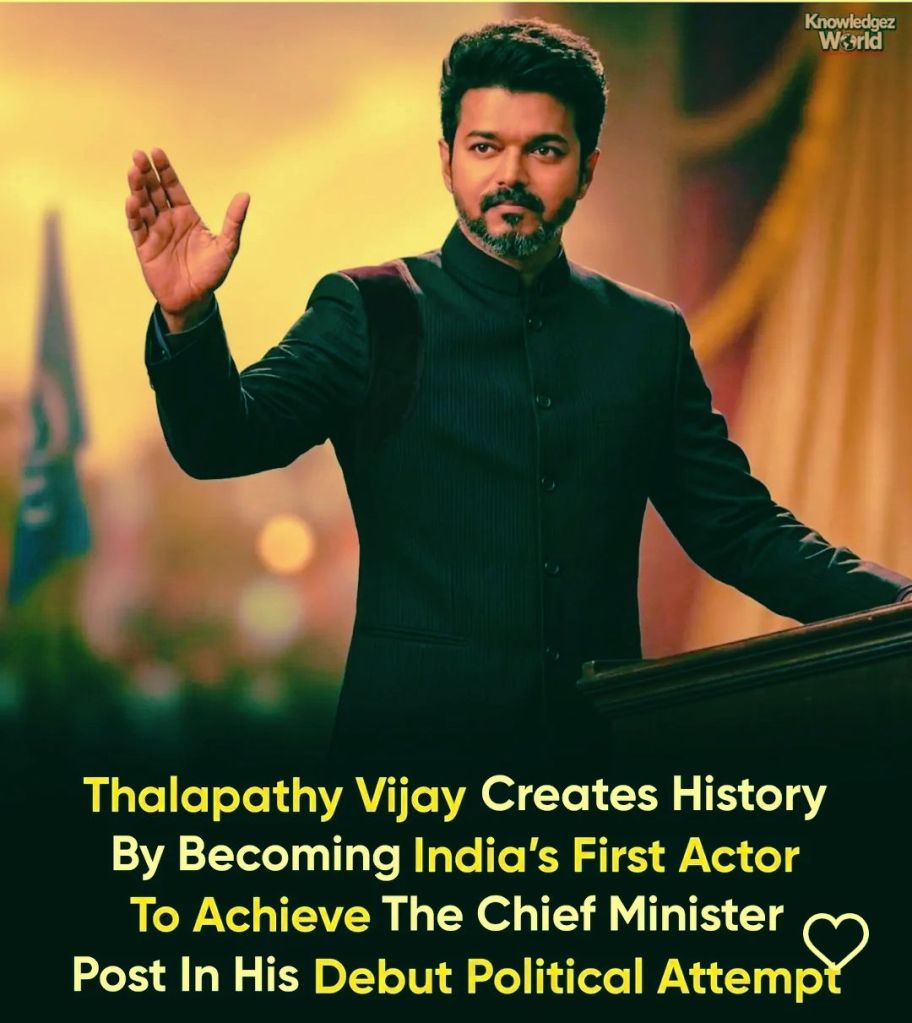
The formation of his government became his first real examination, arriving like a surprise test for someone who had trained only for the stage, not the courtroom. Reports of the early post-result phase painted the image of a leader caught between confidence and uncertainty—popular, but unprepared for the procedural cruelty of constitutional politics. The governor’s insistence on proof of majority forced him into coalition-building, an art that demands quiet persuasion rather than loud symbolism. Instead of sharp negotiations, the early outreach appeared hesitant, indirect, and even dependent on informal channels. This was not merely a communication flaw. It was an early signal to observers that the new leadership was still adjusting to the difference between fan loyalty and legislative loyalty.
And legislative loyalty is the true currency of power. The coalition arrangement that enabled his ascent is fragile by design. Supporting legislators remain psychologically and organisationally rooted in other political ecosystems, maintaining proximity to rival formations. Coalition politics is never smooth, but it becomes especially dangerous when the Chief Minister’s own party lacks deep institutional discipline. Many of his elected members reportedly arrived from other parties, attracted by the electoral wave rather than ideological conviction. In such a scenario, the government becomes less like a single engine and more like a convoy—moving forward only as long as every vehicle agrees not to break formation. The biggest challenge for Vijay is not opposition attacks. It is the unstable architecture of his own support.
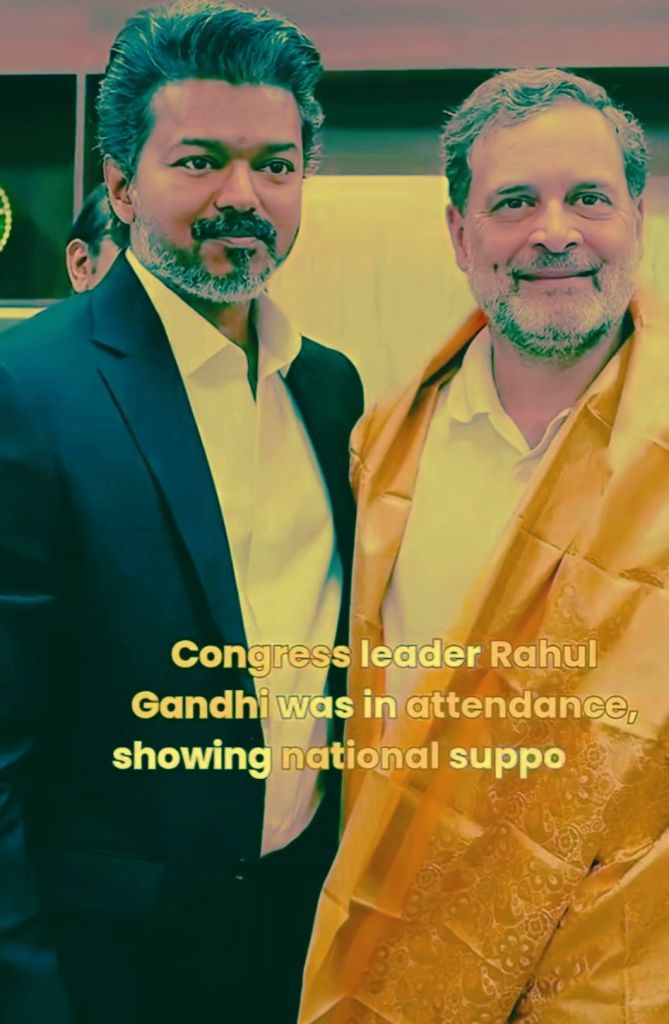
In simple terms, he is not governing with a loyal army. He is governing with rented stability. The posture of older political forces makes this situation even more complicated. Interestingly, established parties appear to be granting him breathing space instead of immediately destabilising him. On the surface, it looks like statesmanship. Beneath the surface, it is calculation. If he fails, the failure will belong to him alone, allowing older forces to return with a convenient argument: that experiments are costly and only traditional machinery can deliver governance. If he succeeds, they can claim they acted responsibly by ensuring stability. Either way, this pause is not generosity. It is strategy wrapped in politeness.
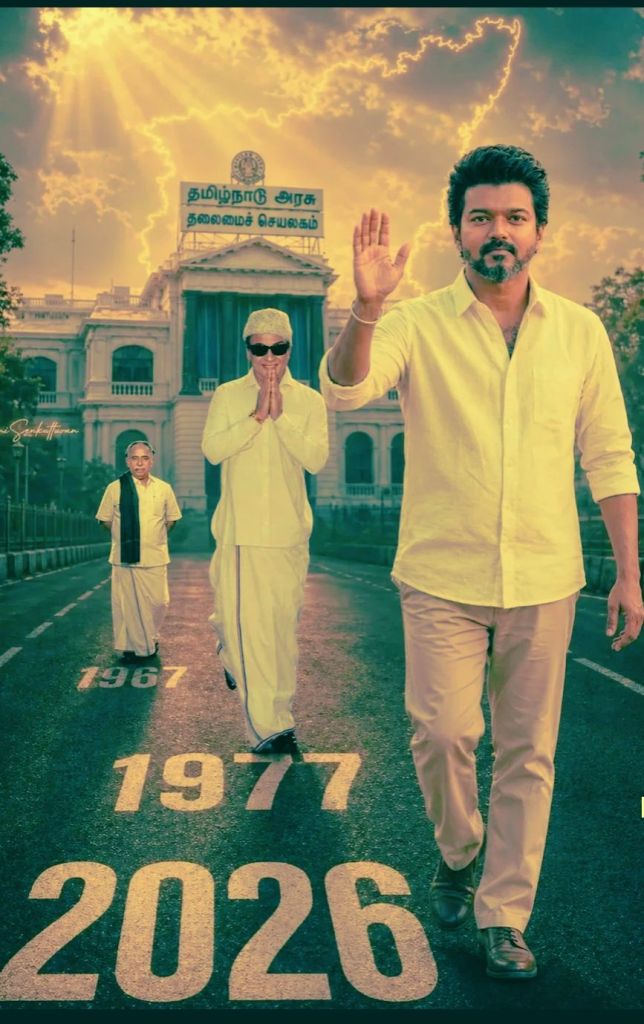
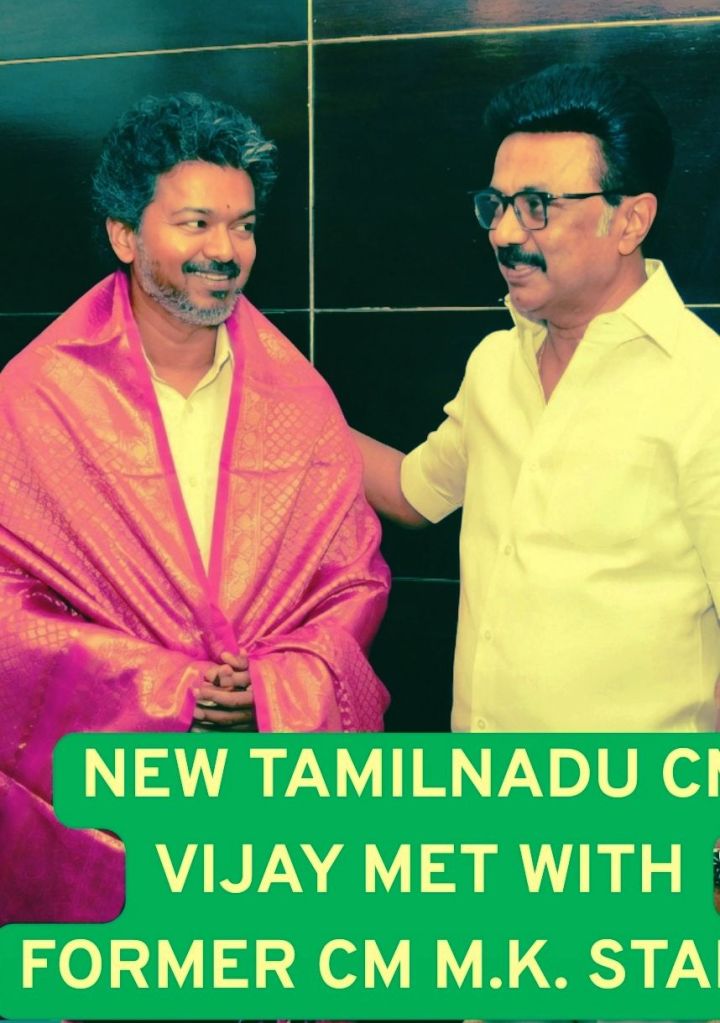
The symbolism of Vijay meeting senior political rivals soon after the results is therefore significant. It reflects a certain maturity—the understanding that power is not only about defeating opponents but also about managing them. His public conduct suggests he is attempting to evolve from campaigner to constitutional leader. But maturity is not proven through courtesy calls. It is proven when crisis arrives and the leader remains calm, procedural, and effective.
The real danger lies not outside the government but within its arithmetic. Anti-defection laws restrict open switching, but modern politics has invented creative detours—resignations, engineered by-elections, and numerical sabotage disguised as “personal decisions.” Such manoeuvres require resources, planning, and hardened political operators. Vijay’s party does not yet appear to possess such machinery. This is significant because it means he cannot play the ruthless hardball that seasoned national operators often deploy. His survival must come from legitimacy and performance, not manipulation. Morally, that is encouraging. Politically, it is risky.
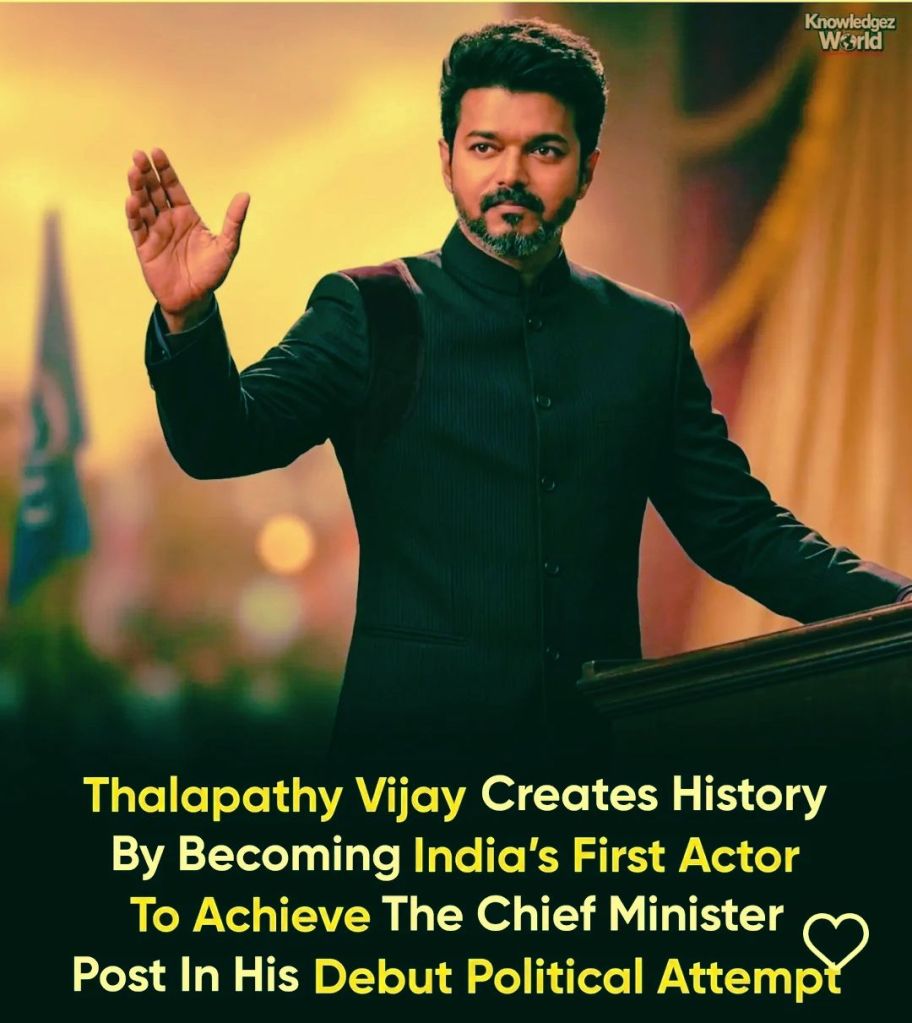
Meanwhile, public expectations are dangerously inflated. His campaign promises—cash transfers, ambitious welfare measures, and strong claims about safety and corruption-free governance—were emotionally powerful. But governance is not an emotional industry. Budgets do not respond to applause. Administrative reform requires policy architecture, not punch dialogues. If delivery is delayed, the public may not interpret it as “complexity.” They may interpret it as betrayal. Established parties survive disappointments because they have ideological loyalty and historical networks as cushions. A new entrant has no such insurance. Performance is the only protection.
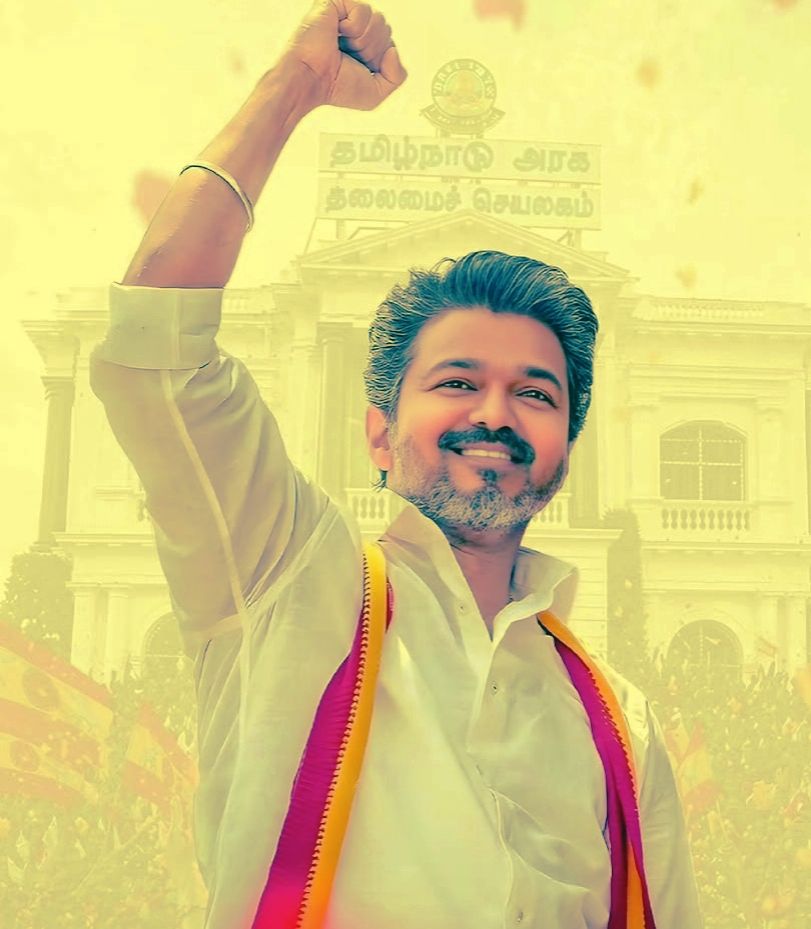
This is why the first six months are not merely an initial phase—they are the real election. A sensible timeline demands immediate focus on institutional credibility: a transparent financial roadmap, prioritisation of law and order, confidence-building within the bureaucracy, and delivery of at least two or three measurable welfare outcomes. Not announcements—outcomes. Governments survive not on speeches but on evidence of seriousness.
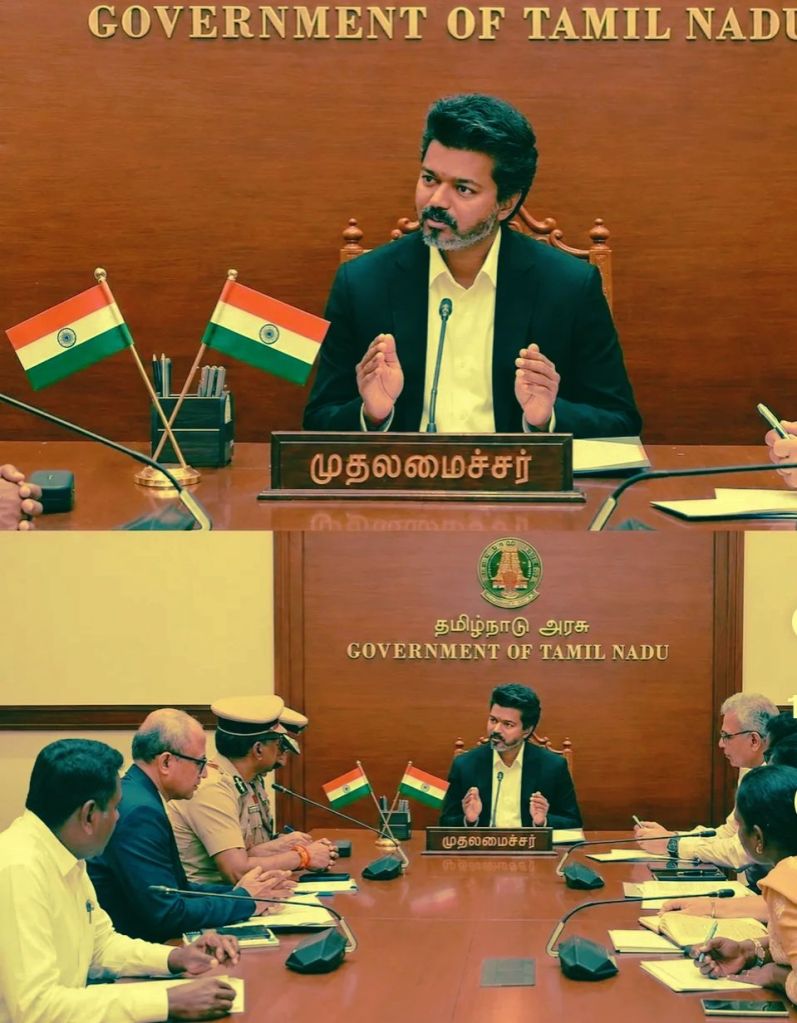
Equally crucial is the professionalisation of his political structure. Charisma can win crowds, but it cannot manage legislators. A Chief Minister’s office must become a disciplined command centre, not an improvised war room driven by instinct. Coalition partners must be integrated through formal coordination mechanisms, not informal assurances. Bureaucracy must be respected, not treated as background staff. The state machinery is not a film set where the system obeys because the hero has arrived. It is a complex organism governed by rules, incentives, and institutional logic.
In the end, Vijay’s story is compelling precisely because it is uncertain. He has achieved what many believed impossible: cracking a hardened political landscape and disrupting an established duopoly. But the harder achievement is still pending—converting electoral magic into administrative order. Tamil Nadu has not elected a performer. It has elected a manager of a vast and demanding state.
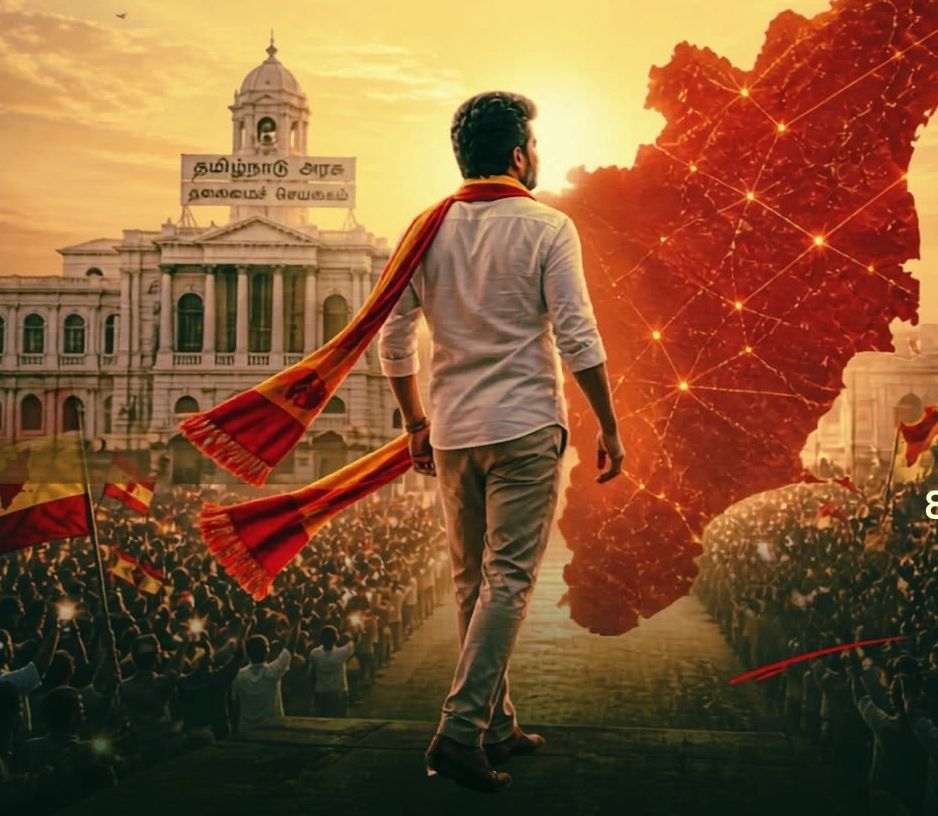
And now the real script begins—one where the villain is not an opponent, but the calendar, the coalition, the budget, and the unforgiving discipline of governance.
VISIT ARJASRIKANTH.IN FOR MORE INSIGHTS

