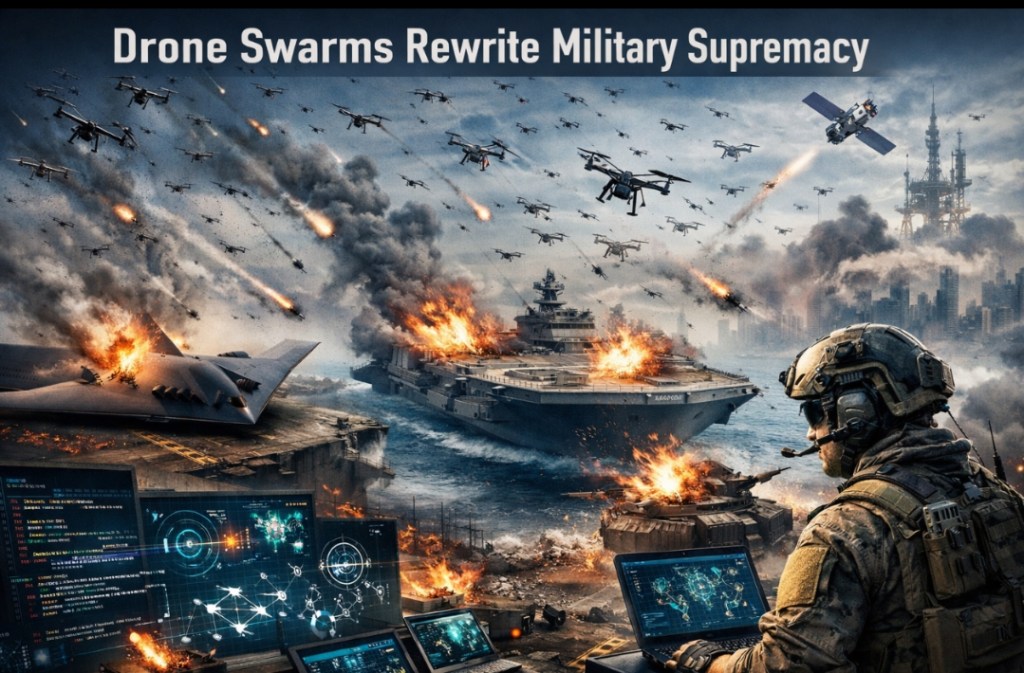
For nearly a century, military supremacy was measured through visible monuments of industrial dominance: aircraft carriers, stealth bombers, armored divisions, and missile shields so expensive they could outvalue the GDP of smaller nations. Warfare belonged to states wealthy enough to sustain enormous defense factories and patient enough to tolerate decade-long procurement cycles. Power was essentially a contest of heavy engineering, mass manufacturing, strategic geography, and financial endurance. The battlefield rewarded nations that could build bigger machines, stockpile more steel, and outspend their rivals across generations. That era created a predictable hierarchy of force, where superiority could be photographed, paraded, and displayed as hardware.
That world is now collapsing with alarming speed. The wars of the present decade have exposed an uncomfortable truth for traditional militaries: a cheap autonomous drone can neutralize an asset worth millions, and sometimes billions. The battlefield is no longer rewarding only sophistication. Increasingly, it rewards affordability, speed, software integration, and mass replication. In strategic terms, war is experiencing its “smartphone moment,” where lean technological ecosystems are beginning to outmaneuver gigantic institutional monopolies. The centre of gravity is shifting away from the prestige platform and toward the invisible system—algorithms, sensors, networks, and real-time adaptation. Modern warfare is no longer merely a contest of machines. It is a contest of iteration.
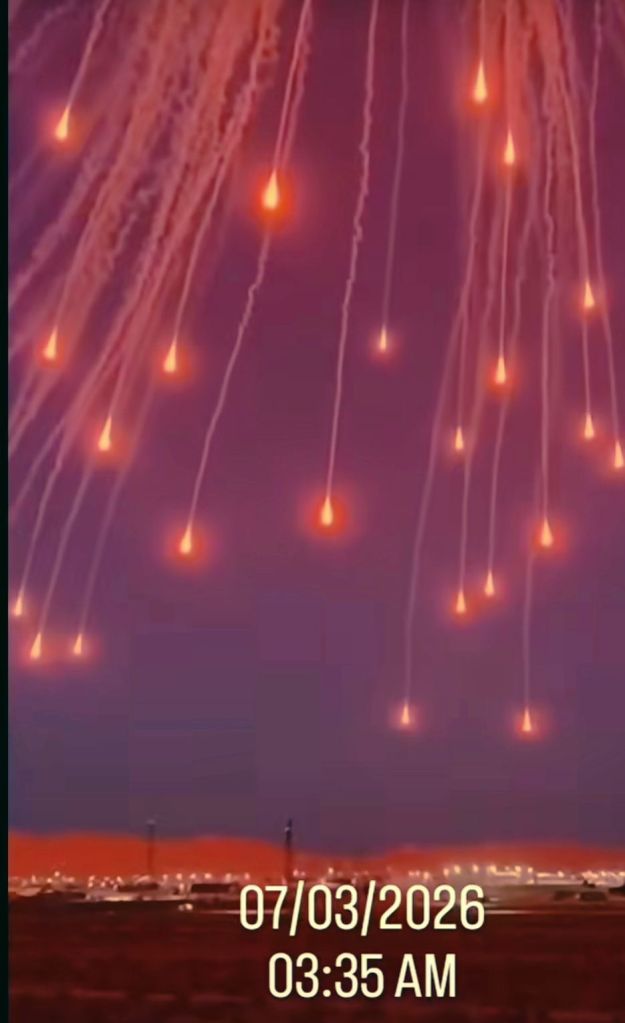
This transformation is giving birth to an entirely new class of defense actors: technology-driven military firms built around software, artificial intelligence, autonomous systems, satellite connectivity, and low-cost drone production. Unlike traditional defense giants engineered for heavy platforms and slow procurement timelines, these new entrants operate with startup logic. They build quickly, fail quickly, learn quickly, and redeploy faster than conventional bureaucracies can even write tender documents. Their weapons are not defined by metal thickness or engine horsepower but by the speed at which they can update code, patch vulnerabilities, and improve targeting precision. In this new ecosystem, war begins to resemble a software industry where the decisive advantage is not brute strength, but constant upgrades.
The economic logic of this shift is brutal and destabilizing. Modern conflicts have revealed the arithmetic of asymmetry with frightening clarity. A loitering munition costing tens of thousands—or sometimes merely thousands—of dollars can force a superpower to respond with interceptor missiles worth hundreds of thousands or even millions. The danger is not only physical destruction; it is financial exhaustion. When defense becomes economically irrational, even the strongest military becomes vulnerable. Drone warfare does not merely destroy tanks, radars, or ships. It destroys the defender’s budget logic. It creates a war of forced overspending, where the attacker’s objective is not victory by conquest but victory by making the opponent bleed resources until the system breaks.
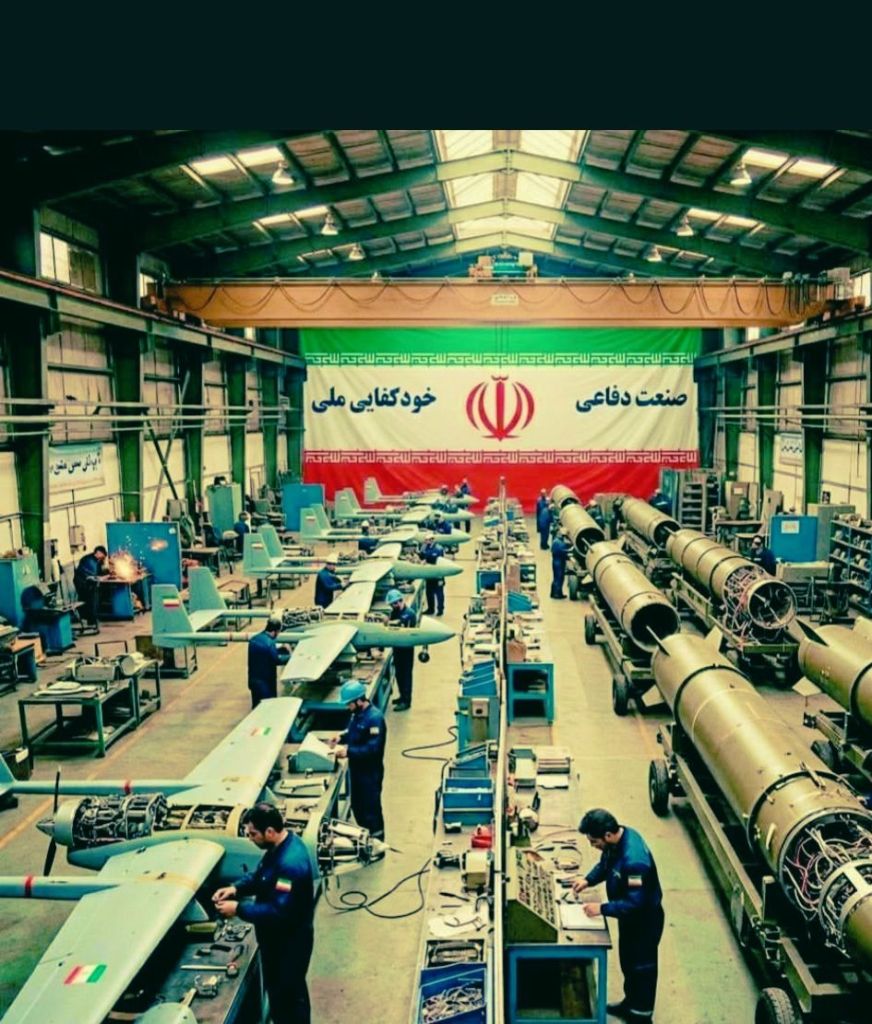
This is why the philosophy of deterrence is being rewritten. Traditional deterrence assumed that expensive systems guaranteed superiority. But drone swarms have shattered that assumption. Swarm logic overwhelms conventional defense not by defeating it directly, but by saturating it. It attacks the defender’s inventory, not merely territory. Radar systems become flooded with targets. Missile stockpiles drain rapidly. Command-and-control structures become overloaded. Air-defense economics collapse because the defender must spend far more than the attacker to survive each strike. In multiple modern conflicts, low-cost unmanned systems have blinded surveillance grids, struck strategic infrastructure, damaged naval assets, and penetrated supposedly impenetrable airspace. The battlefield has become flatter, cheaper, and algorithmically coordinated, where quantity itself becomes a form of intelligence.

At the heart of this new military order lies software supremacy. Earlier generations of military hardware derived value from metallurgy, propulsion, and engineering scale. The emerging generation derives value from data fusion, battlefield networking, predictive analytics, and autonomous decision support. Increasingly, the deadliest advantage is not the missile itself but the intelligence architecture connecting sensors, drones, satellites, and strike systems into a single continuous digital battlefield. Artificial intelligence is accelerating this shift dramatically. AI systems are already being deployed for target identification, pattern recognition, logistics optimization, surveillance coordination, and autonomous navigation. Though governments insist that lethal decisions remain under human oversight, the direction is unmistakable. Experiments are underway to automate larger sections of the “kill chain,” enabling machines to identify, prioritize, track, and recommend targets at speeds no human command structure can match. This is not simply a technological upgrade; it is the transformation of warfare into machine-paced violence.
Yet the ethical and geopolitical implications are darker than most policymakers publicly admit. Defense technologists argue that AI-driven warfare may reduce casualties because machines are theoretically more precise and less emotional than human soldiers. Critics warn that algorithmic warfare creates unprecedented dangers: accidental escalation, opaque targeting systems, biased machine learning models, cyber manipulation, and autonomous lethal loops that move faster than political oversight can respond. The most terrifying risk is not a deliberate decision to unleash autonomous war, but an unintended chain reaction triggered by faulty data, spoofed sensors, or an AI system that misreads intent as aggression. In a world where machines can react in milliseconds, diplomacy may become slower than destruction. Warfare could begin to operate beyond human comprehension, creating a new category of conflict: wars fought at speeds too fast for leaders to stop.
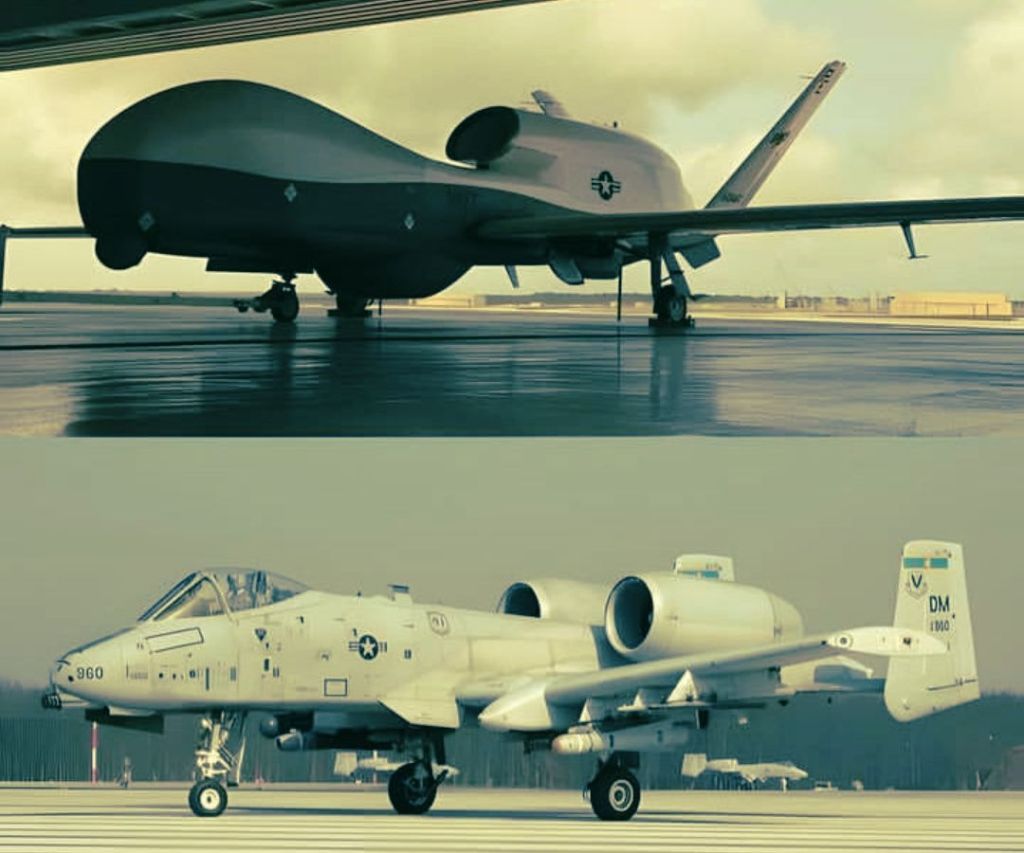
The deepest disruption, however, is not technological—it is organizational. Traditional defense institutions evolved through stability, hierarchy, and centralized planning. The new ecosystem evolves through rapid experimentation and decentralized innovation. One side operates on procurement cycles lasting fifteen years. The other evolves in months. In an era where drone software updates may matter more than armor thickness, institutional speed itself becomes a strategic weapon. Recent conflicts have shown that small battlefield units using commercial electronics, open-source software, 3D printing, and improvised drone engineering can inflict disproportionate strategic damage against vastly superior forces. Even naval dominance is being redefined: multi-billion-dollar warships can now be threatened by autonomous sea drones costing a microscopic fraction of their value. In such an environment, scale itself becomes vulnerability.
The future battlefield will belong not necessarily to the nation with the largest weapons, but to the nation capable of producing intelligent, adaptable, low-cost systems at overwhelming scale. The age of the giant war machine is not disappearing entirely—but it is being surrounded, humiliated, and financially strangled by swarms of cheap machines that fight like mosquitoes, guided by code rather than courage.
VISIT ARJASRIKANTH.IN FOR MORE INSIGHTS
 ARJA SOCIAL PERSPECTIVES