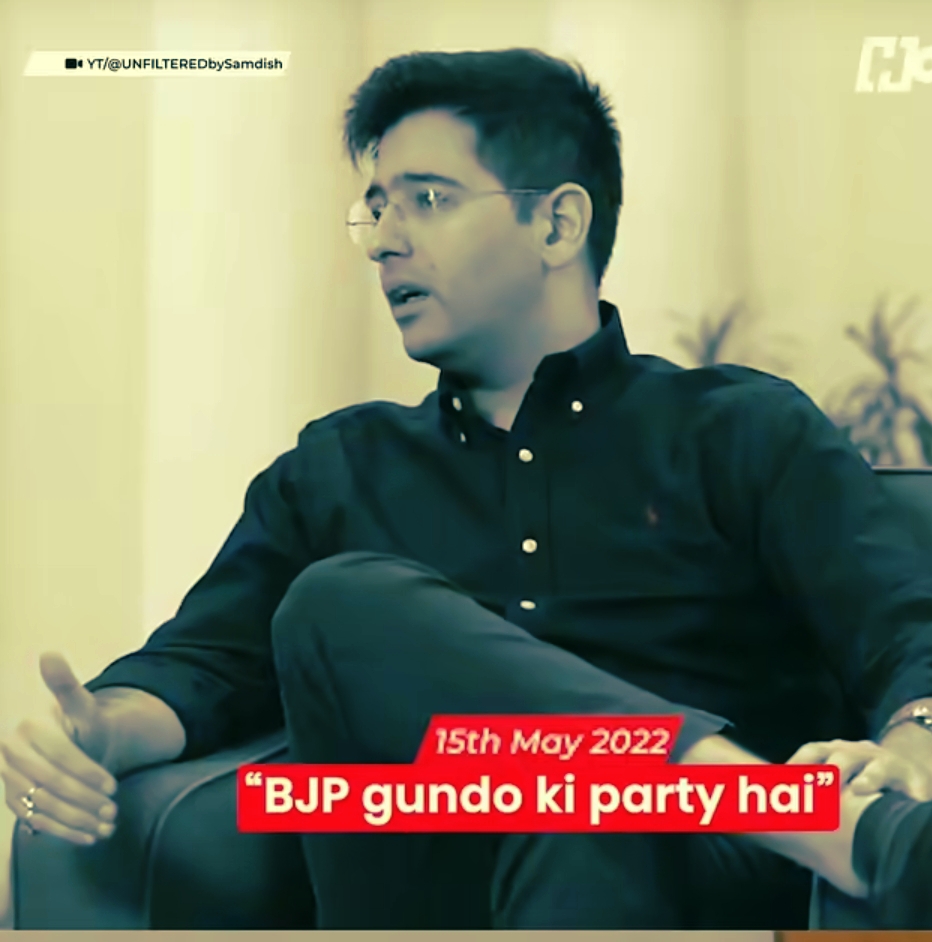
Indian politics has always tolerated ambition, but it rarely respects ambition that wears morality like a designer jacket. The defection of Raghav Chadha and six other Aam Aadmi Party Rajya Sabha MPs on April 24, 2026 was not merely a change of political seating—it was the public collapse of a carefully manufactured reputation. Chadha, once packaged as the youthful conscience of the anti-corruption movement, did not simply walk out of a party; he exited with legal precision, moral vocabulary, and theatrical timing that made the move resemble less an ideological shift and more a corporate acquisition deal. The real scandal is not that he switched camps. The real scandal is that he switched while continuing to sell the illusion that he was still defending “principles.”

For over a decade, Chadha’s ascent was built less on grassroots struggle and more on elite branding: the educated technocrat, the polished reformist, the articulate spokesperson of “clean governance.” AAP projected him as a new-generation antidote to India’s old political species. Yet Punjab revealed another instinct—control. Political accounts repeatedly described him as a parallel authority after AAP’s 2022 Punjab victory, allegedly chairing governance meetings, influencing bureaucratic transfers, and operating as an informal decision-making centre. If even partially true, this exposes a sharp contradiction: the man preaching institutional ethics was comfortable wielding extra-constitutional influence when power was within reach. This is the earliest symptom of ideological hollowness—reformist language survives only until authority is secured, after which reform becomes optional and ethics becomes negotiable.
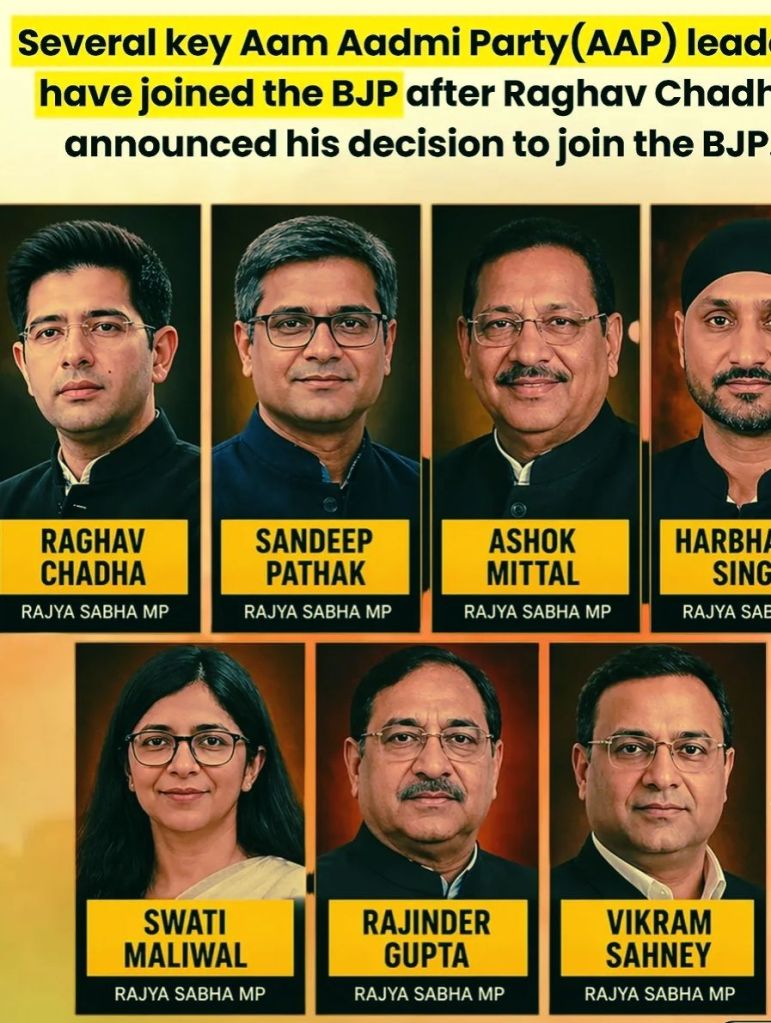
The decline of Chadha’s internal dominance did not occur because his ideals suddenly matured. It occurred because AAP’s internal machinery began moving away from him. Kejriwal’s arrest in March 2024 demanded visible solidarity and political aggression from the party’s national faces, yet Chadha’s reported absence during that crisis damaged his credibility within the cadre. His limited participation in the 2024 Lok Sabha campaign further reinforced the impression that he was already calculating distance from a party under siege. Then came the decisive internal restructuring: after AAP’s Delhi defeat in 2025, Punjab’s organisational command was reconfigured and new decision-making anchors were inserted. The message was unmistakable—Chadha’s era of unchecked influence was ending. Even the reported vacating of the Chandigarh accommodation carried symbolic weight. In Indian politics, bungalows are not just buildings; they are announcements of power.
April 2, 2026 became the formal rupture. Chadha’s removal as Deputy Leader in the Rajya Sabha and replacement by another MP was not routine administrative adjustment—it was a public downgrade. In personality-driven parties, such demotions are treated not as reshuffles but as exile. Chadha’s statement that he was “silenced, not defeated” sounded less like democratic grievance and more like a coded warning. Instead of pursuing internal debate, he reportedly began mobilising numbers. What followed was not rebellion but arithmetic warfare. Under the Tenth Schedule, the two-thirds threshold enables a “merger” that escapes disqualification. AAP had 10 MPs. Chadha needed 7. He secured exactly 7. That precision is not coincidence—it is engineering. This was not an emotional departure. It was a constitutionally designed escape tunnel, built with the cold intelligence of a man who understood that legality can sometimes protect dishonour.
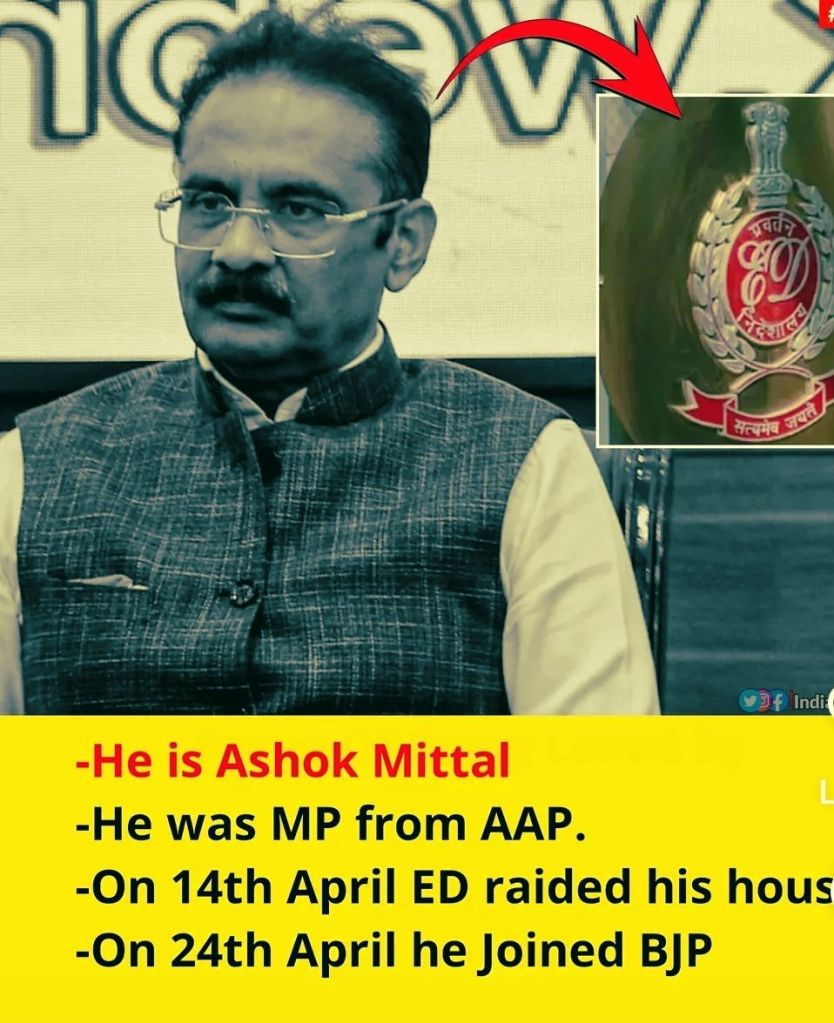
The darker shadow of the episode lies in timing. The Enforcement Directorate raid linked to one of the defecting MPs on April 15, followed by the April 24 announcement, produced the familiar choreography of contemporary politics: pressure, panic, and purchase. Opposition parties frequently allege that investigative agencies are used not merely for law enforcement but as instruments of intimidation. Whether every such allegation is provable is debatable, but the psychological impact is undeniable. When a business-linked MP faces scrutiny, loyalty becomes expensive and betrayal begins to look like insurance. AAP leaders alleged that Chadha acted as a facilitator in a negotiated surrender, with inducements including the possibility of a future ministerial berth. These remain allegations, but the pattern resembles a script the nation has seen too often: fear becomes persuasion, and persuasion is later packaged as “free choice.”
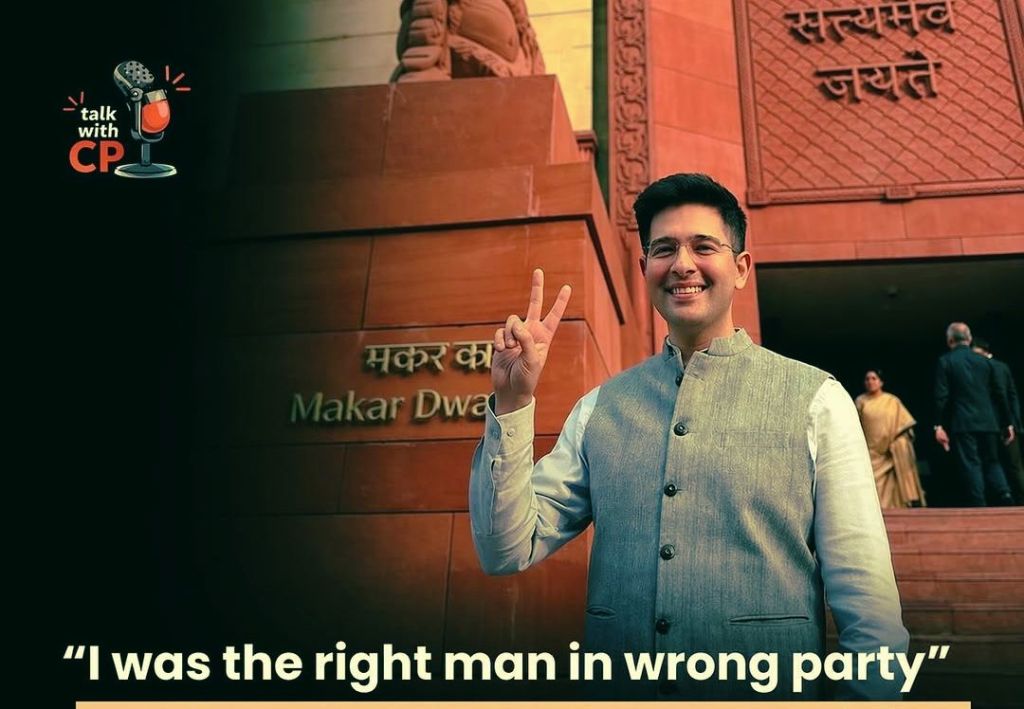
Chadha’s justification for leaving AAP was carefully wrapped in moral language—claims that the party had deviated from its founding principles. But this argument collapses under its own hypocrisy. If AAP had become morally impure, Chadha was not a distant observer; he was part of its top structure for nearly 15 years. If the party’s values were eroding, why did his conscience awaken only after his influence was reduced? The politically uncomfortable answer is obvious: morality was not the reason for exit; morality was the packaging for exit. In Indian politics, politicians rarely admit, “I am shifting because my future is safer there.” Instead, they declare, “I am shifting because my soul is wounded.” This is not ideology. This is brand protection. Chadha did not merely defect—he attempted to defect without losing the halo.
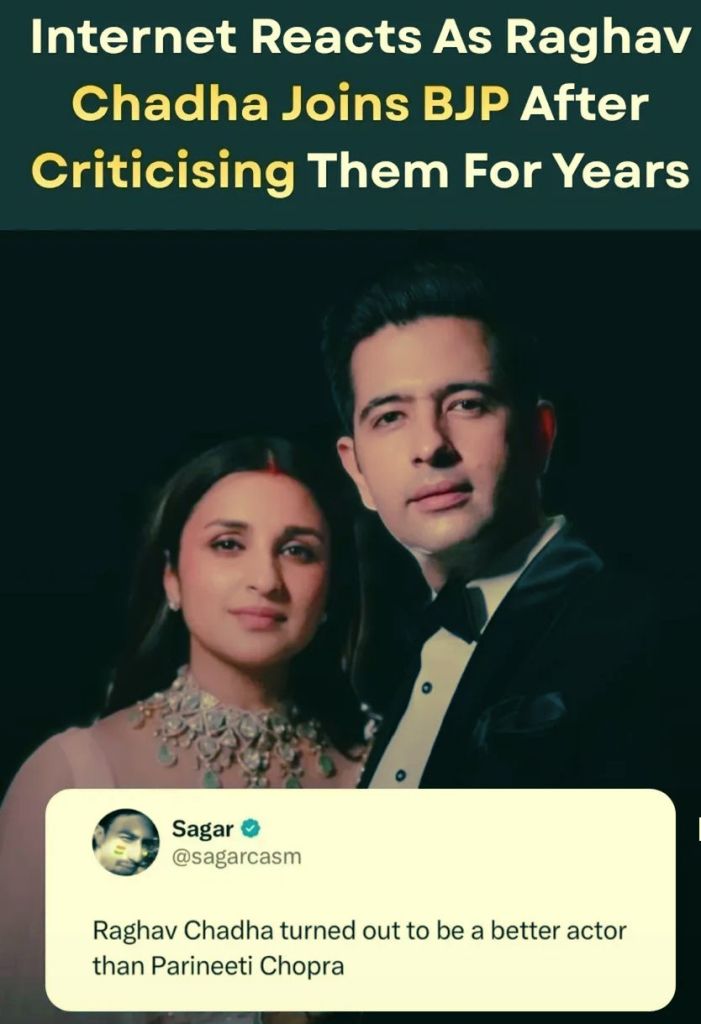
This is why April 24 is not just an AAP crisis; it is a warning for every regional party in India. The ruling establishment’s acquisition model has evolved into a disciplined strategy: identify weak links, exploit institutional asymmetry, apply indirect pressure, trigger internal dissatisfaction, and cross the two-thirds threshold to neutralize anti-defection consequences. The “merger clause” was meant to protect genuine political mergers; it is now being used like a hostile takeover provision in corporate law. It rewards mass betrayal over individual accountability. A party that loses seven MPs overnight does not merely lose numbers—it loses psychological stability, cadre confidence, and public credibility. The new camp did not merely gain MPs; it gained a narrative that opposition parties are unstable, purchasable, and internally hollow.
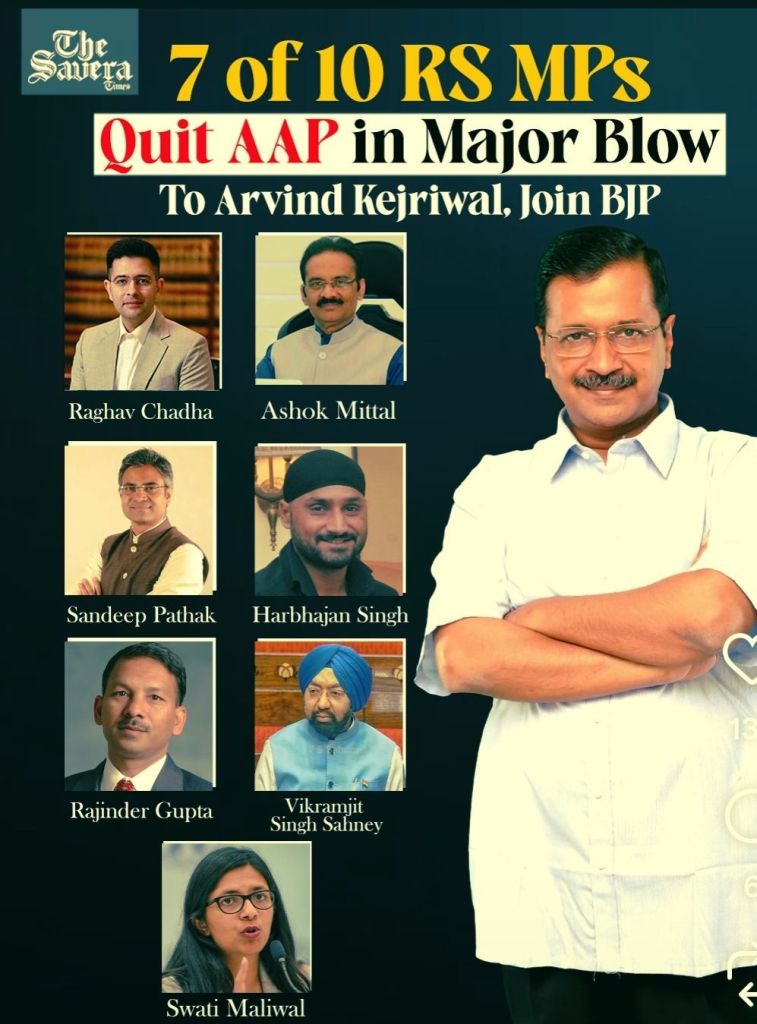
The most chilling lesson is what Chadha’s move communicates about his political personality. A leader who can justify one abandonment as “principle” can justify the next as “national interest.” Such figures do not belong to parties; parties temporarily belong to them. They do not carry ideology—they carry calculation. Yesterday’s defection becomes tomorrow’s precedent. And the fear is not simply that Chadha has switched sides. The fear is that he has normalised a political culture where loyalty is a temporary contract, renewable only while power continues to flow. Today it was AAP. Tomorrow it could be his new shelter. That is the true damage of political shape-shifting: it converts democracy into a marketplace where convictions are not defended—they are auctioned.
VISIT ARJASRIKANTH.IN FOR MORE INSIGHT


One response to “Seven MPs, One Switch, and the Sound of a Party Cracking: India’s Loudest Defection as a Silent Coup”
Very well drafted article with great analysis of political issues in India. It is a fact that the said politicians secured their political future without public support.
LikeLike