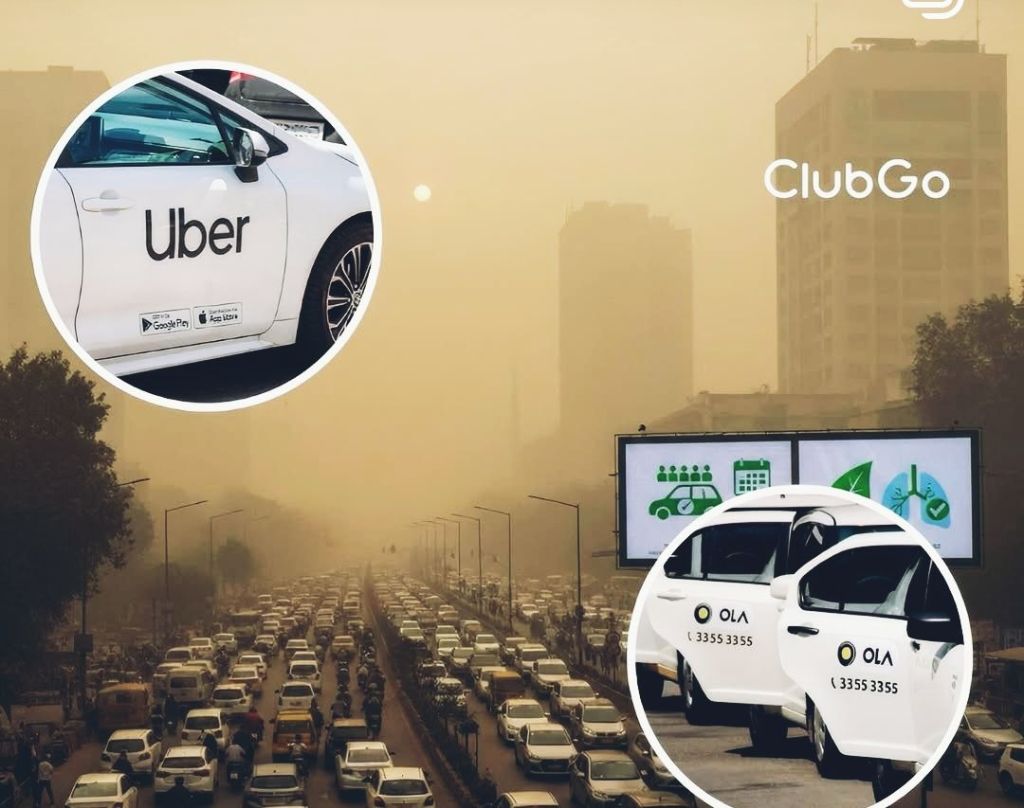
India did not merely adopt ride-hailing platforms like Ola and Uber; it absorbed them into the bloodstream of urban life with the speed of a collective addiction. What began as a seductive promise—clean cars, transparent pricing, polite drivers, and algorithmic accountability—has gradually evolved into a troubling civic disorder. In many Indian cities, app-based taxis are no longer simply a transport innovation; they have become an expanding ecosystem of stressed drivers, deteriorating vehicles, and congested streets. The deeper irony is not that technology failed, but that technology scaled faster than regulation, faster than institutional capacity, and faster than the ethical foundations required for public safety.
The most visible manifestation of this crisis is fleet saturation. Aggregator vehicles now occupy public roads in overwhelming numbers, not merely while carrying passengers but while roaming endlessly in search of them. This phenomenon—known globally as “deadheading”—refers to the distance travelled by cabs without passengers between trips. A 2025 study by the School of Planning and Architecture, Bhopal, quantified this distortion in Delhi, showing that deadheading significantly increases Vehicle Kilometres Travelled compared to Passenger Kilometres Travelled. In practical terms, for every kilometre a commuter travels, the city silently pays the cost of several kilometres of unnecessary driving. This is not a minor inefficiency; it is a structural burden on urban infrastructure—fuel waste, higher emissions, intensified congestion, and the slow transformation of public roads into private holding zones for commercial fleets.
Yet congestion is only the outer layer of the problem. The more dangerous reality lies in the gradual collapse of service quality and vehicle maintenance. In their early years, Ola and Uber were marketed as symbols of professionalism in contrast to informal taxi systems. Today, complaints of unhygienic interiors, malfunctioning air conditioning, broken seatbelts, unsafe tyres, and visibly unfit vehicles have become routine. The cause is not mysterious—it is economic. The commission-driven model historically squeezed drivers into narrow profit margins, leaving little incentive or financial space for regular servicing, cleaning, or preventive repairs. When a driver is forced to treat the vehicle as a survival instrument rather than a professional asset, maintenance becomes a luxury. The result is not merely discomfort but a direct safety threat: worn brakes, unstable steering, defective lighting, and mechanical fatigue turn routine trips into hidden risk.
Driver behaviour has worsened in parallel, and this behavioural decay has now become a major contributor to road accidents and urban fear. Aggressive lane cutting, reckless overtaking, constant phone distraction, impatient honking, and hostile conduct are increasingly reported in aggregator cabs. The psychology behind this is brutally rational: when income depends on the number of trips completed, speed becomes money, and patience becomes unaffordable. The algorithm rewards urgency, not safety. The driver begins to treat traffic rules not as civic discipline but as negotiable obstacles. The situation becomes more dangerous when long working hours are added to the equation. Many drivers operate under extreme fatigue to recover fuel costs, vehicle EMIs, and platform deductions. Fatigue is not a minor inconvenience—it is a documented killer in road safety, as reaction time collapses and judgment becomes impulsive. A tired driver with a smartphone in hand is not a service provider; he is an accident in motion.
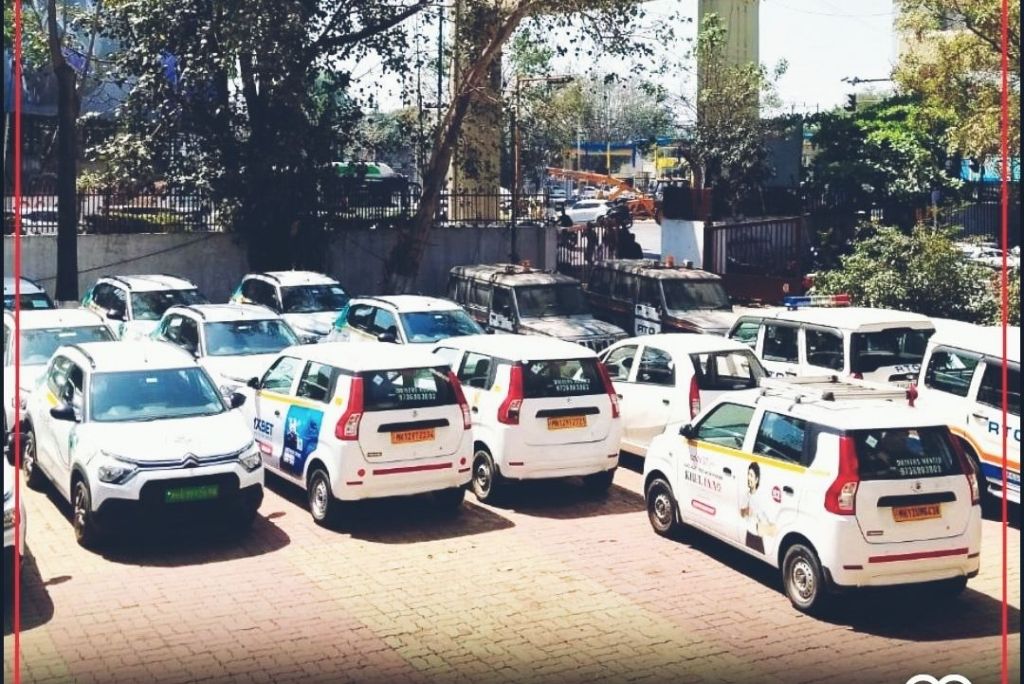
For years, aggregator companies shielded themselves through a carefully designed legal fiction: drivers were not employees, but “partners.” This single word allowed the platforms to enjoy the profits of a transport business while avoiding the liabilities of one. If a passenger faced harassment, the company could claim limited responsibility. If a vehicle was unsafe, blame was redirected to the driver. If urban congestion worsened, the narrative shifted toward infrastructure failures. This loophole created a system where revenue was centralised, but accountability was outsourced. That architecture is now beginning to crack. A landmark Karnataka High Court ruling in 2024 held that for passenger safety and harassment complaints, Ola drivers may be treated as employees, making the aggregator vicariously liable. This is not a minor legal adjustment—it is a civilisational correction that redefines ride-hailing as a transport responsibility rather than a mere digital marketplace.
Public pressure and institutional alarm have triggered a regulatory turning point. In 2025, states such as Maharashtra and Chandigarh adopted Motor Vehicle Aggregator Guidelines designed to directly confront the failures of Ola-Uber culture. Vehicle age limits of roughly 8–9 years have been mandated, alongside compulsory safety equipment such as GPS tracking, panic buttons, first aid kits, and fire extinguishers. Driver onboarding is no longer meant to be casual; medical checks, police verification, and simulator-based driving assessments are being introduced. Most importantly, structured induction training—around 30 hours—has been mandated, including gender sensitisation, customer interaction, disability awareness, and behavioural conduct, with annual refresher programmes. These reforms are not merely administrative exercises; they represent the state’s attempt to impose professionalism on a workforce that was allowed to expand without discipline.
Equally important is the economic rebalancing now being attempted. New rules mandate that drivers must receive at least 80% of the fare, addressing the exploitative commission structure that historically pushed drivers into desperation. In theory, better earnings should translate into better vehicle upkeep and improved conduct, because a driver who is not financially strangled has the capacity to maintain his vehicle and operate without rage. Surge pricing has also been capped at 1.5 times the base fare, restricting predatory pricing during emergencies. Cancellation penalties have been tightened, ensuring passengers are not routinely forced into manipulation. Collectively, these measures signal that the state is no longer willing to tolerate the ride-hailing economy as an unregulated marketplace of private profit and public inconvenience.

However, regulation without enforcement is merely a public relations document. India’s deeper crisis lies in institutional seriousness.
Without random inspections, real-time compliance tracking, strict penalties, and licence suspensions, these guidelines risk becoming elegant paperwork buried under bureaucratic inertia. Global models demonstrate that successful ride-hailing ecosystems require disciplined regulation. London insists on rigorous licensing and inspections. New York actively manages fleet volume and driver welfare to reduce unsafe behaviour. Japan enforces taxi dignity through strict quality standards where cleanliness and professionalism are non-negotiable. India cannot treat road safety as a secondary issue while allowing platform-based mobility to expand unchecked.
Ultimately, Ola and Uber did not merely disrupt taxis—they disrupted urban order itself. They created a system where roads became commercial space, where speed became survival, and where accountability was outsourced to star ratings instead of legal enforcement. The 2025 regulatory framework is a long-overdue correction, but its success will depend on whether Indian governance has the administrative courage to enforce it without compromise. Because the question is no longer about convenience. It is about whether stepping into an app-based cab is entering a service—or entering a calculated risk.
VISIT ARJASRIKANTH.IN FOR MORE INSIGHTS
 ARJA SOCIAL PERSPECTIVES