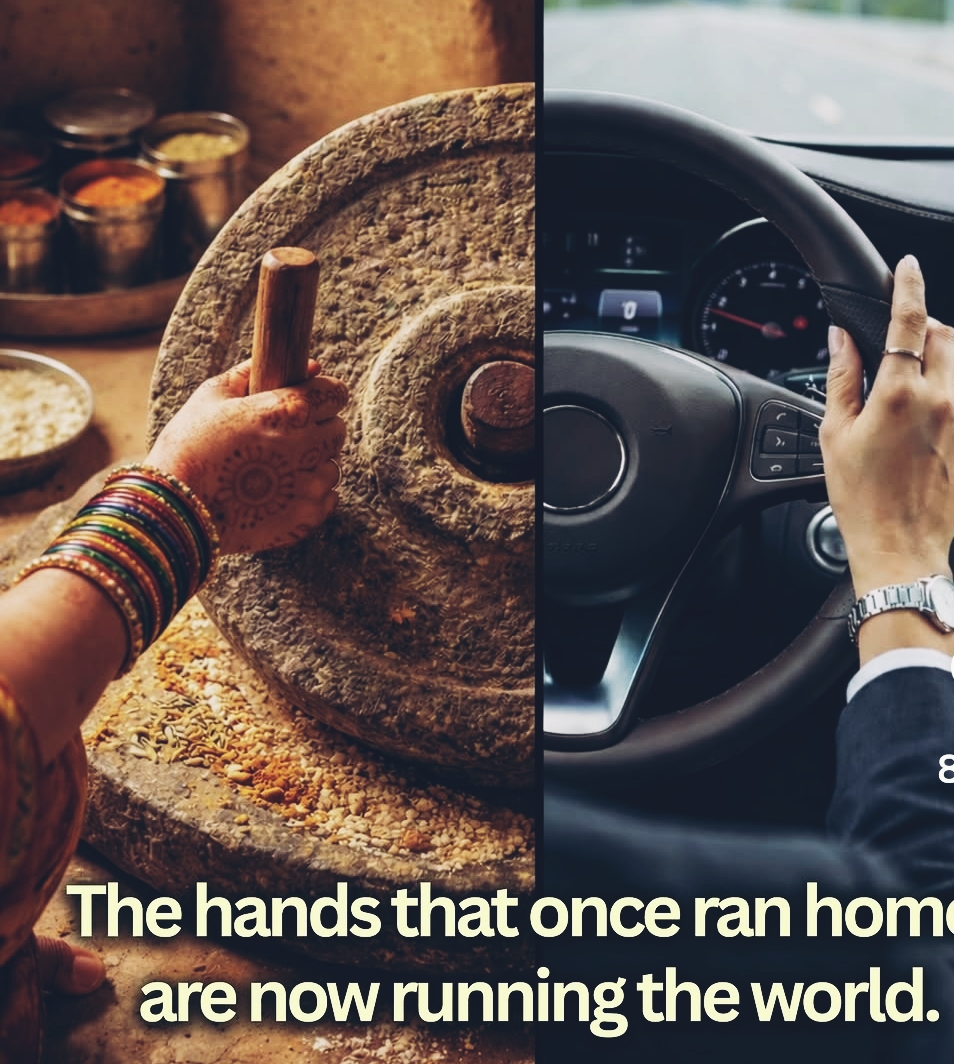
Few topics in India trigger instant emotional combustion like marriage. It is not merely a personal milestone; it is treated as a cultural institution, a social insurance policy, a lineage continuation system, and often a moral certificate. That is why the viral claim that “45% of girls will remain unmarried by 2031” lands like a civilizational earthquake. It activates fear, nostalgia, and outrage in one stroke. But serious societies do not govern themselves through panic. They govern themselves through evidence, empathy, and reform. Once we move beyond sensational headlines and examine demographic logic, the truth looks far more nuanced—and far less apocalyptic.

The first intellectual responsibility is to interrogate the statistic itself. The “45% unmarried girls” claim has been loosely attributed to investment reports and media interpretations, yet no credible demographic projection suggests that nearly half of Indian women will permanently remain unmarried within a few years. What evidence does indicate is not the collapse of marriage, but the recalibration of marriage. India’s own survey trends show that never-married rates among older women remain extremely low, while the median age of marriage has steadily risen. In other words, the viral number likely refers to women being unmarried at a certain age bracket, not unmarried for life. It is a classic case of statistical distortion being marketed as destiny.
Still, dismissing the anxiety entirely would be intellectually dishonest. Something is changing, and it is changing everywhere. Marriage is no longer treated as an unavoidable life event but as a negotiable choice. Education delays marriage because it delays dependency. Every additional year of schooling increases autonomy and postpones the timeline of “settling down.” Financial independence reduces the compulsion to marry early, because marriage is no longer required as a survival strategy. Modern individuals demand emotional compatibility, shared values, and dignity within relationships. This is not “ego.” It is the modernization of human expectations.
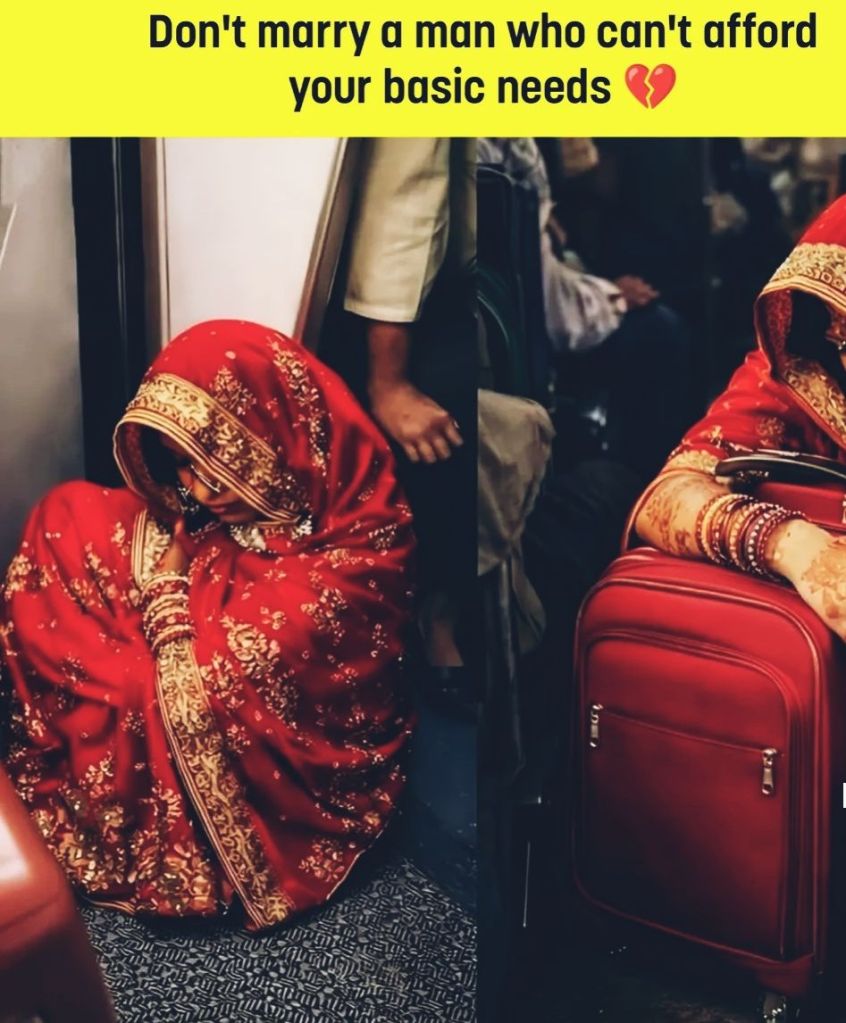
The most dishonest part of the public narrative is its obsession with blaming women alone. Men are delaying marriage too—often more than women. Economic uncertainty, housing inflation, unstable employment, and rising lifestyle costs have turned marriage into an expensive project rather than a natural transition. Traditional marriage systems survived not because they were romantically superior, but because joint families functioned as economic shock absorbers—sharing childcare, elders’ care, and domestic labour. When that ecosystem collapses, marriage becomes a high-risk investment, not a comfortable institution.
Beneath the marriage debate lies a deeper anxiety: demography. Japan, South Korea, Germany, and Italy are not warning stories because people stopped marrying; they are warning stories because fertility collapse creates an ageing society with shrinking communities. Loneliness becomes a public health issue. Elderly citizens live alone. Schools shut down. Entire rural belts become ghost landscapes. India’s fertility rate is already near replacement level, meaning demographic stability cannot be taken for granted. The panic, therefore, is not really about “girls staying single.” It is about the primal fear of a society asking: who will care, belong, and continue?
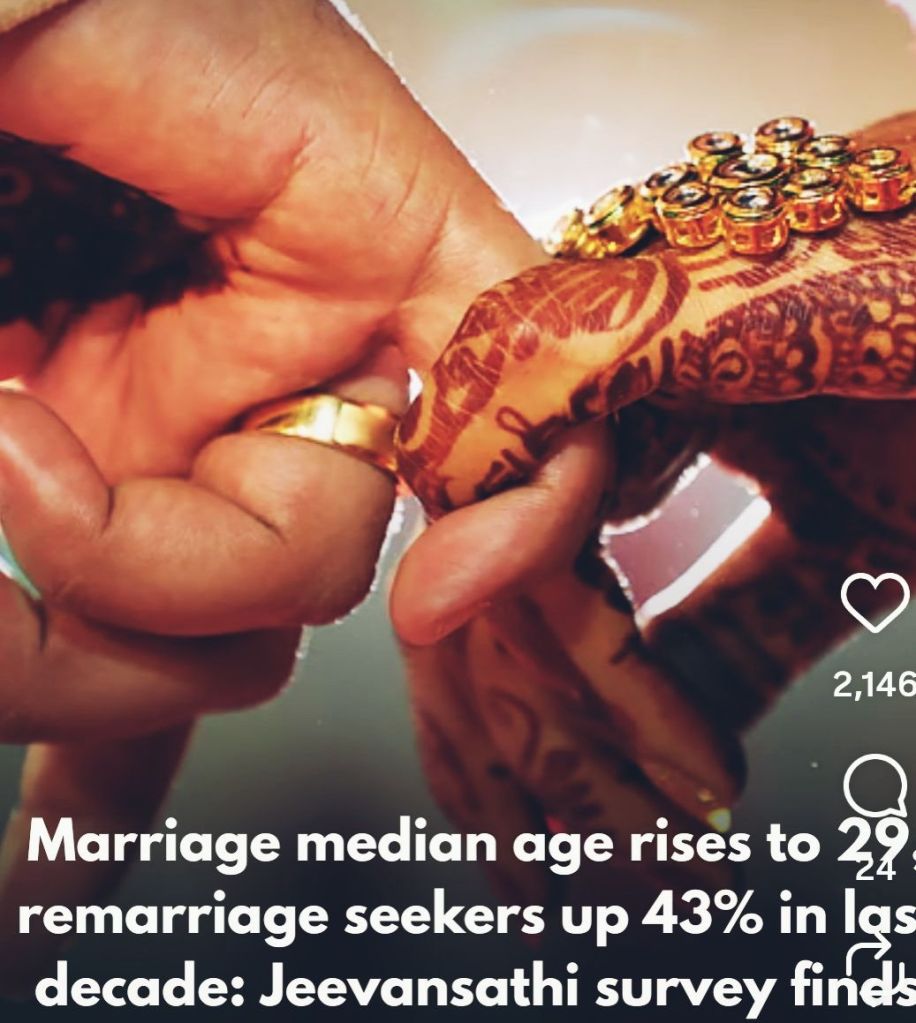
Yet moral panic becomes dangerous when it manufactures myths. One myth is that women are rejecting marriage itself; in reality, many women are rejecting unequal marriage. Another myth is that marrying younger is the solution—when evidence clearly shows early marriage damages education, health, and long-term family stability. A third myth is that freedom is destroying society, when in reality delayed marriage often correlates with higher income, healthier children, and improved maternal well-being. Progress has side effects, but it remains progress.
Instead of policing daughters, India must study global best practices. France remains a gold standard because it made parenting economically survivable through childcare support and family welfare design. Nordic countries reduced fear of family instability through strong social security and parental leave systems. Some nations experimented with structured social platforms to reduce loneliness, not to force marriage. The lesson is blunt: if a nation wants families, it must subsidize family life. If a nation wants children, it must financially support childhood.
Demography is not solved by sermons; it is solved by incentives and infrastructure.

For India, the solution is not cultural anxiety but intelligent policy. If stable families are the goal, then affordable housing, childcare support, flexible work culture, tax incentives for parents, fertility healthcare, and women-friendly career pathways must become national priorities. Simultaneously, society must invest in emotional education—relationship skills, conflict resolution, and shared domestic responsibility—because modern marriage fails not due to feminism, but due to emotional incompetence. The old system survived because people were forced to adjust; the new system survives only if people learn to adjust.
The truth is uncomfortable but liberating: society is not collapsing; it is evolving. The real danger is not unmarried women, but a society that becomes economically hostile to family life and emotionally bankrupt in community living. The future is not the end of marriage—it is the end of automatic marriage.
Civilization will not be saved by guilt. It will be saved by redesigning society so that partnership becomes attractive again, not compulsory. The nations that survive will be those that replace panic with policy, and moral lectures with meaningful support.

VISIT ARJASRIKANTH.IN FOR MORE INSIGHTS


One response to ““The End of Automatic Marriage: India’s Shaadi System Faces Its First Audit” !!!”
Excellent observations Sir.
LikeLike