
Noida International Airport rising out of Jewar is not merely a new aviation node; it is political theatre poured into concrete, steel, and sovereign ambition. It represents a rare moment when the Indian state appears to operate with the discipline of a corporate boardroom and the imagination of a geopolitical strategist. With its first phase inaugurated in early 2026, Jewar is being projected as a declaration of administrative competence—proof that India can execute infrastructure not as fragmented announcements but as an integrated, system-level transformation. This is not an airport built for passengers alone; it is a governance experiment built for history.

At an estimated investment of ₹29,560 crore, the airport is designed to function as the National Capital Region’s second aviation capital, relieving the saturation pressure on Delhi’s IGI while extending the economic frontier of Western Uttar Pradesh. The intent is unmistakable: this is the architecture of a new growth geography. Jewar is being engineered as the nucleus of an aerotropolis, where aviation, logistics, warehousing, industrial clusters, real estate, hospitality, and employment expand outward like concentric rings of economic gravity. Uttar Pradesh is not building a runway; it is attempting to manufacture a new economic spine for North India.
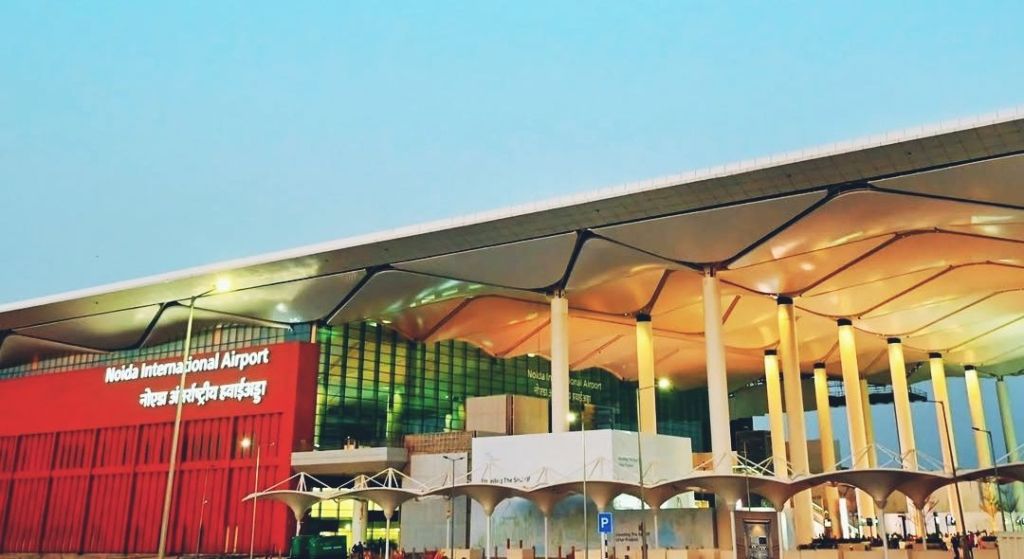
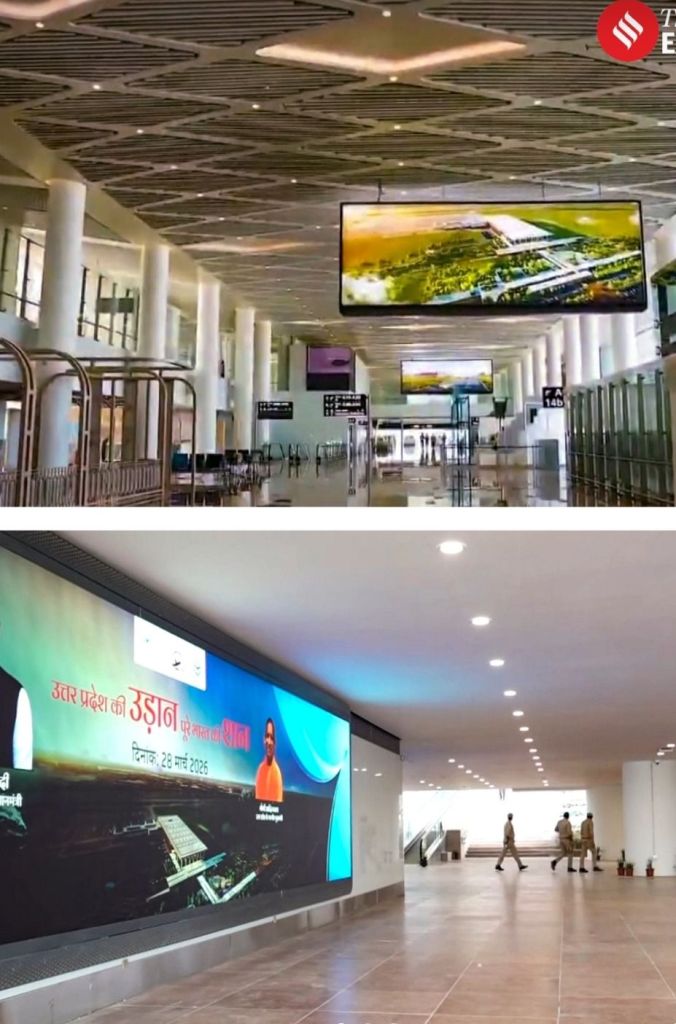
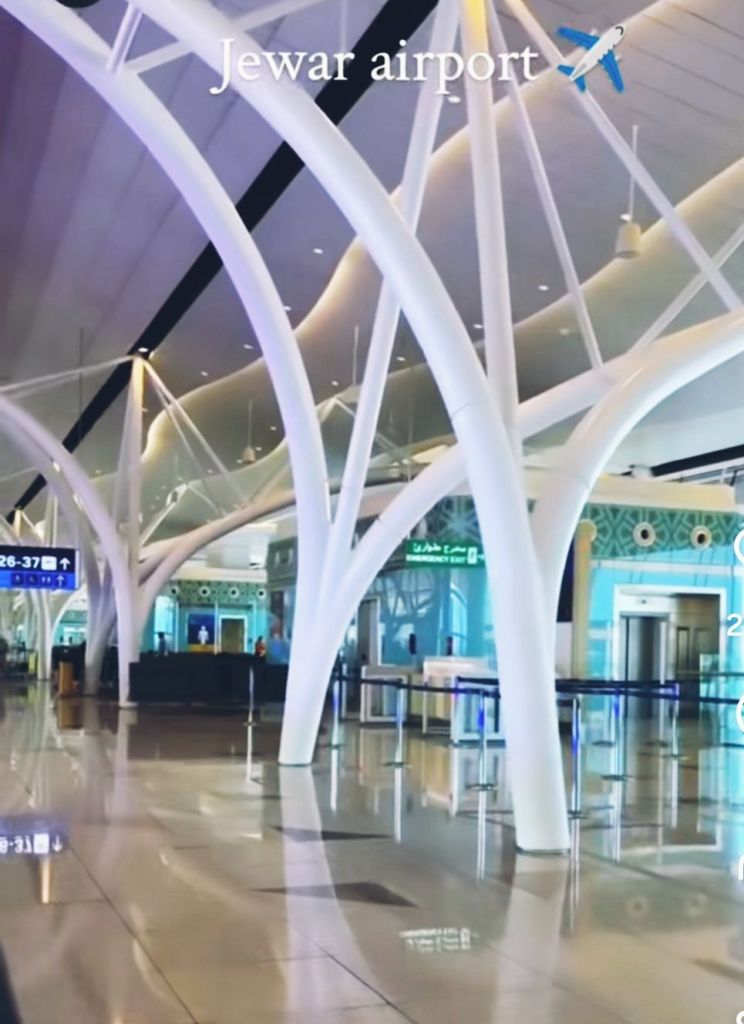
The slogan “Swiss efficiency and Indian hospitality” may sound like polished marketing, but the Swiss component is not symbolic. Zurich Airport International brings precisely what Indian infrastructure has historically lacked: operational discipline, predictable throughput systems, process engineering, and ruthless attention to time. Airports do not collapse because terminals are ugly; they collapse because systems fail under load. Jewar’s architectural references to the ghats of Varanasi, its valley-style courtyards, and net-zero emissions commitments suggest that the state is also attempting to make the airport culturally iconic rather than merely functional. Yet credibility will not be measured in design awards—it will be measured in baggage handling speeds, immigration efficiency, and the ability to remain frictionless under peak-hour chaos.
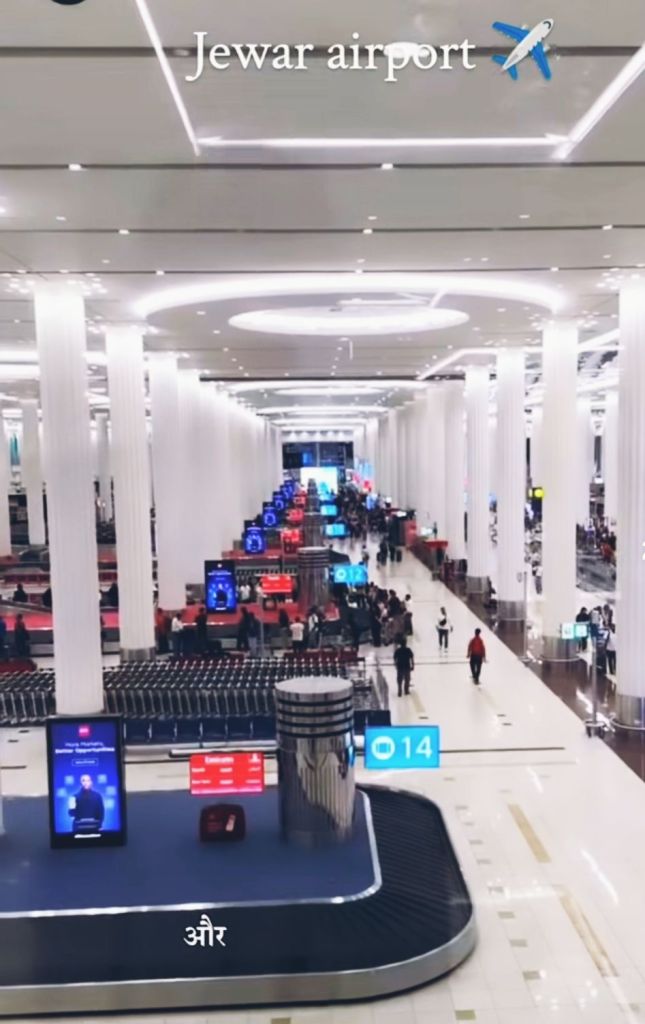
The scale of the blueprint is imperial. The first phase targets 12 million passengers per annum, while the master plan envisions eventual expansion to 70 million passengers. This is not incremental growth; it is premeditated capacity. India’s older airports expanded like overcrowded bazaars—reactive, improvised, stitched together over decades. Jewar is different: it is planned like a future city designed for an era when flying becomes mass mobility rather than elite privilege. That shift—from patchwork modernisation to strategic pre-construction—signals a deeper evolution in India’s infrastructure mindset.

But Jewar’s true weapon is not passenger movement. It is cargo. Beginning with a cargo terminal capacity of 2,50,000 metric tonnes annually and aspiring to scale beyond 18,00,000 metric tonnes, the airport is positioning itself as a logistics empire. Cargo is the silent force multiplier of modern economies: it does not merely move goods, it relocates industries. When logistics accelerates, exporters gain competitiveness; when exporters gain competitiveness, supply chains migrate toward the new advantage. This is how airports stop being transport assets and become economic gravity wells. Jewar’s cargo ambition suggests that Uttar Pradesh is not chasing aviation prestige—it is chasing command over North India’s trade bloodstream.
Perhaps the most strategically intelligent element is the planned 40-acre Maintenance, Repair and Overhaul (MRO) hub—an infrastructure feature that could quietly rewrite India’s aviation economics. A significant share of Indian commercial aircraft still depend on foreign hubs like Dubai and Singapore for heavy maintenance, which is not merely cost but dependency. Every outsourced maintenance cycle represents capital leakage and strategic vulnerability. By building a domestic MRO ecosystem, Jewar aims to retain wealth, create high-skill employment, and potentially attract international servicing contracts. In long-term terms, this is not a hangar—it is a sovereignty instrument disguised as industrial planning.
Yet even the most polished blueprint carries a shadow. Airports create hyper-formal ecosystems—certified contractors, digitised entry, regulated employment, algorithm-driven logistics, and high-security zones. India, meanwhile, still breathes through informality: daily wage labour, street vending, small repair networks, informal transport, and migrant service workers. The danger is that Jewar’s high-tech ecosystem may not absorb these communities—it may exclude them. If rehabilitation, skilling, and livelihood integration are treated as afterthoughts, the airport could become a shining monument surrounded by displaced lives and silent resentment. Jewar is therefore not merely a test of engineering capacity; it is a test of ethical governance—can India build the future without erasing the people who stood on the land where that future now rises?
In the final analysis, Noida International Airport is less an aviation project and more an experiment in centralised economic engineering. It is Uttar Pradesh attempting to operate at maximum administrative voltage, wiring roads, rail, metro, expressways, logistics, regulation, sustainability, and global expertise into a single orchestrated machine. If Jewar succeeds, it will prove that India can execute mega-projects with precision rather than spectacle. If it fails, it will become another magnificent structure crushed by India’s oldest enemy—implementation. Either way, Jewar is not merely taking off. It is trying to redesign the runway on which India’s future will be forced to land.
VISIT ARJASRIKANTH.IN FOR MORE INSIGHTS
 SOCIAL PERSPECTIVES
One response to ““Jewar’s Runway Republic: Uttar Pradesh Tried to Manufacture a Future at 30,000 Feet”!!!”
congrats to people of Uthar Pradesh for electing a super chief minister
LikeLike