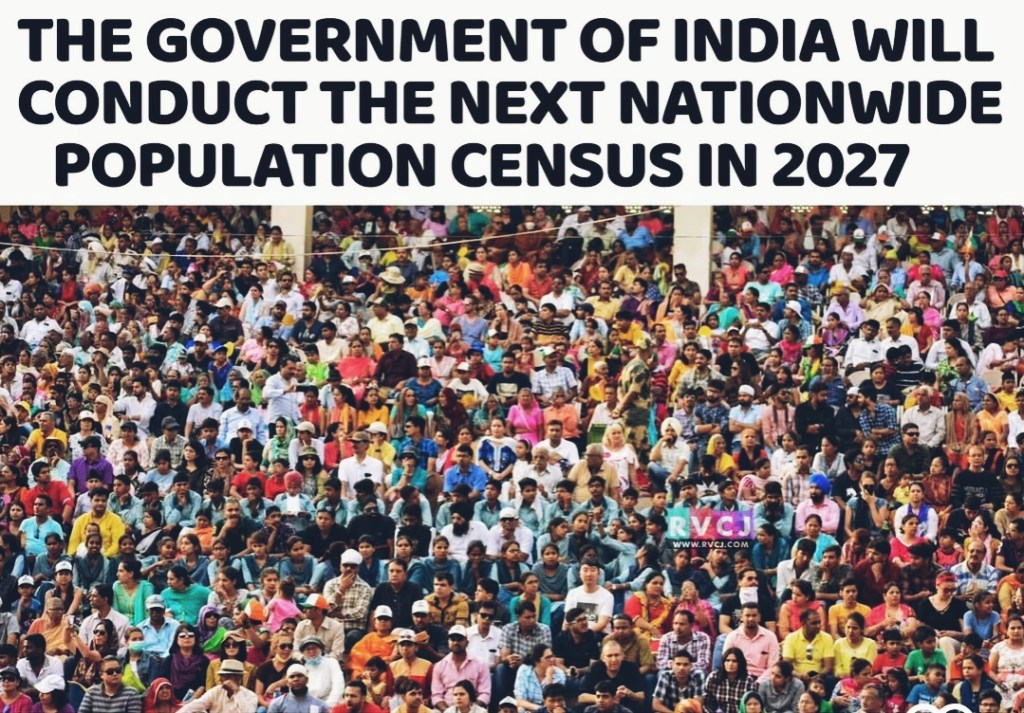
Governments are usually preoccupied with the mundane mechanics of sovereignty. They tax commerce, regulate markets, maintain roads, and guard borders. Occasionally they venture into ambitious terrain—building dams, negotiating treaties, or reshaping economic policy. Yet rarely does a modern state attempt something far more audacious: to measure the living reality of every person within its territory. When India undertakes its next national census in 2026–27, it will attempt precisely that improbable feat. In scale and ambition, the exercise resembles less a bureaucratic ritual and more a civilizational audit—an attempt to translate the chaotic vitality of 1.4 billion lives into a coherent statistical portrait.
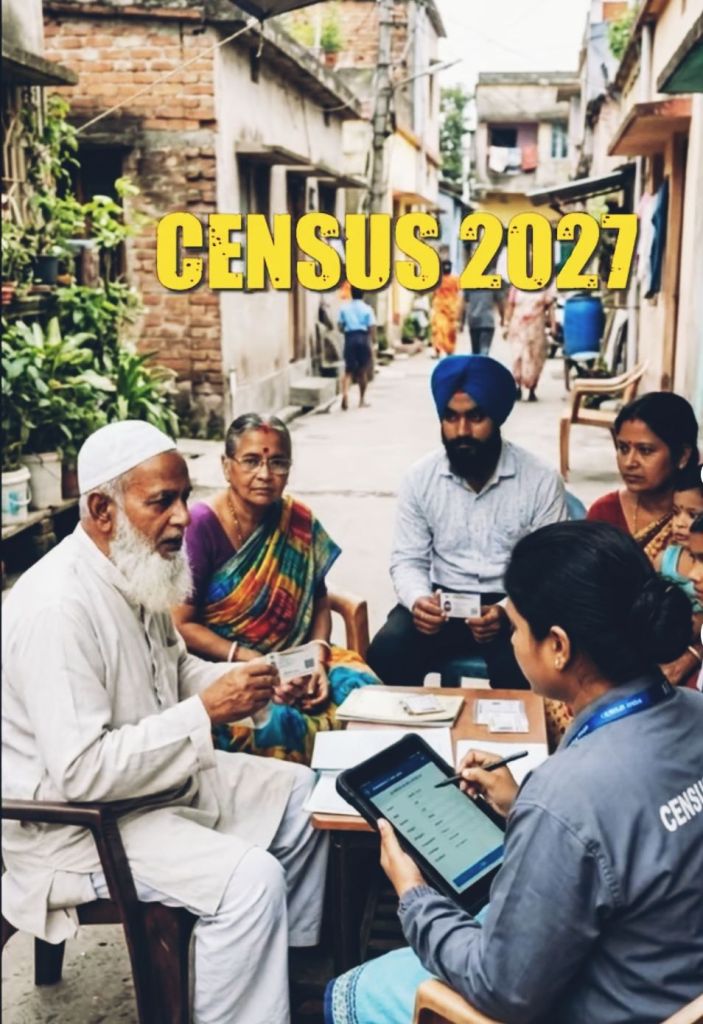
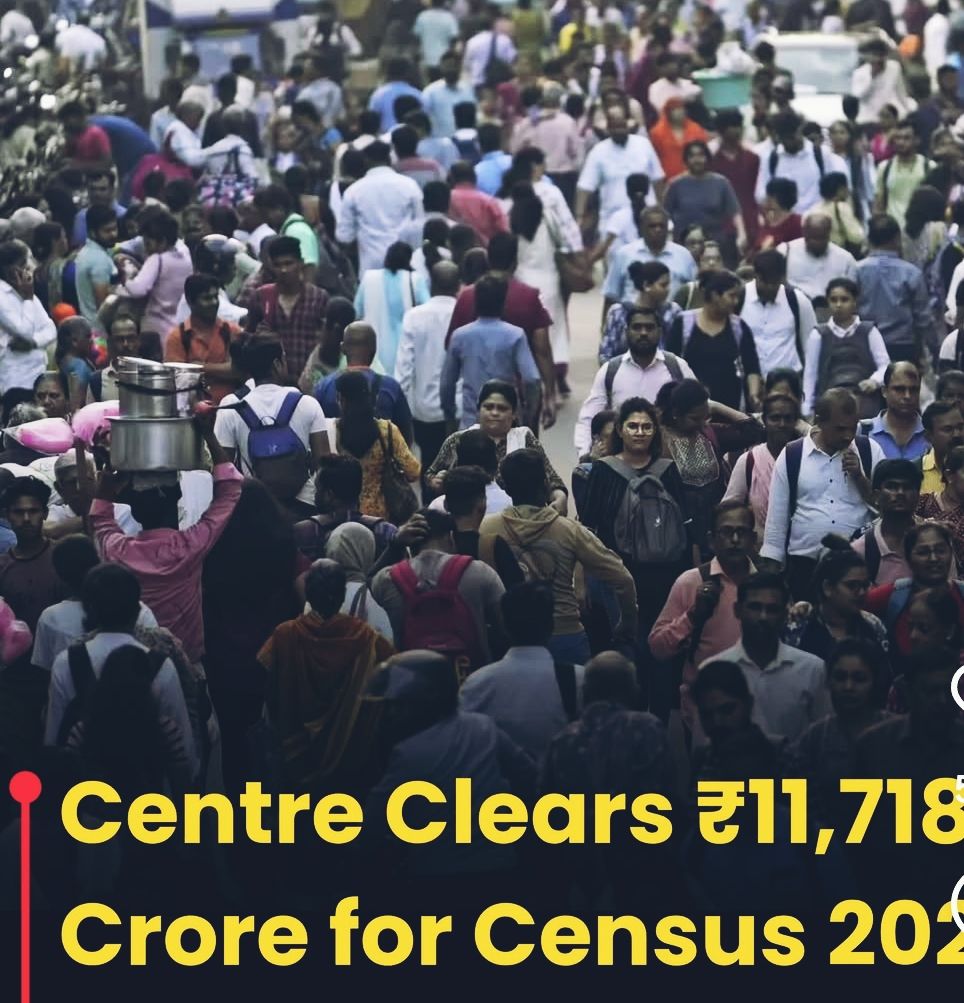
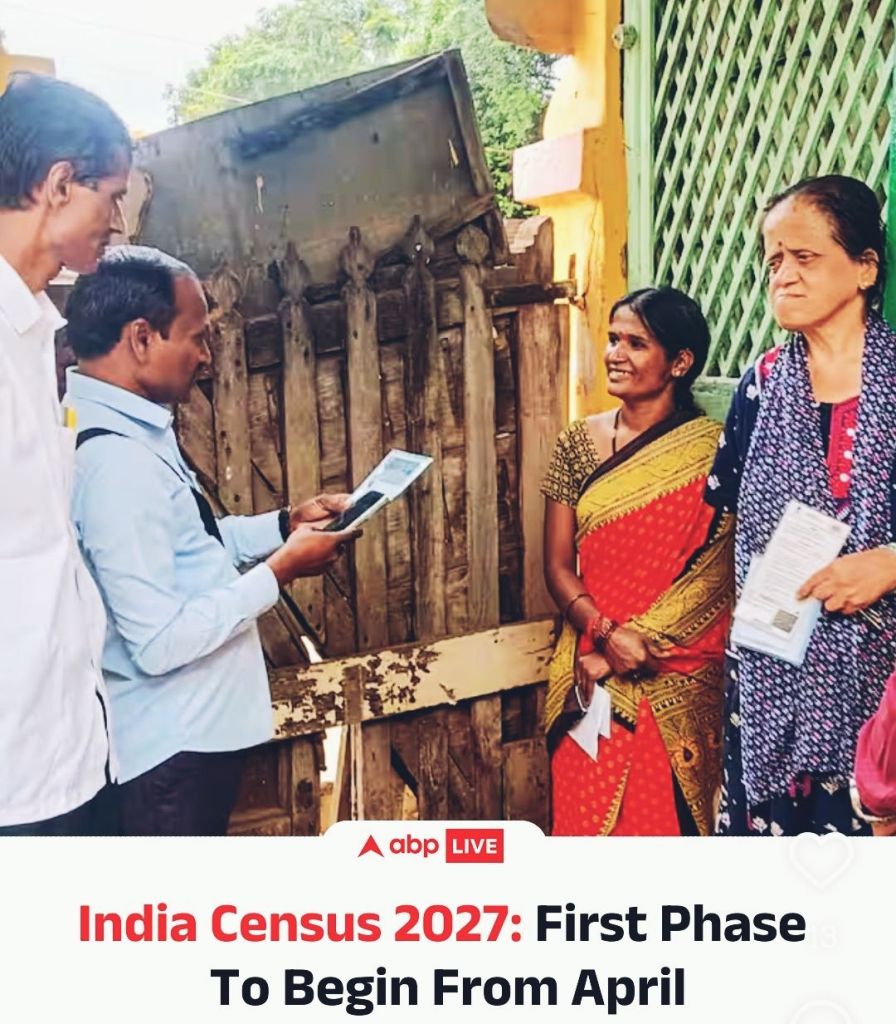
The numbers themselves evoke astonishment. The Union government has sanctioned approximately ₹11,718 crore for what is widely considered the largest administrative operation on Earth. Nearly 3.4 million enumerators and supervisors—teachers, local officials, and civil servants—will disperse across the vast human landscape of the subcontinent. Their mission is deceptively simple: knock on doors, ask questions, record answers. Yet the geography of their assignment is staggering—metropolises with millions of residents, remote Himalayan villages perched above cloud lines, tribal hamlets deep within forests, fishing settlements along endless coastlines. In effect, India will mobilize a peaceful army whose battlefield is information and whose objective is nothing less than the measurement of a nation.
The path to this census has already been shaped by history’s disruptions. Originally scheduled for 2021, the exercise was postponed by the cascading shock of the COVID-19 pandemic and the administrative recalibrations that followed. The consequence is unprecedented: when the census is finally conducted, India will have gone nearly sixteen years without a fresh demographic baseline. For policymakers, this has meant navigating a rapidly transforming society using statistical maps drawn in 2011. Cities have expanded, migration patterns have shifted, new economic sectors have emerged, and demographic structures have evolved—yet governance has often relied on numbers belonging to a different era.
Paradoxically, the delay has coincided with a technological revolution that is transforming the very nature of enumeration. The forthcoming census will be India’s first fully digital census. Enumerators will carry mobile devices equipped with specialized applications capable of capturing data even in offline environments and synchronizing with central servers when connectivity becomes available. What once required mountains of paper schedules and years of manual tabulation will now unfold through digital transmission and near real-time monitoring. The census, in essence, is migrating from clipboards and ink to algorithms and encrypted databases.
Behind this transformation lies a sophisticated digital architecture. A national Census Management and Monitoring System will allow administrators to track the progress of enumeration across the country in real time. Long before enumerators knock on the first door, high-resolution satellite imagery has already been deployed to map and divide the nation into precise enumeration blocks. Citizens themselves will participate in an unprecedented way. Through a web-based self-enumeration portal available in multiple languages, households will be able to submit their demographic details online and generate a unique verification code. In doing so, the census becomes not only a state-driven exercise but also a participatory civic act.

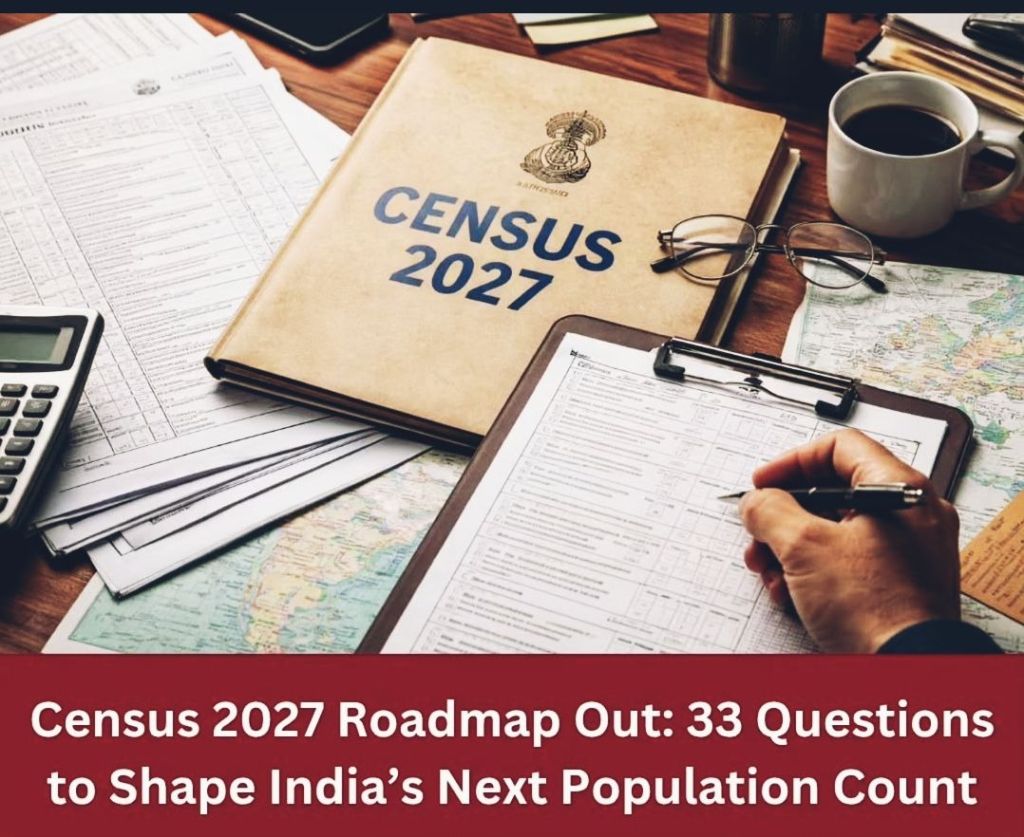
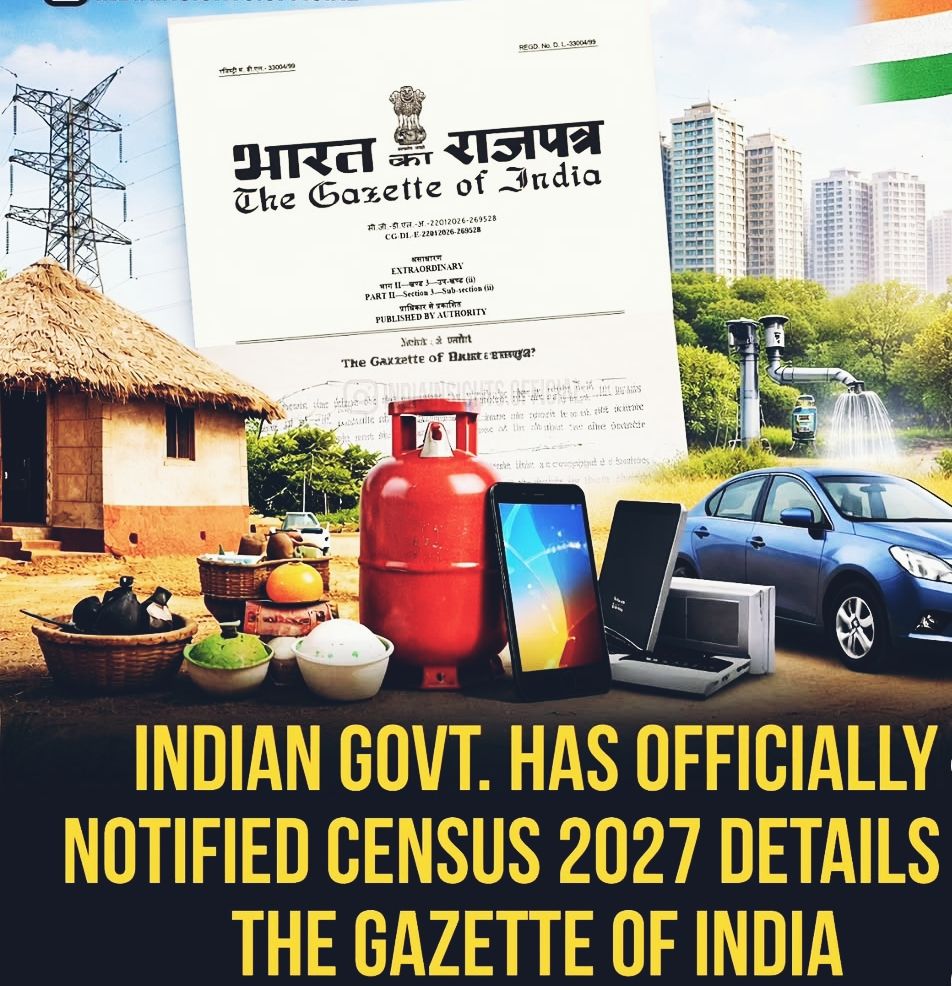
The enumeration itself unfolds in two carefully designed phases that reveal different layers of national life. The first phase—the houselisting and housing census—focuses on the physical environment in which Indians live. Enumerators document construction materials of homes, access to drinking water, sanitation facilities, household assets, and energy usage. Even the type of cooking fuel used in kitchens is recorded. These seemingly ordinary details form the empirical backbone of public policy, guiding decisions on housing schemes, rural electrification, sanitation missions, and energy transitions. The second phase shifts attention from dwellings to people, recording age, gender, education, occupation, migration history, disability status, and language. Together, these variables create the statistical skeleton upon which development policy is built.
Yet the most consequential element of the upcoming census may lie in a single historical decision: the reintroduction of caste enumeration after nearly a century. The last comprehensive caste count occurred during the colonial census of 1931. Since independence, successive governments avoided such enumeration, fearing it might intensify social divisions. Reintroducing caste data transforms the census from a purely demographic exercise into a profound sociological mirror. Supporters argue that accurate caste data is essential for evaluating reservation policies and designing targeted welfare interventions for historically disadvantaged communities. Critics warn that cataloguing identities at such scale may sharpen identity politics and deepen social fault lines.
Administratively, the challenge is formidable—India contains thousands of castes and sub-castes with overlapping names and regional variations.
Digitisation, meanwhile, introduces its own set of dilemmas. A database containing personal information of more than 1.4 billion individuals will become one of the largest repositories of citizen data ever assembled anywhere in the world. Protecting it from cyber threats, misuse, or unauthorized access becomes a governance challenge of unprecedented magnitude. The census therefore tests not only India’s administrative capacity but also its ability to build public trust in digital statecraft. Citizens must believe that the information they share will remain confidential and used solely for statistical and developmental purposes.
Beyond administration and technology lies a deeper political dimension. Updated population figures will inevitably influence debates over the future redrawing of parliamentary constituencies, a process known as delimitation. As demographic growth has varied widely across regions, new numbers could reshape the balance of political representation within the federal structure. Thus, what begins as a statistical exercise may ultimately reverberate through the architecture of democratic power itself.
Despite these complexities, the census remains one of the most remarkable inventions of modern governance. It converts the abstract notion of a nation into measurable reality. Each statistic—whether about literacy, housing, or migration—represents millions of human stories condensed into data points. When the final numbers eventually emerge, they will do far more than update spreadsheets. They will reshape welfare policies, recalibrate development strategies, and redefine how India understands itself in the twenty-first century. For a brief moment in administrative history, the state will attempt something almost cosmic in ambition: to count, classify, and comprehend one of the largest human societies ever assembled. And in that quiet act of counting, India will rediscover the intricate arithmetic of its own civilization.
VISIT ARJASRIKANTH.IN FOR MORE INSIGHTS
 SOCIAL PERSPECTIVES
One response to “When 1.4 Billion Lives Become Data: India’s Census and the Audacity of Counting a Civilization”
Real population figures of the country will arise. Good to everybody especially for the majority communities
LikeLike