On 26 December 2025, India crossed a centenary that should have provoked national introspection but instead passed in near silence: one hundred years since the formal founding of the Communist Party of India. Born in exile, incubated in Tashkent, and ideologically nurtured by international revolution, the CPI once believed history itself was marching in its favour. Yet its hundredth birthday arrived without celebration, debate, or even solidarity among the Left’s own fractured descendants. The irony was stark. On the same day, news broke of the killing of a senior Maoist leader—an echo from a violent fringe that now defines the Left more in obituary columns than in policy debates. The journey from revolutionary certainty to political marginality was not imposed on Indian communism; it was painstakingly self-authored.
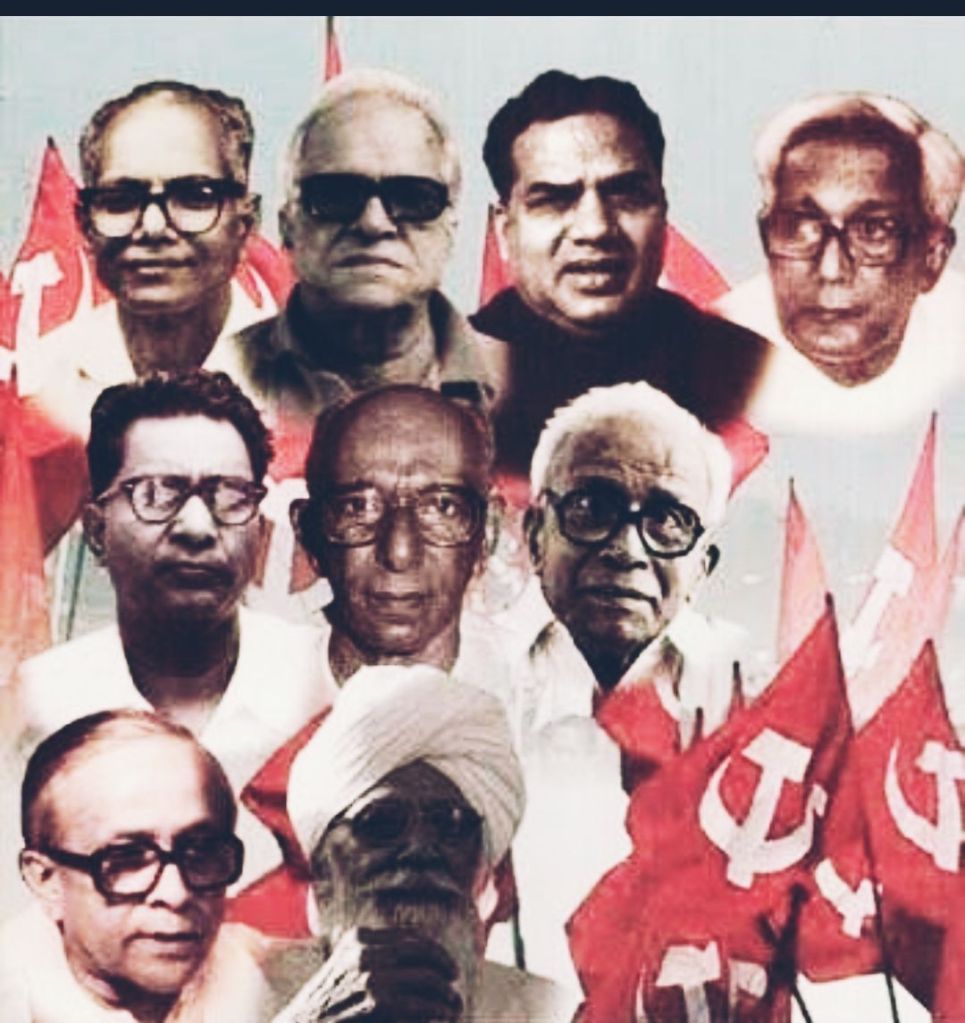
The CPI’s origins were global before they were national. Conceived under the influence of the Comintern, it entered India carrying an ideological passport stamped in Moscow rather than rooted in Indian political soil. From inception, it struggled with a foundational contradiction it never resolved: allegiance to international proletarian revolution versus loyalty to a nation struggling to free itself from colonial rule. This ambivalence proved fatal during the freedom movement. The party’s hesitation, opposition, or distance from decisive nationalist moments—most notably the Quit India Movement—placed it emotionally outside the mainstream of Indian nationalism. Independence itself was dismissed as a “bourgeois transfer of power,” a doctrinal position that permanently alienated the CPI from popular sentiment and national legitimacy.
Post-independence offered opportunities for reinvention, but the party repeatedly chose rigidity over renewal. While India built a constitutional republic under Nehru, communists oscillated between parliamentary participation and flirtation with armed insurrection, inspired alternately by Moscow and Beijing. The Sino-Soviet split did more than fracture global communism; it shattered the Indian Left. The 1964 split between CPI and CPI(M) institutionalised ideological civil war, turning debates into permanent schisms. Every disagreement—on China, nationalism, parliamentarism, or alliances—ended not in synthesis but in separation. Fragmentation became the Left’s defining organisational skill. In contrast, the RSS, founded in the same year as the CPI, absorbed defeats and emerged more cohesive, demonstrating that ideological movements survive not by purity alone but by adaptability.
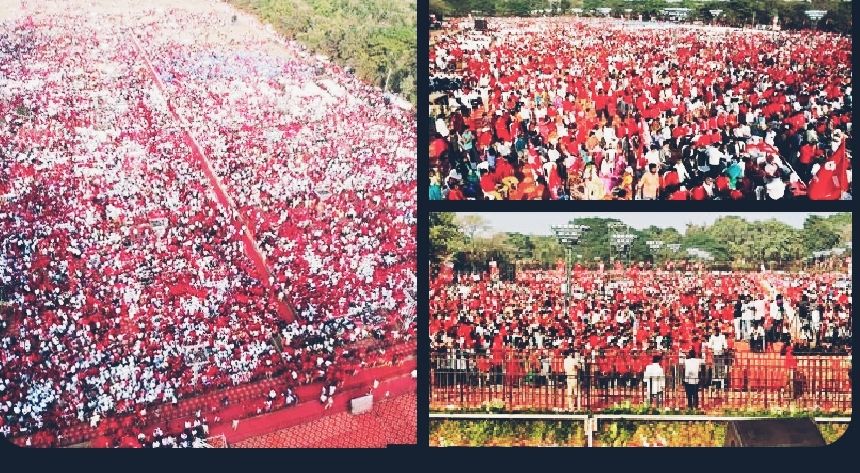
Electoral success, when it came, proved deceptive. Long tenures in West Bengal, Kerala, and Tripura created administrative experience but also intellectual stagnation. The Left governed without renewing its social contract. Leadership aged, cadres ossified, and political language froze in a vocabulary increasingly alien to a changing India. After 1991, as liberalisation reshaped aspirations, the Left offered protest rather than persuasion. It opposed growth without articulating a credible alternative. The decisive rupture arrived in 2008, when the Left withdrew support to the UPA government over the Indo–US nuclear deal, privileging anti-American reflex over strategic relevance. Voters responded with clinical clarity: from 59 Lok Sabha seats in 2004 to single digits by 2019, with only a marginal, alliance-dependent recovery thereafter.
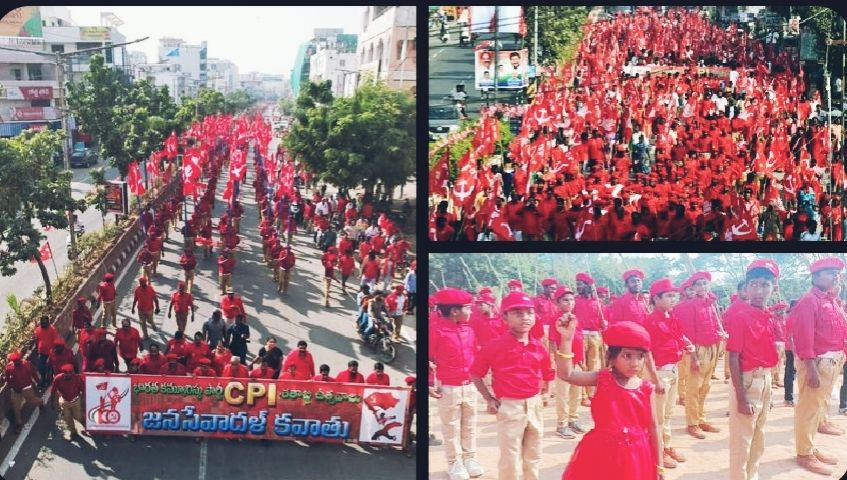
The collapse, however, runs deeper than electoral arithmetic. Indian communism never resolved its democratic paradox. Parties preaching equality were often led by socially privileged elites. Movements condemning authority romanticised authoritarian regimes abroad. While celebrating constitutional freedoms at home, sections of the Left justified repression in the Soviet Union and China as “historical necessity.” This moral asymmetry hollowed out credibility. As India’s poor became aspirational rather than revolutionary, seeking mobility rather than upheaval, the Left remained trapped in the grammar of scarcity, unable to speak the language of opportunity.
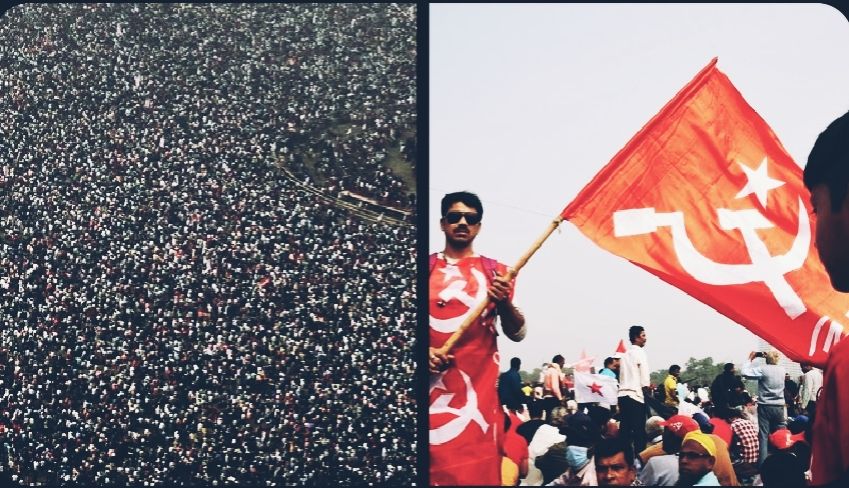
Today, the Communist Party survives institutionally but not intellectually. Kerala remains its last fortress, sustained more by welfare delivery than ideological conviction. Nationally, the Left no longer shapes debates; it reacts to them. Ironically, many of its economic ideas—state intervention, redistribution, welfare—have been appropriated by rivals, including the BJP, which practices a nationalist, electorally effective version of welfare politics without Left dogma. The Left’s paradoxical legacy is ideological redundancy: it lost power even as fragments of its thinking became mainstream.
The CPI’s centenary thus marks not endurance but irrelevance. This is not a tale of persecution or betrayal, but of missed adaptations. History did not defeat Indian communism; Indian communism failed to understand history. In a democracy that prizes nationalism, pluralism, and aspiration, a movement perpetually torn between foreign doctrine and domestic reality was bound to fade. The red flag still flies in pockets—but as a national force, it now belongs less to India’s future than to its political archives.
Visit arjasrikanth.in for more insights
 SOCIAL PERSPECTIVES
One response to “From Red Flag to Fading Ash: India’s Communists Missed History While History Moved On”
Nice obituary to cpi sir good piece of knowledge
LikeLike