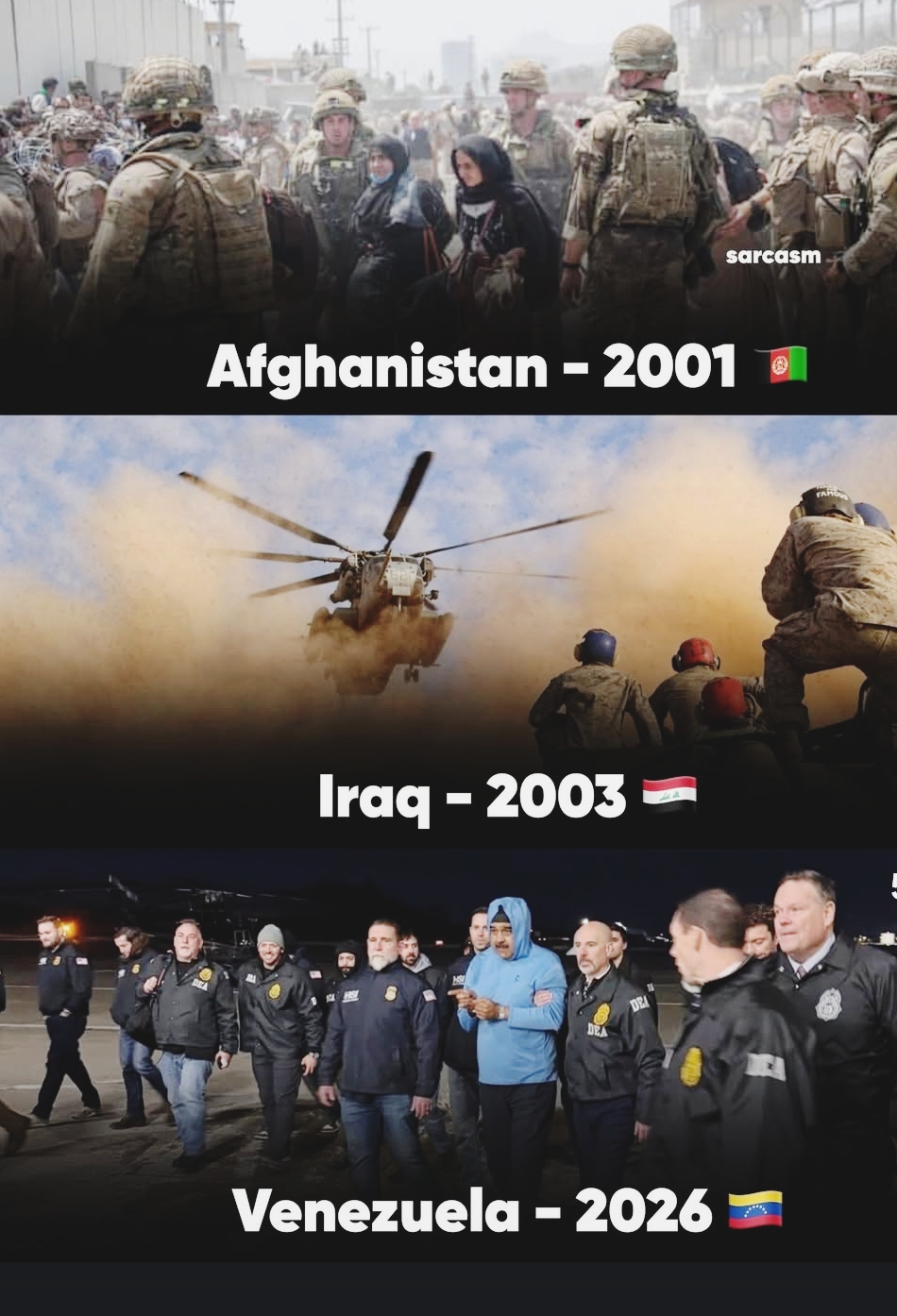
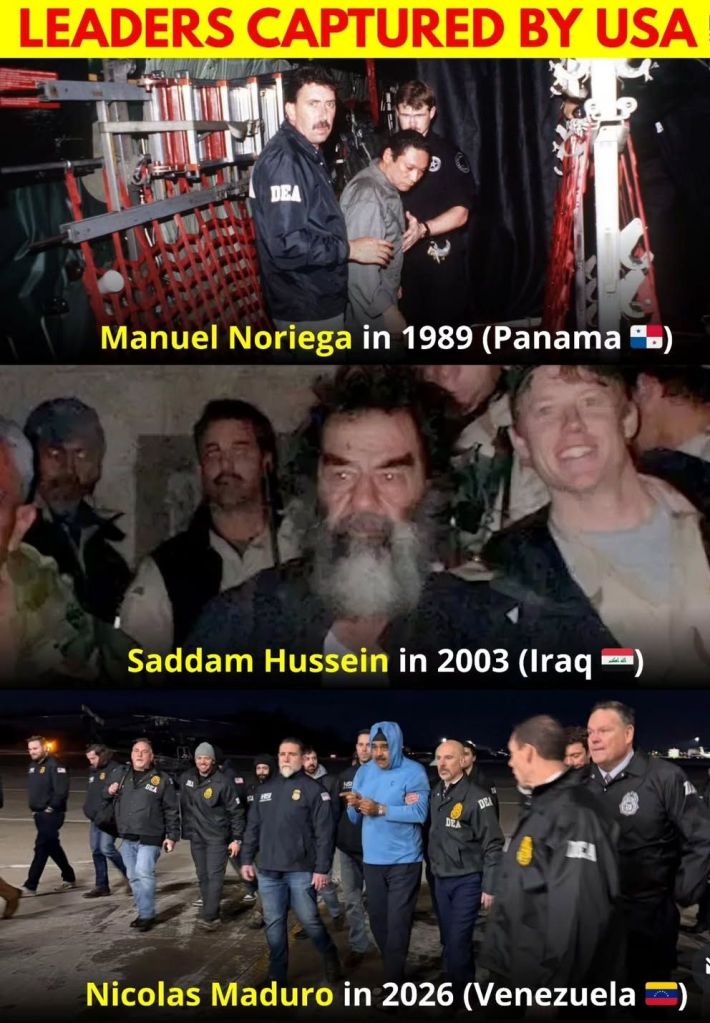
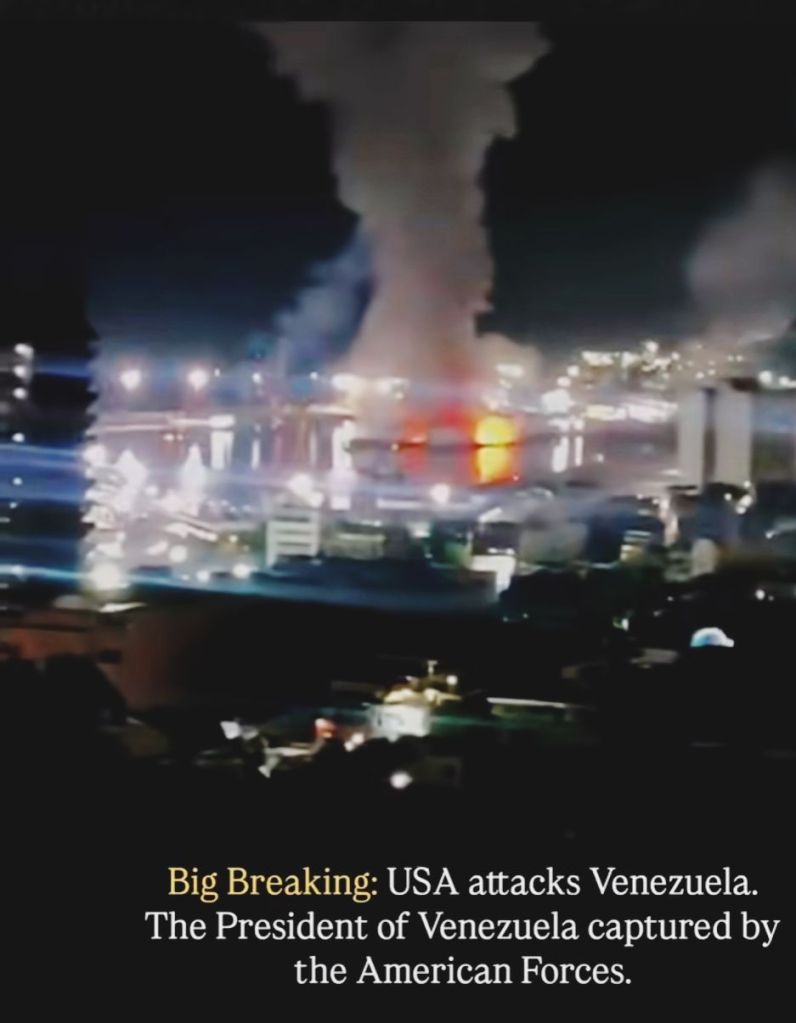
At two in the morning, Caracas relearned a lesson Latin America knows too well: American power does not knock—it arrives. The sky split into orange seams as explosions stitched together ministries, communications hubs, and security installations. Within ninety minutes, the United States executed its most dramatic military intervention in the Western Hemisphere since Panama in 1989. Aircraft, special forces, and intelligence assets converged on the Venezuelan capital not as diplomacy but as judgment. By dawn, images of President Nicolás Maduro and his wife—blindfolded, handcuffed, and in U.S. custody—were circulating globally with intentional speed. The message was unmistakable: Washington had moved beyond sanctions and statements; it was physically rewriting Venezuela’s political order. Geography, sovereignty, and sunrise were irrelevant when American will was activated.

The justification followed a script perfected over decades. Venezuela, Washington declared, was not merely authoritarian but a “narco-state,” a criminal syndicate masquerading as government. Indictments, asset freezes, sanctions, and bounties had prepared the narrative terrain. What followed was framed not as invasion but as law enforcement—criminal justice delivered by fighter jets. This linguistic alchemy matters. Iraq was about weapons of mass destruction, Afghanistan about terrorism, Libya about humanitarian protection, Syria about chemical weapons, and now Venezuela about narcotics and corruption. The vocabulary changes; the logic does not. Interests are laundered through morality, allowing raw power to masquerade as universal good. A superpower never says “we want control.” It says “we are restoring order.”
Inside Venezuela, the aftermath punctured the myth of “clean intervention.” Civilians died, infrastructure burned, and within hours the vice president was sworn in, signalling continuity rather than liberation. The opposition figures endlessly cited in Washington speeches were conspicuously absent from the operation itself, exposing a recurring pattern: American interventions are conducted in the name of local democracy but without its agency. Iraq was liberated without stability, Afghanistan democratized without endurance, and Syria bombed without resolution. When America intervenes, it rarely builds institutions; it manufactures dependency, resentment, and unfinished endings. Power removes leaders faster than it constructs legitimacy.
Globally, reactions revealed unease deeper than ideology. Venezuelan diasporas celebrated, but governments across the Global South condemned the act—not out of affection for Maduro, but out of fear for precedent. If the United States can remove a sitting president under its own domestic criminal charges, international law becomes optional for the powerful and compulsory for the weak. Latin America remembers this choreography—from Guatemala in 1954 to Chile in 1973 to Panama in 1989. The Monroe Doctrine may be rhetorically buried, but its spirit remains operational: sovereignty in the Americas is conditional, revocable when Washington’s patience expires. The United Nations, predictably, watched helplessly, issuing statements that echoed into irrelevance—a reminder that global institutions exist largely at the pleasure of great powers.
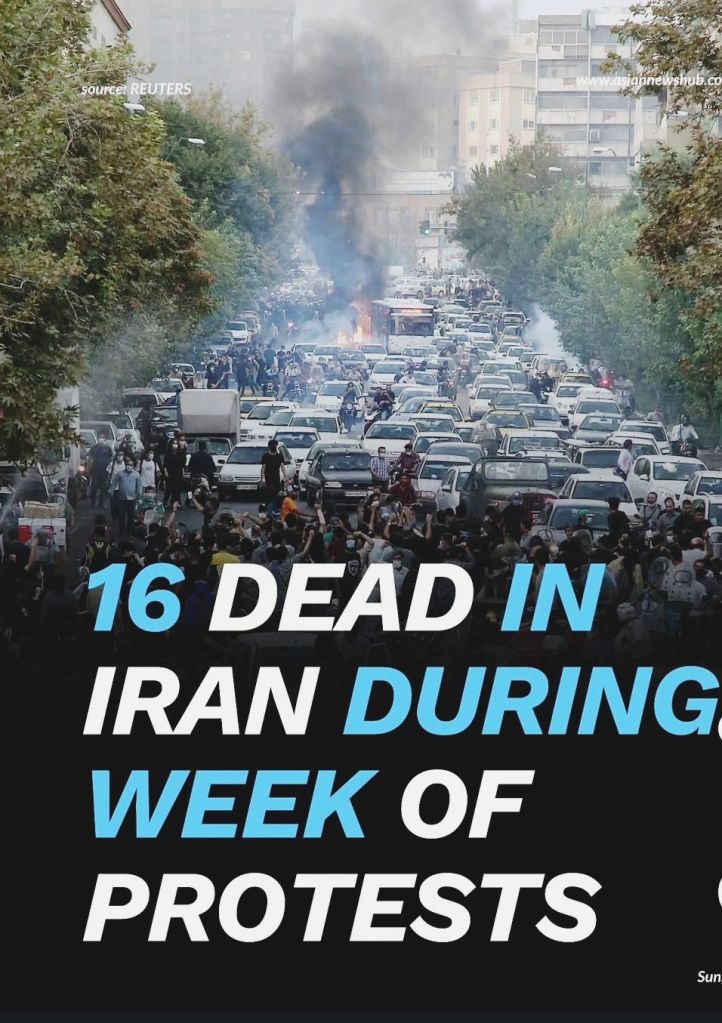
This logic does not stop at airstrikes; it extends into street politics. In Iran, American presidents openly encourage anti-government protests, framing them as struggles for freedom while simultaneously threatening military action. When U.S. leaders declare they are “locked and loaded” or promise to “stand with protesters,” the signal is unmistakable: dissent is geopolitically useful when it weakens adversaries. Iranian protests are real, born of economic pain and repression, but American endorsement often becomes the kiss of death, allowing regimes to rebrand internal opposition as foreign conspiracy. The same pattern repeats globally—support protests, impose sanctions, escalate rhetoric, and keep military options “on the table.” It is regime pressure without accountability for human cost.
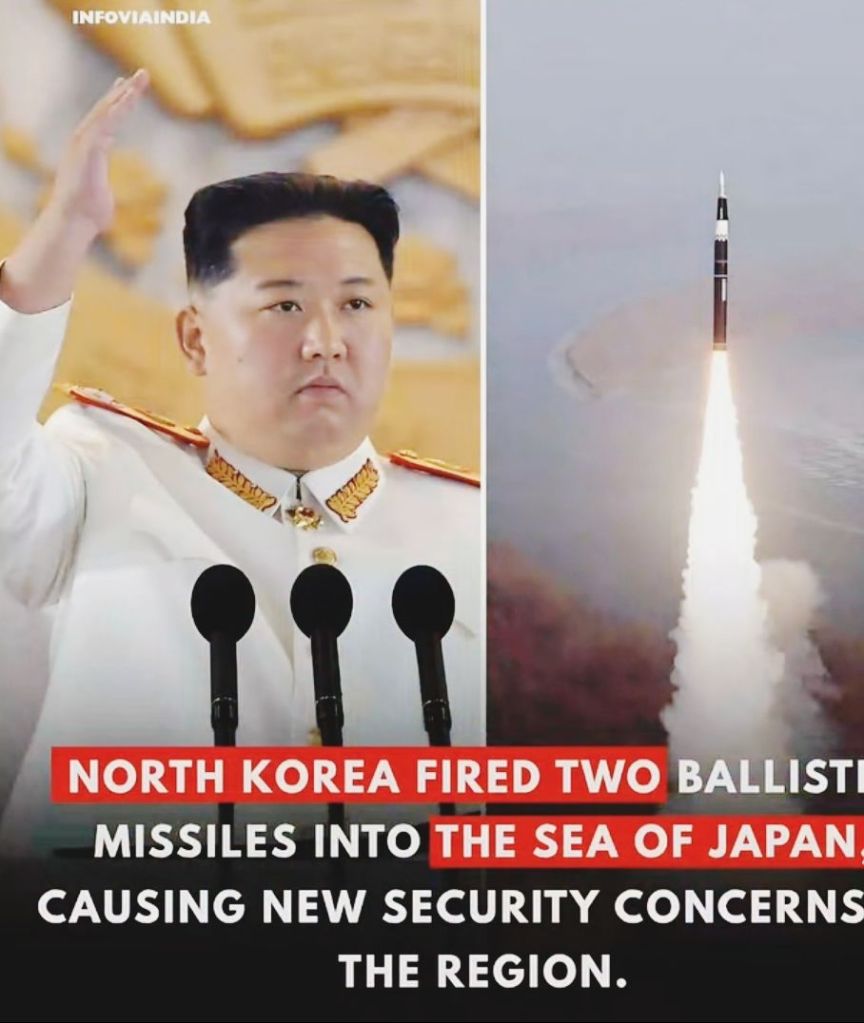
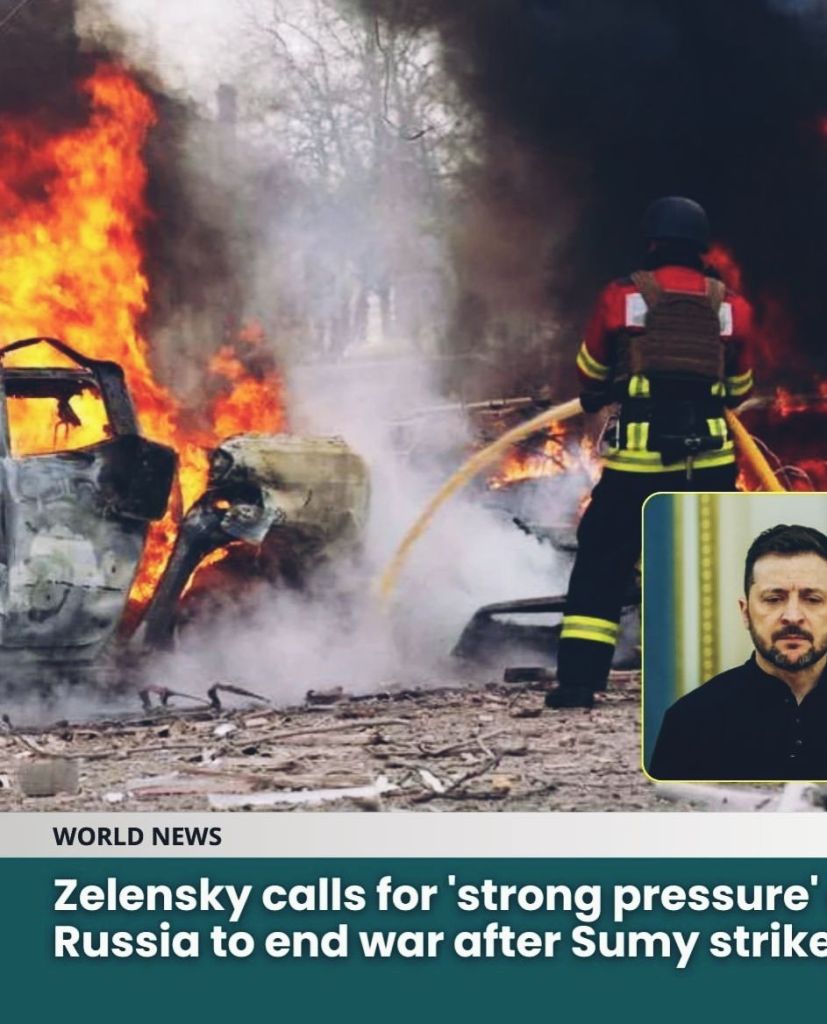
The cumulative effect is a world sliding into retaliation politics. France and the UK strike Syria, North Korea launches missiles toward Japan, Russia escalates in Ukraine, and the United States graduates from sanctions to soldiers in Venezuela while hinting at Iran tomorrow. Each action justifies the next. “An eye for an eye” becomes strategic doctrine, and the world edges closer to blindness. America’s defenders argue that power must be exercised to maintain order. History suggests the opposite: unchecked power teaches others that force works. When a superpower behaves as if it can do anything, others eventually try to do something—missiles, proxies, cyberattacks, or alliances forged in opposition.
Venezuela’s night of fire is not an exception; it is a reminder. From Afghanistan and Iraq to Syria, Venezuela, and the looming shadow over Iran, American intervention reveals a consistent truth: interests first, principles later—if at all. Democracy is invoked selectively, sovereignty respected conditionally, and international law treated as elastic. The tragedy is not confined to nations that wake to bombs before dawn; it belongs to the global order itself. Power without restraint does not produce stability—it produces imitation. And in a world where every rising power learns from America’s example, the cost of that lesson may one day return home, louder and closer than Washington ever intended.
Visit arjasrikanth.in for more insights


One response to “Empire Without Apology: America’s Gunboat Morality Keeps Teaching the World the Wrong Lesson”
Good analysis
LikeLike