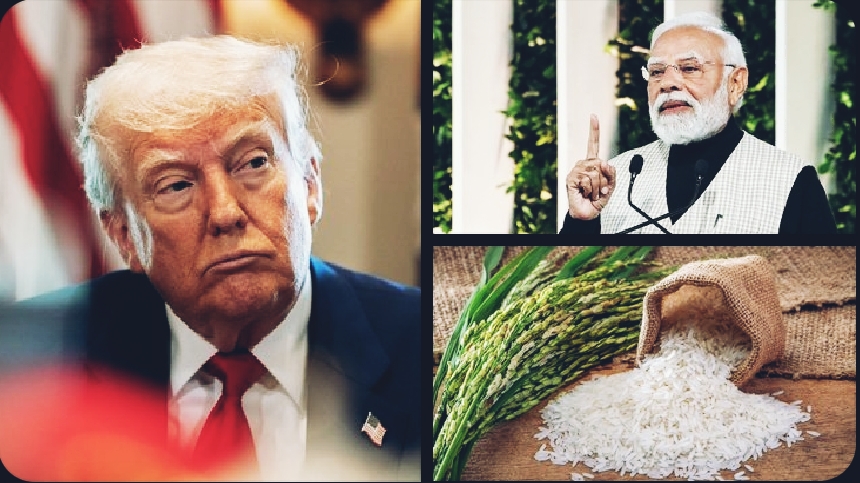
A Trump Outburst Accidentally Unmasked India as the Quiet Giant Feeding the World
When U.S. President Donald Trump recently thundered that India was “dumping rice in America,” the comment sparked laughter, raised eyebrows, and sent Indian exporters scrambling to double-check their shipment logs. Trump’s signature style—“people are telling me… I heard…”—may have fueled the moment, but it inadvertently triggered something far more useful: a long-overdue national reminder that India is, in fact, the world’s largest producer and the world’s largest exporter of rice. In a world where rice feeds more than half of humanity, India stands at the epicentre of global food security, quietly commanding a position most Indians underestimate and few global leaders fully grasp.
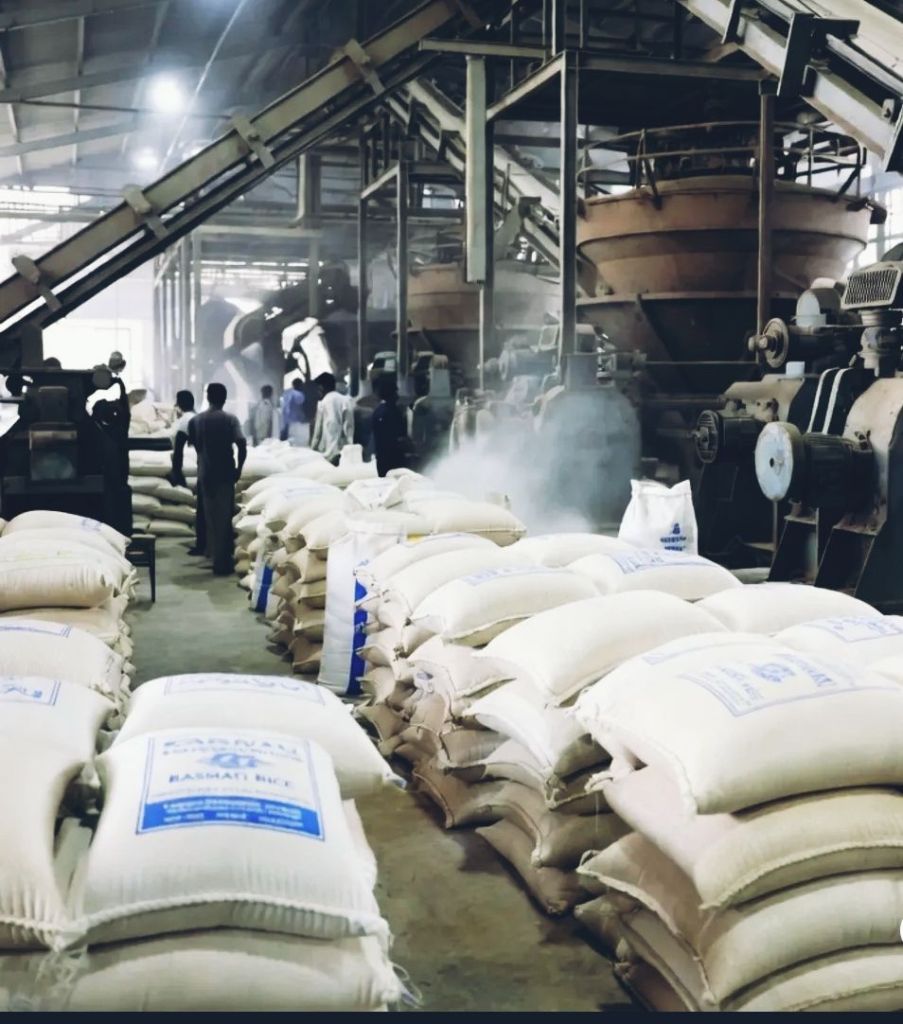
The numbers tell a remarkable story. India contributes over 28% of global rice production, edging past China’s 27% and harvesting nearly 150 million tonnes every year. On the export front, India dominates with a 30% global market share, shipping over 20 million tonnes last year alone. The USDA expects this to touch 22 million tonnes soon, while Indian exporters predict an astounding 30 million tonnes by 2026–27. This is no accidental surplus from a lucky monsoon. It is the product of expanded acreage, resilient farmers, strong procurement systems, MSP-driven incentives, and decades of agricultural reform. India isn’t just growing rice—it is sustaining a global staple with a consistency unmatched by any other nation.
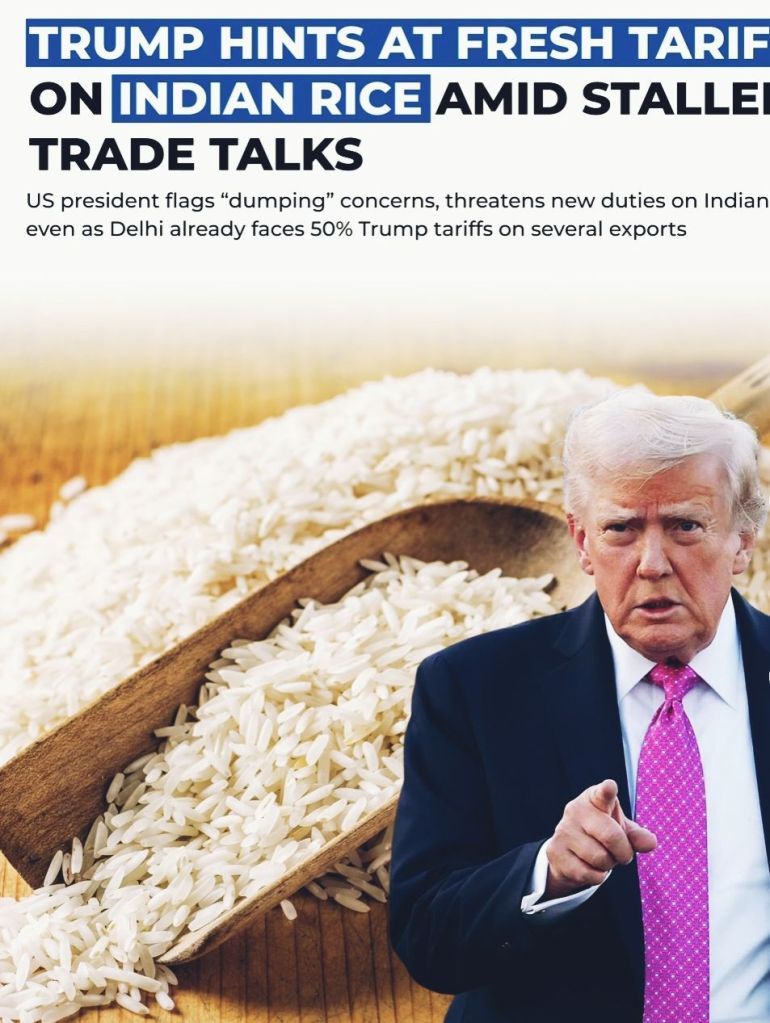
Against this backdrop, Trump’s claim of “dumping” is not only incorrect—it is mathematically impossible. The U.S. produces just 7.5–9 million tonnes of rice annually, around the world’s 11th or 12th position. It both exports and imports rice, mostly specialty varieties it does not grow. India’s rice exports to America amount to a tiny 2.74 lakh tonnes of Basmati and an even smaller 60,342 tonnes of non-Basmati—so negligible that statisticians might label it a rounding error. Thailand, Vietnam, and even smaller exporters supply the U.S. in much larger quantities, yet rhetoric in Washington rarely points their way. The truth is simple: what India sells to America is economically trivial—just $337 million out of India’s $13 billion rice export universe.
But the controversy has generated an unexpected benefit: it has spotlighted the sheer scale and sophistication of Indian agriculture. In the last decade, India’s food grain output has catapulted from 251 million tonnes to 357 million tonnes, including a record 7.65% increase last year alone. Rice, wheat, soybeans, and groundnuts all touched historic peaks. Agricultural GDP remains strong at 3.5–4%, exceptional for a sector employing over half the population. And within rice exports, the story becomes even more impressive: 70% of export volume is low-cost non-Basmati feeding poor nations, while 52% of total export value comes from premium Basmati, whose loyal markets span West Asia, Africa, Europe, and North America.
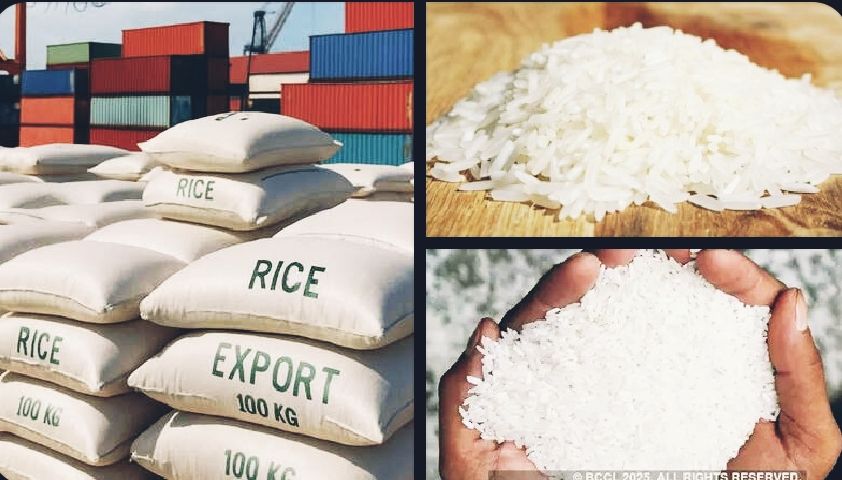
This agricultural dominance gives India enormous global leverage. When India imposed export restrictions in 2022–23 to stabilize domestic prices and support its massive 800 million–beneficiary free-food grain program, global rice prices spiked sharply. Several nations complained of supply shocks. The episode exposed a new geopolitical reality: the global rice market pivots on Indian policy choices. A slight shift in India’s sowing patterns—from rice to oilseeds or pulses—would trigger immediate crises across Asia and Africa. India supplies lifelines to some of the world’s most vulnerable economies—Benin, Togo, Senegal, Somalia, Liberia, Bangladesh, and Nepal—many of which rely on India more than on any other exporter.
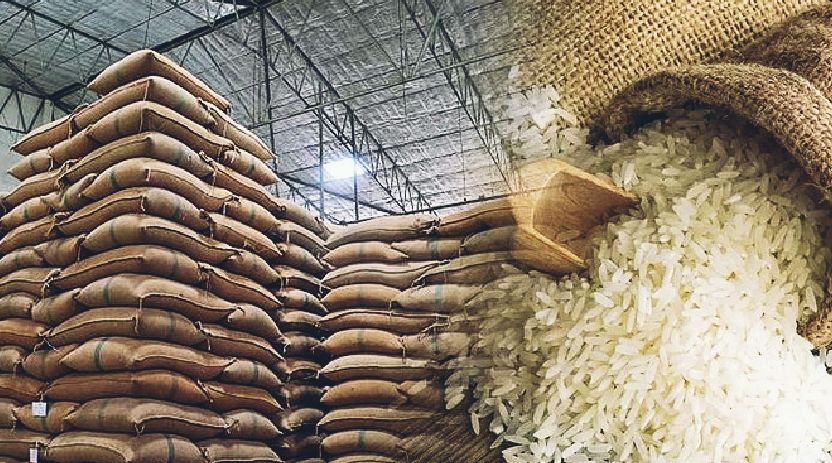
Set against this massive canvas, Trump’s remark collapses into irrelevance. India is not dumping rice—not in the U.S., not anywhere. India is exporting reliability, quality, heritage, and food security. It exports premium Basmati that America cannot grow, and it exports non-Basmati that sustains populations in dozens of developing nations. Even if tariffs doubled or tripled, American consumers who crave Basmati would still reach for Indian bags, just as they always have. India’s rice story is not about undercutting markets; it is about filling plates across continents.
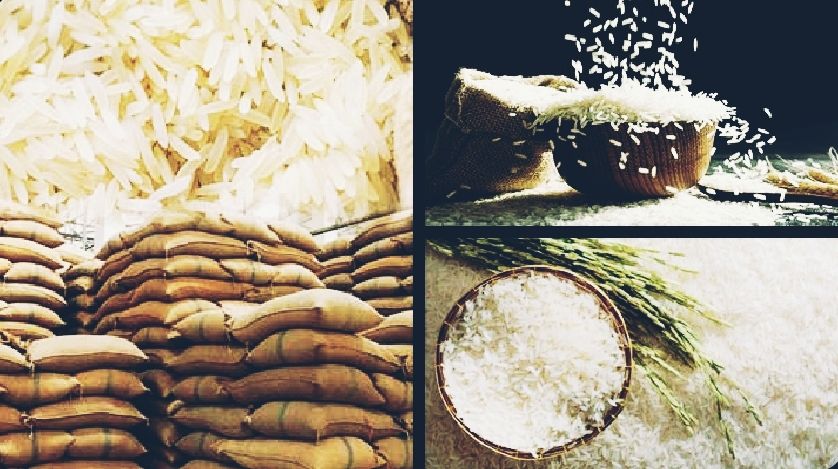
The larger message, however, goes beyond fact-checking a political soundbite. It is about India rediscovering its own agricultural transformation. A country once dependent on foreign grain under PL-480 now shapes global food grain flows. A sector often criticised for low productivity is delivering the world’s largest rice harvests and the world’s largest rice exports. Indian farmers—frequently portrayed as distressed—are simultaneously powering a global food-security architecture.
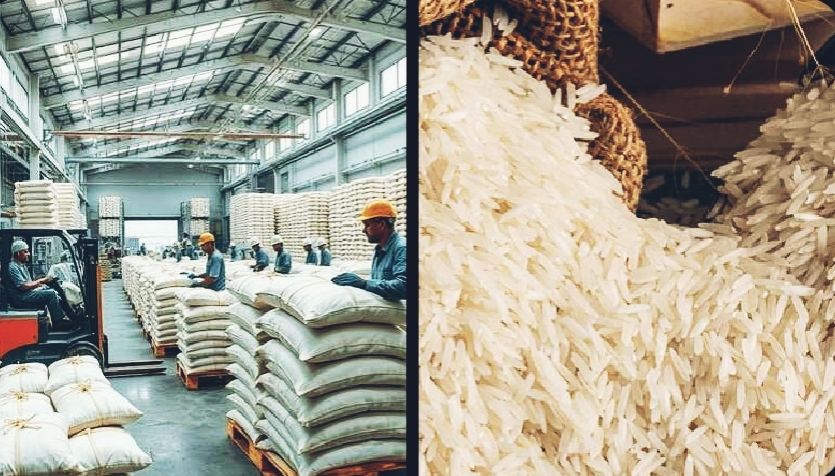
Sometimes it takes a wildly inaccurate accusation to reveal an extraordinary truth. And the truth is this: the world eats because India grows.
Visit arjasrikanth.in for more insights

