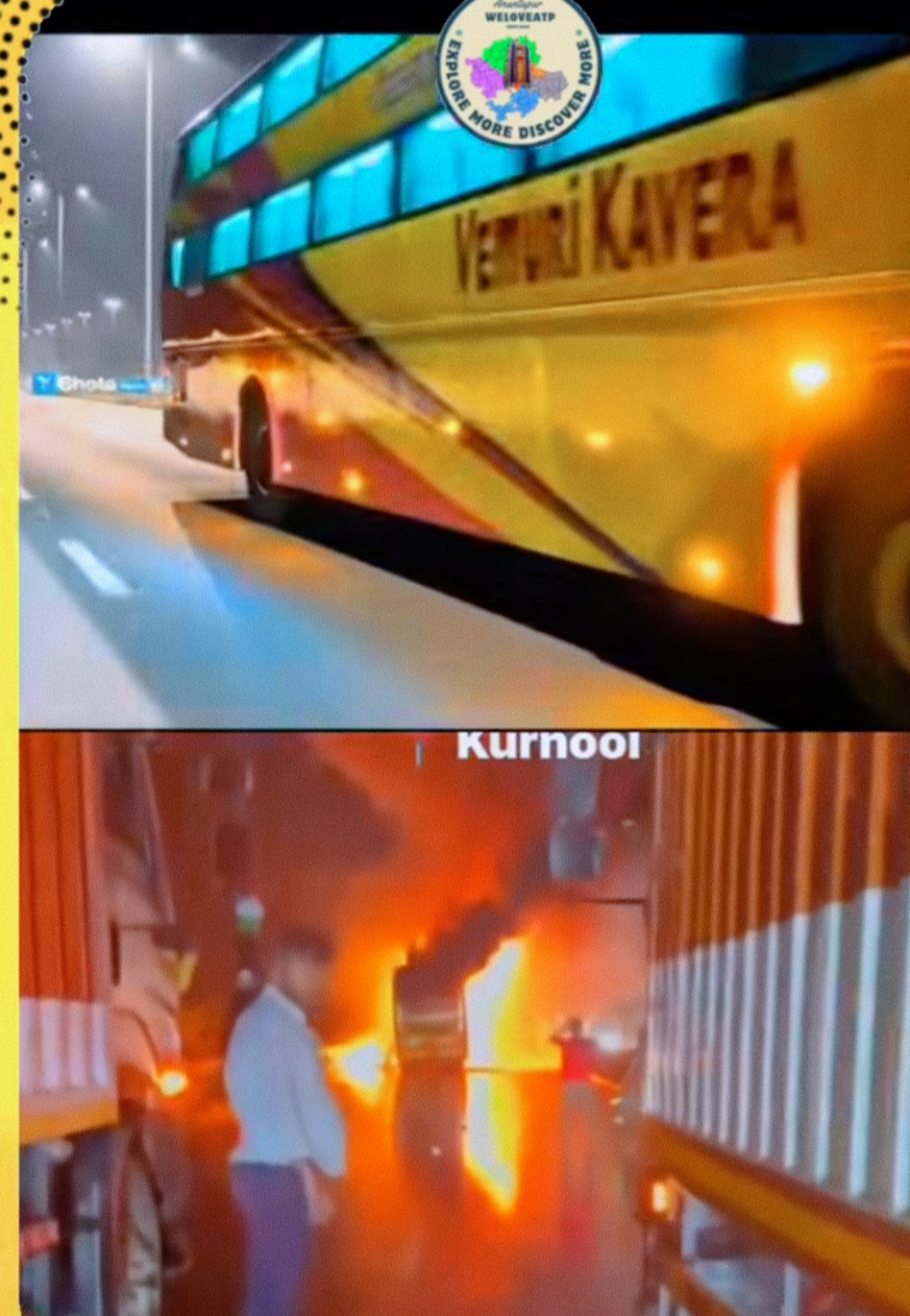
A spark on a rainy highway exposed a system on fire — where greed rode shotgun, rules lay dead, and 20 lives paid the price for a nation’s apathy.
It was supposed to be a routine overnight journey — another bus gliding through the wet, sleepy highways from Hyderabad to Bengaluru. But for 44 passengers aboard the Vemuri Kaveri Travels coach, that night ended in unspeakable horror. Near Chinnatekuru village in Kurnool district, a collision, a spark, and a burst of flame turned comfort into chaos. Within minutes, the vehicle became a blazing coffin, claiming 20 lives — 19 passengers and a motorcyclist — in one of the most gut-wrenching road tragedies in recent memory.

At first, public fury zeroed in on the driver, Miriyala Lakshmaiah. But as the smoke cleared, it became obvious that this was not a single man’s mistake — it was a crime scene built by a chain of greed, apathy, and official neglect. This was not an accident. It was a system-made massacre.
The chain of tragedy began at 2:30 a.m. Two friends, Siva Shankar and Swami, were traveling on a motorcycle when they skidded on the rain-slick road. Siva Shankar died instantly; Swami, stunned and panicked, tried to pull the body and the fallen bike away from the road. Before he could, the Bengaluru-bound bus thundered toward them — and struck.

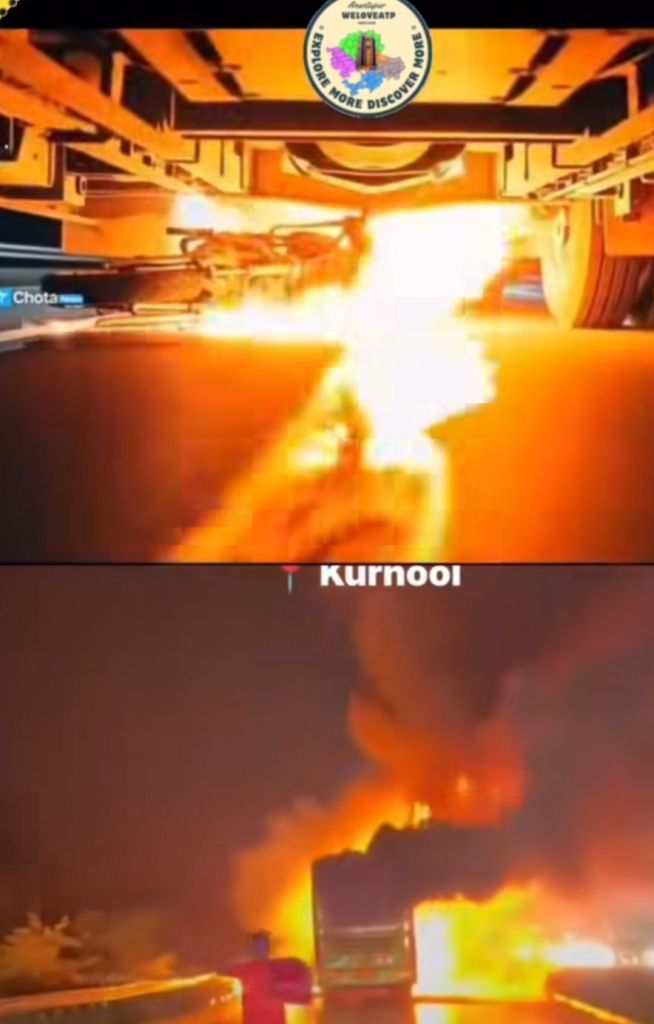
The collision should have ended there. Instead, it triggered a firestorm. The bus dragged the bike for several meters, sparks flew as metal scraped asphalt, and leaking petrol met flame. In seconds, the undercarriage was ablaze. What should have been a small, containable fire turned catastrophic because of a deadly secret in the cargo hold: over 400 mobile phones packed in cartons, smuggled for profit.
These weren’t just phones — they were time bombs. As the heat rose, the lithium-ion batteries began to detonate in a chain reaction so fierce that the bus’s steel skeleton buckled and melted. Forensic experts later called it a “thermal explosion event.” Passengers seated above the luggage compartment never had a chance. Within minutes, flames engulfed the front of the bus, trapping everyone in a furnace of smoke, screams, and molten metal.
The fire didn’t come from fate — it came from greed. The operator had turned a passenger vehicle into a smuggling truck, violating every transport law that prohibits combustible goods in passenger carriers. This was a tragedy engineered by profit and sanctioned by silence.
The negligence didn’t stop there. The driver, Lakshmaiah, should never have been behind that wheel. Investigations revealed that the 42-year-old had forged his educational documents to secure a heavy vehicle licence. Though official records claimed he passed Class 10, he had only studied till Class 5. The law requires at least Class 8 for a heavy licence — but corruption sold him a shortcut.
This wasn’t a loophole — it was a gaping wound. A system that sells licences for cash and conducts no background verification handed over a 20-tonne machine to an unqualified driver. The regulator, the operator, and the enforcer all failed in a perfect symphony of indifference.
The bus itself lacked basic safety features: no fire suppression system, no smoke detectors, no functioning emergency exits. Fitness certificates and safety audits were mere paper rituals, bought and stamped without inspection. This was a moving deathtrap certified by bureaucracy.

So, who really killed those 20 people? Not destiny. Not the driver alone. But a corrupt ecosystem — an industry that prizes profit over protection, a regulatory machinery that confuses compliance with corruption, and a public conscience numbed by routine tragedy.
Every passenger aboard had a destination — a family, a reason to live. They trusted the system to deliver them safely. Instead, the system delivered them to flames. When the pursuit of profit becomes the national ethic, every journey becomes a gamble with death.
Justice cannot stop at condolences. It must rewrite the way India travels. The answers lie in reform, not ritual outrage. First, enforce independent safety audits for all private operators — verifying driver credentials, vehicle health, and cargo contents. Second, deploy AI-driven cargo scanning and digital driver verification to stop illegal goods and fake licences. Third, treat corporate negligence as a criminal offence, not an administrative lapse. Those who profit from risk must pay with more than money — they must face prison.

The Kurnool bus fire must be remembered not as an accident but as evidence — proof that apathy kills faster than flames. The victims didn’t perish because destiny betrayed them. They died because greed drove them, forgery guided them, and governance abandoned them.
As the ashes cool in Chinnatekuru, one truth must remain searingly alive — when negligence travels first-class, nobody ever reaches home.
Visit arjasrikanth.in for more insights
 SOCIAL PERSPECTIVES
2 responses to “🔥“Highway to Hell: Greed, Forgery, and Fire Turned a Night Bus into a Moving Coffin””
The ultimate culprit is the prevailing system. Can someone really bell the Cat?????
LikeLike
Sir, Horrifying facts. Logical, Justified and Scientific analysis. Only the query is – will the system change?
Temporary relief measures, ex-gratia, strict rules implementation for time being.
The deficiency is non civic accountability. Citizens fight for rights but never feel responsibility and accountability.
Change should come in parents who are grooming their children not in a right manner.
Dr Sai Sudheer T , Vice Principal, KMC, Kurnool, AP.
LikeLike