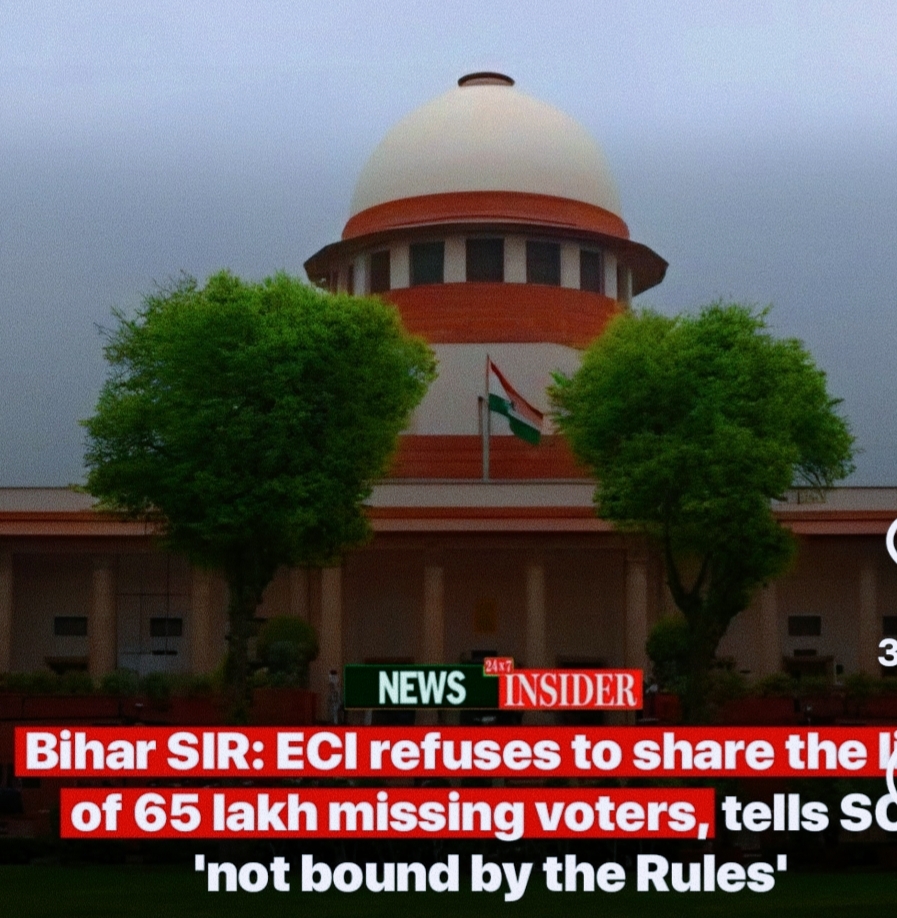
From handshakes in village squares to ballots in urban booths, millions faced the terrifying reality of erasure, as the Supreme Court stepped in to rescue a democracy on the brink of bureaucratic oblivion.
In August 2025, what was meant to be routine administrative housekeeping in Bihar erupted into a full-blown democratic crisis. The Election Commission’s special revision of voter rolls—usually a mundane task of removing duplicates, deceased voters, or those who had shifted—took a catastrophic turn.
Approximately 6.5 million names vanished from draft rolls, a number surpassing the entire populations of Denmark and Singapore. Suddenly, millions of legitimate voters faced the horrifying prospect of being locked out of the electoral process in one fell swoop.

The Supreme Court intervened decisively. A bench led by Justice Sakshi directed the Election Commission to simplify re-inclusion and dismantle bureaucratic barriers. Citizens were now able to reapply using Aadhaar, Voter ID, biometrics, or any of 11 officially recognized proofs. Political parties were mobilized to deploy their 160,000 Booth Level Agents (BLAs) to ensure voters were aware, connected, and guided through the process. The Court made it abundantly clear: administrative efficiency cannot come at the cost of fundamental rights.
The sheer scale of deletions exposed a massive disconnect in grassroots democracy. Despite millions of names being removed, only a tiny fraction of objections had been filed. The BLAs, intended as the eyes and ears of electoral oversight, had largely failed. The human cost was immediate and profound. In rural Bihar, handicraft sellers and small entrepreneurs—citizens whose livelihoods are intertwined with governance—found themselves silenced. Refunds and confusion surged, trust eroded, and pathways out of poverty abruptly closed. This was not clerical oversight; it was a democratic crime in slow motion.
Transparency became the Court’s rallying cry. Every deletion required traceable documentation; no longer could the Commission operate in opaque shadows. Accuracy alone was insufficient—public trust demanded visibility. Citizens needed to see proof of each action, ensuring that their democratic rights were neither ignored nor arbitrarily removed.
Bihar’s crisis revealed a sobering truth about the machinery of democracy: its strength is contingent on outreach, ethical conduct, and technological efficiency. A missing clause, a delayed notice, or inadequate verification can paralyze an entire electoral ecosystem. Interconnected systems, whether global trade or voting infrastructure, require accountability, not indifference.
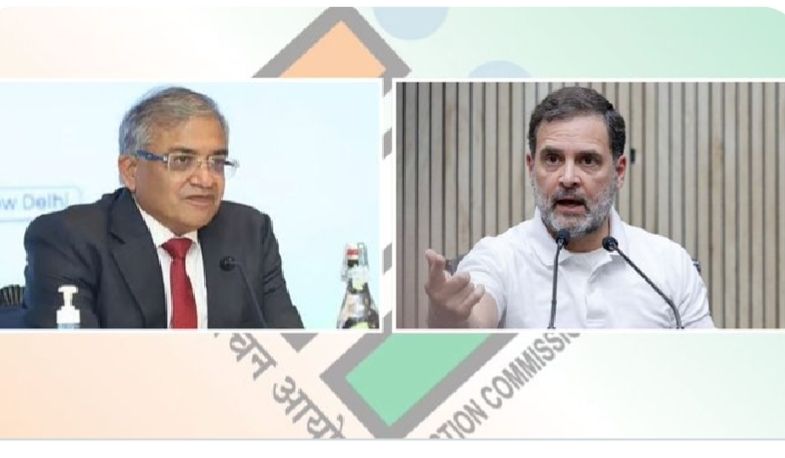
The Court’s intervention was more than corrective—it was precedent-setting. When administrative efficiency risks colliding with citizen rights, judicial oversight becomes the guardian of democracy. Bihar is now a litmus test for how far the judiciary can step in to ensure that the ballot box remains sacred and accessible.
The episode also casts a stark light on the declining credibility of the Election Commission. Once, under T.N. Seshan, the Commission inspired awe, fear, and unwavering trust. Commissioners enforced rules without fear or favor, and voters felt protected. Today, the body that is constitutionally empowered to safeguard elections often inconveniences citizens. Slow responses, opaque processes, and bureaucratic labyrinths erode confidence and undermine the very democracy it is meant to protect. Neutrality is not self-declared—it is earned through consistent transparency and action.
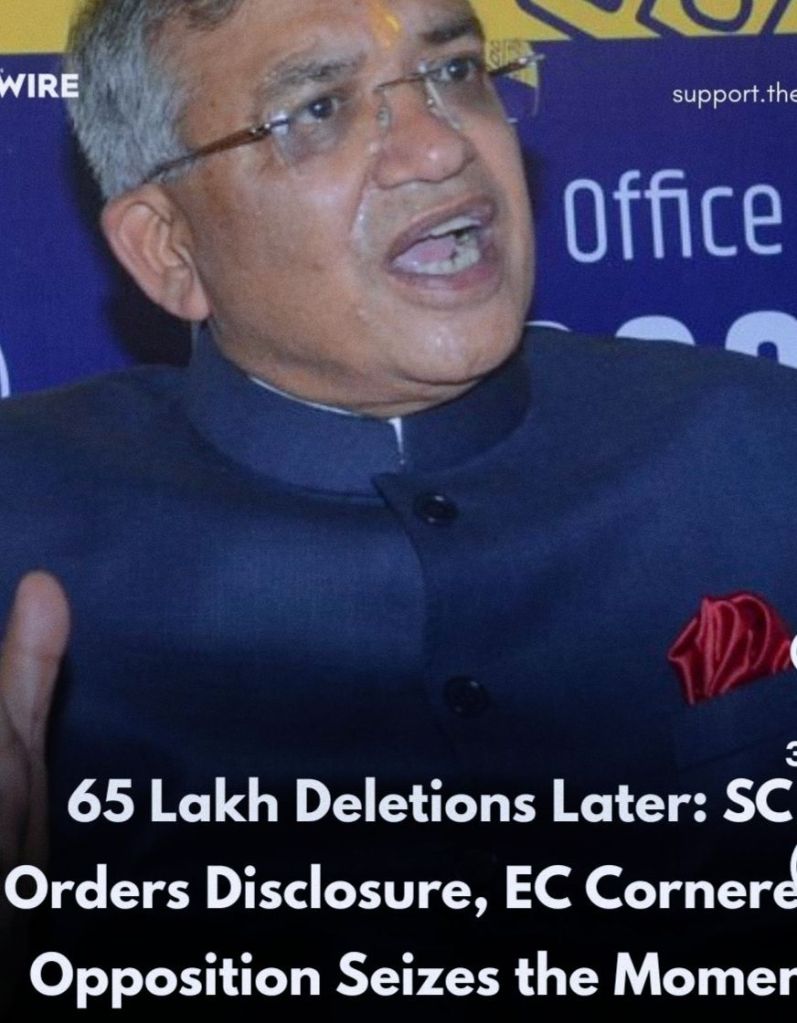
Revival requires courage, empathy, and operational efficiency. Commissioners must prioritize citizens over convenience, enforce rules without partiality, and safeguard each voter’s right as sacrosanct. The spirit of Seshan is not nostalgia; it is a blueprint for restoring institutional authority and public trust.
The saga of 6.5 million vanished voters is no longer a local concern—it is a national alarm bell. Bihar’s crisis will set the precedent for electoral integrity across India. The stakes are immense: fairness, transparency, and citizen confidence hang in the balance. The Supreme Court’s actions remind us that democracy is not merely about elections held but about votes counted and rights respected.
India stands at a crossroads. The Election Commission’s next moves will determine whether it reclaims its stature as the guardian of the franchise or continues to erode trust. Bihar is the proving ground, a moment where administrative efficiency, political accountability, and judicial oversight intersect. The outcome will define whether India’s democracy remains resilient or falters under the weight of bureaucratic neglect. The world watches, citizens wait, and the very essence of India’s democratic promise hangs in the balance.
Visit arjasrikanth.in for more insights
 ARJA SOCIAL PERSPECTIVES
One response to ““The Day 6.5 Million Voters Vanished: Democracy Disappears in Bihar’s Bureaucratic Black Hole””
The present election system itself a fraud. It is the correct time to rectify the mistakes committed earlier
LikeLike