
A 50% Import Shock Could Turn iPhones into Luxury Relics, Flatten Indian Jobs, Crash Remittances—and Still Fail to Break the Chai-Drinking, Chaos-Loving Indian Spirit
In the soap opera of global trade, just when you think the drama couldn’t get wilder, Donald Trump walks back into the Oval Office with a megaphone in one hand and a sledgehammer in the other. His opening act? A proposed 50% tariff on all Indian imports—a move so economically violent, it might as well come with its own Bollywood villain soundtrack. This isn’t just trade policy. It’s economic war cosplay. And the casualties won’t be governments. They’ll be the everyday Indian citizens watching their wallets bleed out at checkout counters.

Let’s break down what this economic grenade actually means. Picture this: iPhones skyrocketing to near-luxury status, washing machines priced like motorbikes, almonds becoming rarer than gold dust, and medicines once available over-the-counter now stuck behind price tags that punch you in the gut. Middle-class Indian families—already dancing a tightrope of inflation and EMIs—would be shoved into a financial chokehold as consumer prices explode overnight. That cheap Californian apple you enjoy? Now an aspirational fruit.
But food is only the appetizer. The main course is jobs—millions of them. The sectors that form the heart of India’s export machine—textiles, seafood, pharmaceuticals, engineering goods—would feel the heat first. As American importers flee rising costs, Indian manufacturers would be left high and dry. Export orders would collapse. Factories would shutter. The hum of textile machines in Tiruppur and the clatter of engineering plants in Gujarat would go silent. We’re talking mass layoffs, especially in rural India where these industries are lifelines. The ripple effect? Migration chaos, unemployment spikes, and growing social unrest.
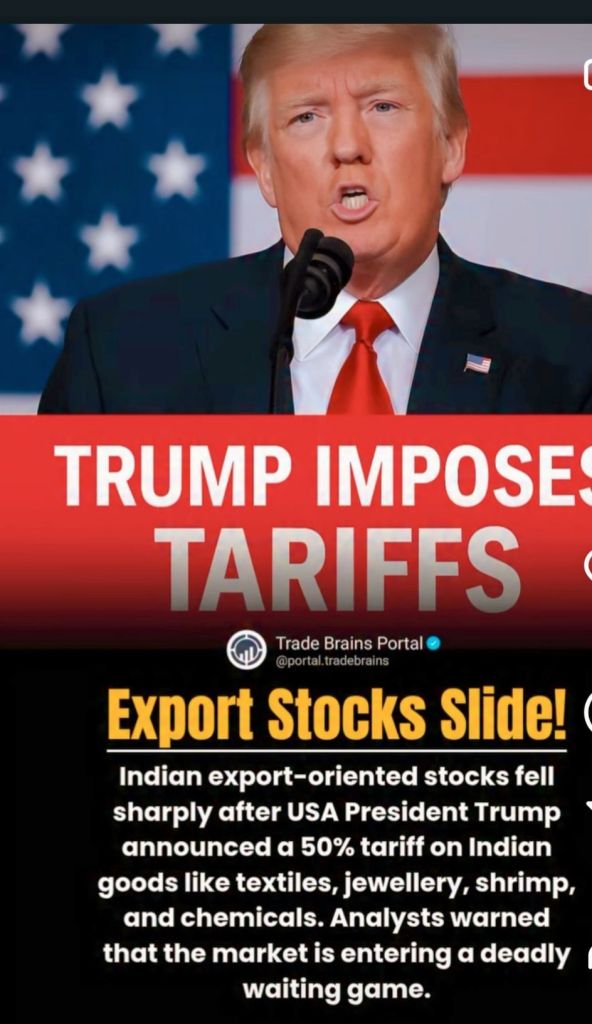
Meanwhile, Trump’s tariff fireball would light another fuse—foreign investor anxiety. No sane global business wants to pour billions into a market suddenly caught in a tariff war. FDI flows would freeze. Start-ups would stall. Cross-border supply chains would clog like arteries. Even mega corporations like Apple, which invested heavily in Indian manufacturing, would start sweating bullets. The dream of India as a reliable “China-plus-one” destination? Thrown into jeopardy by a man in a red tie with a Twitter habit.
And then there’s the digital dragon: India’s IT sector. While not directly slapped by tariffs, it won’t escape the fallout. A hostile U.S. trade environment would cool demand for offshore services. H-1B visa pipelines could tighten again, squeezing Indian tech talent. Major outsourcing deals might dry up, impacting Tier-1 tech cities like Bengaluru, Hyderabad, and Pune. This silent downturn won’t make front pages—but it’ll creep into annual reports, stock markets, and paychecks.
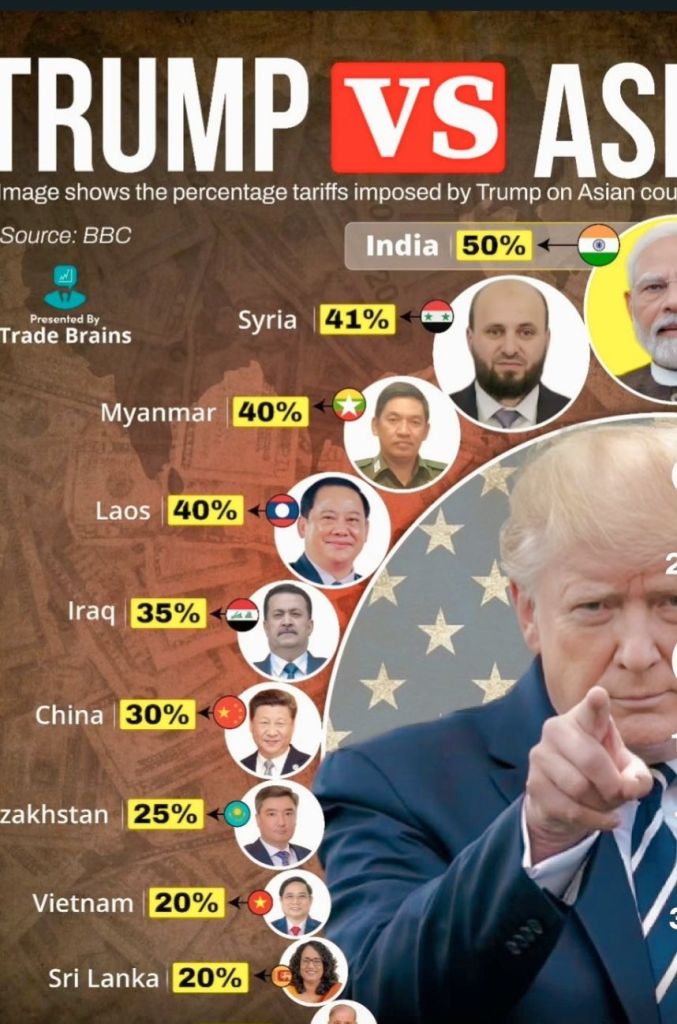
Oh, and don’t forget the remittance collapse. Indian workers in the U.S.—from engineers in Silicon Valley to doctors in New Jersey—would face growing job insecurity if Trumpian volatility makes hiring foreigners politically toxic again. Layoffs and stricter immigration could slash the $100 billion-plus lifeline India gets annually from its diaspora. The rupee, already juggling oil prices and inflation, could go into freefall.
So what’s India supposed to do? Sit back and take the hit? Absolutely not.
This is the moment for New Delhi to rip up the old playbook and go full ninja mode. First, diversify. Fast. India’s over-dependence on U.S. markets must end. Europe, Africa, Latin America, ASEAN—India needs new trade BFFs. Just like Vietnam danced around China to build new export lanes, India must swerve the U.S. and deepen its footprint in emerging and less tantrum-prone economies.
Second, double down on “Make in India 2.0”—not as a slogan, but as an economic doctrine. Invest in homegrown R&D. Incentivize domestic production of everything from semiconductors to EVs to paracetamol. South Korea rose from ashes to become a tech titan. India has the talent, the numbers, and the urgency. Build now—or bleed later.

Third, go diplomatic, but with brass knuckles. Don’t just lobby Washington. Build coalitions. Use QUAD, BRICS, and every possible multilateral platform to show that weaponized tariffs are relics of a dying empire. India should also lead conversations on trade justice and alternative payment systems—hello rupee-Ruble, goodbye SWIFT. If the West wants to play empire games, India must be ready to write the rules for the post-dollar world.
Trump’s 50% tariff fantasy isn’t just an attack on Indian trade. It’s a declaration that economic stability can be sacrificed on the altar of one man’s political theatre. The man wants a villain for his 2025 campaign. China is too risky. Europe is too aligned. India? Independent, calm, and inconvenient. Perfect target.

But here’s the kicker: India isn’t kneeling. It’s adapting.
This isn’t just survival—it’s reinvention. If the tariff tsunami comes, India won’t be found clinging to American shores. It’ll be building bridges in every other direction. Because while Trump might slap, sulk, and scream—India? India just sips its chai, smiles at the chaos, and gets to work.
Visit arjasrikanth.in for more insights


2 responses to “Tariffs, Tantrums, and the Trumpocalypse: A 50% Tax Could Flatten India’s Middle Class and Set the World on Fire””
informative, analytical
LikeLike
informative and analytical article @arjasrikanth
LikeLike