
Nara Lokesh is Breaking the Dynasty Mould, Digitizing Governance, and Redefining TDP’s National Comeback Story
In the fast-changing landscape of Indian politics, few stories are as compelling as that of Nara Lokesh, who is progressively carving his niche as the significant voice of the Telugu Desam Party (TDP) on the national stage. As the son of N. Chandrababu Naidu, a long-standing political heavyweight in Andhra Pradesh, Lokesh’s journey has been one marked by strategic manoeuvring and a remarkable evolution in leadership skills. His calculated, mature steps toward becoming the front-runner of the TDP at the national level reflect not only personal ambition but also a broader aspiration to rejuvenate the party’s image and influence.

Nara Lokesh burst onto the political scene not simply as an heir to a political legacy but as a figure with a distinct vision for the future. His formative years were spent in the crucible of politics, witnessing the intricacies of governance and the art of public engagement. Lokesh’s inclination towards technology and innovation became clear during his early career, where he focused on bringing modern solutions to traditional issues. His tenure as the Minister of Information Technology and Panchayati Raj in the Andhra Pradesh government showcased his commitment to transforming governance through digital initiatives, a move that not only marked his entry into politics but also revealed his understanding of contemporary governance paradigms.

In recent years, as Andhra Pradesh underwent various socio-economic challenges, Lokesh positioned himself as a pragmatic leader. He actively engaged with the youth, addressing their aspirations and concerns, which further solidified his role as a competent communicator. His ability to resonate with younger demographics, who are often disillusioned with traditional political approaches, is a testament to his mastery of modern political tactics. He has embraced social media platforms, effectively using them to amplify his message and reach out to voters in an era where digital communication dominates.
Lokesh’s emergence as a national leader of the TDP is underscored by his strategic alignment with pressing national issues. Unlike many politicians who are often embroiled in regional concerns, he has broadened the narrative, appealing to youth employment, innovation, and economic development on a national scale. His nuanced understanding of these issues positions him not only as a regional leader but as a viable candidate on the national platform. By incorporating national discourse into his regional base, Lokesh is effectively bridging the gap between state and national politics, which is a crucial step for the TDP as it seeks to reclaim its significance in a crowded political landscape.
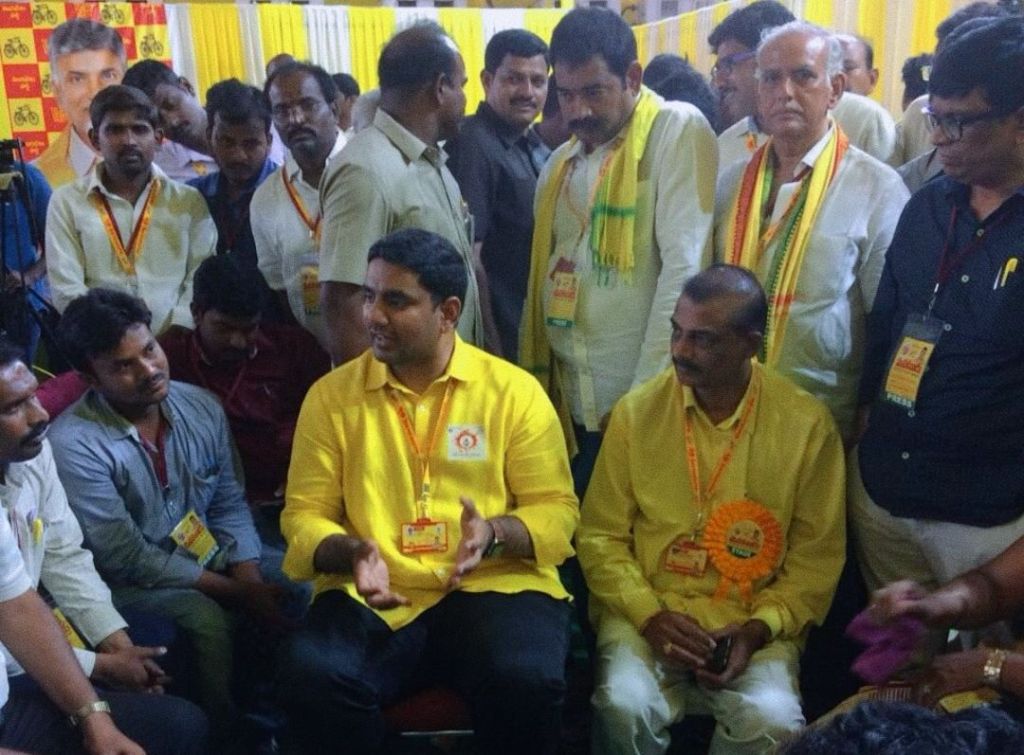
Furthermore, Lokesh has consistently highlighted the achievements of the TDP under his father’s leadership, while simultaneously acknowledging the challenges faced by the party since its peak power days. This dual approach serves to galvanize loyal supporters while attracting undecided voters who may be searching for a credible alternative in the political arena. His rhetoric carries a blend of optimism and realism—while he reverently speaks of the party’s glorious past, he simultaneously rallies for innovative solutions to current issues, thus appealing to a broader audience.
The rise of Nara Lokesh is not only a personal journey but also part of a well-crafted strategy to reinvigorate the TDP’s standing on the national stage. Recognizing the competitive political environment, he has sought alliances and strategic partnerships that could bolster the party’s reach. With murmurs of a potential coalition among regional parties gaining momentum, Lokesh’s role in facilitating dialogues and forging ties will be pivotal for the TDP’s aspirations outside Andhra Pradesh.
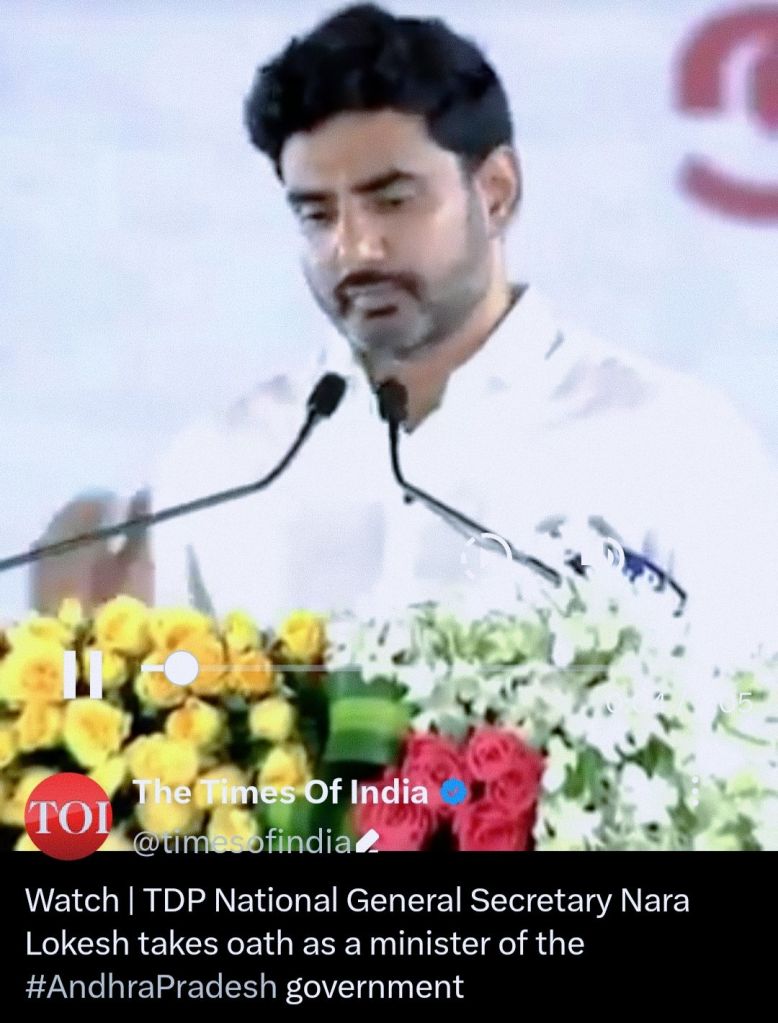
Moreover, Lokesh’s focus on grassroots engagement cannot be overstated. He has made concerted efforts to connect with the electorate at the micro-level, ensuring that the voices of common citizens resonate in the party’s larger narrative. By launching initiatives that directly address community needs, such as welfare schemes and development projects, Lokesh has illustrated a commitment to service that transcends mere electoral politics. His outreach signifies a shift from a traditional top-down approach to a more inclusive and participatory governance model.
In the realm of Indian politics, where dynastic legacies often overshadow genuine merit, Lokesh is working diligently to redefine what it means to lead. His journey reflects a blend of heritage and innovation—a fusion that appeals to multiple generations of voters. As he emerges as the face of the TDP on a national level, his journey will be closely watched, not only by party loyalists but also by political analysts and rival parties alike, eager to understand the next chapter of his burgeoning political narrative.

In conclusion, Nara Lokesh stands as a beacon of potential for a party looking to rejuvenate its identity in the national arena. His strategic foresight, combined with a genuine connection to the electorate, positions him as a formidable player in the evolving landscape of Indian politics. The TDP, under his emerging leadership, may just find itself returning to relevance—not merely as a regional stalwart but as a key player in the national political discourse of India.
Visit arjasrikanth.in for more insights


One response to ““Nara Lokesh 2.0: From Legacy to Leadership—The Recode of Telugu Politics””
This feature offers a persuasive and nuanced portrayal of Nara Lokesh as a leader striving to transcend the limitations of political inheritance and reframe the image of the TDP in both state and national politics. The article emphasises Lokesh’s efforts to redefine dynastic politics—an enduring critique of Indian democracy—by presenting him not as a passive successor, but as an active reformer who combines digital innovation, grassroots engagement, and youth-oriented outreach. One of the article’s strengths is its balanced tone, acknowledging Lokesh’s familial legacy while underscoring his individual achievements, notably his role in digitising governance as Minister for IT and Panchayati Raj. This helps distinguish him from stereotypical dynasts by attributing competence and vision to his political identity. Furthermore, the piece successfully captures his media-savvy approach, particularly his use of social media to connect with younger demographics—a tactic increasingly crucial in digital political communication. His focus on national issues such as youth employment and economic development indicates an ambition to transcend regional boundaries, which is timely and strategic for a party like the TDP that has seen diminishing relevance outside Andhra Pradesh. The article also commendably highlights Lokesh’s efforts at grassroots-level engagement, reflecting a shift from hierarchical leadership to inclusive, participatory politics. His emphasis on welfare initiatives and developmental outreach is indicative of a more service-oriented model of politics, which can resonate in a voter base fatigued by populism and rhetoric. However, while the article is rich in optimism and rhetorical flourish, it could benefit from a critical lens that also reflects on challenges Lokesh faces—such as previous electoral setbacks, leadership image issues, or internal party dynamics. A more comprehensive picture would enhance credibility by offering a holistic assessment of his journey.
LikeLike