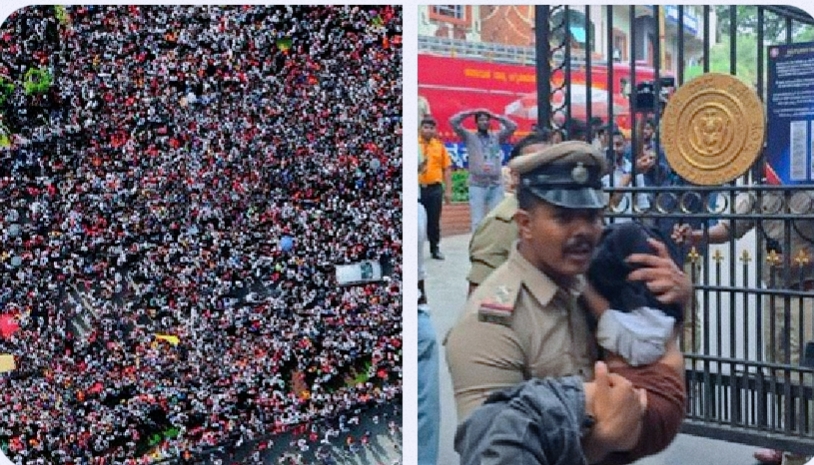
Excitement Turns Deadly: The Tragic Consequences of Poor Crowd Management
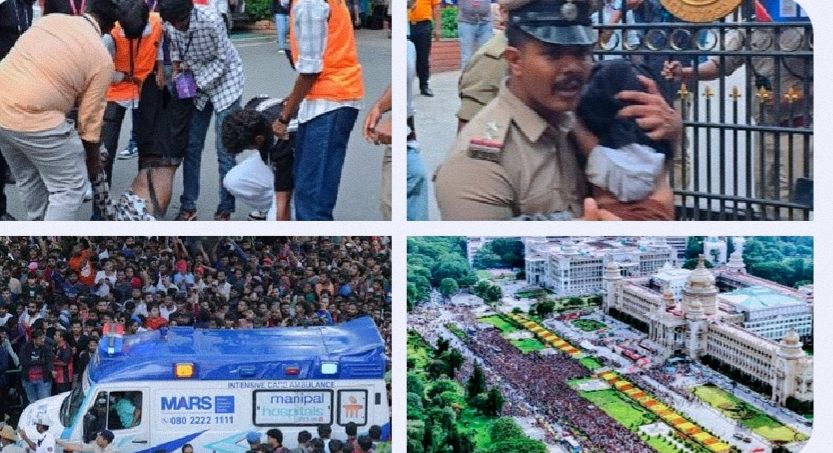
There’s something uniquely electrifying about the roar of a crowd in celebration—the thundering applause, the spontaneous dancing, the collective energy that unites thousands into one heartbeat. But what happens when that heartbeat skips, when the pulse of a jubilant crowd turns into the crushing chaos of tragedy? The recent Royal Challengers Bangalore (RCB) victory in Bengaluru was meant to be one such euphoric moment. Instead, it spiraled into horror. Outside M. Chinnaswamy Stadium, where fans gathered to revel in their team’s win, at least 11 people lost their lives and more than 47 were left injured—not due to any act of violence, but because of mismanaged joy. The celebration had become a stampede, a cruel twist in what should have been a night of unity and pride.
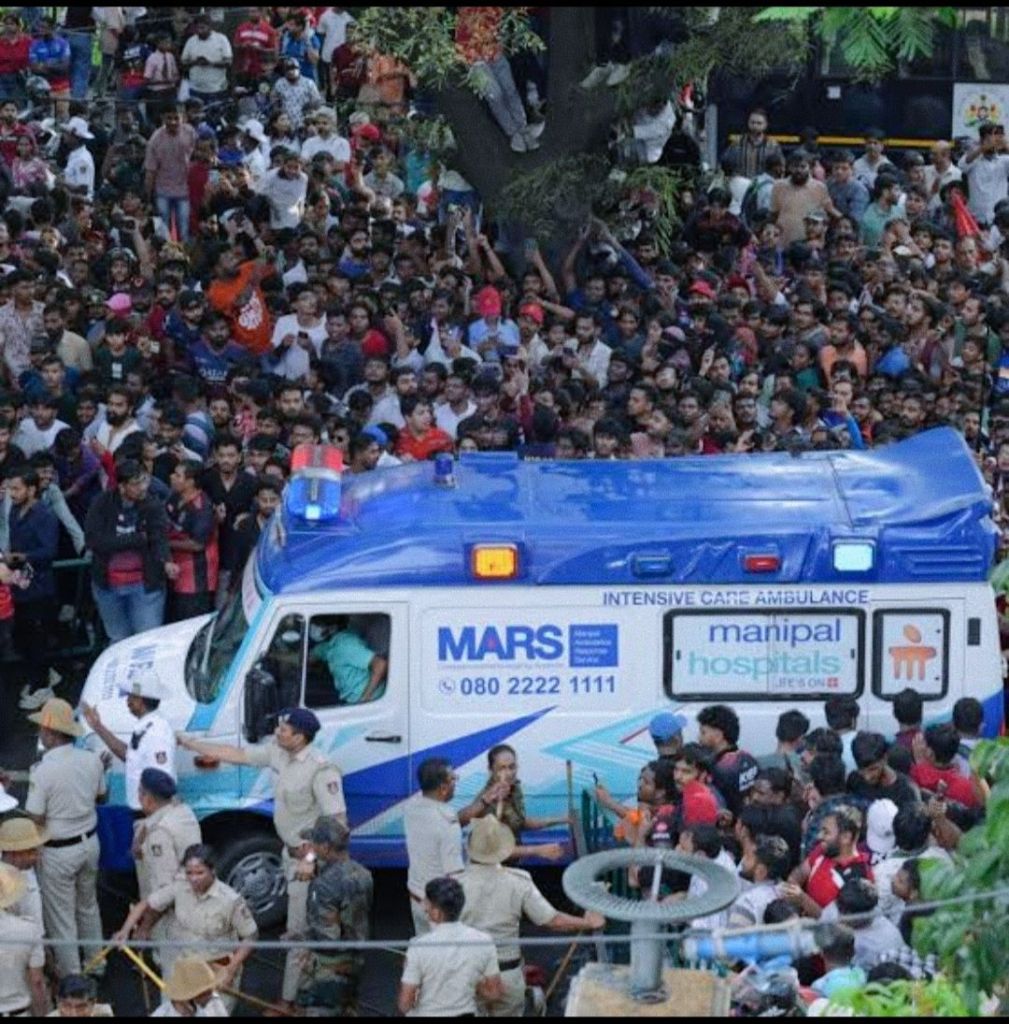
With over 200,000 fans flooding an area meant to host just 35,000, the crowd’s energy became a pressure cooker of unchecked excitement, poor infrastructure, and unprepared security. The police, overwhelmed and outnumbered, watched helplessly as the mood shifted from exhilaration to alarm. What started with chants and cheers soon collapsed into chaos, with people pushing to gain entry, some collapsing underfoot, others screaming for help. It wasn’t a riot or a protest—it was joy gone rogue, celebration without a plan.
This is not the first time celebration has turned deadly. The history of public gatherings is marked with similar tragedies. The 2015 Mina stampede during the Hajj pilgrimage in Saudi Arabia claimed over 2,400 lives. In 2010, 21 young people died during the Love Parade music festival in Germany due to overcrowding in a narrow tunnel. Despite being held in vastly different parts of the world and for vastly different reasons—faith, music, sport—the common denominator in all these tragedies is a profound underestimation of human behaviour in high-density spaces and a failure to plan accordingly.
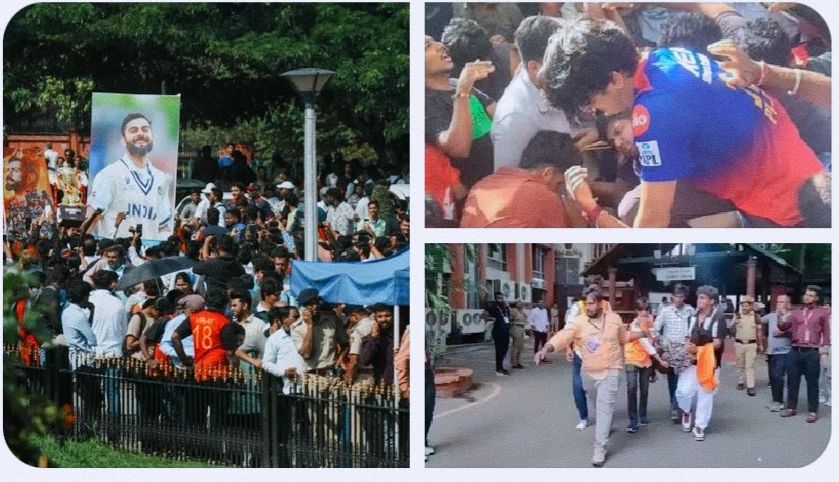
What makes crowd disasters particularly chilling is their psychological dimension. In tightly packed spaces, a simple rumour or a sudden noise can spread panic faster than wildfire. Rational thinking is often the first casualty. People don’t trample one another because they are heartless—they do it because their survival instinct kicks in. It’s a domino effect: one person panics, another follows, and soon a human wave is crashing uncontrollably. The very structure of crowds demands expert management, not casual oversight. It is not just about barricades and announcements; it’s about understanding crowd dynamics, emotions, and the thin line that separates order from chaos.

The aftermath of these tragedies leaves more than physical scars. Families are shattered, often without closure or justice. Legal accountability remains a grey area. Who shoulders the blame? The organizers? Local authorities? Law enforcement? It’s a bureaucratic maze where the grieving often face cold procedures and inadequate compensation instead of empathy and restitution. The tragedy lingers long after the ambulances leave and the media spotlight fades.
The RCB rally should be a final warning bell. We cannot afford to treat crowd management as a formality or an afterthought. It must be central to any public event planning. Regulatory frameworks need to mandate detailed crowd control plans, stress testing, and approval protocols before large-scale gatherings. Technology must be an ally. AI-driven surveillance, real-time crowd density mapping, drone patrols, and mobile alerts can all be part of a smarter approach to mass gatherings. Emergency services must be not just present but prepared—with accessible routes, trained response units, and public awareness campaigns that teach attendees how to act in a crisis.
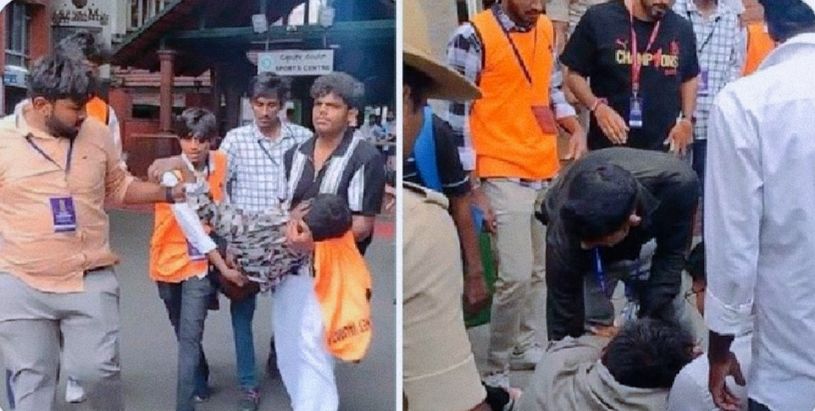
But this isn’t just the job of officials and organizers. Every participant in a public gathering carries a slice of responsibility. Public education on behaviour during events—knowing where exits are, avoiding bottlenecks, understanding signals from security staff—can go a long way in keeping crowds safe. When the crowd is informed, it is not only more confident, it is more composed.
Celebrations should be moments of collective joy, not collective grief. They should be remembered for laughter and lights, not sirens and loss. As a society, we must shift the narrative from reactive mourning to proactive protection. Human life cannot be collateral damage in our pursuit of excitement. The smiles of a victory parade should never come at the cost of breathless bodies lying on the pavement.
If we are to truly honour those who’ve lost their lives in such tragedies, the greatest tribute is change. Let every stampede be one less tomorrow. Let every event be one more prepared. Because a celebration that ends in tears is not a celebration—it’s a warning we ignored.
Visit arjasrikanth.in for more insights

