
Blood Snow in Paradise: Pakistan’s Terror Factories Turn Kashmir into a Graveyard of Innocents and Their Own Future
The serene valleys of Pahalgam, where snow-capped peaks once mirrored the purity of untouched landscapes, now echo with the screams of tourists caught in the crossfire of a decades-old war they never signed up for. In April 2025, the idyllic meadows turned crimson when militants from The Resistance Front (TRF), a rebranded offshoot of Lashkar-e-Taiba, massacred 28 innocent travellers—families, honeymooners, and adventure seekers—in what they called a “response to Indian occupation.” This attack, like countless others, was proudly claimed by terrorists operating from Muzaffarabad, the nerve center of Pakistan-Occupied Kashmir (PoK), where groups like Lashkar-e-Taiba (LeT) and Jaish-e-Mohammed (JeM) thrive under the shadow of Pakistan’s military-industrial complex. While India reels from relentless violence, Pakistan’s obsession with nurturing terror as a state policy is not just bleeding its neighbour—it is cannibalizing its own future, squandering resources on unproductive hatred while its economy crumbles and its youth rot in radicalized madrassas.
Muzaffarabad, a city cradled by the Jhelum River, is no ordinary capital. It is a launchpad for death. Here, LeT and JeM militants train in camps disguised as mosques and residential complexes, mastering guerrilla warfare and bomb-making under the guidance of Pakistan’s Inter-Services Intelligence (ISI). The 2025 Pahalgam attackers, a mix of Pakistani nationals and locally radicalized youth, were products of this ecosystem. Their tactics? Outsourced violence. Their mission? To keep Kashmir burning while Pakistan’s generals cling to the illusion of “strategic depth” against India. But this strategy is backfiring spectacularly. Every missile fired across the Line of Control (LoC), every dollar funnelled into jihadist madrassas, and every propaganda video glorifying suicide bombers is a nail in Pakistan’s coffin—a nation that could have been a regional economic powerhouse but chose to become a patron of global terrorism instead.
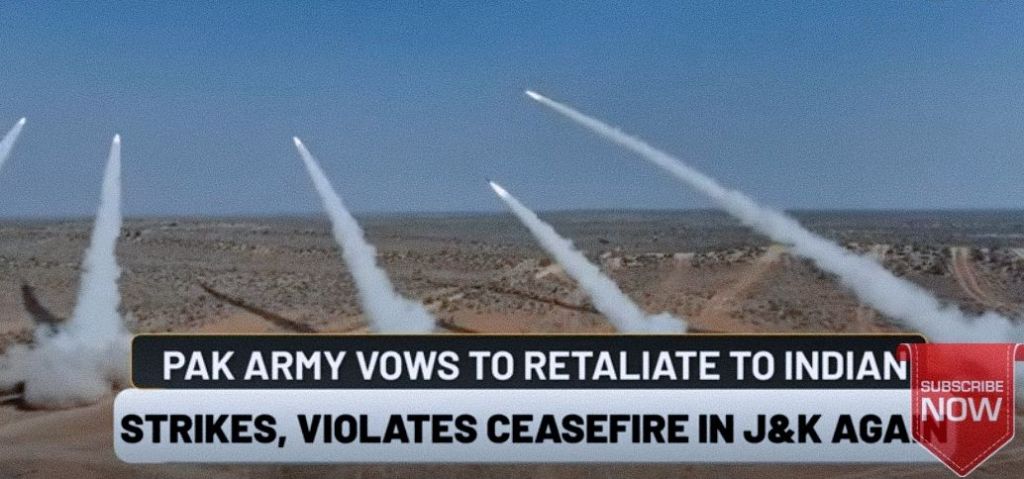
Consider the irony: Pakistan spends billions propping up groups like LeT and JeM, whose fighters once boasted about “liberating” Kashmir but now find themselves pawns in a doomed game. The 2025 Pahalgam massacre, like the 2019 Pulwama attack, was met with global condemnation—but also exposed Pakistan’s crumbling façade. When India retaliated with precision strikes on Muzaffarabad using SCALP missiles, Pakistan’s military cried “civilian casualties,” conveniently ignoring that its terror camps operate in densely populated areas. This is the playbook: hide behind civilians, cry victimhood, and keep the Kashmir dispute alive. But the world is waking up. The UN’s hollow pleas for “restraint” and Saudi Arabia’s tepid mediation efforts cannot mask the truth: Pakistan’s terror factories are a liability, not just for India but for the entire region.

The cost of this obsession is staggering. While Pakistan’s leaders fund jihad, their citizens queue for subsidized wheat. The China-Pakistan Economic Corridor (CPEC), which slices through PoK, was supposed to be a lifeline. Instead, it has become a symbol of exploitation—Chinese bulldozers grabbing land, hydropower projects diverting resources to Beijing, and locals protesting “economic colonialism.” Meanwhile, Pakistan’s military silences dissent in PoK with brute force. Pro-India voices vanish. Journalists are threatened. And yet, the myth of “Azad Kashmir” persists—a “freedom” that chains its people to poverty and violence.

India’s stance is clear: PoK is Indian territory, stolen in 1947 by tribal raiders backed by Pakistan’s military. Legally, historically, and morally, India’s claim is unassailable. The Shimla Agreement of 1972 locked Kashmir as a bilateral issue, yet Pakistan insists on internationalizing it, hoping to distract from its own failures. But India’s surgical strikes, like Operation Sindoor in 2025, signal a new era—one where tolerance for cross-border terror has evaporated. Every time a Pahalgam happens, India’s resolve hardens. The message is stark: silence the terrorists, or we will.
But here’s the tragic twist: Pakistan’s terrorism industry isn’t just India’s problem. It’s a self-inflicted wound. Radicalized youth who could have been doctors, engineers, or teachers now rot in graves or prisons, their potential wasted on futile jihad. Funds that could have built schools and hospitals instead buy AK-47s and suicide vests. And for what? A war Pakistan cannot win. Even Afghanistan, itself a victim of terror, watches in horror as Pakistan exports extremism, only to face blowback from groups like the TTP.

The solution is agonizingly simple. Arrest the terrorists flooding Kashmir. Dismantle the camps in Muzaffarabad. Redirect resources from hate to hope. Imagine a Pakistan where the Indus River irrigates farms instead of feeding terror networks. Where Gilgit-Baltistan’s mountains attract tourists, not Chinese bulldozers. Where PoK’s hydropower lights up homes, not bomb factories. This is not a utopian fantasy—it’s a choice. Pakistan’s elites cling to terrorism as a tool of policy, but the cost is their own demise.

The 2025 Pahalgam attack was a wake-up call. When will Pakistan answer? Every bullet fired at India ricochets, tearing through its own future. The snows of Kashmir will keep falling, but unless the bloodstains are washed away, paradise will remain a graveyard—and Pakistan, the architect of its own ruin.
Visit arjasrikanth.in for more insights


One response to “Cannibalizing Tomorrow: Pakistan’s Suicide Pact with Terror and the Bullet That Bites Back”
a very good article by Dr.Arja srikanth. Pakistan is in the hands of their army. The army people have vested interests in local business and they have spread their business into various fields.
While keeping that interests alive, will make these terrorists to fight instead of themselves fighting.
India need to act in a bigger way to silence their army and help pakistan choose a responsible Govt . Thereafter, their army should be made to listen to the political Govt in power, such that there is peace in pakistan.
LikeLike