
Unveiling the Growth and Future of the State’s Thriving Fisheries Sector
The fisheries sector in Andhra Pradesh is vital to the state’s economy, leveraging its abundant aquatic resources and future growth potential. The Andhra Pradesh government has persistently supported this sector, recognizing it as a key element of its economic strategy. This sector not only generates significant employment, supporting around 1.45 million people both directly and indirectly, but also contributes Rs. 41,328 crores to the state’s gross value added (GVA) at constant prices. Such economic impact underscores the fisheries sector’s critical role in driving overall economic development and solidifies its integral position in Andhra Pradesh’s economic framework.
Andhra Pradesh’s impact extends well beyond its borders, making a significant mark in the global seafood market. With marine seafood exports valued at approximately Rs. 24,000 crores, as reported by the Seafood Exporters Association of India (SEAI) and the Marine Products Export Development Authority (MPEDA), the state’s seafood products are in high demand internationally, underscoring its importance in global trade. Aquaculture, a key component of the state’s fisheries sector, has seen remarkable advancements in recent years. Total fish and prawn production surged from 39.91 lakh metric tons (LMT) in 2018-19 to 46.23 LMT in 2020-21, a 16% increase, while the aquaculture area expanded from 1.96 lakh hectares to 2.09 lakh hectares, a 6% rise. This growth highlights the sector’s increasing importance and potential. Andhra Pradesh’s success in aquaculture, particularly inland farming of fish and shrimp, is noteworthy, with the state now leading India in farmed shrimp production, contributing about 70% of the national output. This achievement showcases the state’s commitment to adopting best practices and innovative technologies in aquaculture.

Aquaculture offers significant benefits, including increased productivity, reduced pressure on wild fish stocks, and the potential for year-round production. By adopting best practices and innovative technologies, it can become a sustainable, profitable venture that supports the state’s economic growth and food security. Expanding marine fish and shrimp production leverages Andhra Pradesh’s maritime advantages, but addressing challenges like sustainable resource management and technological advancements is crucial. Government support should focus on investing in research and development, upgrading infrastructure, and implementing policies for sustainable fishing. Providing fishermen with modern gear and training will also enhance productivity and income.
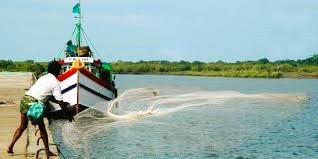
Poly-culture, which involves raising multiple fish and prawn species together, is a cost-effective and sustainable aquaculture method. It optimizes resource use and mitigates risks associated with monoculture, where only one species is farmed. By diversifying species and balancing ecosystems, poly-culture enhances productivity and sustainability while reducing disease and pest impacts. In Andhra Pradesh, poly-culture has significantly contributed to the growth and diversification of the aquaculture sector. Integrating species with varying feeding habits improves resource utilization, market resilience, and economic returns. Additionally, this method enhances nutrient cycling and water quality, resulting in healthier, more productive aquaculture systems.
The introduction and subsequent revocation of Government Order 217 have significantly impacted the fisheries sector in Andhra Pradesh. Enacted on August 18, 2021, this order aimed to auction fishing rights for public water bodies exceeding 100 hectares, intending to boost revenue and management. However, it faced criticism for disadvantaging small-scale fishermen, as the auction process favoured wealthier entities and jeopardized their livelihoods. The policy raised concerns about overfishing, which could deplete fish stocks and disrupt ecological balance, threatening the sector’s sustainability. Restoring water bodies to local fishermen’s societies, as envisioned by the late NT Rama Rao, is essential for equitable and sustainable fisheries management, addressing the policy’s adverse effects and supporting the livelihoods of those reliant on these resources.

The development of robust welfare schemes is essential for strengthening the fishermen community in Andhra Pradesh. The state government has introduced programs such as the “Fishermen Welfare Scheme,” which provides financial aid to those affected by natural disasters and other challenges. Additionally, the “Deep Sea Fishing Policy” aims to boost fisheries development and income. The establishment of fisheries cooperatives has also been beneficial, allowing fishermen to sell their catch at competitive prices.
Subsidies are available through welfare schemes, with 60% support for Scheduled Castes (SC) and women beneficiaries, and 40% for others. These measures, along with national schemes providing housing and accident compensation, are improving the socio-economic conditions of fishermen. Welfare schemes create a safety net for fishermen, who often face harsh working conditions. Financial aid, housing, and other support stabilize incomes and improve quality of life. Cooperatives enable fishermen to pool resources, share knowledge, and access markets, enhancing bargaining power and profitability.

The Andhra Pradesh Marine Fishing (Regulation) Act, 1994, plays a crucial role in regulating fishing vessels in the state’s territorial waters. Established to enhance port sector development and address overfishing and unsustainable practices, the Act enforces regulations on fishing capacities and methods. The Act promotes responsible fishing practices and conservation measures to protect marine biodiversity.
Key provisions of the Act include regulating mesh sizes, limiting fish sizes, restricting fishing methods, and establishing sanctuaries for sustainable fishery management and resource conservation. Effective implementation of the Act requires continuous monitoring, enforcement, and collaboration with local fishing communities. This approach ensures compliance and conservation, mitigating risks of overfishing and habitat destruction, and supporting the long-term viability of marine resources.
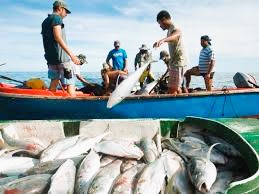
Infrastructure development is a critical component of boosting Andhra Pradesh’s fisheries sector. Upgrading landing centres, storage facilities, and market linkages enhances fishermen’s operations and income. The Fisheries Infrastructure Development Fund (FIDF) supports this with concessional finance for essential infrastructure, including fishing harbours, shore-based facilities, fish drying platforms, and boat yards.
The initiative aims to improve fish production, reduce post-harvest losses, and promote value-added products, thereby increasing farmer incomes and creating rural employment. Investments in infrastructure strengthen the state’s fisheries sector, driving economic growth and improving efficiency. Modern infrastructure enhances operational efficiency and the quality and safety of fish products. Improved storage facilities reduce spoilage, extend shelf life, and enable access to broader markets. Well-equipped landing centres streamline the unloading and processing of catches, boosting productivity.

Capacity building and training are crucial for equipping fishermen with essential skills and knowledge. The Andhra Pradesh government’s initiative includes diverse programs such as training sessions, workshops, and certification courses focused on fishery management, health, water quality, modern fishing techniques, and marketing strategies. By enhancing fishermen’s skills, these programs significantly boost efficiency, promote sustainable practices, and support sector growth. Training in sustainable methods, advanced aquaculture techniques, and value addition not only improves productivity and profitability but also helps fishermen adapt to evolving market demands and environmental changes. Such capacity-building efforts foster effective resource management, mitigate environmental impacts, and build resilience against climate change, thereby driving innovation and economic diversification within the sector.

Effective fisheries management involves collaboration among various stakeholders, including fishermen, their representative organizations, fishing communities, dependent industries, management agencies, Civil Society Organisations (CSOs), NGOs, research institutions, educational institutions, and citizens. A meeting to discuss strategies for the sustainable use of the Fisher Friend Mobile App (FFMA) among Krishna District fishers highlighted the importance of partnerships for reaching fishers nationwide. Key participants included government departments, NGOs, fishermen associations, and FFMA users.
Engaging stakeholders in fisheries management fosters collaboration, knowledge sharing, and effective policy implementation. Involving fishermen and communities in decision-making builds trust, enhances compliance, and promotes sustainable resource use. The collaborative approach ensures that management practices reflect the needs and perspectives of those directly involved in the sector, leading to more effective and equitable outcomes.
Infrastructure investment is crucial for supporting marine fisheries. Andhra Pradesh has made significant investments in facilities such as fishing harbours, cold storage, and processing units, which have increased efficiency and productivity. In 2020-21, fish and prawn production rose by 16% to 46.23 LMT, and the area under aquaculture expanded by 6% to 2.09 lakh hectares. These investments are driving growth in the fisheries sector, with a projected output exceeding four million metric tons by 2024.
Despite the positive trends, the fisheries sector faces several challenges, including resource management, environmental sustainability, and technological advancements. Addressing these challenges is essential for maintaining growth and ensuring long-term viability. The adoption of species like the murrel, as the state fish highlights the importance of species management and conservation.
Andhra Pradesh’s four Fisheries Science colleges play a vital role in advancing research and education, supported by the Indian Council of Agricultural Research (ICAR) and its National Bureau of Fish Genetic Resources (NBFGR). The fisheries sector in India has shown a sustained annual growth rate of 8.61% from 2014-15 to 2021-22. By 2030, improved management practices could double the fish population in oceans and achieve a global maximum sustainable yield of around 95 million tons by 2050.

In conclusion, Andhra Pradesh’s fisheries sector is experiencing dynamic growth and transformation, driven by its abundant resources, expanding infrastructure, and strategic investments. The sector plays a crucial role in the state’s economic framework, contributing significantly to employment and economic development. To sustain this growth and achieve long-term success, it is essential to address existing challenges and capitalize on emerging opportunities. The state’s commitment to advancing aquaculture, enhancing marine fisheries, and investing in infrastructure is pivotal for shaping the future of the fisheries industry. By implementing equitable policies, robust welfare schemes, sustainable practices, and comprehensive capacity-building initiatives, Andhra Pradesh is well-positioned to secure a prosperous future for its fisheries sector and ensure a thriving blue economy for generations to come.
visit arjasrikanth.in for more insights


2 responses to “Catch of Prosperity: Andhra Pradesh’s Blue Revolution”
Comprehensive write up on the state of blue revolution in AP. It has thrown up many insights into the issue of aquaculture, especially inland shrimp faming.
LikeLike
Thank you for your valued feed back and observations
LikeLike