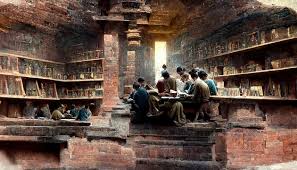
Resurrecting an Ancient Seat of Learning for Modern Global Collaboration
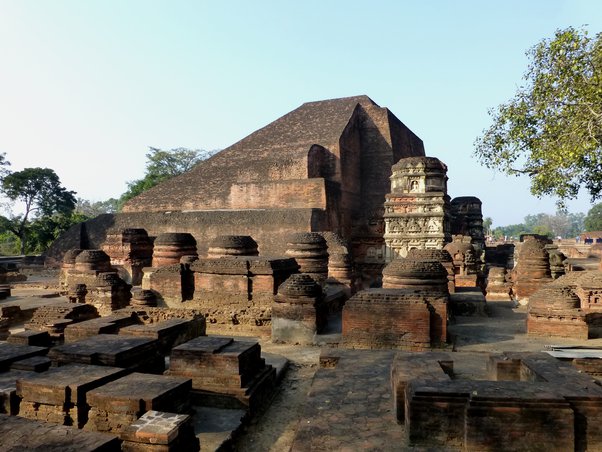
India’s historical legacy as a centre of learning and cultural exchange reached its zenith during the first millennium CE, with Nalanda University standing as a testament to this intellectual prowess. Situated in what is now Bihar, Nalanda attracted scholars and students from across Asia for eight centuries, fostering a vibrant environment where knowledge flourished and transcended geographical boundaries.
During its prime, Nalanda University became synonymous with intellectual prowess and cultural exchange. It housed thousands of students and teachers, offering a curriculum that encompassed Buddhist studies, philosophy, theology, mathematics, astronomy, and medicine. Its library, known as the “Dharma Gunj” or “Mountain of Truth,” was said to contain over nine million manuscripts, making it one of the largest repositories of knowledge in the ancient world.
Nalanda’s reputation as a centre of learning extended far beyond the Indian subcontinent. Scholars from China, Korea, Japan, Tibet, Mongolia, Sri Lanka, and Southeast Asia travelled to Nalanda to study and exchange ideas. This cultural melting pot nurtured a unique intellectual ecosystem where diverse traditions and philosophies coexisted and thrived.
However, Nalanda faced a tragic fate in the 12th century when it was ransacked and burned by Turkish invaders led by Bakhtiyar Khilji in 1193 CE. The destruction of Nalanda was not merely a loss of physical infrastructure; it represented a blow to India’s intellectual heritage and a disruption of centuries-old traditions of knowledge dissemination. Despite the devastation, Nalanda continued to function in a diminished capacity for some years before finally succumbing to abandonment and neglect.

The idea to revive Nalanda University gained momentum in the early 2000s, fuelled by a collective desire to reclaim India’s historical legacy as a global centre for learning. The late President of India, Dr. APJ Abdul Kalam, played a pivotal role in championing this cause, emphasizing Nalanda’s potential to once again become a beacon of knowledge and cultural exchange in the modern world.
In 2006, the initiative to revive Nalanda received significant international support through the East Asia Summit, comprising 18 member countries including India. This collaborative effort underscored Nalanda’s importance not only to India but also to the broader Asian region as a symbol of shared heritage and intellectual curiosity.

The path to revival culminated in the enactment of the Nalanda University Act in 2010 by the Government of India, which provided a legal framework for the establishment of the new university. The Act emphasized Nalanda’s role as an international institution dedicated to intellectual, philosophical, historical, and spiritual studies, echoing the multidisciplinary approach of its ancient predecessor.
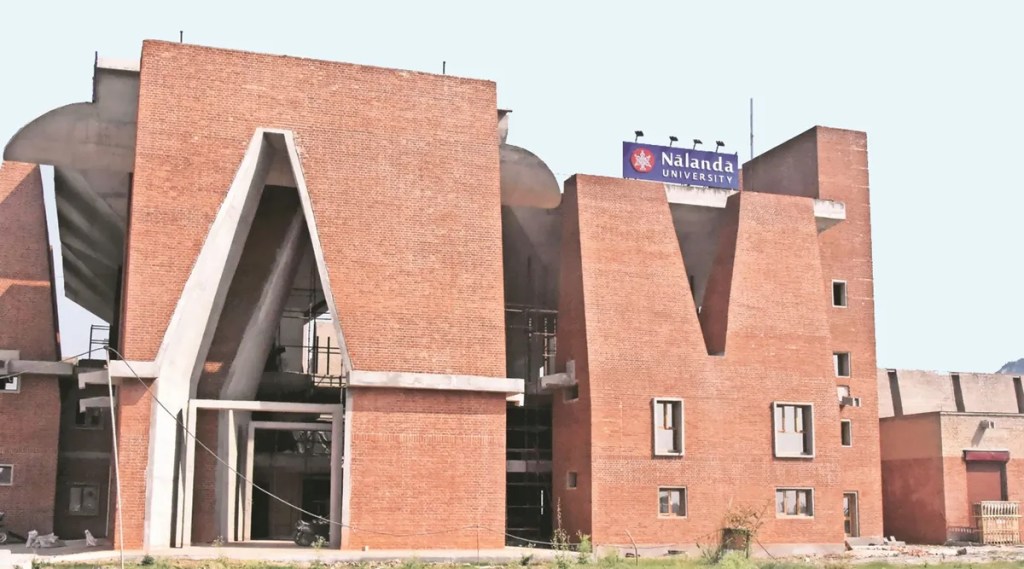
On June 19, 2024, Prime Minister Narendra Modi inaugurated the new campus of Nalanda University near Rajgir, Bihar, marking a historic moment in India’s educational landscape. The inauguration symbolized not only the physical resurrection of Nalanda but also the renewal of India’s commitment to fostering global cooperation in higher education.
Nalanda University admitted its very first batch of students in 2014, heralding a new chapter in its storied history. Initially, classes were held at the Rajgir Convention Centre, with temporary accommodation provided at Hotel Tathagat by the Bihar government. These early years were characterized by logistical challenges and infrastructure development as the university sought to establish its academic programs and administrative framework.
The contemporary Nalanda University embodies a vision of educational excellence and global collaboration. Designed to blend ancient wisdom with modern knowledge systems, the university offers programs in diverse disciplines such as Historical Studies, Ecology, Environmental Studies, Philosophy, Comparative Religion, and Management Studies. This interdisciplinary approach reflects Nalanda’s commitment to addressing contemporary global challenges while preserving and promoting traditional wisdom.
Under the governance of a distinguished Governing Board, Nalanda University fosters an environment conducive to scholarly exchange and intellectual exploration. The board comprises eminent intellectuals, diplomats, and administrators who are dedicated to upholding academic integrity and promoting cultural understanding through education.

The revival of Nalanda University stands as a testament to India’s enduring commitment to educational excellence and cultural preservation. From its ancient origins as a beacon of learning to its modern-day resurrection, Nalanda continues to inspire scholars and enthusiasts worldwide with its rich history and scholarly pursuits. As Nalanda University moves forward, it seeks to reclaim its position as a global centre for learning and cultural revitalization, bridging the past with the future in the pursuit of knowledge and enlightenment. Through its interdisciplinary programs, international collaborations, and commitment to sustainability, Nalanda University is poised to make significant contributions to global academia and cultural dialogue. Students and researchers from around the world converge at Nalanda, inheriting a legacy of intellectual curiosity, mutual respect, and a shared commitment to shaping a more inclusive and enlightened world.
visit arjasrikanth.in for more insights


One response to “Nalanda University: Reviving India’s Legacy of Knowledge and Enlightenment”
I’m thrilled to see the renewed efforts to revive Nalanda University. I recently wrote a blog highlighting some of the shortcomings in our current higher education system and sincerely hope that these issues are addressed in Nalanda.
Here is the link https://nrj2000.blogspot.com/2024/05/3-mistakes-in-indian-higher-education.html
Dr. Neeraj Saxena
LikeLike