Shifting the focus to the White Revolution, India aims to revolutionize its dairy industry akin to the Green Revolution, ensuring sustainable milk production to meet growing demands.

In the heartland of India, where the rivers flow and fields stretch to the horizon, a remarkable story unfolds. India proudly wears the crown of the world’s largest milk producer, contributing an astounding 24.64% to the global milk production . Yet, behind this impressive achievement lies a nuanced tale of challenges and paradoxes, as recent reports hint at a unique milk crisis gripping the nation’s dairy industry. This article embarks on a journey through India’s sprawling dairy landscape, exploring the intricate factors that shape its dominance and the hurdles that cast shadows on its success.
A tapestry woven with growth, India’s trajectory as the foremost milk-producing nation is awe-inspiring. The fiscal year 2022-23 witnessed a remarkable 58% surge in milk production over the past nine years, culminating in an astonishing 230.58 million tonnes. This exponential rise reaffirms India’s position as the unchallenged global leader in milk production, a feat achieved through the collective efforts of millions of dairy farmers and a robust dairy industry.

As the sun rises over India’s dairy landscape, the state of Uttar Pradesh emerges as the protagonist, claiming the title of the highest milk-producing state during 2022-23. With a substantial 15.72% share of the total milk production, Uttar Pradesh leads the charge, followed by Rajasthan, Madhya Pradesh, Gujarat, and Andhra Pradesh, each contributing significantly to the nation’s dairy prowess.

Beneath the veneer of success, a paradox unfolds. In the fiscal year 2021-22, India produced a staggering 221 million tonnes of milk, securing its position as the world’s largest producer. Yet, reports from the UN Food and Agriculture Organization (FAO) hint at a looming crisis. The challenge lies in reconciling immense production with the intricate issues plaguing the dairy sector, inviting a closer inspection.
Unlocking the secrets of milk production reveals a triad of factors – genetics, nutrition, and management. Genetic variations among dairy cattle breeds, the interval between milkings, the stage of lactation, animal age, feeding regimes, and disease control intricately weave the tapestry of milk composition and production. The quest for sustained growth in milk production hinges on a delicate balance of these factors.
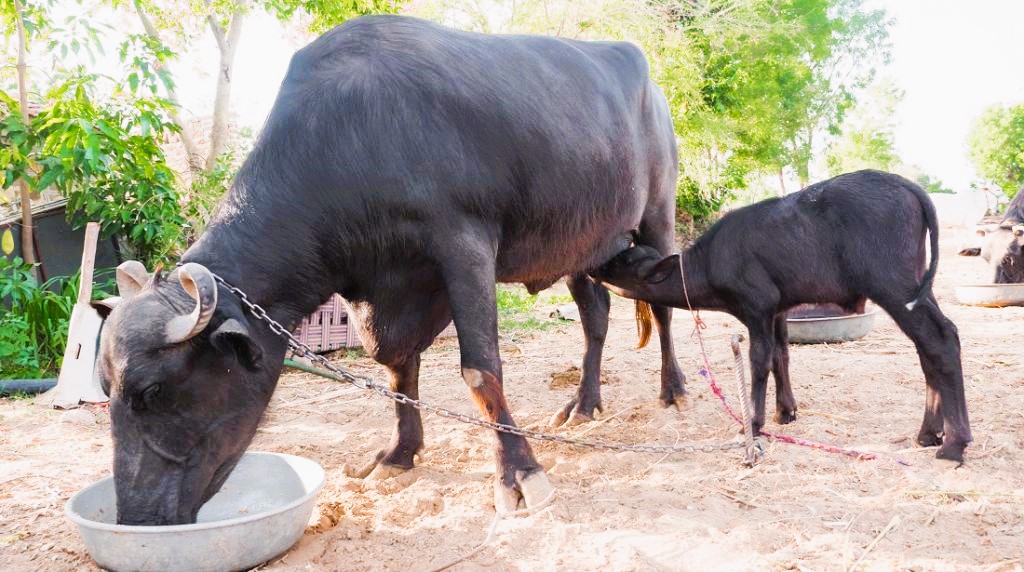
Despite its global acclaim, India’s dairy sector grapples with challenges. The productivity per animal remains a bottleneck, standing at a modest 987 kg per lactation, far below the global average of 2,038 kg. Ethical concerns echo through the corridors of animal husbandry, as growth hormones, antibiotics, and disease control measures raise questions about the treatment of dairy animals and the quality of the milk they produce.
India’s dairy saga unfolds against the backdrop of a remarkable evolution. From a milk-deficient nation dependent on imports in the 1950s and 1960s, the country has metamorphosed into a surplus producer, contributing 23% of the global milk production. This transformation is a testament to the resilience and commitment of farmers, cooperatives, and private entities shaping India’s dairy destiny.

As the wheels of progress turn, threats emerge on the horizon. The quality of milk, a lifeline for millions, is at risk. Pathogen contamination, chemical additives, environmental pollution, and nutrient degradation cast shadows on the sanctity of this indispensable commodity. Microbiological hazards loom large, demanding vigilant measures to preserve the integrity of India’s milk supply.

In the vast expanse of India’s dairy landscape, the echoes of success and challenges reverberate. The paradox of a milk crisis amid abundance calls for introspection and action. From the fields of Uttar Pradesh to the cooperative stronghold of Anand, the trajectory of India’s dairy industry navigates a complex milky way. The path forward demands a delicate balance – a balance between soaring productivity, ethical practices, and environmental sustainability. As India charts its course through this intricate Milky Way, the choices made today will shape the nation’s dairy destiny for generations to come.
visit arjasrikanth.in for more insights
 SOCIAL PERSPECTIVES
2 responses to “India’s White Revolution 2.0: Navigating the Milky Way to Sustainability”
PROF. ARZA VVS SWAMY STAYS IN VIJAYAWADA. I AM HAPPY TON SEE ARZA subfamily.Can you provide info about you.
LikeLike
Good Information sharing you sir…. I am happy to inform you that I am reading every day your stories… Thank you sir…. Shaik Meera Vali MA, LLM.
LikeLike